
The modern workshop has evolved dramatically over the last decade. It’s no longer just a space for manual labor and simple tools; today’s workshops are hubs of precision, technology, and complex projects. If you’ve ever spent frustrating minutes searching for a specific component mid-assembly, you understand how quickly a project’s momentum can be lost. Misplaced parts, incorrect components, and faded labels lead to wasted time, costly mistakes, and a general sense of disorganization that undermines productivity.
In today’s competitive environment, speed is only one part of the equation. Accuracy, accountability, and traceability have become equally critical. Whether you’re a hobbyist in a small garage or managing a large-scale fabrication facility, the challenge remains the same: how to efficiently manage an ever-increasing number of parts, tools, and projects. As builds grow in complexity, the need for a reliable method to label and identify every component is no longer a luxury—it’s a necessity.
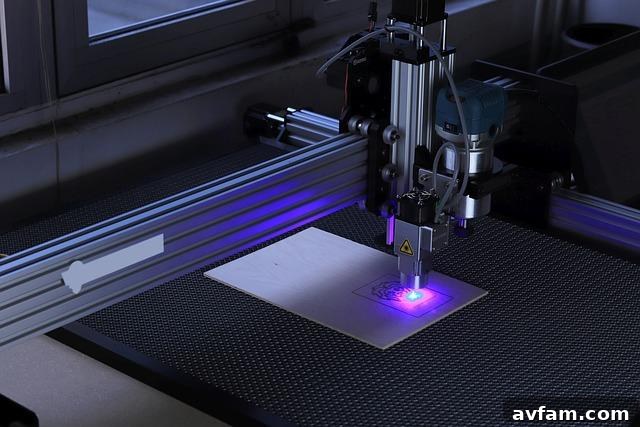
This is where the practice of permanent marking enters the picture. What was once considered an optional finishing step is now an integral part of the workflow for many forward-thinking workshops. From etching serial numbers for traceability to branding custom parts with a logo, permanent marking ensures that vital information remains with an item throughout its entire lifecycle. For shops utilizing advanced solutions like a laser marking machine, the objective extends beyond simple efficiency. The goal is to build a more streamlined, reliable, and professional process from the ground up.
Enhancing Product Traceability and Component Identification
One of the most significant challenges in any dynamic workshop environment is maintaining organization. When juggling multiple projects simultaneously or producing batches of similar items, it’s remarkably easy to mix up components or lose track of individual parts. Imagine a custom cabinetry project or a metal fabrication job involving dozens of pieces that appear nearly identical. Without clear, durable markings, the risk of swapping parts or installing them incorrectly is high, leading to rework and delays.
The Old Way: A Recipe for Error
Before the widespread adoption of permanent marking, workshops often relied on temporary solutions. Masking tape, permanent markers, and handwritten tags were the standard. However, these methods are inherently flawed. Adhesive labels peel off in oily or dusty environments, ink fades when exposed to solvents or sunlight, and tags can be torn off during handling. As a project progresses, parts become increasingly difficult to identify, turning the final assembly into a time-consuming puzzle.
The New Standard: Built-in Clarity
With permanent marking, each component carries its own identity directly on its surface. A part can be picked up at any stage of production, and its purpose, orientation, or serial number is immediately clear. This creates a far more robust system, especially for:
- Complex Assemblies: Ensuring every unique component is installed in its correct location.
- Quality Control: Tracking parts back to a specific batch, machine, or operator if a defect is found.
- Inventory Management: Clearly identifying tools, jigs, and fixtures that are shared among team members.
- Replacement Parts: Guaranteeing that a replacement part meets the exact specifications of the original.
This level of identification also revolutionizes troubleshooting. If a product fails in the field, a permanent serial number allows you to instantly trace its entire history. You can pinpoint the materials used, the date it was manufactured, and the specific processes it underwent. This data is invaluable for resolving issues quickly and preventing future occurrences.
Of course, the marking itself is only as good as the preparation that precedes it. Precision is key. Before applying a mark, parts must be dimensionally accurate. Using a high-quality micrometer tool to verify measurements ensures that markings are placed consistently and correctly every time, contributing to a professional and functional final product.
Why Permanent Marking is a Workshop Essential
As workshops continue to tackle more ambitious projects, the need for a dependable system for labeling and tracking is undeniable. Permanent marking technologies have become the go-to solution, seamlessly integrating into modern manufacturing workflows. Several key advantages are driving this trend.
Durability in Harsh Environments
Workshop environments are tough on equipment and components. Parts are often exposed to heat, chemicals, moisture, abrasion, and heavy handling. Temporary labels simply cannot withstand these conditions. Permanent marks, whether etched by a laser, indented by a dot peen machine, or engraved, are designed to last the lifetime of the part. They remain legible year after year, ensuring that critical information is never lost.
Versatility Across Materials
Modern marking technologies are incredibly versatile. A single system can often be used to mark a wide range of materials, including steel, aluminum, titanium, plastics, composites, and coated surfaces. This flexibility allows a workshop to apply a consistent identification strategy across all its projects without needing multiple different systems, saving both space and investment.
Streamlined and Automated Workflows
Integrating permanent marking into your production line transforms it from a manual, error-prone task into a streamlined, automated process. Once a part is marked, it becomes part of a digital ecosystem. A simple QR code or serial number can link a physical component to a wealth of digital information, such as design files, manufacturing parameters, inspection reports, and maintenance logs. This connection between the physical and digital worlds is a cornerstone of the modern “smart factory” and is becoming increasingly accessible to smaller workshops.
Professionalism and Brand Identity
Beyond the practical benefits of organization, permanent marking adds a layer of professionalism and quality to your work. A cleanly marked logo, part number, or serial number communicates attention to detail and confidence in your product. For businesses creating custom products, it’s an effective way to reinforce brand identity and make your work stand out. It tells your clients that you are serious about quality, from the initial design to the final finishing touch.
Choosing the Right Marking Technology
Not all permanent marking methods are created equal. The best choice for your workshop depends on your specific needs, including the materials you work with, your production volume, and your budget. Some of the most common technologies include:
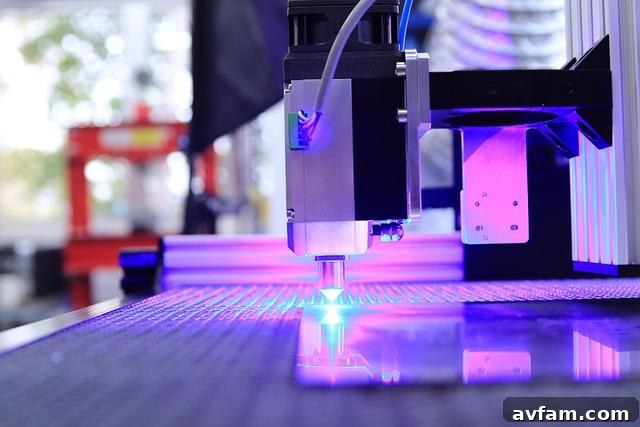
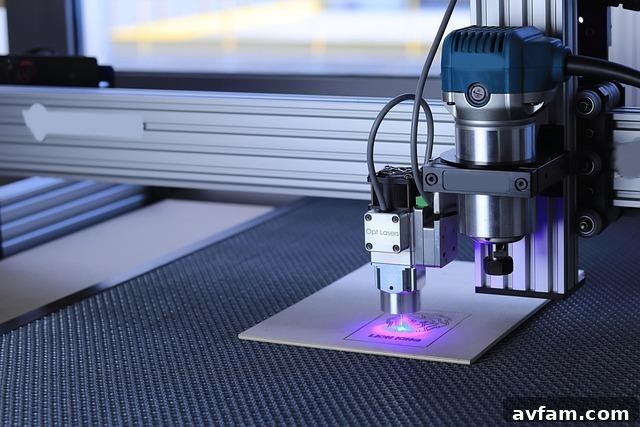
- Laser Marking: Uses a focused beam of light to alter the surface of a material. It’s incredibly fast, precise, and non-contact, making it ideal for delicate parts, complex graphics, and a wide variety of materials.
- Dot Peen Marking: Uses a carbide or diamond stylus to strike the surface and create a series of dots that form characters and numbers. This method creates deep, highly durable marks and is excellent for heavy industrial applications on metals.
- Scribe Marking: Drags a sharp pin across the surface to “scribe” a continuous line mark. It’s much quieter than dot peen and produces a high-quality, readable mark, often preferred for applications requiring lower noise levels.
Conclusion: Building a Smarter, More Efficient Workshop
Permanent marking is rapidly shifting from a niche capability to a fundamental practice in the modern workshop. Its ability to enhance organization, ensure accuracy, and streamline the management of both simple and complex projects is undeniable. By adopting a reliable marking system and integrating it with precise measurement tools, workshops of all sizes can establish a more efficient, repeatable, and professional workflow.
Ultimately, every marked component becomes easier to track, assemble, and maintain throughout its lifecycle. As workshops continue to embrace technology and automation, seemingly small upgrades like implementing a permanent marking strategy make a significant cumulative impact. This is more than just labeling; it’s about building a smarter, more organized workspace that consistently delivers superior results.