
The Unparalleled Precision of Japanese Axes: A Deep Dive into the Ono
For centuries, Japanese artisans have been celebrated globally for their meticulous craftsmanship and an unwavering commitment to refining every tool and product they create. This dedication to perfection is not merely an aesthetic choice; it’s a fundamental philosophy that permeates their entire approach to design and utility. While Japanese saws have long found their rightful place in the toolkits of discerning woodworkers worldwide, renowned for their pull-stroke efficiency and razor-sharp precision, the Japanese axe, known as an Ono, remains a lesser-known gem. Yet, for those who appreciate the subtle nuances of a finely crafted instrument, the Ono axe represents a valuable and indispensable addition to any arsenal, offering unparalleled precision and effectiveness in specific tasks.
Beyond the Conventional: Understanding the Ono Axe Design
When most enthusiasts think of high-quality hatchet-style axes, names like Gransfors Bruk or Wetterlings often come to mind. These celebrated axes, born from the dense forests of Sweden, are legendary for their robust construction and versatility, excelling at a wide range of tasks from felling small trees to splitting firewood. They embody the rugged spirit of Nordic woodworking, prioritizing durability and raw power.
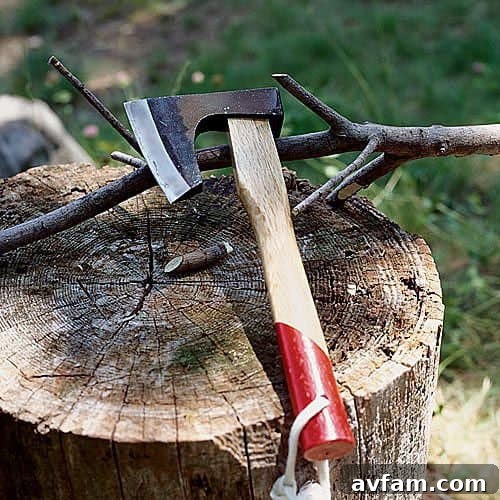
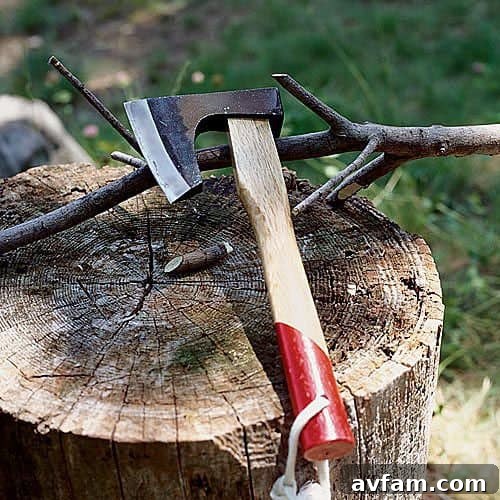
However, the Japanese Ono axe presents a distinctly different philosophy. Its design is not merely a variation but a complete reimagining of the axe’s potential, tailored for precision and balance. Typically, an Ono features a slightly longer handle than its Western counterparts, a characteristic that subtly shifts the leverage dynamics. More significantly, the head of a Japanese axe is weighted and shaped in a unique manner. This specialized weighting, often combined with a thinner, sharper blade profile, optimizes the axe for tasks requiring finer control and less brute force, making it exceptionally effective for detailed work like splitting kindling. The extended handle contributes significantly to generating greater power through momentum and leverage, transforming the act of splitting into a more efficient and less strenuous endeavor.
The Art of Craftsmanship: What Makes a Japanese Axe Unique?
Historical Roots and Evolution of Japanese Axes
The history of axes in Japan is deeply intertwined with its forestry, carpentry, and even martial traditions. Early Japanese axes were essential tools for clearing land, constructing elaborate wooden temples, and shaping timber with remarkable accuracy. Over centuries, these tools were continuously refined, with blacksmiths perfecting the art of forging and balancing to meet the specific demands of highly skilled artisans. This evolutionary process led to the development of tools like the Ono, which reflects a deep understanding of wood mechanics and human ergonomics.
Blade Technology: The Laminated Steel Edge
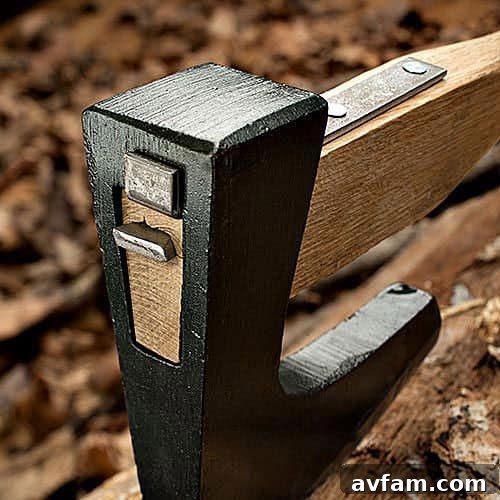
One of the most defining characteristics of a high-quality Japanese axe is its blade construction, often utilizing laminated steel, similar to that found in traditional Japanese knives and swords. This “San Mai” construction involves sandwiching a core of extremely hard, high-carbon steel between layers of softer, more ductile steel. The hard core forms the razor-sharp cutting edge, renowned for its superior edge retention, while the softer outer layers provide flexibility and absorb shock, preventing the blade from becoming brittle and prone to chipping. This ingenious design results in an axe head that can achieve an incredibly keen edge while remaining remarkably resilient.
The “Bearded” Blade Design and Balance
Many Japanese axes, including the one mentioned from Garrett Wade, feature a distinctive “bearded” shape. This unique blade profile extends downwards from the cutting edge, creating a longer cutting surface relative to the axe head’s overall mass. The primary advantage of the bearded design is that it brings the center of gravity closer to the user’s hand. This improved balance offers several benefits: enhanced control for precise cuts, reduced fatigue during extended use, and greater maneuverability in tight spaces or for delicate tasks. It transforms the axe from a blunt instrument into a finely balanced extension of the user’s arm, allowing for nuanced control that is often challenging with traditional axe designs.
Handle Design and Material for Optimal Performance
The handle of a Japanese Ono axe is typically crafted from resilient woods such as White Oak or Magnolia, chosen for their strength, shock-absorbing properties, and comfortable feel. While often slightly longer than many Western hatchet handles, its design prioritizes balance and control. The subtle curvature and ergonomic shaping are meticulously designed to work in harmony with the axe head’s weighting, ensuring an optimal swing arc and efficient transfer of energy from user to target. This combination allows for powerful, yet controlled, blows, particularly beneficial when splitting smaller pieces of wood or performing intricate carving.
Japanese Ono vs. Western Axes: A Comparative Analysis
To truly appreciate the value of the Japanese Ono axe, it’s helpful to understand how its design philosophy diverges from that of well-regarded Western axes. While both are excellent tools, their specialization caters to different demands.
Purpose and Application
- Western Axes (e.g., Gransfors Bruk, Wetterlings): Primarily designed for heavy-duty tasks such as felling trees, limbing branches, splitting large logs, and general wood processing in forestry or wilderness settings. Their robust construction and heavier heads prioritize brute force and durability.
- Japanese Ono Axes: Excel in precision tasks. They are ideal for preparing kindling with accuracy, fine woodworking, shaping small timber, pruning branches with clean cuts, and even some intricate carving. Their design prioritizes control, sharpness, and clean cuts over sheer splitting power for massive logs.
Blade Geometry and Edge
- Western Axes: Often feature a thicker, more wedge-like blade profile designed to split wood by force, driving the fibers apart. The edge angle is typically more obtuse to withstand heavy impacts.
- Japanese Ono Axes: Characterized by a much thinner, sharper grind on the blade, sometimes almost chisel-like, especially near the edge. This allows for incredibly clean cuts and precise splitting along the grain. The laminated steel construction ensures this fine edge maintains its integrity.
Weight Distribution and Balance
- Western Axes: Tend to have more weight concentrated in the head for maximum impact force, crucial for felling and heavy splitting.
- Japanese Ono Axes: Often possess a more balanced feel due to the “bearded” design pulling the center of gravity closer to the handle, enhancing control and reducing wrist strain during repetitive, precise motions. This makes them less fatiguing for detailed work.
Here’s a brief video explaining some key differences between these two distinct axe styles, offering a visual comparison of their form and function:
Optimal Applications for Your Japanese Axe
The Ono axe, while versatile, truly shines in specific scenarios, making it an indispensable tool for various tasks:
- Kindling Preparation: This is arguably where the Ono excels most. Its sharp, thin blade and balanced design allow for precise, effortless splitting of small logs into kindling-sized pieces, making fire preparation quick and efficient with minimal effort.
- Bushcraft and Camping: For light wood processing, crafting small tools, shelter building, or preparing small cooking fires in a wilderness setting, the Ono provides an excellent balance of portability, precision, and effective cutting power without the bulk of a larger axe.
- Fine Woodworking and Carpentry: In traditional Japanese carpentry, axes like the Ono are used for rough shaping, joinery preparation, and even some decorative work where precision and clean cuts are paramount, allowing for a level of detail not easily achieved with other axes.
- Garden and Orchard Maintenance: For pruning thicker branches or shaping woody plants, the Ono’s clean-cutting ability minimizes damage to the plant and encourages healthy regrowth, promoting better plant health.
- General Utility: Beyond specialized tasks, its comfortable handling and sharp edge make it a pleasure to use for general camp chores, clearing small brush, or any task where a precise, controlled cut is preferred over brute force.
Choosing and Maintaining Your Japanese Ono Axe
Selecting the Right Ono for Your Needs
When choosing a Japanese axe, consider the primary tasks you intend to perform to ensure you select the best model for your requirements. Look for the following key features:
- Blade Material: Prioritize axes with laminated steel (San Mai) for superior edge retention, exceptional sharpness, and overall durability. This construction ensures a long-lasting, high-performance edge.
- Blade Shape: A “bearded” design enhances balance and control, especially for finer work and close-quarter tasks, making the axe feel like a natural extension of your hand.
- Handle Length and Material: Ensure the handle feels comfortable and is made from a durable, shock-absorbing wood like White Oak. Longer handles provide more leverage for splitting, while shorter ones offer greater control for carving and intricate tasks.
- Weight: A lighter axe is more nimble for precision work and less fatiguing for extended use, while a slightly heavier one can aid in splitting larger kindling or for tasks requiring a bit more momentum.
Essential Care and Maintenance for Longevity
To ensure your Japanese axe remains a high-performing tool for generations, proper care is crucial. Adhering to these maintenance practices will preserve its exceptional qualities:
- Sharpening: Due to its finer edge and sophisticated steel, a Japanese axe benefits greatly from sharpening with high-quality Japanese waterstones. This method creates an exceptionally keen edge without overheating the steel, which can compromise its hardness. Always maintain the original bevel angle for optimal performance.
- Handle Care: Periodically oil the wooden handle with linseed oil, tung oil, or a similar wood conditioner to prevent drying, cracking, and to enhance its grip and longevity. This also protects the wood from moisture.
- Storage: Always store your Ono axe with a protective leather or canvas sheath over the blade to prevent accidental injury and to protect the delicate edge from dulling or chipping. Store it in a dry environment to prevent rust on the steel and to maintain the integrity of the wooden handle.
- Cleaning: After each use, especially when working with sap-heavy wood, wipe down the blade thoroughly to remove any sap, dirt, or moisture, which can lead to rust. A light coat of camellia oil or similar rust-preventative oil can further protect the blade, particularly in humid conditions.
Embracing Japanese Precision in Your Tool Collection
The Japanese Ono axe is more than just a cutting tool; it’s a testament to centuries of refined craftsmanship and an ethos that prioritizes efficiency, precision, and harmony between user and instrument. While Western axes are invaluable for their robust strength and versatility in heavy tasks, the Ono offers a specialized elegance that unlocks new levels of control and effectiveness for detailed work. Integrating a Japanese axe into your toolkit opens up a world of finely controlled wood processing, transforming chores like kindling preparation into a satisfying experience of precision. For those who seek the best in traditional craftsmanship and appreciate tools designed with thoughtful intent, the Ono axe is not just an acquisition; it’s an investment in superior performance and a connection to an ancient legacy of mastery.