
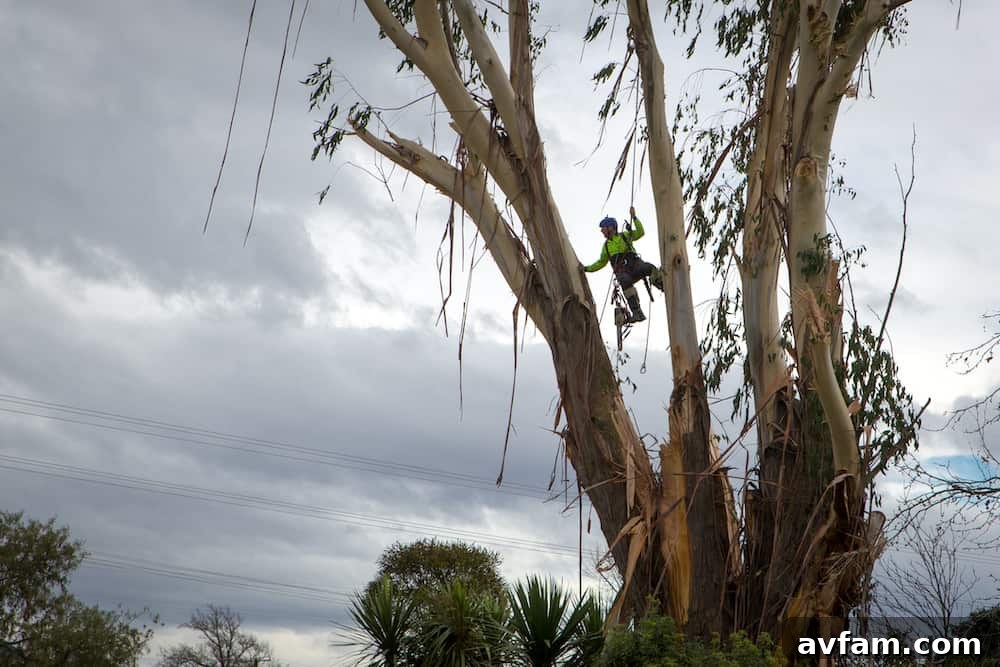
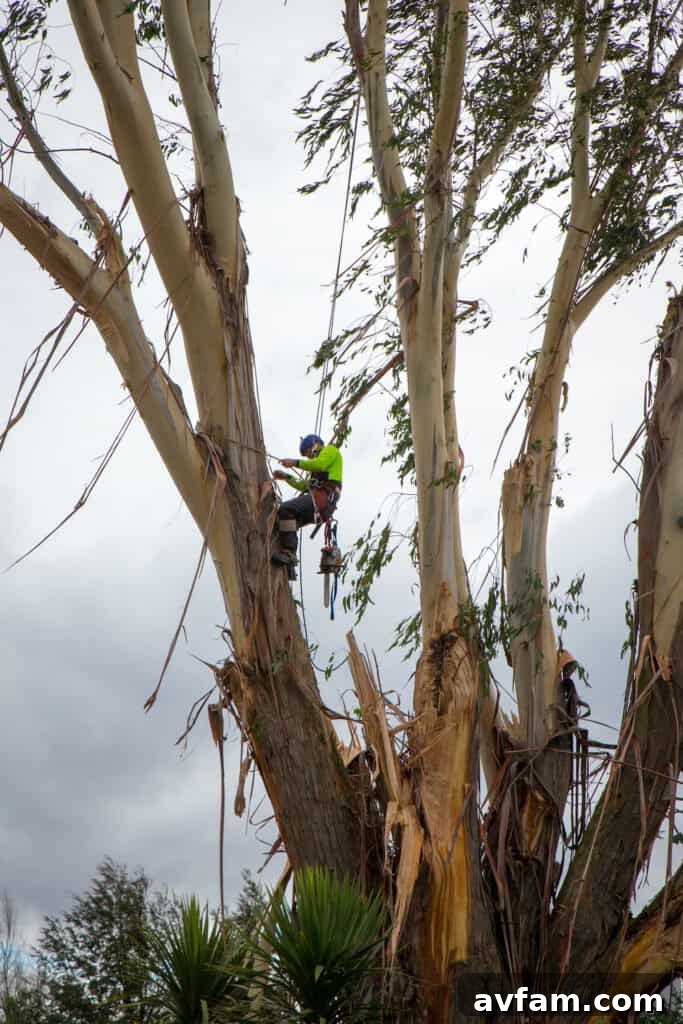
Maintaining a lush, expansive yard filled with fast-growing trees like ficus, eucalyptus, privet, eugenia, and creeping fig is both a joy and a significant responsibility. These magnificent specimens, while contributing immense beauty and shade, demand consistent attention through regular tree trimming and topping. In this comprehensive guide, we’ll share our firsthand experiences and strategies for effectively managing these trees, ensuring their sustained health, vibrant beauty, and structural integrity.
Three years ago, when we first moved into our current home, the sheer scale and density of the landscape were truly breathtaking. However, we quickly underestimated the substantial commitment of time and financial investment required for proper tree care. Having never previously owned a property with such a verdant and extensive green space, we found that the previous homeowners had neglected ongoing tree maintenance. This oversight resulted in a host of issues, including aggressively overgrown ficus roots creating tripping hazards, an accumulation of leaf debris, and dense, unruly branches that threatened both property and safety. This journey into professional and DIY tree care has been transformative, teaching us invaluable lessons about sustainable landscape management.
- How to Find a Reliable Tree Service Near Me
- Preparing Your Yard for Professional Tree Trimming
- Essential Tools The Pros Use for Tree Care
- Effective DIY Tree Trimming Tips and Tools
- Establishing a Consistent Tree Trimming Schedule
- The Benefits of Regular Tree Maintenance for Better Health

Our commitment to responsible tree care was recently underscored by a neighbor’s concern regarding a section of our towering eucalyptus tree. While we cherish this majestic tree, our neighbor rightly pointed out the potential danger of falling branches. This thoughtful request prompted us to undertake a thorough evaluation of all our trees’ needs, leading to the proactive steps and valuable insights we’re now eager to share for effective tree trimming and topping.
How to Find a Reliable Tree Service Near Me

While we handle much of our routine yard maintenance ourselves, certain tasks, like climbing a 50-foot eucalyptus tree with a chainsaw, are best left to seasoned professionals. Such complex and potentially hazardous jobs require specialized equipment, extensive experience, and proper safety protocols that are beyond the scope of typical DIY efforts. Given the abundance of tree service companies in the sprawling Los Angeles area, our initial search focused on platforms known for connecting homeowners with skilled local professionals. We found great success utilizing both Thumbtack and Yelp to identify and vet potential tree care crews.
Having previously used Thumbtack with positive results for appliance installation, it was our go-to platform for finding a reputable tree trimming service. The process is straightforward and free: you simply describe your project and request quotes or site visits from local companies. This approach allowed us to easily gather competitive bids and assess different service providers without commitment.
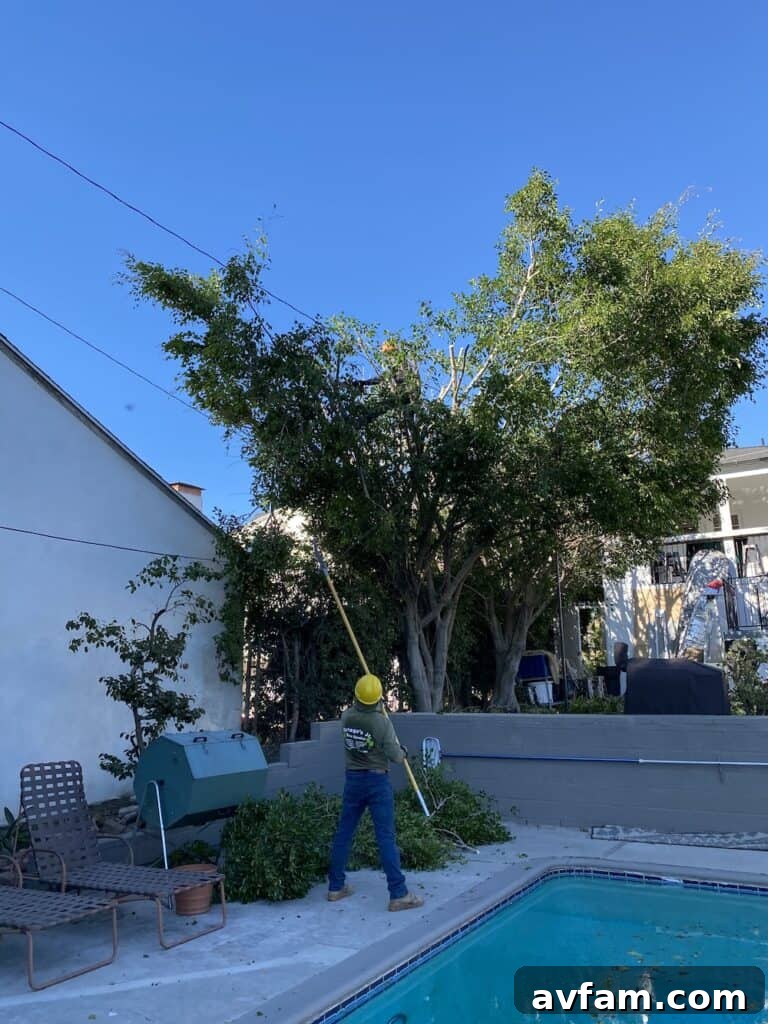
After receiving detailed quotes from two distinct companies, we ultimately selected Ortega Jr. Tree Services. Their proposal was not only significantly more affordable, being half the price of their competitor, but they also assured us they could complete the entire job within a single day. Their strong reputation on Yelp further solidified our decision, confirming their professionalism and reliability. A week later, a dedicated crew of five, including the owner, arrived punctually with a large truck fully equipped with a comprehensive array of tools and a powerful wood chipper in tow. Their efficiency and readiness were immediately apparent.
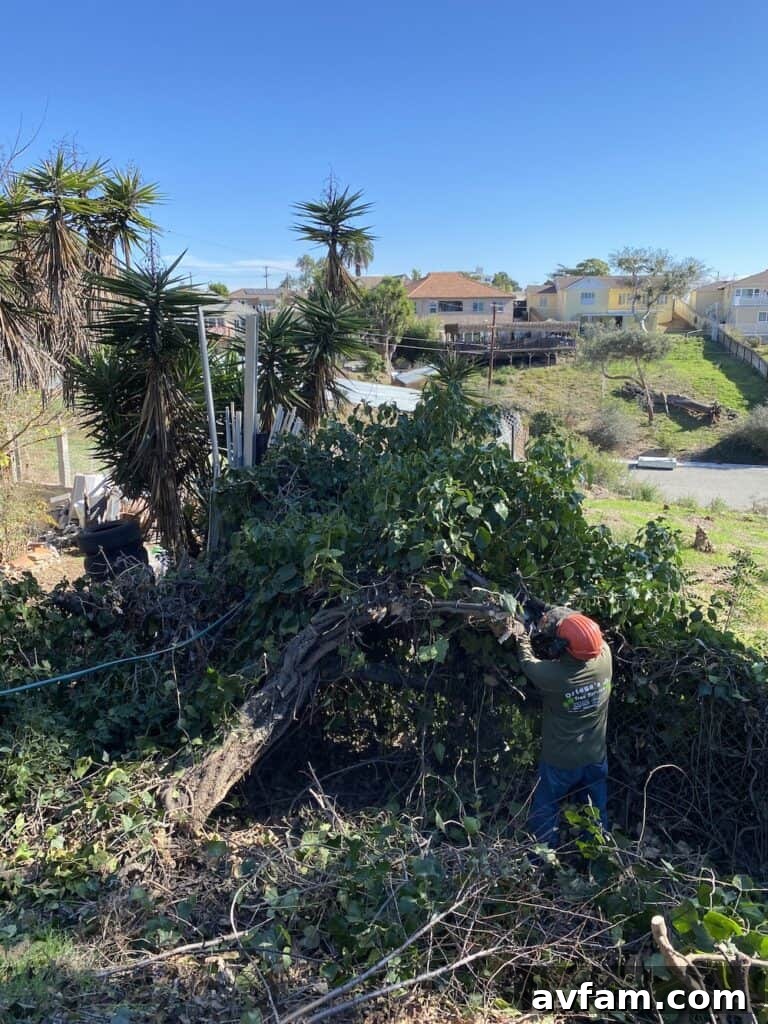
Beyond the extensive tree trimming, we also entrusted them with the formidable task of removing a substantial section of ivy that had completely enveloped an old fence at the rear of our property. This tenacious ivy had not only climbed over several dead trees but had also intricately woven itself into the fence structure, making its removal exceptionally challenging and labor-intensive. Their willingness and expertise to tackle this unenviable task further demonstrated their comprehensive tree and yard care capabilities.
Preparing Your Yard for Professional Tree Trimming
When professional tree trimmers arrive, they are typically eager to begin work immediately to maximize efficiency. To make the most of their valuable time and ensure a smooth, safe operation, thorough preparation of your yard beforehand is crucial.
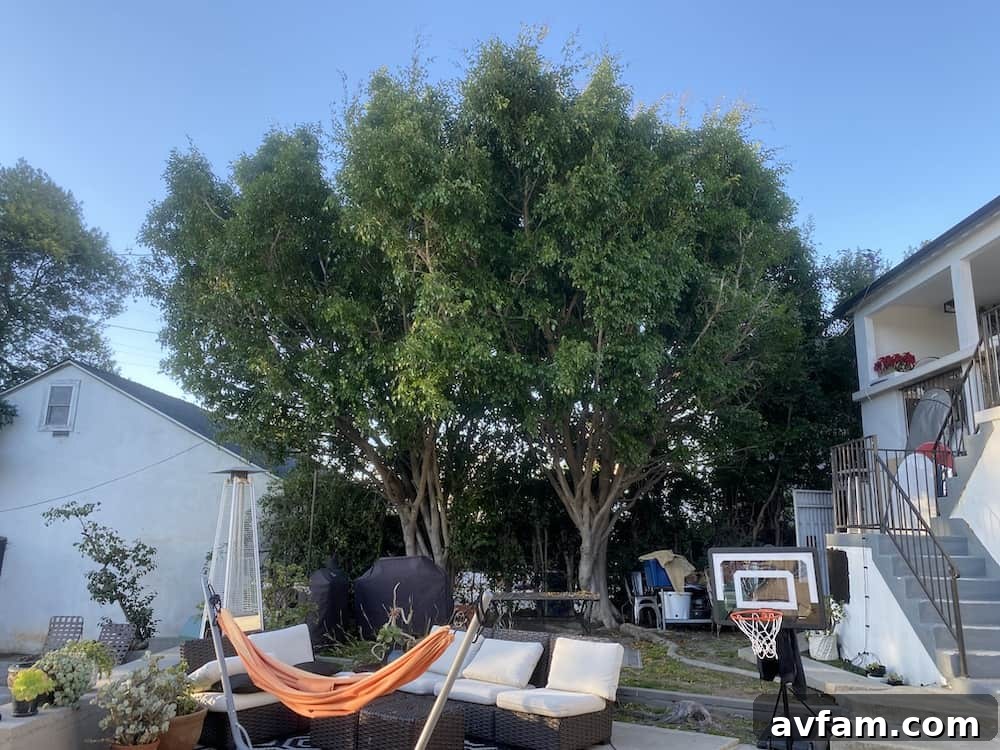
The primary objective is to provide unobstructed access to your trees and protect any valuable items from potential damage. This involves relocating all patio furniture, BBQ grills, hanging lights, garden ornaments, and any other movable objects situated directly beneath the tree canopies. Falling branches, even small ones, can cause significant damage, so a clear zone minimizes risks and allows the crew to work more freely and safely.

Clearing the area beneath the trees not only safeguards your belongings but also significantly streamlines the cleanup process for the trimmers. With fewer obstacles, they can more efficiently gather and remove fallen leaves, branches, and other debris, ensuring a quicker post-trimming tidying.
Once the trimming is complete, the crew will typically use powerful blowers for a final sweep of the yard. This can generate a considerable amount of dust and fine debris. To prevent this from entering your home, ensure all windows and doors are securely closed before the cleanup begins. After the tree trimmers depart, a quick spray-down with a hose can help wash away any lingering sawdust or dirt that might have settled on outdoor surfaces. Furthermore, be aware that a wood chipper, while essential, produces a tremendous amount of dust. Our car, parked near the chipper in the driveway, was completely covered in a layer of fine wood particles. It’s also considerate to inform your neighbors about the upcoming work, as they too will experience the noise and potential dust. Offering to pay for a car wash for them can be a thoughtful gesture to maintain good neighborhood relations.
Essential Tools The Pros Use for Tree Care
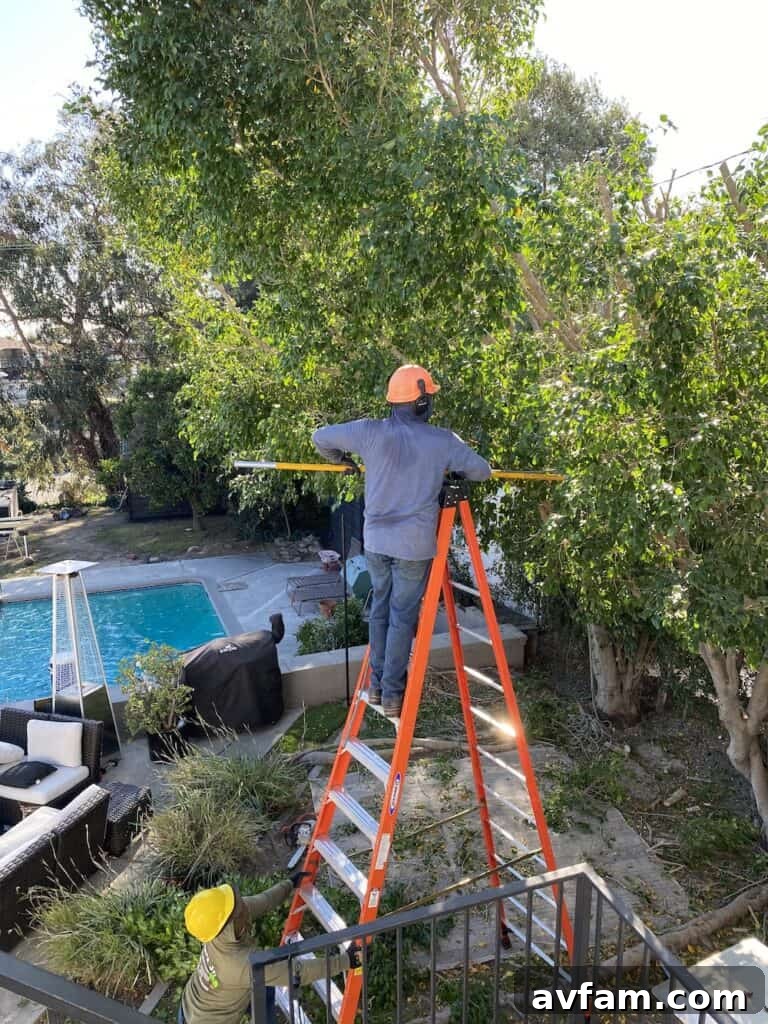
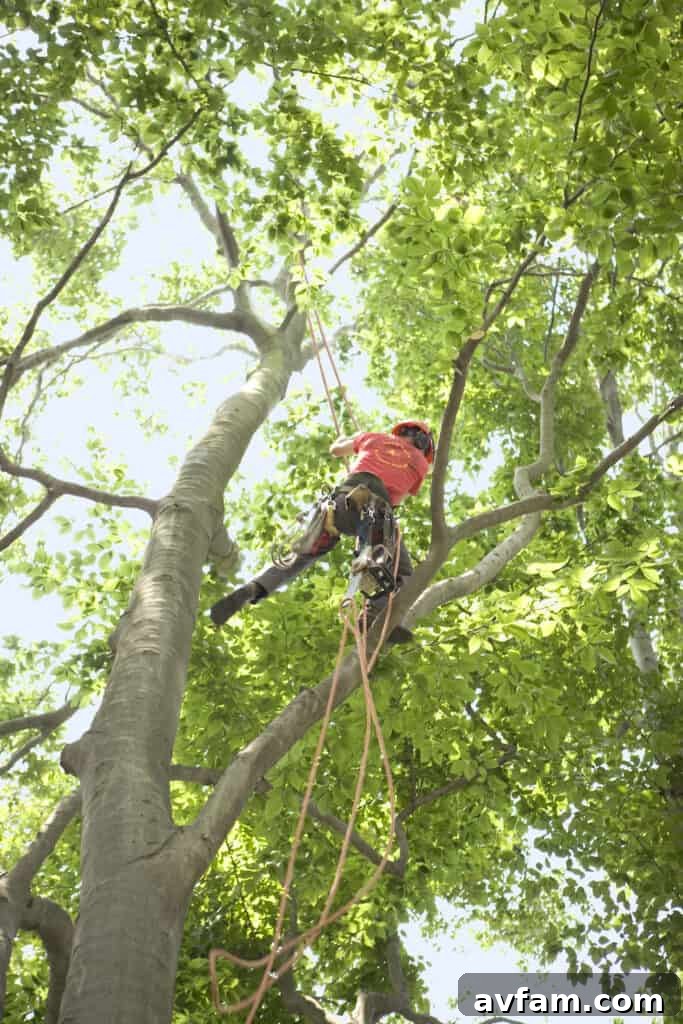
Our professional tree trimming crew utilized an impressive arsenal of tools designed for efficiency, power, and safety. The primary workhorse for tree trimming and topping was a gas-powered Stihl chainsaw. The sheer cutting power of this professional-grade tool is indispensable for rapidly and cleanly severing large branches, though its operation, as expected, came with considerable noise and exhaust fumes. For navigating the towering heights of our eucalyptus and ficus trees, which were too tall for mechanical lifts to access on our property, the crew employed traditional, highly effective climbing techniques.

Arborists literally used ropes and specialized climbing gear to ascend the massive trunks, demonstrating incredible skill and physical prowess. Once positioned, they would then carefully hoist their chainsaws up from the ground, ensuring precise and controlled cuts from within the tree canopy. Having experienced a tree climbing demonstration myself at the Stihl headquarters, I can attest that this demanding work requires immense strength, agility, and rigorous training.
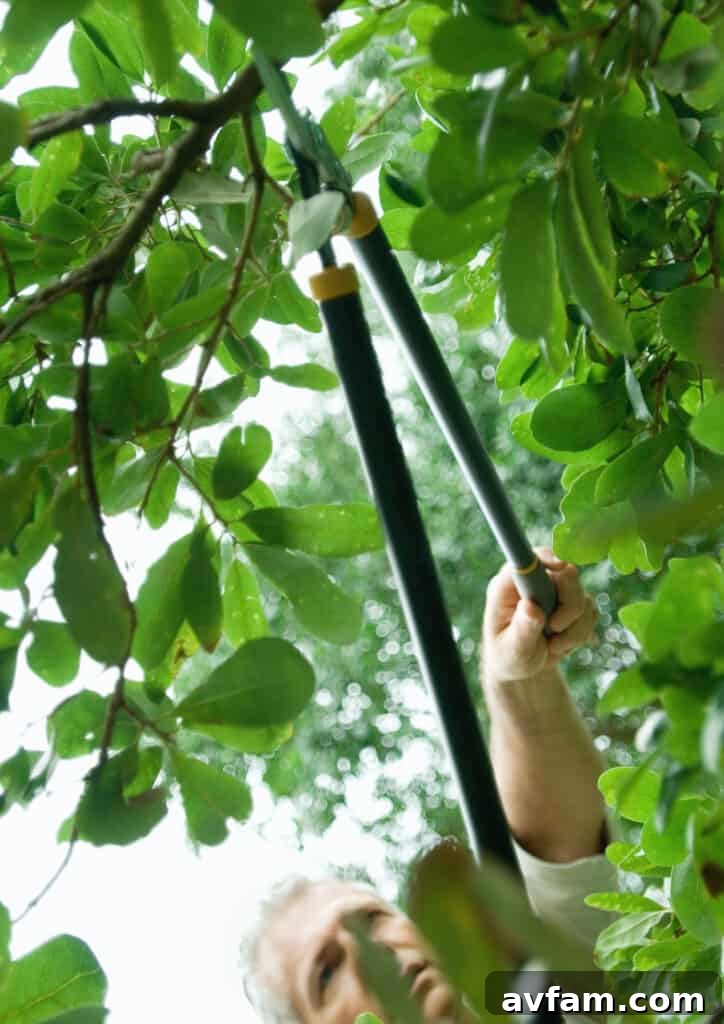
For more detailed work on smaller branches and shaping, the professionals also utilized manual pole saws and heavy-duty loppers – versatile tools that are also staples in our own DIY tree care kit. The final phase of their operation involved a powerful Stihl gas backpack blower. This essential tool was used to meticulously clear all fallen leaves, sawdust, and small branches, ensuring our yard, driveway, and even the surrounding street were left immaculately clean.
Effective DIY Tree Trimming Tips and Tools
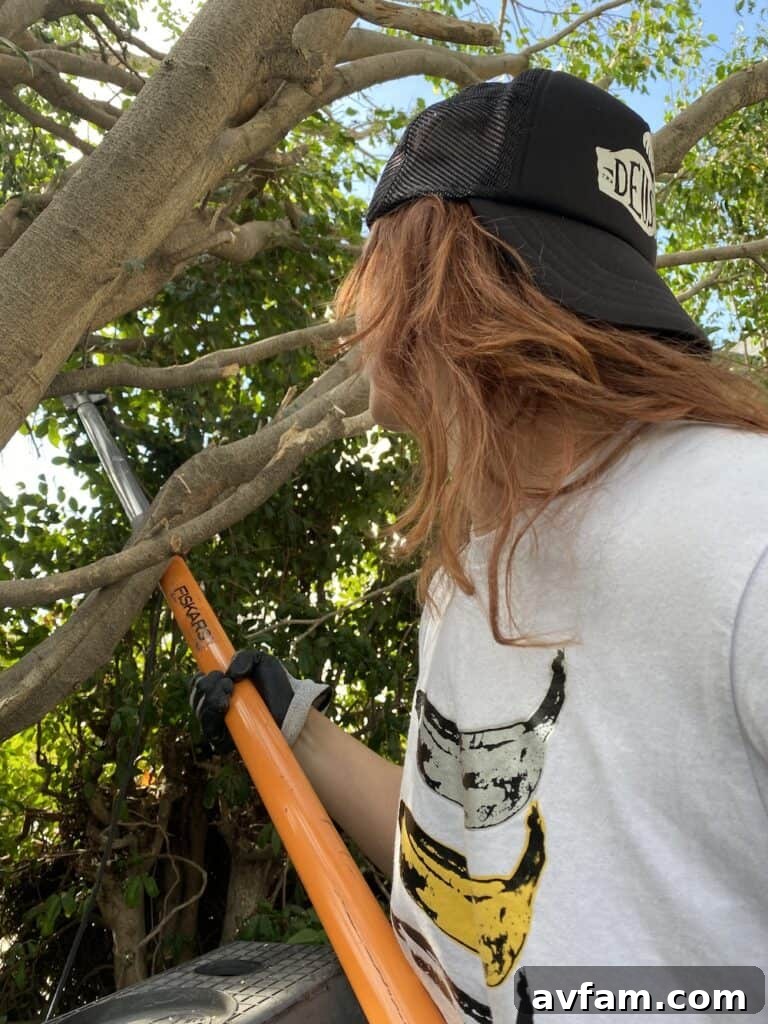
While hiring professionals was indispensable for the initial, extensive trimming and topping of our mature eucalyptus and ficus trees, establishing this baseline has significantly empowered us to handle ongoing maintenance ourselves. With the major work completed, our focus now shifts to regular, manageable trimming that we can safely perform using our own tools, primarily reaching what’s accessible from our 8-foot ladder and longer pole tools.
One of our most utilized tools is our Fiskars pole saw. We frequently detach the saw blade, primarily using the pole as an extended pruner for precise cuts on thinner branches. However, for those larger, more stubborn branches that still require a saw, we can easily reattach the blade, making it a versatile addition to our toolkit.
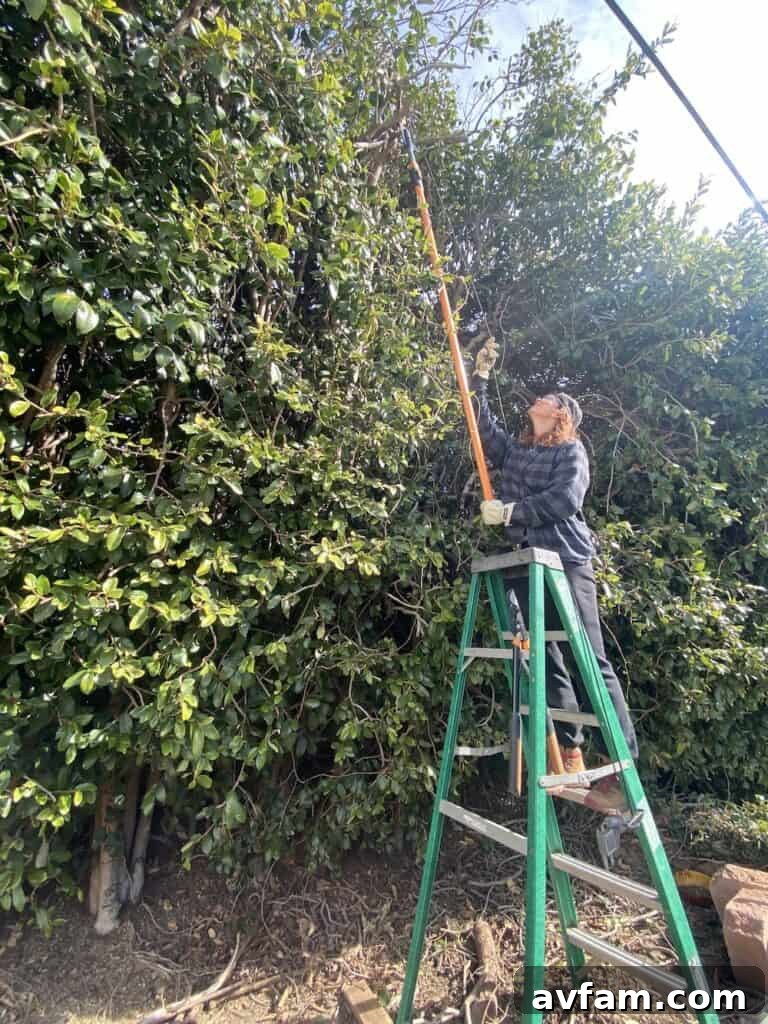
With our trees now properly trimmed back, our personal maintenance efforts yield more immediate and visible results. A persistent challenge has been the aggressive root growth of our two ficus trees. These roots have become a significant tripping hazard and raise serious concerns about potential damage to our swimming pool, home foundation, and even our neighbors’ property. The ficus trees demand a considerable amount of our attention due to these invasive roots. While we’ve considered the drastic measure of removing them entirely to halt root expansion, their invaluable contribution of dense shade and privacy makes them irreplaceable assets to our landscape.
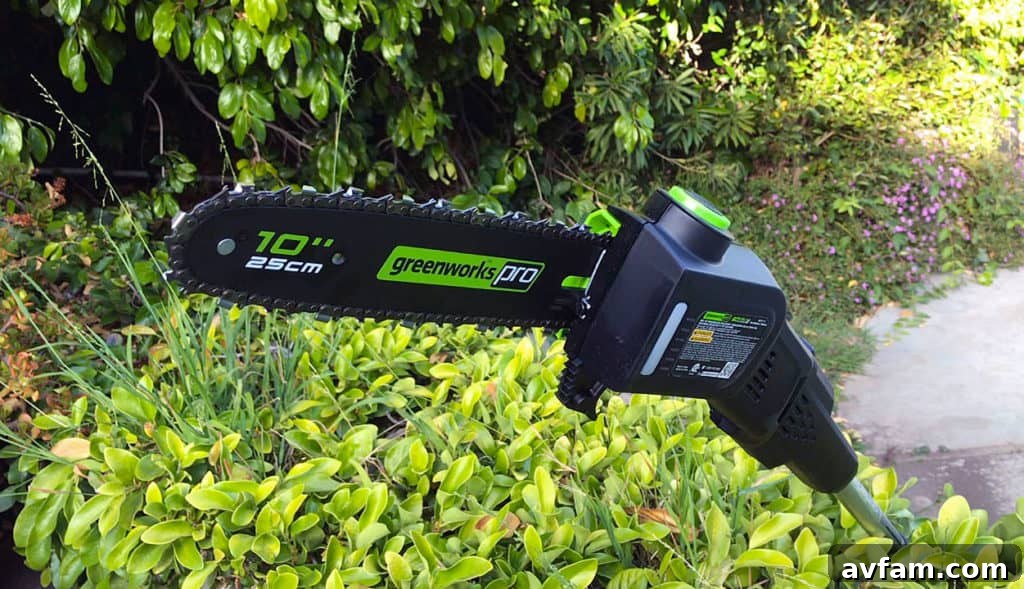
Our current strategy for the ficus involves aggressive topping and substantial cutting back, which we hope will effectively inhibit further root proliferation. To maintain this trimmed state, we rely on both our manual Fiskars pole saw and pruner, alongside our powerful Greenworks cordless pole saw. These tools collectively provide the necessary reach to access nearly the entire canopy of the ficus trees now that they’ve been topped. With consistent, regular maintenance, we are confident that the root growth can be kept under control, preserving both safety and property integrity.
Another indispensable tool in our yard is the Fiskars lopper, which we use extensively on every tree. Its powerful leverage allows us to quickly and cleanly remove dead branches and precisely shape our ficus, eugenia, and orange trees. Compared to small handheld pruners, loppers offer superior cutting power for thicker branches, ensuring cleaner cuts that promote better tree health.
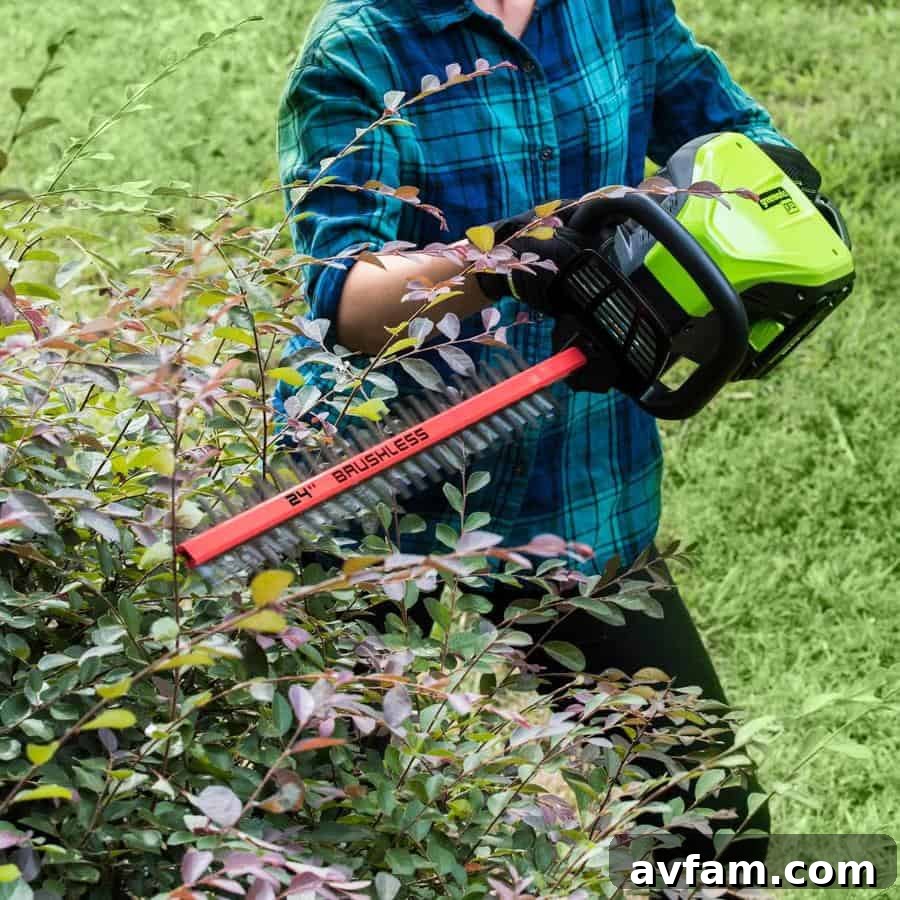
For the meticulous maintenance of our creeping fig, we primarily employ both the loppers for thicker stems and our reliable Greenworks hedge trimmer. This trimmer is not only effective at managing the rapid leaf growth but is also robust enough to cut through small, woody branches. A standout feature of the Greenworks hedge trimmer is its articulating head, which allows us to achieve optimal cutting angles, significantly reducing strain on our wrists and making detailed shaping much easier.
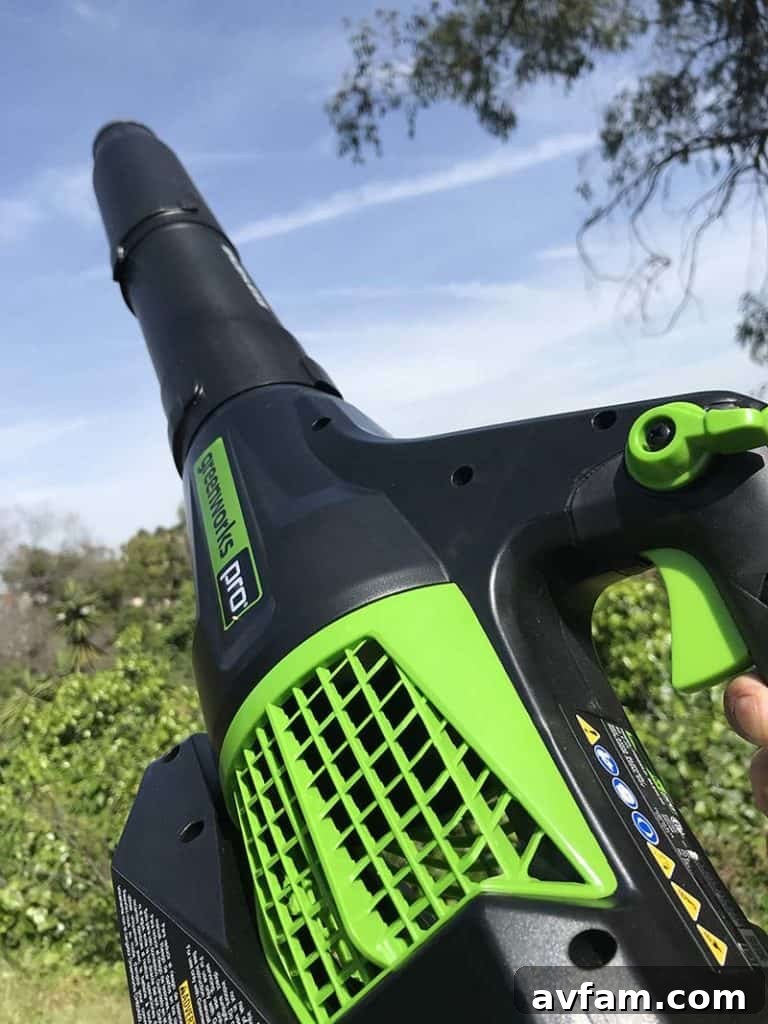
The final, indispensable tool for tidying up after any trimming session is a powerful Greenworks leaf blower. While a commercial-grade backpack blower might be overkill for our residential yard, the Greenworks blower offers ample power to clear all remaining leaves, small branches, and debris. Its efficiency allows us to quickly gather the yard waste, which we then easily scoop into our refuse bin using a Quiklid. Equipped with a long-lasting 2.0 Ah battery, the Greenworks blower typically requires charging only once a month, providing consistent, reliable performance.
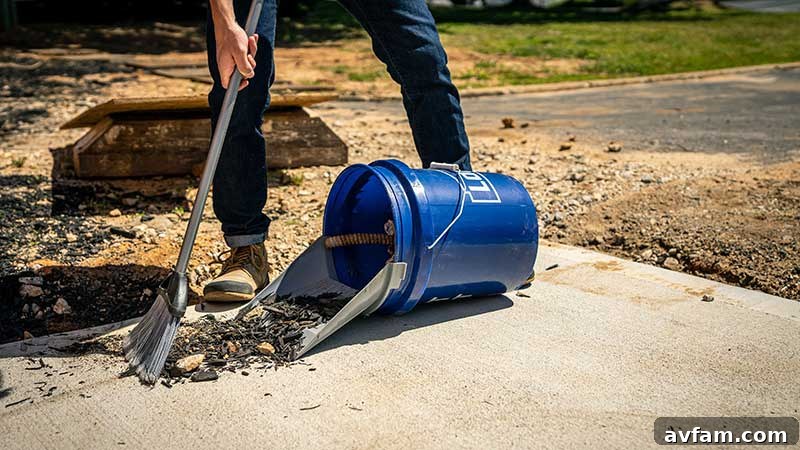
Since we don’t own a wood chipper, managing large branches requires an additional step. We use our chainsaw to cut down these larger sections into more manageable pieces that fit neatly into our weekly yard refuse bin. This process, while effective, is slow and gradual, as we can only fill one bin per week. For instances where significant amounts of large debris accumulate, we often hire day laborers to efficiently haul away all yard waste in a single, concerted effort, saving us considerable time and labor.
Establishing a Consistent Tree Trimming Schedule
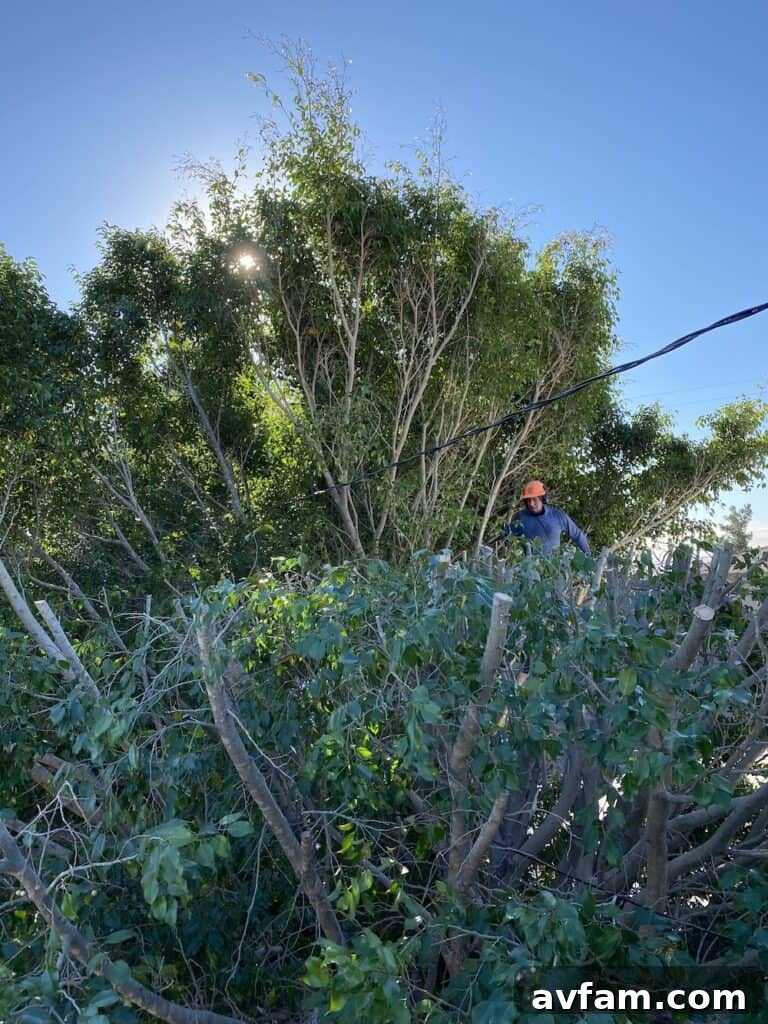
Now that our sprawling “jungle” has been brought back under control by professional services, establishing and adhering to a consistent tree trimming schedule is paramount. We’ve integrated our trimming tasks into our weekly watering routine, dedicating a small amount of time each week to address growth. This proactive approach ensures our trees and hedges remain tidy and prevents them from reverting to an overgrown state. By tackling small amounts of growth regularly, we can conveniently dispose of the resulting yard waste in our weekly refuse collection, avoiding overwhelming accumulations.
The prospect of significant, neglected tree maintenance can be incredibly daunting, often preventing homeowners from initiating any work at all. However, our experience has shown that investing in professional tree services to initially bring our yard under control was money exceptionally well spent. This foundational work eliminated the intimidating backlog and provided us with a manageable starting point. With the right tools now at our disposal, we possess the capability and confidence to maintain our landscape throughout the year. While we anticipate needing professional intervention every couple of years for major topping and shaping, their future tasks will be considerably simpler and, consequently, more cost-effective thanks to our consistent upkeep.
The Benefits of Regular Tree Maintenance for Better Health
Beyond aesthetic appeal and growth management, the paramount concern for our trees is their long-term health. Regular, judicious pruning plays a critical role in fostering robust tree vitality. By systematically removing dead, diseased, or damaged branches, a tree can redirect its precious energy resources away from supporting non-viable parts and toward vigorous, healthy growth. This not only allows the tree to flourish and develop a more lush, full canopy but also significantly reduces its susceptibility to common issues.
Removing dead wood is a vital preventative measure against tree rot, which can quickly spread and compromise the tree’s structural integrity. Furthermore, decaying branches can become breeding grounds or entry points for various insect infestations and fungal diseases. A healthy, well-maintained tree possesses a stronger natural defense system, making it more resilient against environmental stressors and pests. The aesthetic improvements, enhanced property value, and peace of mind derived from a healthy landscape are all invaluable benefits of committed tree care.
The next major project on our yard’s agenda involves the removal of approximately four remaining tree stumps. We’ve already engaged our trusted tree trimming service to return at a later date to tackle this final phase of landscape optimization. We look forward to sharing our experience and their techniques for efficient stump removal in an upcoming article.
As we continue our journey of diligent tree and yard maintenance, we are committed to enriching this article with additional tips, advanced techniques, and practical advice to assist fellow homeowners in cultivating and preserving their beautiful, healthy landscapes.