
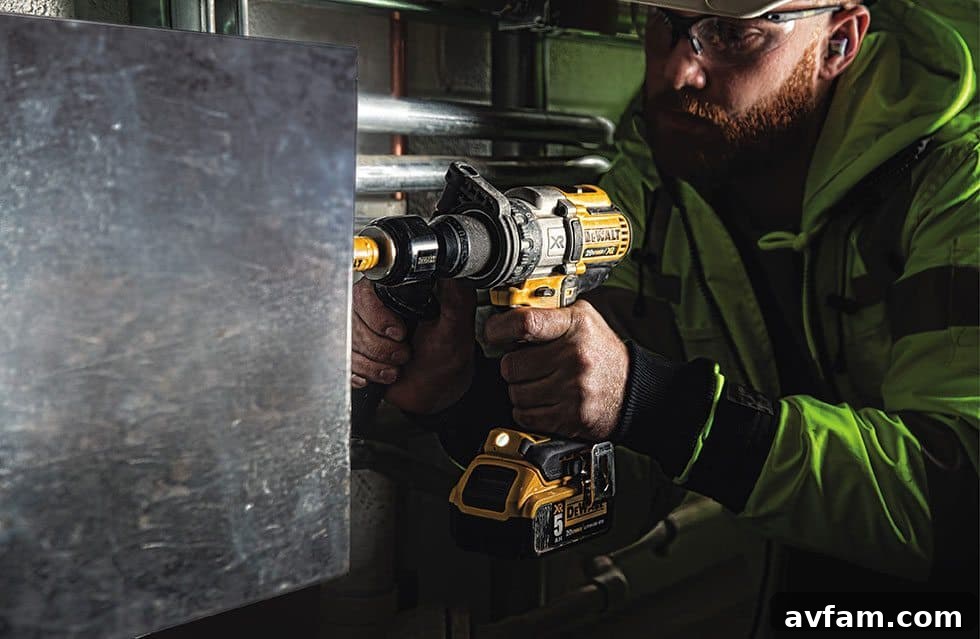
The landscape of power tools has undergone a revolutionary transformation, with cordless drills emerging as quintessential instruments in both professional workshops and home garages. It wasn’t long ago that the standard bore of the industry comprised primarily A/C powered corded models, tethering users to outlets and limiting their mobility. Today, the formidable capabilities of professional-grade cordless drill/drivers not only match but often surpass the raw power of their corded predecessors, offering unparalleled convenience and all-day runtime. This incredible evolution is a testament to relentless innovation in battery technology and advanced electronics, which continue to push the boundaries of power, performance, and efficiency. The fundamental mechanics behind how a drill operates have been dramatically refined, making these tools marvels of modern engineering.
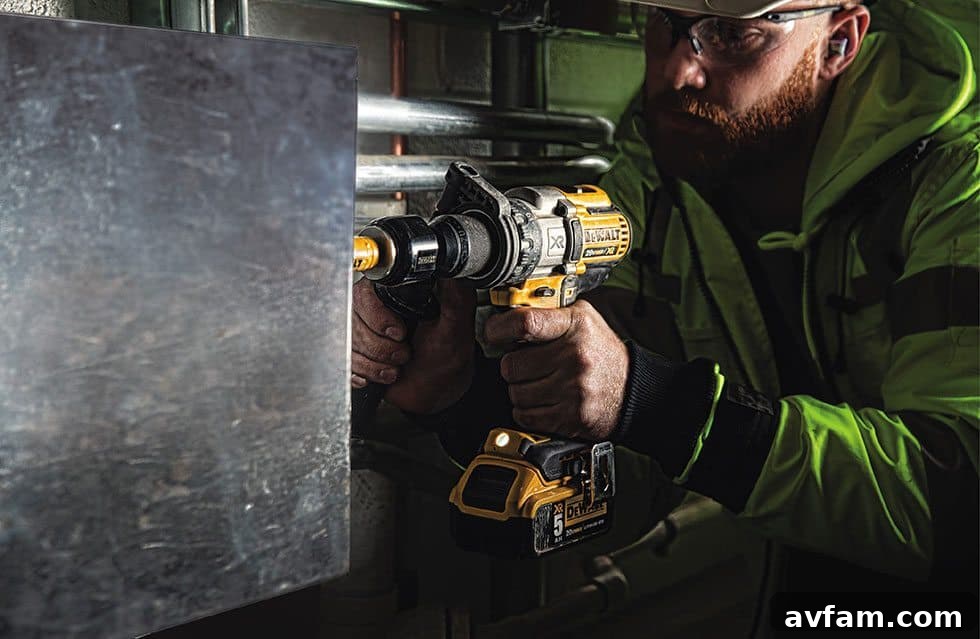
Unveiling the Engineering Behind Your Drill with an Industry Expert
To truly grasp the intricate workings of these indispensable tools, we turned to an authority in the field: Bill Gallagher, Director of Engineering for Drilling and Vertical Fastening at Stanley Black & Decker. With his profound expertise, Bill is at the forefront of innovating cordless tool technology, particularly with Dewalt, a flagship brand within the Stanley Black & Decker family. Their pioneering efforts have consistently challenged conventional limitations, exemplified by the introduction of the revolutionary Flexvolt tool platform and the industry’s first-ever cordless table saw and 12-inch miter saw. Such innovations underscore the significant strides made in battery and motor technology, setting new benchmarks for cordless power and versatility.
The Fundamental Principle: Energy Conversion for Rotational Power
At its core, a drill is an ingeniously designed machine built to convert electrical energy into concentrated rotational torque. This mechanical energy is then precisely applied to accomplish a multitude of tasks: boring precise holes, tapping threads, or tightening and loosening fasteners. Essentially, any application demanding controlled rotation can be efficiently handled by a modern drill. Understanding this fundamental energy conversion is the first step in appreciating the sophisticated systems that make contemporary cordless drills so powerful and versatile.
The Power Source: The Intelligence of Lithium-Ion Batteries
For cordless drills, particularly those powered by advanced lithium-ion batteries, the energy conversion process involves a critical preliminary step where the tool’s integrated intelligence actively manages battery health and user safety. Lithium-ion batteries generate voltage through a precisely controlled chemical reaction occurring between a positive and negative electrode within each cell. To achieve the substantial voltage and current required by the motor for high torque and RPM output, multiple individual battery cells are meticulously arranged in a combination of series and parallel connections within the battery pack. This sophisticated arrangement not only amplifies power but also ensures optimal energy delivery to meet the demanding requirements of various drilling and driving applications.
Advanced Battery Management Systems: Ensuring Safety and Longevity
Beyond simply providing power, modern cordless drill battery packs incorporate highly sophisticated electronics programmed to constantly monitor battery conditions. This monitoring occurs both before the drill commences operation and continuously throughout its use. The Battery Management System (BMS) rigorously tracks critical parameters such as overall battery voltage, voltage differences between individual cells, internal temperature, and the total current being supplied by the entire pack. These real-time diagnostics are paramount for protecting the battery cells during intense operation, thereby ensuring both user safety and the long-term longevity and performance of the battery. Without such intelligent management, the high energy density of lithium-ion batteries could pose significant safety risks, and their lifespan would be drastically reduced.
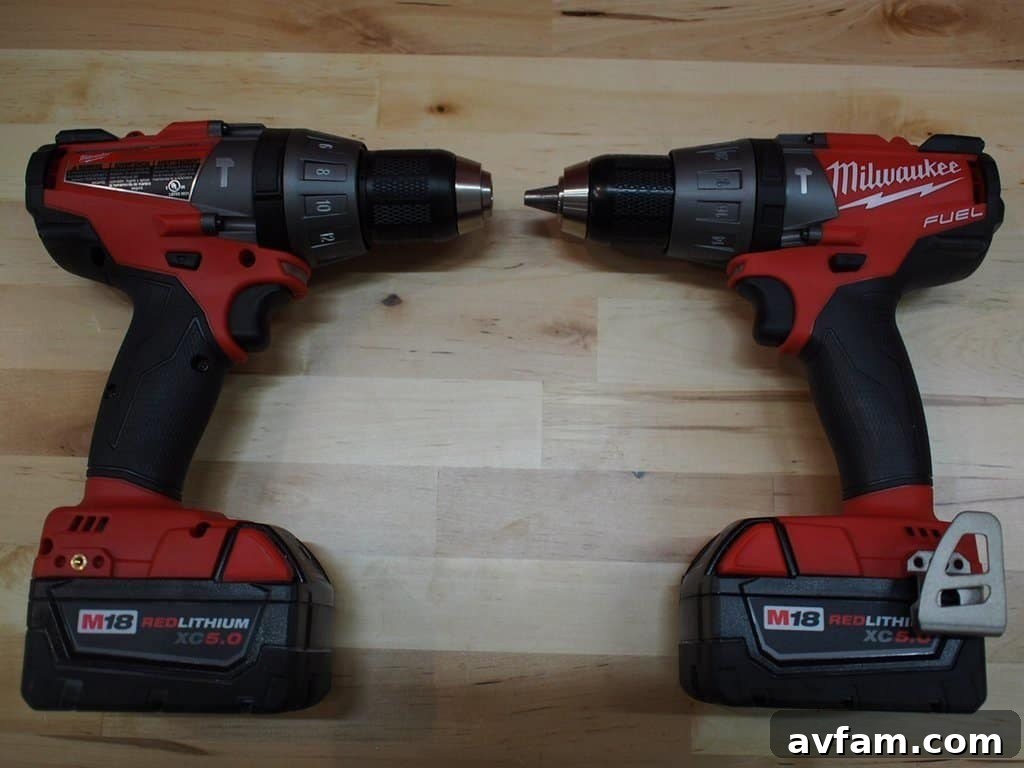
Mastering Motor Control: The Role of the Trigger and PWM
Once the intelligent battery system ensures safe and efficient power delivery, the user takes command through the drill’s trigger. This seemingly simple component is, in fact, a sophisticated interface. Pushing the trigger deeper into the handle doesn’t just turn the tool on; it signals the internal electronics to precisely regulate the power supplied to the motor. This regulation is often achieved through a technique known as Pulse Width Modulation (PWM), which efficiently controls the voltage and current, thereby directly adjusting the motor’s RPM (revolutions per minute) and, consequently, the speed and power of the drill. It is at this stage that the electrical power, having been carefully managed and modulated, is finally transformed into the dynamic rotational power that drives the chuck and its attached accessory.
The Evolution of Motors: Brushed vs. Brushless Technology
A significant leap in drill technology has been the widespread adoption of brushless motors. Traditional brushed motors rely on physical carbon brushes to transfer current to the motor’s commutator, creating friction and heat. Brushless motors, by contrast, utilize electronic controllers (often integrated with the PWM system) to commutate the motor digitally. This eliminates the need for brushes, resulting in several key advantages:
- Increased Efficiency: Less friction means less energy loss as heat, leading to longer runtimes per battery charge.
- More Power and Torque: Brushless motors can deliver higher power-to-weight ratios and sustained torque.
- Enhanced Durability: Without brushes to wear out, brushless motors have a significantly longer lifespan and require less maintenance.
- Compact Size: The absence of brushes often allows for a more compact and ergonomic motor design.
- Better Control: Electronic control allows for more precise speed and torque management, enhancing performance across various tasks.
This technological shift represents a cornerstone of modern cordless drill performance, directly contributing to their ability to rival and often surpass corded tools.
The Transmission: Optimizing Speed and Torque
From the motor, the meticulously controlled rotational power is channeled into the drill’s transmission, typically a robust planetary gear system. This crucial component usually offers either two or three selectable gear ratios or “speeds.” The primary purpose of these different gear ratios is to provide distinct speed and torque ranges, allowing the drill to be optimized for a wide array of applications. For instance, tasks requiring significant force, such as driving large self-feed bits into dense wood or operating sizable hole saws, necessitate high torque at low speeds. Conversely, precision tasks like drilling small pilot holes with twist bits in metal or other materials demand high speed with lower torque for efficient and clean results. The ability to select the appropriate gear ensures that the drill operates at peak efficiency and effectiveness for any given job.
Understanding Planetary Gear Systems and Clutch Mechanism
A planetary gear set is renowned for its compact design and ability to achieve high gear ratios. It consists of a central sun gear, multiple planet gears orbiting the sun, and an outer ring gear. By selectively locking or driving different components, multiple speed reductions and torque multiplications can be achieved within a small space. This is precisely why they are ideal for drill transmissions.
Integrated with or alongside the transmission, especially in drill/drivers, is a vital clutch mechanism. This adjustable torque clutch allows the user to pre-set a maximum torque output. Once this pre-set torque limit is reached, the clutch “slips,” preventing the fastener from being over-driven into the material, stripping the screw head, or damaging the workpiece. This feature is indispensable for precision fastening, safeguarding both the material and the fastener, and also protecting the tool and the user from kickback.
The Chuck: The Gripping Heart of the Drill
The final destination for the drill’s rotational power before it reaches the workpiece is the chuck. This critical device is responsible for firmly grasping and securing the accessory – be it a drill bit, screwdriver bit, or hole saw – ensuring that the rotational torque is efficiently transferred without slippage. Most chucks feature three robust “jaws” that clamp down on the round or hexagonal shank of the accessory. These jaws exert hundreds of pounds of clamping force, providing a secure hold even under heavy loads. The design ensures maximum stability and power transfer.
Keyed vs. Keyless Chucks: Convenience Meets Power
Historically, drills utilized “keyed” chucks, where a separate key, often with a bevel gear arrangement, was used to rotate the chuck’s outer sleeve and tighten the jaws. While offering superior gripping power for heavy-duty applications, keyed chucks were less convenient dueable to the necessity of keeping track of the key and the slower bit-changing process. Today, “keyless” chucks are predominant, allowing users to tighten the chuck simply by gripping and rotating the outer sleeve by hand. Internally, keyless chucks feature threads connected to the outer sleeve that mate with corresponding threads on the jaws. Rotating the sleeve translates into an axial movement of the jaws, which, guided by a slight angle (much like a wedge), move forward and inward to clamp securely onto the accessory. Modern keyless chucks have significantly improved their gripping capabilities, making them suitable for most demanding tasks while retaining their convenience.
Conclusion: The Power in Your Hands
Once you’ve expertly attached your chosen bit, armed with a deeper understanding of the sophisticated engineering beneath your fingertips, you are truly ready to embark on your drilling or driving task. From the chemical energy within the lithium-ion battery to the precision grip of the chuck, every component of a modern cordless drill is a testament to advanced design and relentless innovation. These tools are far more than simple power devices; they are complex, intelligent machines engineered to deliver maximum performance, safety, and efficiency. They empower users to tackle projects with confidence, knowing that the power and precision are literally in their hands, ready to transform electrical energy into productive motion.