
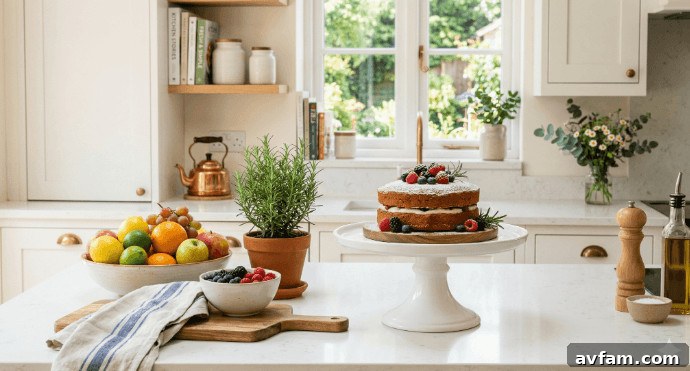
The kitchen counter is the busiest surface in your home, yet it often receives the least design attention. It becomes a catch-all for mail, chargers, loose fruit, and appliances that never return to their cabinets. With a few deliberate choices and some editing, your kitchen counter can look tidy and purposeful every day, not just when guests arrive.
The key is not buying more things but curating what you already own and assigning each item a functional and visual role. This practical guide outlines counter styling techniques that work in real kitchens rather than staged photo shoots.
Start with a Clear Surface and Work Backwards
Before you begin styling, remove everything from the counter. Seeing a clear surface helps you decide deliberately what deserves to stay rather than defaulting to what was there before.
For each item you consider returning, ask three questions: Is it used at least once a week? Does it have a defined home elsewhere if it doesn’t need to sit out? Does it contribute visually through color, texture, or shape? If an item fails two of these, it probably belongs in a drawer or cabinet.
This may feel strict, but it is the most effective step before spending money. A counter with a few intentional objects looks far better than one overloaded with items competing for attention.
Group Items in Odd Numbers and Vary the Height
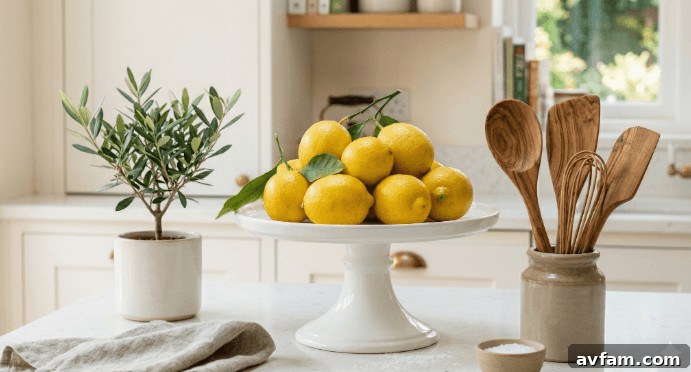
Designers favor odd-number groupings because they create a dynamic, natural composition. Two objects can feel flat; three objects, especially at different heights, form a focal point and guide the eye through the arrangement.
Height variation is often overlooked. When everything sits at the same level, even a small collection reads as clutter. Introducing a taller element—such as a propped cutting board, a small plant, or a pedestal—adds dimension and balance.
A simple white cake stand is one of the most versatile tools for counter styling. It elevates smaller items like a fruit bowl, a candle, or a stack of napkins, creating the height contrast the grouping needs. White reflects light, which helps the counter feel open and airy even when in use.
Use the Triangle Rule to Anchor Your Layout
The triangle rule, borrowed from floral design and photography, translates neatly to counters. Position three anchor items to form a loose triangle rather than a straight line: the tallest piece at the back or to one side, a medium-height piece opposite, and the smallest element in front.
This principle scales from a short stretch of countertop to a full island because it relies on spatial relationships. A tall olive oil bottle, a medium wooden salt cellar, and a small ramekin of salt follow the triangle rule just as a propped cutting board, a cake stand with fruit, and a small herb pot do.
With the triangle established, secondary items can fill the surrounding negative space without needing their own strong visual logic. The anchor triangle keeps the composition coherent.
Bring in One Natural Element
Kitchens are dominated by hard surfaces—stone, metal, glass, and ceramic. Adding a single organic element softens the look and makes the space feel lived-in. It doesn’t take much.
Fresh fruit is the simplest choice and is useful. A bowl of lemons or a cluster of figs on a cake stand serves as decor until you need them for cooking. Small potted herbs add color, scent, and function. Even a single stem in a bud vase beside the coffee station introduces warmth.
Treat the natural element as part of the composition. If you display fruit, pick a single variety or stick to one color family. A mixed bowl of apples, bananas, and oranges reads as leftover groceries; a bowl of green apples or mixed citrus looks intentional.
Edit Seasonally, Not Constantly
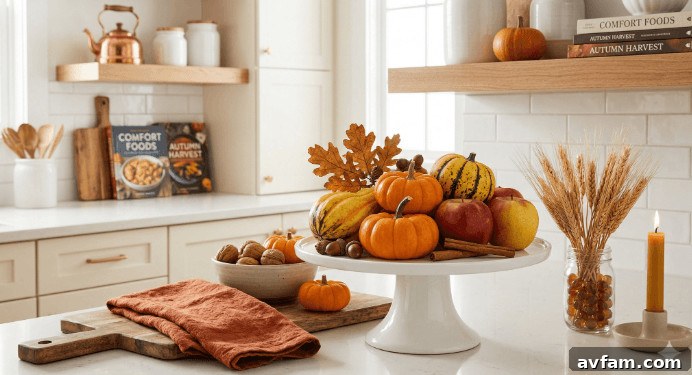
Keep your counter fresh by treating it like a seasonal wardrobe. You don’t need weekly changes, but swap a few accent pieces two or three times a year to avoid a tired look.
In spring and summer, favor lighter colors, fresh greenery, and bright fruit. In autumn and winter, introduce warmer tones through wood, seasonal produce, or a small candle grouping. Keep your base layout—the triangle, height variation, and neutral anchors—consistent; only the accents rotate.
A neutral piece like a white cake stand is ideal for seasonal edits because it complements varied accents. Changing what sits on it creates a new look without buying new items.
The One Rule That Ties Everything Together
Every well-styled counter shares one important feature: clear surface around the arrangement. Not a spotless expanse, but visible breathing room separating the styled grouping from the rest of the workspace. That negative space tells the eye the arrangement is intentional, not merely organized clutter.
If the composition feels off despite good items and varied heights, the issue is usually lack of breathing room. Pull the grouping slightly tighter, then clear a few inches around it. The result is immediate and noticeable.
Effective counter styling rewards restraint. The aim is not a perfectly curated showroom but a kitchen that feels welcoming, functional, and genuinely yours whenever you enter it.
Ready to upgrade your kitchen space? Read more practical home and kitchen ideas at charlesandhudson.com/kitchen/