
A Timeless Haven of Craft: John Lewis’s Primitive Woodshop in Brighton, CO
Step into a world where craftsmanship reigns supreme, where the whispers of history mingle with the scent of sawdust and the rhythmic scrape of a hand plane. Nestled in Brighton, Colorado, John Lewis’s extraordinary woodshop isn’t just a place of work; it’s a living testament to the enduring beauty of traditional woodworking. This is a space so rich in character and authentic artistry, it would undoubtedly make even the most seasoned modern woodworkers like Norm Abram pause in admiration. John Lewis dedicates himself to the art of hand-made chair making and constructing primitive-style furniture, breathing new life into reclaimed materials and time-honored techniques.
An Authentic Setting: The 1800s Barn Transformed
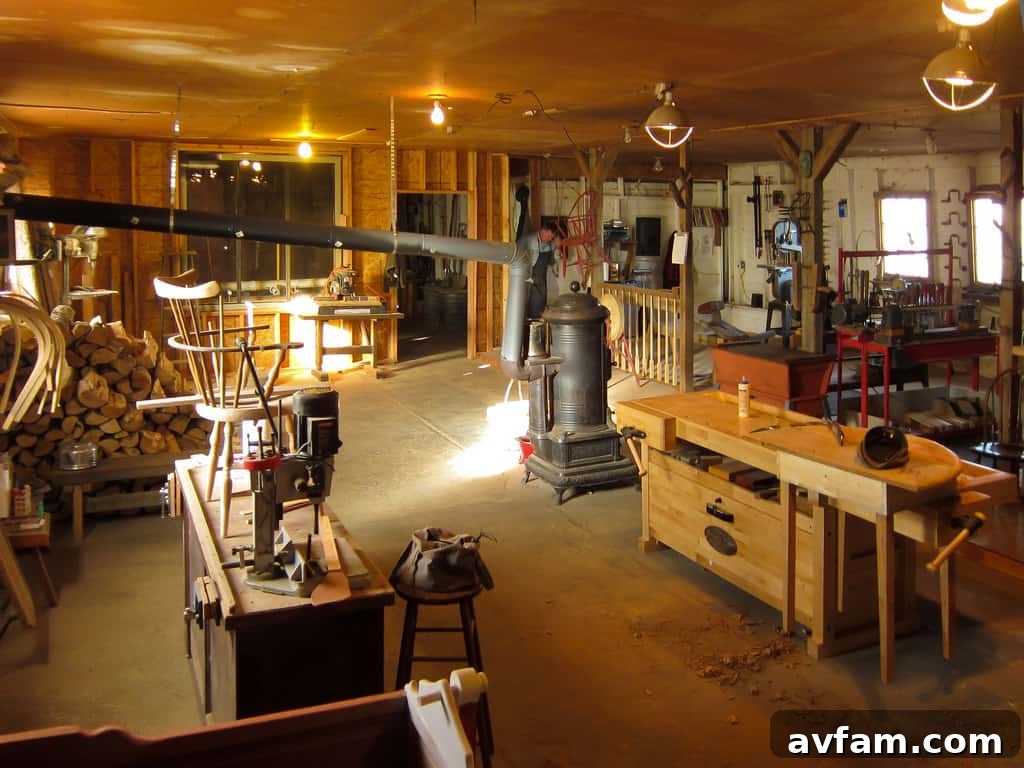
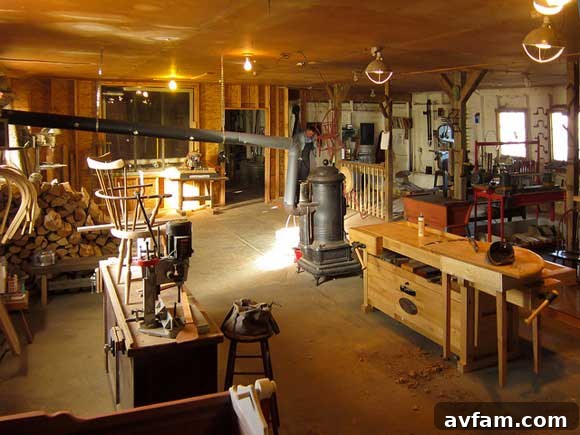
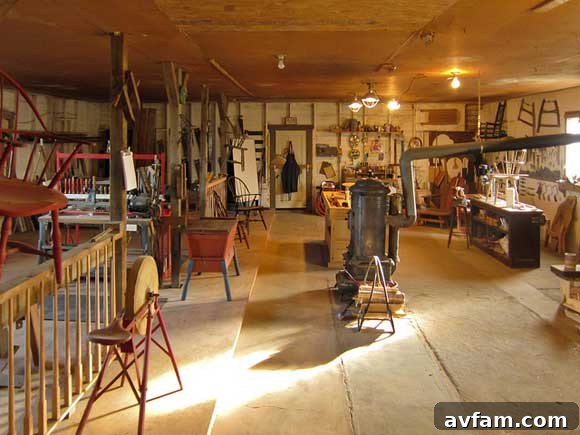
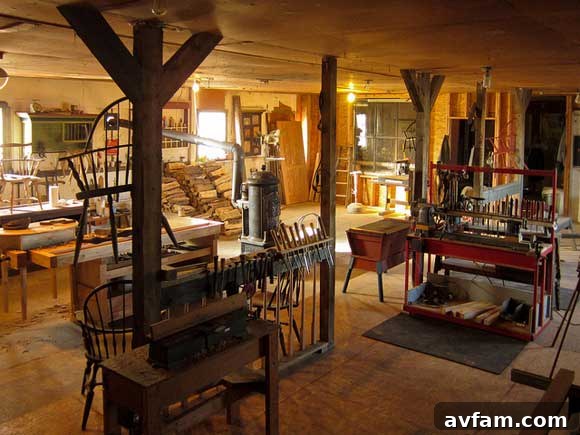
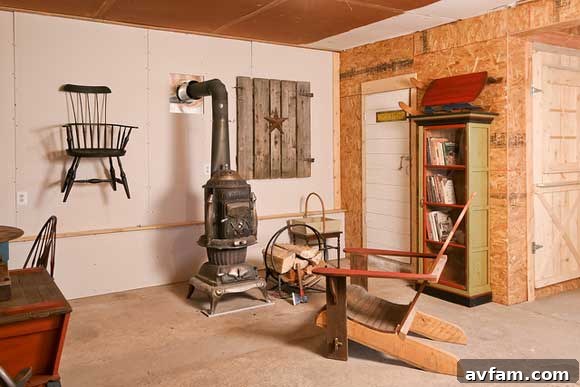
The very foundation of John’s craft lies within the walls of a partially renovated 1800s barn. This historic structure, with its sturdy timbers and weathered facade, provides the perfect backdrop for his pursuit of primitive woodworking. The renovation itself was a thoughtful and deliberate process, focused on preserving the barn’s original spirit while making it functional for modern-day artisanal work. Central to this transformation was the careful installation of an exquisite 1890s base burner stove, which serves not only as a vital source of warmth during the chilly Colorado winters but also as a charismatic focal point, casting a comforting glow and radiating the nostalgia of a bygone era. Beyond this, the renovations involved meticulous insulation work and patching enough of the barn’s venerable holes to ensure unwanted avian visitors like sparrows remained outside, allowing a peaceful environment for focused creation. Every beam, every crevice of this barn tells a story, contributing to the profound sense of history that pervades the workshop, making it more than just a building—it’s an integral part of the artistic process itself.
The Artisan’s Toolkit: A Legacy of Hand Tools and Traditional Methods
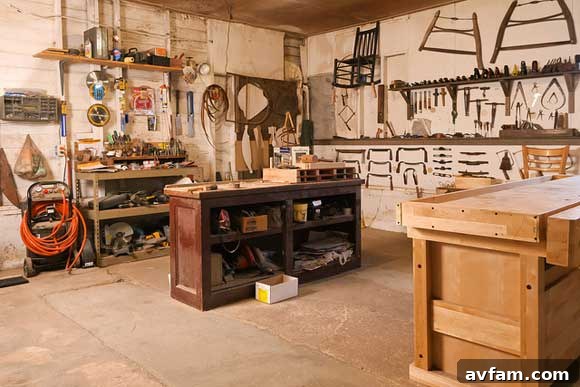
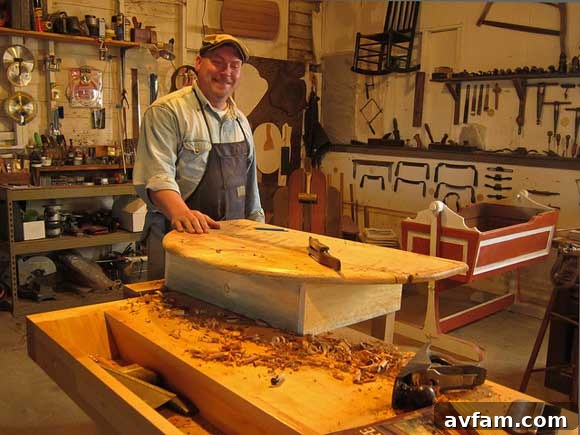
At the heart of John Lewis’s philosophy is an unwavering commitment to authentic tools and traditional methods. He possesses a truly remarkable collection of woodworking instruments dating from the 1800s to the early 1900s. These aren’t mere museum pieces; they are working tools, each with its own history and character, brought to life daily in the service of his craft. His arsenal includes a diverse array of spoke shaves, essential for shaping and refining curved elements like chair legs and spindles; hand drills, used for precise boring without the whine of modern machinery; an assortment of block planes, perfect for detailed trimming and chamfering; and an impressive selection of lathe tools, which he masterfully employs to turn intricate forms. When an antique tool proves too fragile, valuable, or rare for regular use, John meticulously seeks out modern counterparts crafted by artisans who, much like himself, dedicate themselves to making hand-made woodworking tools in the traditional style. This deliberate choice underscores his commitment to preserving the integrity of historical techniques. The contrast with contemporary woodshops is striking: the only power tools you’ll find in John’s domain are his lathe, utilized for the turning of chair components and other intricate forms, and a robust table saw. However, even the table saw’s role is strictly limited to breaking down large, unwieldy pieces of raw material into manageable sizes, after which the painstaking work of shaping and refining falls back to the skilled hands and traditional tools. This dedication to manual processes ensures that every piece of furniture created carries the indelible mark of true craftsmanship, infused with patience and precision.
A Sanctuary of Serenity: Disconnecting to Create
In an age dominated by constant digital connectivity and the relentless hum of the internet, John Lewis’s woodshop offers a profound and much-needed escape. There is no internet access here, no flickering screens or notifications to disrupt the focused quiet. Instead, the workshop is a haven for intellectual exploration and manual skill, replete with an extensive library of books. These treasured volumes cover everything from the intricate nuances of classic Windsor chair making to the foundational principles of primitive woodworking and furniture design. Browsing through these richly illustrated texts, artisans can delve deep into centuries of accumulated knowledge, drawing inspiration and instruction directly from the masters of the past. The environment John has cultivated goes far beyond merely functional; it is deliberately designed as a relaxing, almost therapeutic space. This ethos highlights a fascinating truth about human nature: the profound sense of calm and rejuvenation derived from engaging in meaningful, tangible work. It might seem paradoxical, but spending ten hours in the shop, meticulously crafting a cradle for a friend’s new child, can be infinitely more soothing to the soul than any lavish spa treatment or high-tech entertainment system could ever offer. The rhythmic sounds of tools, the tactile connection with natural materials, and the sheer satisfaction of creating something beautiful and enduring with one’s own hands provide a unique form of meditation, grounding the individual in the present moment and fostering a deep sense of accomplishment.
Echoes of the Past: Reclaiming More Than Just Wood
We often find ourselves romanticizing the “good old days,” sometimes to an extent that historical reality doesn’t quite warrant. Yet, stepping into a space like John Lewis’s woodshop makes it incredibly easy to understand this allure. While life in the late 1800s was undoubtedly challenging and far from a utopian paradise, there are undoubtedly invaluable elements from that era that our modern culture has, perhaps inadvertently, allowed to fade into obscurity. This woodshop serves as a vibrant bridge to those forgotten aspects – a connection to a time when quality, durability, and the human touch were paramount in every crafted item. It reminds us of a period when objects were made to last, passed down through generations, and imbued with the stories of their makers. John’s commitment to primitive woodworking is more than just an aesthetic choice; it’s a re-engagement with a way of life that valued patience, resourcefulness, and a profound respect for materials. In his workshop, the very act of creating becomes a subtle form of cultural reclamation, helping us reconnect with parts of our heritage that our fast-paced, disposable society often overlooks without fully comprehending the loss. It’s about understanding the intrinsic value of slowness, the quiet dignity of labor, and the deep satisfaction that comes from mastering a craft that has sustained humanity for millennia. This philosophy resonates deeply, offering a powerful antidote to the impersonal nature of mass production and reminding us of what truly enriches the human experience.
The Art of Primitive Furniture: Crafting Enduring Beauty from Reclaimed Materials
John Lewis’s expertise extends beyond simply building furniture; he crafts pieces that possess an inherent soul, born from his deep understanding of primitive styles and his passion for reclaimed materials. Each piece of wood brought into his shop carries its own unique history – perhaps salvaged from an old barn, a discarded fence, or a forgotten piece of structural timber. Rather than viewing these materials as flawed, John sees their imperfections as character marks, weaving them seamlessly into the narrative of the finished product. This approach not only promotes sustainability but also ensures that no two pieces are ever exactly alike. The primitive style he employs is characterized by its robust simplicity, honest joinery, and a timeless aesthetic that eschews fleeting trends. Whether he is shaping the elegant curves of a Windsor chair or constructing a sturdy, rustic table, John’s method respects the innate qualities of the wood, allowing its natural beauty to shine through. The result is furniture that is not only functional but also deeply evocative, each piece telling a story of its origins and the skilled hands that brought it into being. This dedication to crafting enduring beauty from what others might discard is a testament to his vision and his commitment to a sustainable, meaningful form of artistry.
The Calming Embrace of Craft: A Visitor’s Perspective
The unique atmosphere of John’s woodshop is not lost on those who experience it. Sam Ley, a close friend and the talented photographer behind these evocative images, perfectly captures its essence, describing the workshop as “a very calming place, especially in the winter with the old 1800’s stove burning.” This sentiment beautifully encapsulates the profound peace and restorative quality that emanate from this space. Imagine the crisp winter air outside, contrasted by the inviting warmth radiating from the antique stove, its gentle crackling the only sound accompanying the focused work of an artisan. The interplay of light and shadow, the rich scent of various woods, and the deep quiet broken only by the deliberate sounds of hand tools—all contribute to an environment that fosters introspection and creativity. It’s a place where time seems to slow down, allowing both the maker and the observer to fully immerse themselves in the moment, appreciating the beauty of intentional creation. For more detailed insights into John Lewis’s exceptional work and his philosophy, we encourage you to visit his dedicated website, where you can explore his projects and learn more about his traditional woodworking courses.
Share Your Own Winning Workshop!
John Lewis’s woodshop is truly a benchmark for what a dedicated artisan’s space can be – a place where skill, tradition, and passion converge to create not just furniture, but a legacy. If you believe your own workshop embodies a similar spirit of excellence, innovation, or unique traditional craftsmanship – a true “Winning Workshop” that inspires and captivates – we would be thrilled to see it! Please consider sharing your story and photos with us. We are always on the lookout for spaces that celebrate the art of making, highlighting the dedication and creativity of craftspeople everywhere.
All photos generously provided courtesy of Sam Ley.