
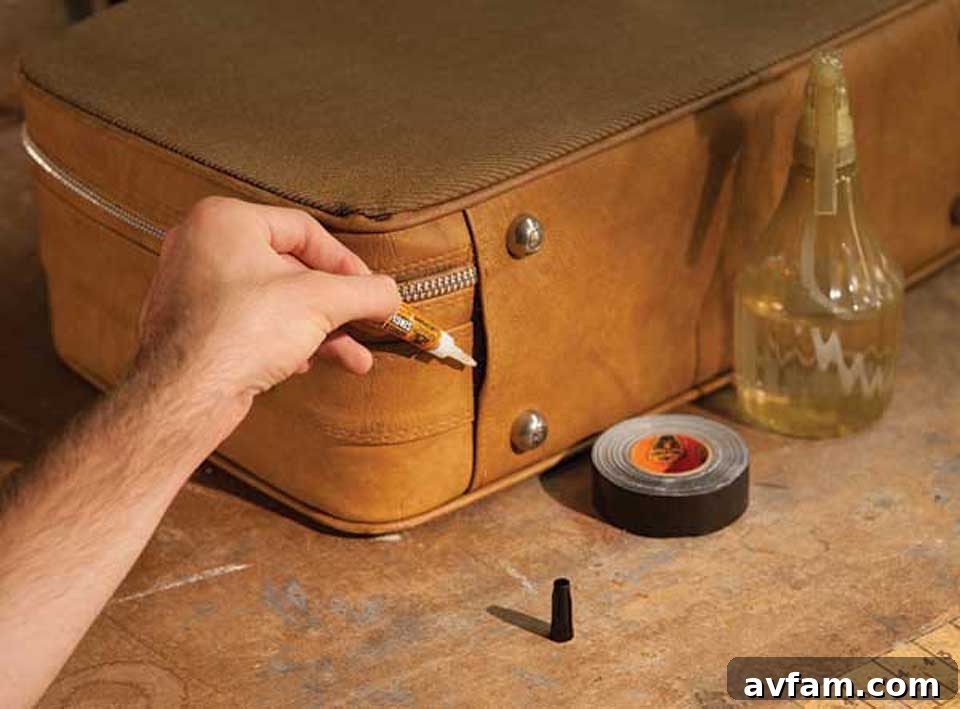
Every dedicated DIY enthusiast knows the thrill of starting a new project, whether it’s a small home repair or an ambitious creative endeavor. Yet, with every project comes the almost inevitable “oops” moment – a piece that won’t hold, a crack that appears, or a joint that just isn’t strong enough. These aren’t the kind of accidents that send you to the emergency room, but rather the minor setbacks that can derail your progress and test your patience. The secret to transforming these moments into minor inconveniences rather than major disasters lies in being prepared with the right tools, and for many situations, the most crucial tool is the right adhesive.
A well-stocked workshop isn’t complete without a versatile arsenal of glues and tapes. Having the best adhesives at your fingertips means you can tackle a wider range of materials, ensure lasting repairs, and execute your projects with professional-grade strength and finish. From quick fixes to heavy-duty construction, the adhesives we’re about to explore are the true workhorses of any DIYer’s toolkit. They are chosen for their flexibility, durability, and effectiveness across countless applications. Get ready to discover the five most essential adhesives that will empower you to save your projects from potential failure and achieve outstanding results every time.
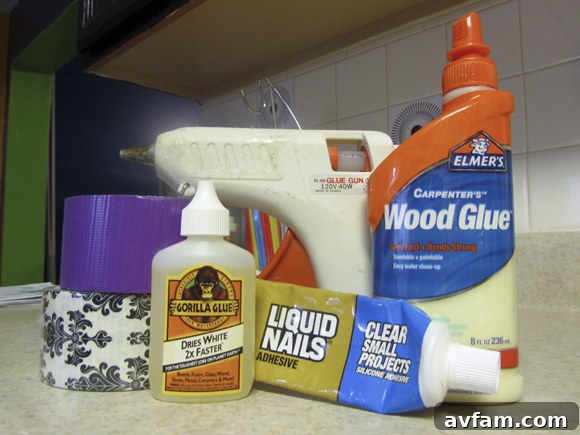
1. Duct Tape: The Universal Problem Solver
When it comes to quick fixes and temporary solutions, nothing quite rivals the legendary status of duct tape. Often cited as the ultimate “fix-all,” this incredibly versatile adhesive tape is a staple in virtually every toolbox and workshop, and for good reason. While its name suggests a primary role in ductwork (a task it’s actually not ideal for due to its lack of airtight sealing), its true genius lies in its sheer adaptability.
Duct tape offers an impressive combination of strong adhesion, flexibility, and tear resistance. It can be used for bundling items, making quick patch repairs on a variety of surfaces, sealing plastic sheeting, reinforcing weakened materials, or even providing a temporary handle or hinge. Its polyethylene coating makes it water-resistant, adding to its utility in both indoor and outdoor scenarios. Modern duct tape has also evolved far beyond its traditional silver-gray, utility aesthetic. Today, you can find it in a vibrant array of colors and patterns, allowing for not just functional repairs but also creative and decorative applications that can match any palette or personal style. Whether you need to secure a loose cable, patch a ripped tarp, or create a makeshift solution in a pinch, duct tape is the immediate go-to for countless scenarios, proving that a temporary fix can often be surprisingly robust.
2. Hot Glue: Instant Adhesion for Crafts and Beyond
Once primarily relegated to the realm of crafting and school projects, hot glue has unequivocally earned its place as a serious contender in the DIY world. Its most compelling feature is its incredibly rapid setting time, making it an indispensable tool for situations that demand instant adhesion. Applied molten from a hot glue gun, it cools and solidifies in mere seconds, creating a strong bond almost immediately. This speed is invaluable when you need to hold pieces together quickly, tack down elements, or create temporary jigs for more permanent gluing solutions.
Hot glue works exceptionally well on a wide range of porous and non-porous materials, including fabric, wood, paper, cardboard, some plastics, and even light metals. It’s perfect for attaching decorative elements, securing loose trim, mending small household items, or even prototyping ideas without waiting hours for glue to dry. While it provides a sturdy fix for many light to medium-duty applications, it’s crucial to remember its limitations. Hot glue is not ideal for high-stress joints, applications exposed to extreme heat (as it can re-melt), or items that will bear significant weight. Always ensure your materials aren’t meltable before application, and for best results, use a high-temperature glue gun for stronger bonds on more robust materials. Its ease of use, mess-free application (when cooled), and quick curing make it a highly practical and often overlooked adhesive for the everyday DIYer.
3. Wood Glue: The Carpenter’s Choice for Unyielding Bonds
For any project involving wood, wood glue is not just an option; it’s an absolute necessity. This heavy-duty adhesive is specifically engineered to create bonds that are often stronger than the wood itself, making it the cornerstone of furniture repair, cabinet making, and virtually any woodworking endeavor. Most standard wood glues are PVA (polyvinyl acetate) based, designed to penetrate the porous fibers of wood and create an incredibly robust, permanent mechanical and chemical bond.
While primarily formulated for wood, its excellent penetration properties mean it also performs exceptionally well on other porous surfaces like fabric, paper, and some types of ceramics. However, achieving maximum strength with wood glue requires patience and proper technique. Unlike hot glue, it needs sufficient clamping pressure to ensure tight joint contact and allow the glue to cure properly, which can take several hours, or even overnight, depending on the type and application. Some wood glues are water-resistant (like Type II or Type III for exterior use), and formulations vary in color, drying clear, yellow, or even brown, which can be a factor if the joint will be visible. Although it demands a longer setting time and clamping, the resulting bond is incredibly durable, resistant to wear and tear, and designed to last for generations. Investing in a quality wood glue and understanding its application nuances is fundamental for any serious DIYer tackling wood-based projects.
4. Clear Liquid Nails (Construction Adhesive): The Mighty Multi-Material Gripper
For projects demanding exceptional strength and a clean, unobtrusive finish, a clear construction adhesive like Clear Liquid Nails (or similar clear-drying heavy-duty adhesives such as Loctite PL Premium Clear) is an invaluable addition to your workshop. This robust adhesive is designed to provide a super strong, permanent bond across a vast array of materials, including wood, metal, concrete, tile, ceramic, plaster, brick, and many types of plastic and foam. Its clear drying formulation makes it ideal for decorative trim, molding, glass, and other applications where aesthetic appeal is paramount and a visible glue line would be undesirable.
What sets this type of adhesive apart from traditional super glues is its superior gap-filling capability, extended working time, and incredible durability. While it begins to set in approximately 10-20 minutes, offering ample time to position your pieces perfectly, it typically requires a minimum of 16-24 hours to fully cure and achieve its maximum bond strength. This longer drying time, while requiring patience, is a significant advantage over super glues, which can bond instantly and unforgivingly. Furthermore, unlike many super glues that can bond fingers together or dry up in their tubes, clear construction adhesives are generally much easier to work with, more forgiving during application, and less prone to sealing themselves shut in storage. It’s the perfect replacement for that old tube of super glue when you need a stronger, more flexible, and aesthetically pleasing permanent bond for bigger, more critical projects, both indoors and out.
5. Gorilla Glue (Polyurethane Adhesive): The Expanding Powerhouse
Often hailed as the “mack daddy” of adhesives, Gorilla Glue (referring specifically to its original polyurethane formula) represents the pinnacle of bonding strength and versatility, bordering on epoxy-level adhesion once fully cured. This unique adhesive stands out due to its incredible expansion properties; it typically expands to three times its applied amount as it dries, filling gaps and voids to create an exceptionally tight and strong bond. This expansion is activated by moisture, meaning a slightly damp surface is often beneficial for optimal performance, though too much moisture can cause excessive foaming.
Gorilla Glue excels at bonding dissimilar materials, making it a go-to for challenging repairs where other glues might fail. It works exceptionally well on wood, stone, metal, ceramic, foam, glass, and more. Its waterproof and temperature-resistant properties make it ideal for both indoor and outdoor projects, from repairing broken garden ornaments to securing loose outdoor tiles. However, its powerful nature requires careful handling. Due to its expansion, clamping is absolutely essential during the 30-60 minute drying period (though full cure takes 24 hours) to prevent pieces from separating and to control squeeze-out. The glue dries to a clear-white or light amber color, meaning any excess will be highly visible. Therefore, precise application and immediate cleanup of any squeeze-out are crucial. While not for casual projects that require a delicate touch, for robust, heavy-duty repairs and constructions where an unyielding, waterproof bond is paramount, polyurethane-based Gorilla Glue is simply unrivaled.
Choosing the Right Adhesive for Your Project
With such a diverse range of powerful adhesives available, selecting the perfect one for your specific task can seem daunting. The key is to consider several factors before you even open a tube or unroll a tape. First, identify the materials you are bonding. Are they porous (like wood, fabric, paper) or non-porous (like metal, glass, hard plastics)? Some glues excel on one type but struggle with the other. Second, consider the required strength and durability. Is it a light-duty craft, a temporary fix, or a structural repair that needs to withstand significant stress, weight, or environmental exposure? Third, think about the drying and curing time. Do you need an instant bond, or can you afford to clamp and wait for several hours? Fourth, evaluate the final appearance: does the glue need to dry clear, or will the joint be hidden? Lastly, consider the environment – will the project be exposed to moisture, extreme temperatures, or UV light?
Matching the right adhesive to the job is an art that comes with practice, but by answering these fundamental questions, you can significantly narrow down your options and ensure a successful outcome. Having a variety of these essential adhesives on hand will equip you to tackle almost any bonding challenge that comes your way.
Safety and Storage Tips for Adhesives
Working with adhesives often involves chemicals that can be harmful if not handled correctly. Always work in a well-ventilated area to avoid inhaling fumes. Wearing gloves is highly recommended to protect your skin from contact, especially with strong glues like super glue or polyurethane adhesives. Eye protection is also crucial to prevent accidental splashes. Read the manufacturer’s instructions and safety data sheets for specific precautions related to each product.
Proper storage is vital to maximize the shelf life and effectiveness of your glues. Most adhesives should be stored in a cool, dry place, away from direct sunlight and extreme temperatures. Ensure caps are tightly sealed to prevent air exposure, which can cause glues to dry out or cure prematurely in their containers. Some adhesives, like hot glue sticks, have a very long shelf life, while others, like opened super glue or certain polyurethane glues, may have a shorter lifespan once exposed to air or moisture.
Bonus: Essential Gunk Removers
Despite our best efforts, accidents happen, and sometimes adhesives end up where they shouldn’t be – on your skin, tools, or surrounding surfaces. Having the right gunk remover on hand can save a lot of frustration and potential damage. For many general-purpose glues and tapes, especially if caught before they fully cure, simple rubbing alcohol can be effective on non-porous surfaces. For stronger, cured adhesives or particularly sticky residues:
- Mineral Spirits: Excellent for removing oil-based glues, wood glue residue, and even paint from non-porous surfaces and hands. It can leave an oily residue, so a final wipe with soap and water might be necessary. Always test on an inconspicuous area first, as it can damage some finishes.
- Nail Polish Remover (Acetone): This is a powerful solvent effective at dissolving super glue, hot glue, and many other adhesive types. It’s particularly useful for getting glues off skin without the oily feel and strong odor of mineral spirits. However, acetone is very strong and can damage or dissolve many plastics, painted surfaces, and finishes, so use with extreme caution and always test first.
- Specialty Adhesive Removers (e.g., Goo Gone, Goof Off): These products are formulated to tackle a broad range of sticky residues and cured adhesives. They are generally safer for a wider variety of surfaces than pure acetone but still require testing.
Always apply a small amount to an inconspicuous area first to ensure the remover doesn’t damage the surface underneath. With these removers in your arsenal, you can confidently tackle any adhesive mishaps that come your way.
Conclusion
Navigating the world of DIY projects and repairs often means facing unexpected challenges. But with a carefully curated selection of the right adhesives, you can transform potential frustrations into successful fixes and lasting creations. From the quick-grab convenience of hot glue and the universal utility of duct tape, to the enduring strength of wood glue, the multi-material versatility of clear construction adhesives, and the expansive power of polyurethane glues like Gorilla Glue, each product plays a vital role in a well-equipped DIY workshop.
Being prepared with these essential bonding agents ensures that you’re not just reacting to problems, but proactively empowering your projects with superior strength, durability, and a professional finish. So, take the time to stock your workshop, understand the strengths and weaknesses of each adhesive, and embrace the confidence that comes with knowing you have the right solution for nearly any bonding task. What are your personal favorite go-to glues and adhesives that have saved your projects and repairs? Share your indispensable bonding secrets with fellow DIYers in the comments below!