
Rediscovering Aerial Photography: How 1905’s Captive Balloons Foreshadowed the Drone Era
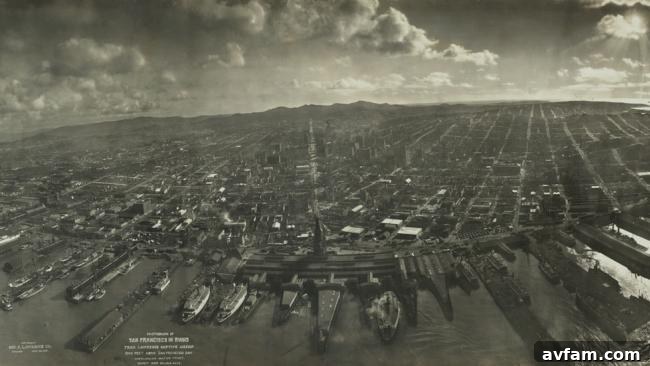
The human desire to view the world from above is as old as civilization itself. From soaring birds inspiring mythological tales to Leonardo da Vinci’s flying machine sketches, the pursuit of an elevated perspective has always captivated our imagination. While today we readily associate aerial views with sophisticated drones and satellite imagery, a fascinating glimpse into the nascent stages of this ambition can be found in a surprising place: a 1905 article from Popular Mechanics. This century-old publication extolled the virtues of what was then a cutting-edge trend: captive balloon photography. Remarkably, the headlines and underlying sentiment of that vintage piece resonate profoundly with discussions surrounding drone photography in our modern era, highlighting a timeless spirit of innovation and accessibility in capturing elevated perspectives.
The Dawn of Aerial Imaging: A 1905 Revolution
Imagine a world without instant aerial mapping or cinematic drone shots. At the turn of the 20th century, obtaining an elevated photograph was a complex and often expensive endeavor, usually reserved for specialized expeditions or military applications. However, the 1905 Popular Mechanics article heralded a breakthrough that promised to democratize this exciting field. Under the compelling headline, “Within the Reach of Every Photographer, Amateur or Professional — Expense no Longer an Obstacle,” the article outlined a method that would allow virtually anyone to engage in aerial photography using surprisingly simple means. This claim, echoed almost identically by drone manufacturers today, speaks volumes about the enduring human drive to make advanced technology accessible.
The core innovation discussed was the use of a “captive balloon” – a small, tethered balloon designed to carry a camera aloft. The brilliance lay in its simplicity and implied affordability. The article suggested that the experiment was “robbed of almost all of its expense,” making it a viable pursuit for hobbyists and professionals alike. This accessibility was a game-changer, opening up new possibilities for documenting landscapes, urban development, agricultural areas, or even personal property from a fresh vantage point. For a time when photography itself was still a relatively young art form, this was nothing short of revolutionary, fostering a community of pioneers eager to push the boundaries of visual capture.
Unpacking the Captive Balloon Concept: Ingenuity in Simplicity
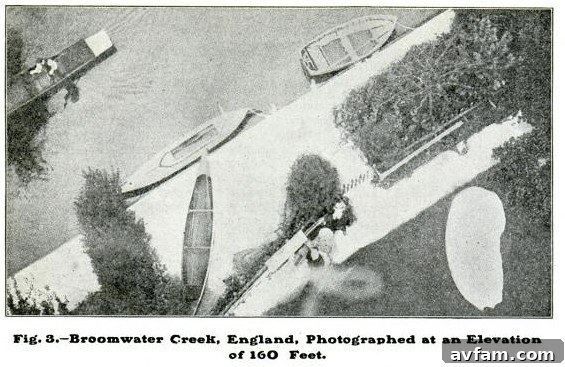
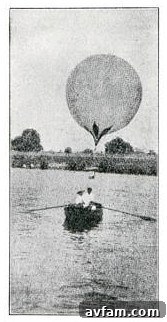
The practicalities of captive balloon photography, as described in 1905, are surprisingly straightforward, yet they required a degree of ingenuity. The principle involved a small, gas-filled balloon attached to a lengthy tether, with a camera mounted beneath it. The camera would be remotely triggered, often by a timing mechanism or a simple electrical impulse sent down the tether. The article highlights the flexibility of this system, noting that “excellent photographs may be taken at an elevation of 150 feet and good ones at 500 feet.” This range allowed for diverse perspectives, from detailed overhead shots of localized areas to broader panoramic views of the surrounding terrain.
The recommendation to use a “long line” was not merely for achieving greater altitudes but also for the sheer joy of discovery. The authors emphasized the “pleasure in experimenting with altitudes and comparing effects and results.” This sentiment perfectly encapsulates the adventurous spirit of early photographers and innovators. Each ascent was an experiment, a venture into the unknown, promising unique visual returns. The ability to control the apparatus, even remotely and somewhat crudely by today’s standards, was a significant advantage over simply launching a camera and hoping for the best. This degree of control meant photographers could strategically position their cameras, aiming for specific subjects or compositions that would otherwise be impossible to capture.
The Allure of Experimentation and the Path to Mastery
One of the greatest appeals of captive balloon photography, as highlighted by Popular Mechanics, was the complete control one could maintain over the apparatus. Unlike kites, which were also used for early aerial photography but were highly dependent on wind conditions, a tethered balloon offered more stability and predictable positioning. This control was crucial for enabling the meticulous experimentation necessary to achieve superior results. The article candidly admits, “Naturally, it requires considerable experimenting to secure good results by this means.” This acknowledgement underscores the hands-on nature of early technological adoption – success wasn’t instantaneous but earned through dedication and trial-and-error.
Photographers had to fine-tune every element: the balloon’s lift, the camera’s weight distribution, the stability of the mount, and the reliability of the trigger mechanism. “The balloon, the camera, conductors and connections must all be carefully adjusted, and probably readjusted, before the apparatus works entirely satisfactorily,” the article advises. This iterative process of adjustment and refinement was not seen as a deterrent but as an integral part of the rewarding journey. For the enthusiast, the challenge itself was part of the appeal, much like early ham radio operators or amateur astronomers. The satisfaction of finally achieving a clear, well-composed aerial photograph after numerous attempts was undoubtedly immense, validating the effort and ingenuity invested.
This method made aerial photography “quite within the realm of the possible for any photographer, amateur or professional, and will repay trying.” The promise of reward for effort, coupled with the relatively low entry barrier, created an exciting new frontier for visual storytelling. It allowed individuals to become pioneers in their own right, contributing to a nascent field that would eventually reshape how we perceive and document our world. The enthusiasm for this emerging technology, driven by its potential for enjoyment and profit, laid foundational groundwork for the evolution of aerial imaging.
From Balloons to Drones: A Century of Aerial Innovation
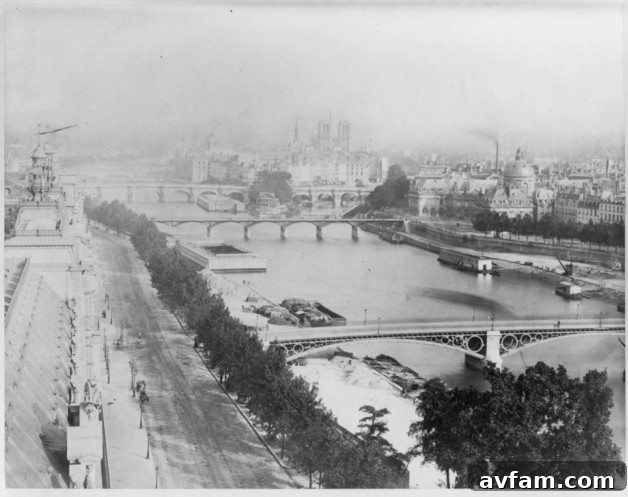
The parallels between the 1905 excitement over captive balloon photography and the modern drone revolution are striking and profound. Both technologies represented a democratization of aerial views, moving previously inaccessible perspectives into the hands of a broader public. The 1905 article’s assertion that “expense no longer an obstacle” for captive balloons mirrors the dramatic reduction in drone costs over the past decade, making high-quality aerial photography accessible to hobbyists and small businesses alike. This shared philosophy of accessibility is perhaps the most enduring legacy connecting these two eras of aerial innovation.
Similarities Across Time: The Enduring Quest for Perspective
Beyond affordability, several other common threads link these seemingly disparate technologies. The spirit of experimentation, for instance, remains a cornerstone. Just as early photographers painstakingly adjusted their balloon setups, modern drone pilots continually experiment with flight paths, camera settings, and editing techniques to achieve their desired shots. The early struggles with stability and control in balloon systems find a modern counterpart in the learning curve associated with mastering drone flight, gimbal operation, and advanced intelligent flight modes. In both cases, the journey from novice to adept requires dedication, practice, and a willingness to troubleshoot.
Both technologies also sparked significant public interest and imagination. In 1905, the idea of a camera floating hundreds of feet above ground, capturing unseen vistas, would have been as awe-inspiring as the first drone footage of breathtaking landscapes is today. This inherent wonder fuels adoption and encourages further innovation, pushing the boundaries of what’s possible with aerial imaging.
Evolutionary Divergence: Technology’s Leap
While the spirit is similar, the technological leap from captive balloons to modern drones is astronomical. The “complete control” afforded by a 1905 balloon system involved careful tether management and a simple trigger. Today, drone pilots benefit from GPS stabilization, advanced gimbals that negate wind effects, high-resolution cameras capable of shooting 4K video, real-time FPV (first-person view) feeds, and intelligent flight modes that automate complex maneuvers. These advancements have transformed aerial photography from a cumbersome, often unpredictable endeavor into a precise, highly controllable art form.
Payload capacity and operational range are also dramatically different. While a captive balloon could lift a relatively bulky early camera, modern drones can carry sophisticated sensors, thermal cameras, and cinema-grade cameras, all while maintaining extended flight times and ranges measured in miles rather than hundreds of feet. Furthermore, the legal and ethical landscape has evolved considerably. While 1905 had few regulations concerning airborne photography, today’s drone operators navigate a complex web of airspace restrictions, privacy concerns, and licensing requirements, reflecting the increased power and pervasive nature of modern aerial technology.
The Enduring Legacy of Early Aerial Photography
The story of captive balloon photography in 1905 is more than just a historical anecdote; it’s a testament to the persistent human drive for innovation and new perspectives. These early pioneers, wrestling with their rudimentary equipment, laid the conceptual groundwork for everything that followed. Their experiments demonstrated the immense value of aerial views for a myriad of applications, from urban planning and surveying to landscape documentation and scientific observation. They proved that the effort to elevate a camera, however challenging, was richly “repaid” by the unique visual insights it provided.
Today, as drones become an increasingly integrated part of our daily lives, it’s important to look back at these origins. The ingenuity required to take a camera aloft over a century ago reminds us that true innovation often starts with simple tools and a grand vision. The spirit of making advanced visual capture “within the reach of every photographer” continues to inspire developers and enthusiasts alike, ensuring that the quest for new vantage points will forever be a dynamic and evolving journey. From the gentle ascent of a gas-filled balloon to the silent hum of a multi-rotor drone, the sky remains an irresistible canvas for our photographic aspirations.