
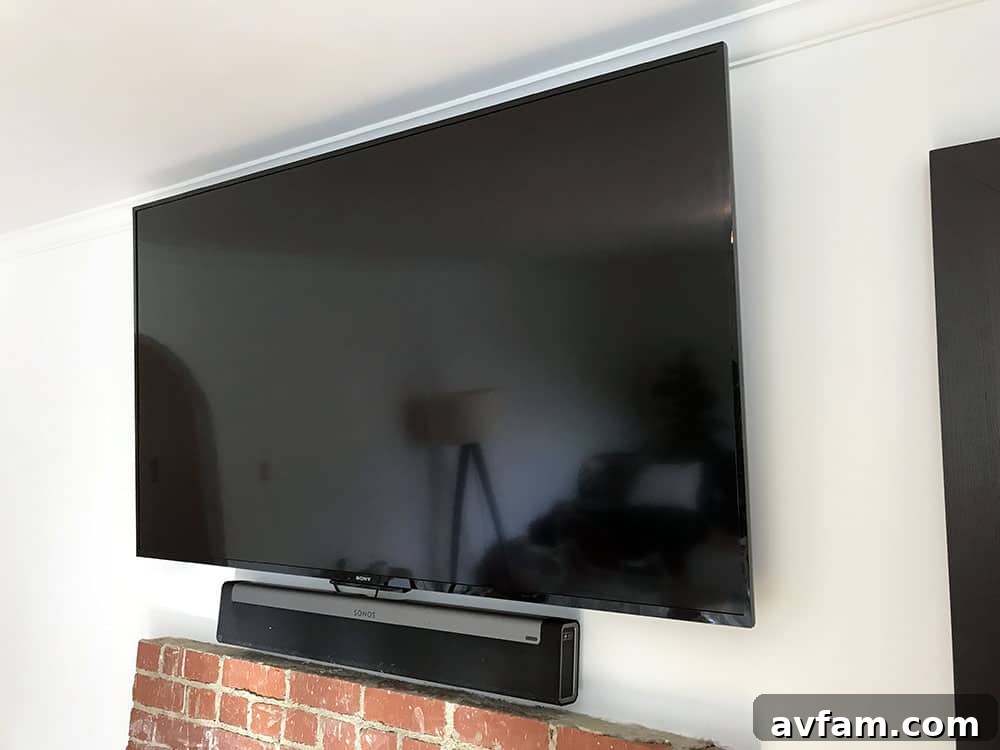
For many years, we, like countless households across the nation, were firmly entrenched in the world of traditional cable television subscriptions. We even experimented briefly with satellite television, only to return to the perceived convenience and reliability of our local cable provider. However, a recent move presented us with a unique opportunity for a fresh start. We decided it was time to take the plunge, to boldly cut the cord from conventional TV, and we haven’t looked back since. This decision to ditch cable has proven to be incredibly rewarding, offering a multitude of benefits that extend far beyond simple entertainment. This comprehensive guide details our journey, the advantages we’ve discovered, and how you too can transition to a more flexible, affordable, and personalized viewing experience.
Reclaim Your Wallet: Significant Savings by Cutting the Cord
One of the most compelling reasons to cut the cord is the potential for substantial financial savings. In our specific area of Los Angeles, our local cable provider held a near-monopoly on service. While the general quality of service was acceptable, the cumulative cost of our package was staggering. A basic subscription, combined with premium channels like HBO, an essential sports package, high-definition (HD) channels, and the indispensable internet service, consistently pushed our monthly bill close to the $200 mark. When we critically assessed our viewing habits, we realized that our consumption of broadcast television was minimal, primarily limited to a handful of live sports events. This stark reality made it clear that we were paying a premium for services we barely utilized.
By making the switch, we’ve managed to significantly reduce our monthly expenses. Even with a carefully curated “patchwork” of diverse media providers, which we’ll detail further, we are consistently saving approximately $50 per month compared to our old cable bill. Over the course of a year, this translates to an impressive $600 in savings – money that can be reallocated to other important household needs, savings, or even more entertainment experiences. This financial liberation is a primary driver for many considering cord-cutting and can make a tangible difference in your household budget. It’s not just about finding cheaper entertainment; it’s about gaining control over your spending and ensuring you only pay for what you truly value.
Understanding the True Cost of Cable vs. Streaming
Traditional cable bills often include a complex array of hidden fees and charges that inflate the sticker price. Beyond the advertised package rates, consumers frequently face equipment rental fees for set-top boxes and DVRs, regional sports network fees, broadcast TV fees, and various taxes. These add-ons can collectively increase your bill by 20-30% or more. With streaming, your costs are generally more transparent and predictable. You subscribe to specific services, each with its own clear monthly fee, and in most cases, there are no hidden equipment rentals or arbitrary surcharges. The primary remaining cost is your internet service, which is a necessity regardless of your TV viewing method, and often becomes the single largest utility bill.
To accurately assess your potential savings, we recommend a simple exercise: take a close look at your last few cable bills. Identify every line item and calculate your total monthly expenditure. Then, research the cost of a high-speed internet plan (if not already separate) and the streaming services that would replace your most-watched cable channels. Compare these figures, and you’ll likely find a substantial difference, making the financial argument for cutting the cord incredibly compelling.
Unleash Unlimited Content: Superior Channel Selection and Flexibility
While our current internet access still comes from the same provider, we are continuously evaluating alternatives to ensure we’re getting the best speed and value. The true revolution, however, lies in how wireless connectivity has transformed our access to entertainment. Through our Roku streaming device, we now have seamless access to virtually any channel, application, or movie we desire, all on demand. We’ve chosen Roku as our preferred streaming platform due to its neutrality as a third-party provider. This insulates us from the potential content limitations that can arise from media disputes or exclusive deals often seen with products tied more directly to specific content ecosystems like Apple, Amazon, or Google.
Our streaming ecosystem began with long-standing subscriptions to Netflix, a pioneer in the streaming world, and Amazon Prime, which bundles streaming video with numerous other benefits. To ensure we didn’t miss out on premium content, we added HBO Now (which has since evolved into HBO Max, then simply Max) for exclusive series like “Game of Thrones.” For live sports and essential network events, we initially opted for Hulu + Live TV. While Hulu + Live TV offered a robust selection, we encountered persistent buffering issues that were incredibly frustrating and inexcusable, especially given our robust internet speeds exceeding 100 Mbps, and the flawless performance of all our other streaming services.
Navigating Live TV Streaming Options
Due to the unresolved buffering problems with Hulu + Live TV, we made the strategic decision to switch to Sling TV, and we couldn’t be happier with the transition. For a competitive monthly fee of $45 (at the time of our switch), we gained access to both the Orange and Blue packages, which collectively encompass almost every major cable channel, alongside essential broadcast networks. We further customized our package by adding a lifestyle and sports bundle to broaden our channel lineup even more. The difference in performance was immediate and significant: Sling TV offered a consistently smooth streaming experience with no buffering whatsoever. We successfully watched major live events like the Super Bowl without interruption. The only minor caveat we encountered was the absence of the Oscars broadcast in our specific viewing area through Sling TV. This is easily remedied by integrating a simple, one-time purchase of an over-the-air (OTA) HD antenna, which provides free access to local broadcast channels like ABC, CBS, NBC, and FOX, ensuring we miss nothing.
Beyond live viewing, Sling TV also boasts a user-friendly cloud DVR feature, allowing us to record shows and watch them at our convenience. We utilized this extensively for major events like the Olympics, finding the interface intuitive for searching, recording, and playing back desired programs. Another significant advantage of consolidating our services through Sling TV was the ability to add HBO directly to our Sling subscription, thus allowing us to cancel our separate HBO Now subscription and further streamline our billing and service management.
The Expanding Universe of Streaming Services
The streaming landscape continues to evolve, offering an unprecedented variety of choices. Beyond the major players we utilize, consumers can explore:
- SVOD (Subscription Video On Demand): Services like Disney+, Apple TV+, Paramount+, Peacock, each offering exclusive original content and vast libraries.
- AVOD (Ad-Supported Video On Demand): Free services like Pluto TV, Tubi, and the free tiers of Peacock and Freevee (formerly IMDb TV), which provide an incredible amount of content at no monthly cost, supported by commercials.
- Additional Live TV Services: YouTube TV, FuboTV (especially strong for sports), and DirecTV Stream (often replicating a more traditional cable feel) offer robust alternatives to Sling TV and Hulu + Live TV, each with unique channel lineups and features.
The key is to tailor your subscriptions to your specific viewing habits, ensuring you get the most value for your money and never feel limited by choice.
Embrace Minimalism: No More Cables or Clunky Boxes
One of the most aesthetically pleasing and practically liberating aspects of cutting the cord is the dramatic reduction in clutter and the simplified setup of our home entertainment system. We recently acquired a new Sony 70-inch television during a Black Friday sale and proudly installed it above our fireplace. Paired with this, we opted for the new Roku Streaming Stick Plus, a remarkably compact device that is self-powered directly by the TV via an open USB port and simply plugs into an HDMI input. The result is an incredibly clean installation: the only visible cables are the power cords for the television and our Sonos Playbar, along with a single optical audio cable connecting the Playbar to the TV for superior sound.
This minimalist approach is truly liberating. Gone are the days of trying to find a discreet spot for a bulky cable box, wrestling with a spaghetti mess of wires, or struggling to configure complex RF remotes. The simplicity is profound. We also made a conscious decision to forego connecting our Blu-Ray/DVD player. In this digital age, any movies we wish to purchase or rent are readily available through platforms like Amazon Prime Video, allowing us to stream content seamlessly from anywhere, eliminating the need for physical media and another piece of equipment.
Streamlined Control and Hardware Evolution
For unified control, we initially utilized a universal Harmony remote (or its accompanying app), which effectively managed our Sony TV, Roku device, and Sonos Playbar. However, we’ve found that for the most intuitive and responsive experience, we often revert to using Roku’s dedicated remote for navigation within the streaming ecosystem, reserving the Harmony for overall system power and volume control.
Our journey wasn’t entirely without its minor technical hiccups. Our initial Roku Streaming Stick Plus experienced some HDCP (High-bandwidth Digital Content Protection) issues, which manifested as a persistent purple warning screen. Roku’s excellent customer service swiftly replaced the Streaming Stick Plus with their more powerful Roku Ultra device, which significantly mitigated the problem. It seems the most consistent trigger for the HDCP issue was streaming YouTube content directly through the Roku. While we investigated alternative solutions, including a Chromecast device, we found ourselves preferring the dedicated remote control experience of the Roku over the app-centric navigation of Chromecast. Understanding and troubleshooting HDCP issues can be a common part of the cord-cutting experience, often requiring firmware updates, trying different HDMI ports, or, as in our case, upgrading the streaming device itself.
Expand Your Entertainment: Multi-Room Viewing Made Easy
The flexibility of a cord-cutting setup extends effortlessly to other rooms in your home. Our plan includes hooking up our old television downstairs, which will also be wall-mounted in an area that, conveniently, lacks space for a traditional cable box. The beauty of the streaming ecosystem is that setting up this second TV is incredibly straightforward. We’ll simply equip it with another Roku device, log into all our existing streaming accounts, and instantly gain access to the same vast library of content available on our main television. There are no additional monthly fees for extra “boxes” or punitive charges for multi-room viewing, which is often the case with traditional cable or satellite providers.
This scalability is a significant advantage, allowing every television in your home to become a fully functional entertainment hub without incurring escalating costs. Whether it’s a basement den, a guest room, or a kitchen TV, adding streaming capabilities is a simple, cost-effective process, ensuring that personalized entertainment is accessible throughout your entire household.
The Verdict: Why Cord-Cutting is the Future of Television
Reflecting on our experience, we genuinely struggle to find a compelling reason for anyone to remain tied to the outdated models of cable or satellite television. For far too long, consumers have been locked into their escalating costs, restrictive contracts, and monopolistic practices. The landscape of media consumption has irrevocably shifted, offering a paradigm where flexibility, personalization, and significant savings are not just possible but readily achievable.
Even for heavy television watchers, the notion of missing out on content is largely a myth. Between the diverse offerings of on-demand streaming services and the robust channel lineups of live TV streaming platforms (often complemented by a free over-the-air antenna for local broadcasts), almost everything you could possibly want to watch is available. The transition empowers you to curate your own entertainment bundle, paying only for the content and services you truly value, thereby dramatically reducing your media viewing bills.
If you’re still hesitant to make the leap, we offer one final piece of advice that can either ease your transition or save you money without even cutting the cord entirely: contact your current cable or satellite provider and explicitly state your intention to cancel your service. Be prepared for their retention department to spring into action. They will often go to great lengths to keep you as a customer, including offering substantial reductions to your monthly bill, significant discounts, or even upgrades to your service at a lower cost. This tactic can either provide immediate financial relief or give you the confidence to eventually make the full switch, knowing the benefits are real and within reach. The future of television is streaming, and it’s a future that promises more choice, more convenience, and more savings for everyone.