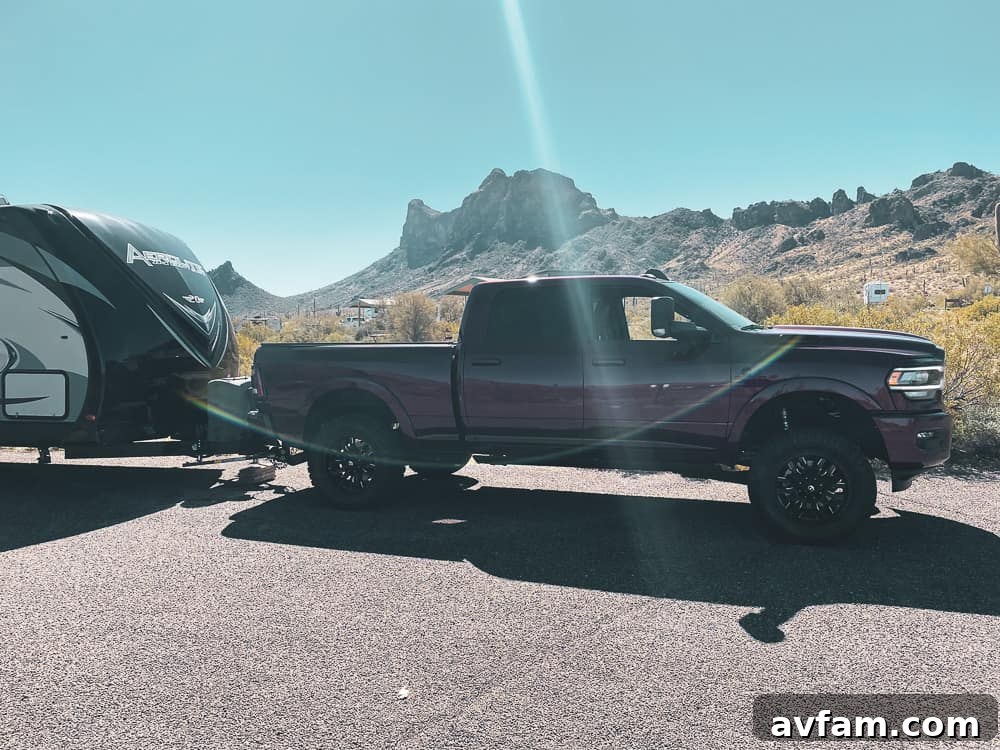
Embarking on the journey of truck ownership, especially with a specific purpose in mind, is an exciting venture. For me, that meant finally acquiring my dream truck: a robust 2020 Ram 2500. This formidable machine wasn’t just a vehicle; it was the foundation for countless weekend adventures, primarily centered around hauling a new travel trailer. Before hitting the open road with our new home-on-wheels, I wasted no time personalizing the Ram to optimize it for my needs, beginning with practical upgrades like a Retrax bed cover for secure storage and a ceramic tint for comfort and privacy. These initial modifications were crucial steps in preparing the truck for its primary role: providing a stable and comfortable towing platform for our family’s future escapades.
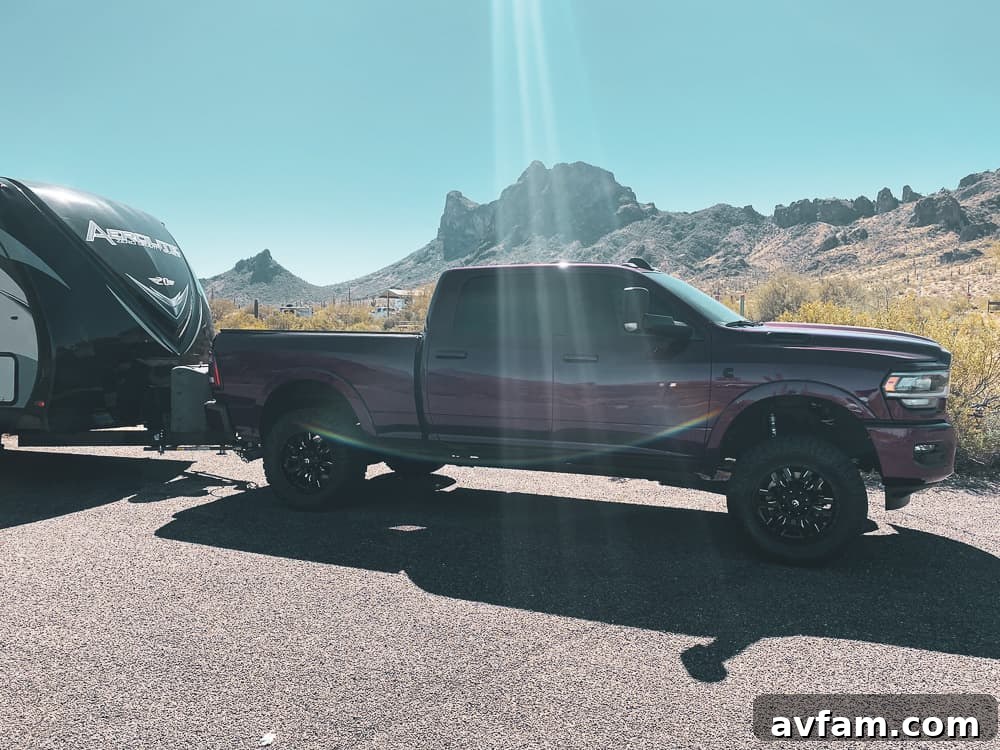
However, after the thrilling purchase of our travel trailer and embarking on a couple of introductory trips, a significant challenge quickly surfaced. Despite diligently employing a high-quality weight-distribution hitch complete with integrated sway bars, my truck’s rear end exhibited noticeable sag under the trailer’s tongue weight. This wasn’t merely an aesthetic concern; the compromised ride height affected steering response, braking efficiency, and overall stability, creating a less-than-ideal and potentially unsafe towing experience. The “bucking” motion, a common issue when towing heavy loads, was also far more pronounced than I had anticipated, even with the advanced hitch setup. It became abundantly clear that to truly unlock the Ram 2500’s full towing potential and ensure maximum safety and comfort for my family, a more robust suspension solution was essential to manage the load effectively.
Elevating Towing Performance with the Air Lift LoadLifter 7500 XL
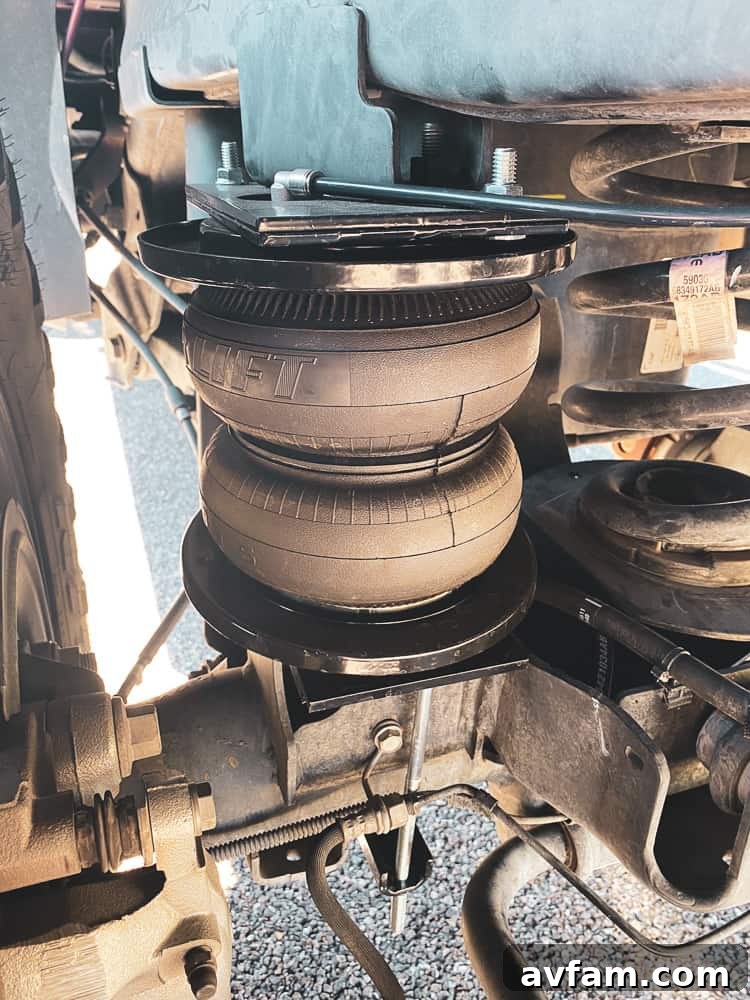
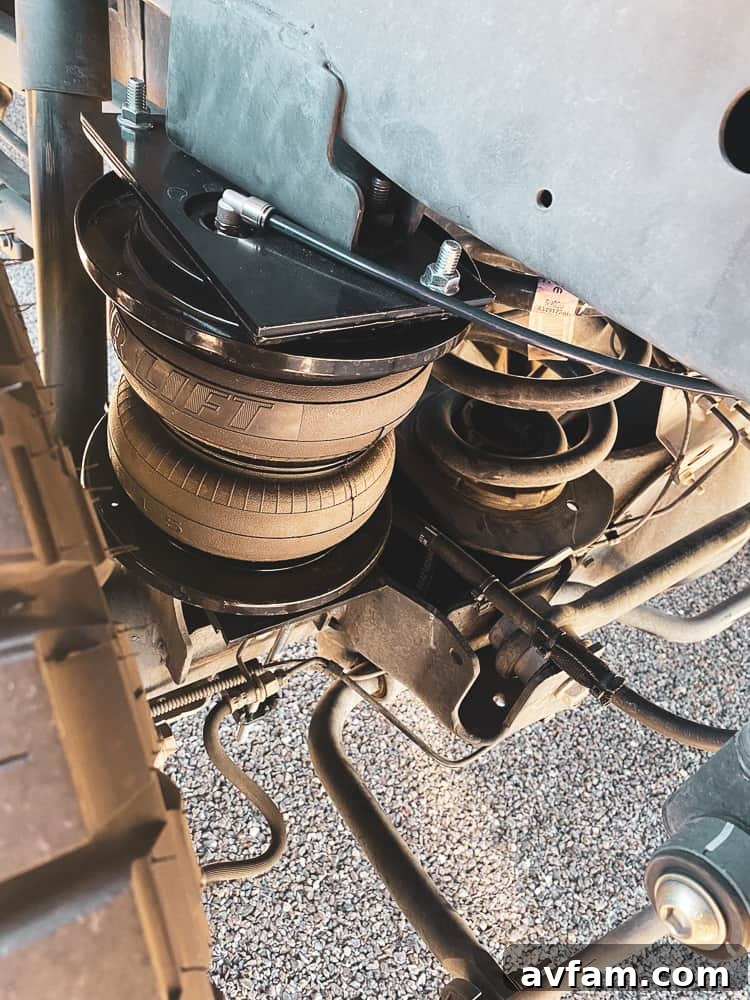
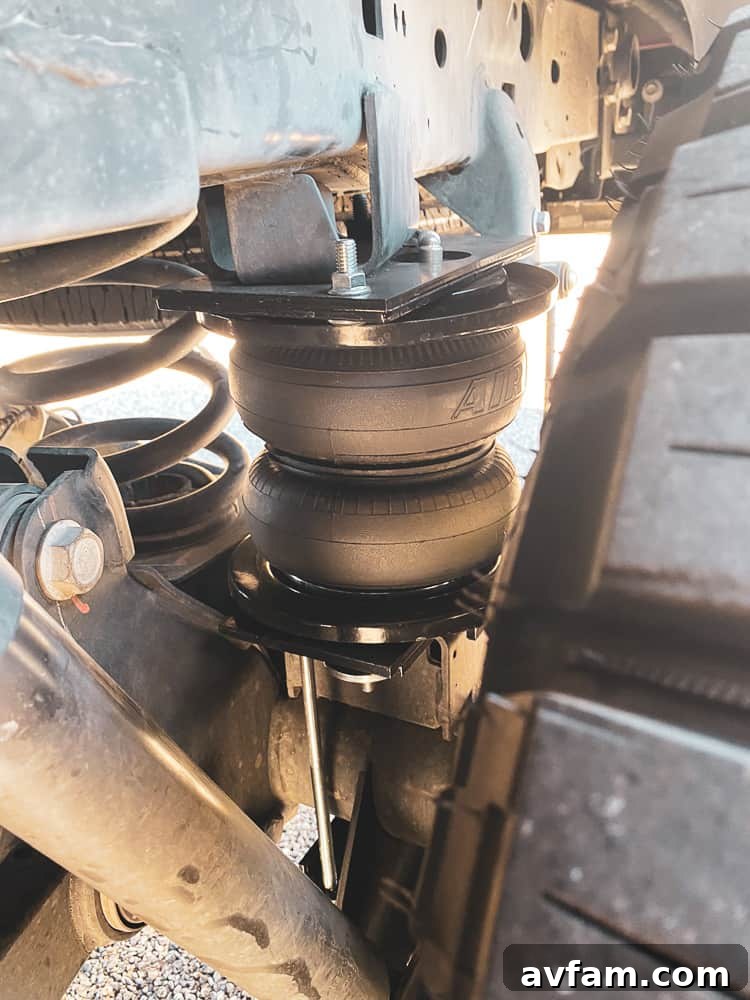
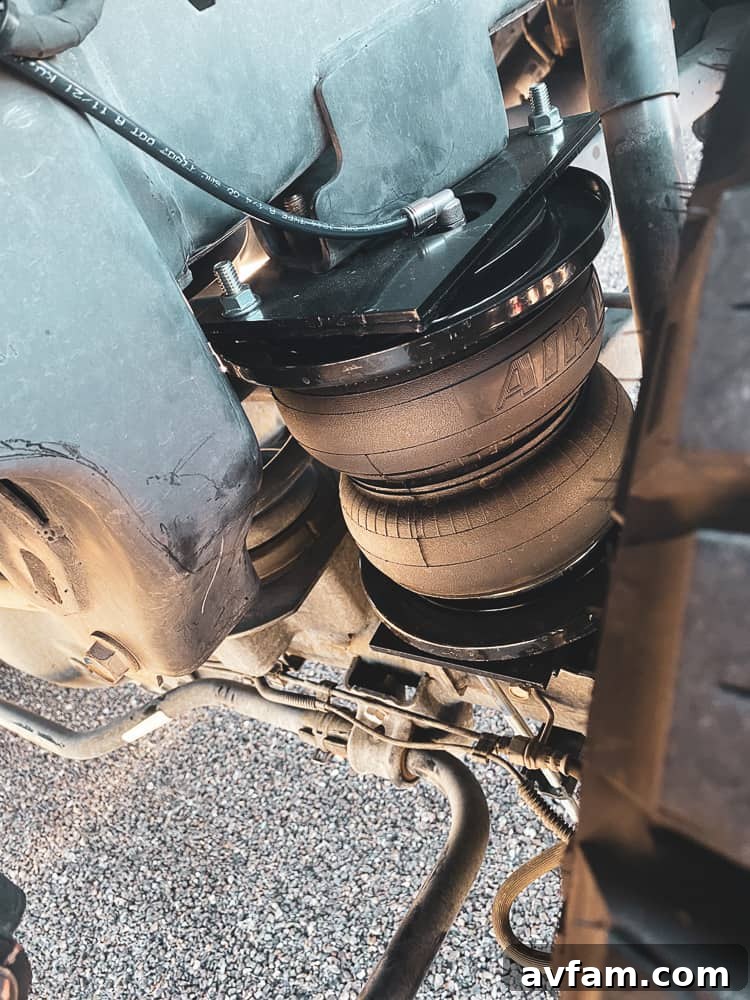
To directly address the rear-end sag and enhance the overall towing dynamics, I meticulously researched various air spring systems, ultimately choosing the LoadLifter 7500 XL Air Spring Kit from Air Lift. My decision to opt for the 7500 XL, with its impressive 7,500-pound load-leveling capacity, was a strategic one. While it might seem like overkill for my current bumper-pull travel trailer, I have aspirations of upgrading to a fifth-wheel trailer in the future. Investing in the 7500 XL now ensures I have ample capacity and future-proof my truck’s suspension, eliminating the need for another upgrade down the road. This extra margin of safety and capability, even if not fully utilized at present, offers invaluable peace of mind when embarking on long hauls or encountering unexpected road conditions. The robust design and superior load-leveling capabilities of the 7500 XL promised to transform my truck’s towing behavior, delivering a level ride, improved stability, and a significantly more comfortable experience for all occupants.
Having now driven approximately 1,000 miles since the installation, including several fully-loaded camping trips, I can confidently share my comprehensive review of the Air Lift LoadLifter 7500 XL system. One crucial distinction setting the 7500 XL apart from its LoadLifter 5000 counterpart, beyond its enhanced load-leveling capacity, is its fundamental design. The 5000 series incorporates an internal bounce bumper, designed to prevent bottoming out during extreme compression. In contrast, the 7500 XL relies purely on its heavy-duty air springs to manage the load and prevent suspension collapse, offering maximum air volume and responsiveness. This design philosophy underscores the 7500 XL’s commitment to delivering unparalleled load support for the most demanding towing scenarios. Crucially, pairing these powerful air springs with the WirelessONE compressor system elevates the user experience to an entirely new level, making on-the-fly adjustments an absolute breeze.
The WirelessONE system significantly enhances the functionality of the air springs. Its dedicated remote control offers the convenience of two programmable presets, allowing for quick adjustments between common towing and non-towing pressures. Furthermore, the intuitive mobile application expands this capability to three presets, providing even greater flexibility. What truly stands out is the precise control over air pressure, with an adjustable PSI range from 5 to 100 in precise 1 PSI increments. This granular control allows for meticulous customization of the ride quality, whether you’re hauling a heavy trailer, carrying a substantial payload, or simply driving unloaded. This level of fine-tuning ensures that the truck always maintains optimal ride height, handling characteristics, and comfort, regardless of the load. The immediate difference in towing performance was nothing short of remarkable; the notorious bucking sensation, even with the weight distribution hitch engaged, was virtually eliminated, and without the hitch, the decrease in bucking was substantial. While the rear end did feel a touch stiffer when the truck was unloaded and the bags were at their minimum recommended pressure, this was a minor trade-off for the vastly improved towing experience.
Unleashing Convenience with the WirelessONE Compressor System
The WirelessONE compressor system is a true game-changer, transforming the management of air springs from a chore into a seamless, one-touch operation. The convenience of airing up or down on the fly is immense, especially once your preferred presets are programmed into the system. Imagine pulling up to the storage unit to hitch up your travel trailer; instead of fiddling with an external compressor or manually checking PSI, a simple tap on the remote or app instantly inflates the bags to your pre-set towing pressure. This foresight eliminates the common scenario of forgetting to inflate the bags beforehand or realizing you need an adjustment while already en route. The sheer simplicity, coupled with the speed and accuracy of the WirelessONE, makes it an incredibly valuable addition to the Air Lift system. While it’s possible to install the air bags and inflate/deflate them manually (and I’d suggest investing in a good cordless compressor if going this route), the effortless control provided by the WirelessONE system makes it an investment well worth considering for anyone serious about optimizing their towing experience.
Beyond the convenience of preparing for a tow, the WirelessONE system proves its worth repeatedly during camping trips. When unhooked from the trailer at the campsite, it’s incredibly easy to deflate the bags to their minimum pressure, restoring a comfortable, near-stock ride quality for exploring local attractions or running errands. This adaptability means you don’t have to carry additional air compressors or constantly monitor tire gauges, simplifying the entire camping experience. The ability to precisely adjust air pressure based on varying loads, road conditions, or even just personal preference significantly enhances driving dynamics, offering peace of mind and superior control. This level of immediate, wireless adjustment truly distinguishes the Air Lift system, making it an indispensable tool for any serious tower who values both efficiency and optimized performance.
Demystifying the Air Lift Installation Process: A DIYer’s Perspective
One of the most impressive aspects of the Air Lift system is the meticulous attention to detail in their installation instructions. Air Lift provides incredibly thorough, step-by-step directions, complemented by excellent, clear photographs. This comprehensive approach makes the installation process remarkably straightforward, even for those with average mechanical skills. In addition to the provided documentation, the abundance of installation videos available online proved to be an invaluable resource. Watching these videos beforehand allowed me to familiarize myself with each step, gain confidence, and anticipate potential challenges, effectively demystifying the entire project. As someone who rates himself as an average handyman rather than a seasoned mechanic, the combination of Air Lift’s clear instructions and community-sourced videos gave me the assurance needed to tackle this project confidently.
The beauty of this Air Lift kit lies in its accessibility, requiring a surprisingly basic set of tools that most DIY enthusiasts might already own. You’ll primarily need a standard socket set, a tube cutter for the air lines, a torque wrench for precise fastening, hex sockets, and potentially a drill with a 5/16-inch bit for specific tasks. This minimal tool requirement makes the installation feasible for a wide range of individuals without needing specialized or expensive equipment.

My specific installation was performed on a 2020 Ram 2500, which already features a front leveling kit and rides on sizable 35″ x 12.5” wide tires. Given the truck’s naturally high stance, I initially hoped to avoid removing the rear tires or even needing a jack. While I succeeded in leaving the tires on, a jack was indeed necessary to slightly lift the rear end, creating sufficient clearance to maneuver the air bags into place. This turned out to be a minor adjustment, proving that some flexibility and adaptation are always key in DIY projects.
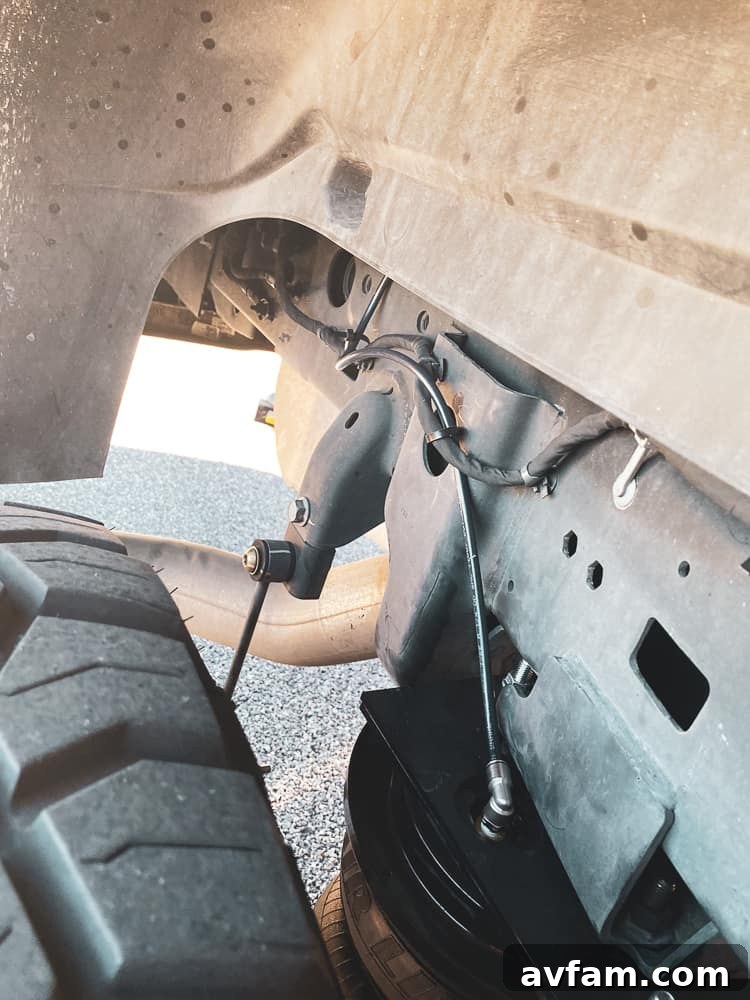
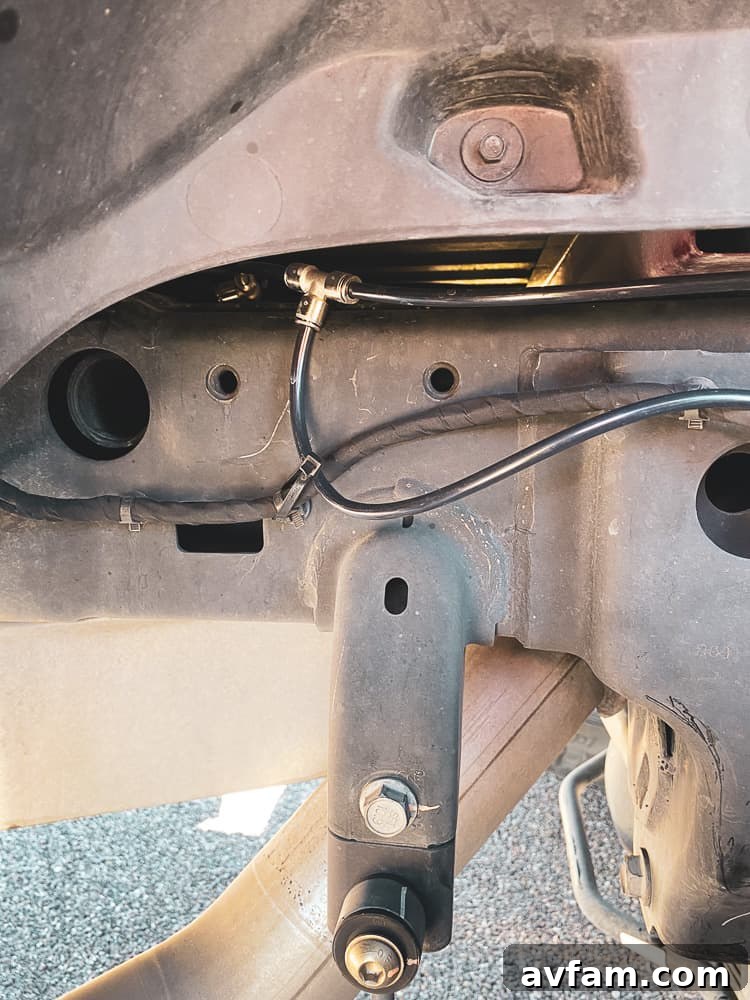
Remarkably, the entire Air Lift kit is predominantly a bolt-on affair, minimizing the need for extensive fabrication or modifications. I only encountered one instance where drilling was absolutely necessary: to establish a secure ground for the compressor. Although Air Lift provides a self-tapping screw for this purpose, I found better success by drilling a pilot hole first, a small but important tip for anyone undertaking the install. While Air Lift recommends removing the rear wheels to facilitate air bag installation, I managed to complete the process with the wheels still attached. It would undoubtedly have been easier with them removed, offering more working space, but it’s certainly doable for those who prefer to keep them on. After lifting the rear axle with a jack to create sufficient clearance for the air springs, I was able to comfortably lay under the truck, expertly routing the air lines and compressor wiring. To ensure maximum reliability and provide a contingency, I neatly tucked the air lines above the spare tire and installed a manual inflation valve at the back of the truck. This provides a crucial backup inflation point should the WirelessONE compressor ever encounter an issue, ensuring I can always maintain optimal air pressure.
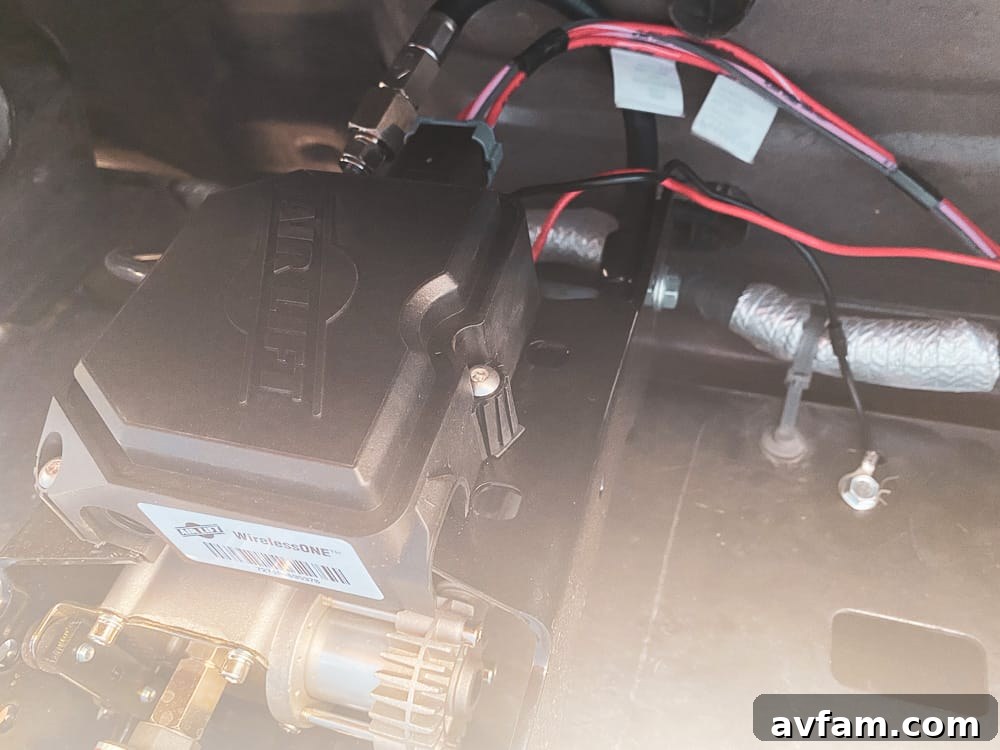
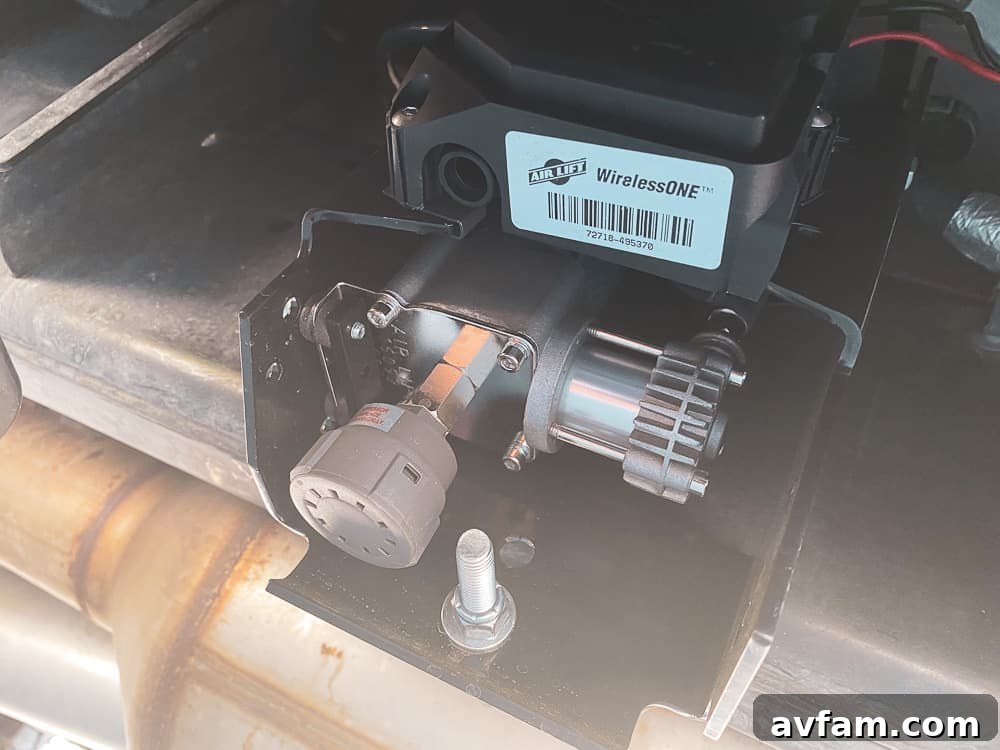
Mounting the WirelessONE compressor itself was straightforward, thanks to the included EZ mount bracket – a robust U-bolt system designed to attach securely to the truck’s frame. As mentioned, the most challenging part of the entire installation was drilling the hole for the ground wire. The tight space between the frame and the body made it tricky to maneuver a drill, requiring patience and a bit of ingenuity to get the pilot hole perfectly positioned. Once the ground connection was established, the rest of the wiring process for the WirelessONE unit was incredibly smooth sailing, guided by clear and unambiguous instructions. In total, I dedicated the better part of a Sunday to installing the entire Air Lift system. I could have rushed through it, but I chose to take my time, meticulously routing the air lines and electrical wiring to ensure a clean, tidy, and well-protected installation. This deliberate approach paid dividends, resulting in a system that not only performs flawlessly but also looks professionally installed.
Final Thoughts: A Transformative Towing Experience
My experience with the Air Lift LoadLifter 7500 XL and WirelessONE compressor system has been overwhelmingly positive. I am genuinely impressed by the profound difference it has made in both the stability and overall ride quality of my 2020 Ram 2500, particularly when towing. The ease of use, the seamless functionality of the WirelessONE system, and the remarkably straightforward installation process all contribute to a product that exceeds expectations. The combination of enhanced safety, superior comfort, and the sheer convenience of on-the-fly adjustments makes this system an absolute game-changer for anyone regularly towing heavy loads.
Frankly, if I were to acquire any tow vehicle in the future, installing Air Lift air bags, preferably paired with the WirelessONE system, would be the very first modification I would make. This speaks volumes about the value and impact of this upgrade. While I wholeheartedly endorse the WirelessONE compressor for its unparalleled convenience and control, it’s important to remember that it is not a mandatory component for the air bags to function. If budget constraints are a concern, you can certainly prioritize the installation of the LoadLifter 7500 XL air bags first, and then upgrade to the WirelessONE system at a later date. However, if your budget allows for the complete package, I cannot recommend the entire Air Lift LoadLifter 7500 XL and WirelessONE kit highly enough. It’s a comprehensive solution that delivers a truly transformative and significantly improved towing experience, ensuring safety, comfort, and peace of mind on every journey.