
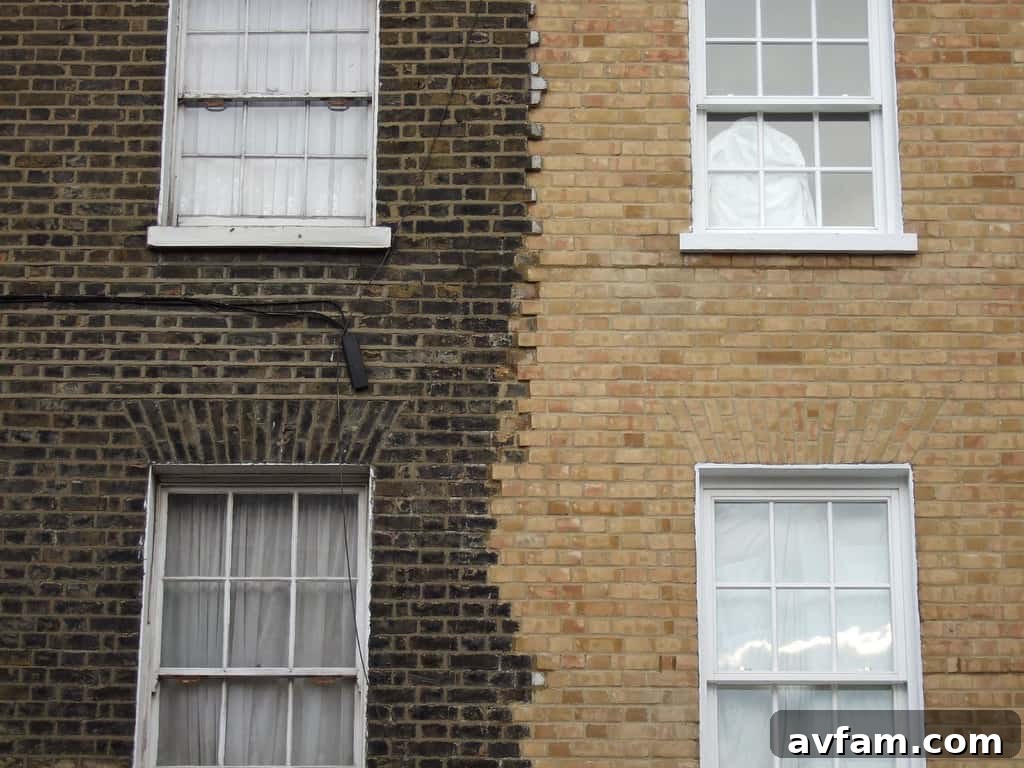
To truly grasp the multifaceted phenomenon of gentrification, we must look beyond its contemporary popular perceptions. Discard the common, often caricatured images of disgruntled hipsters, aging baby boomers, or flamboyant urbanites. To understand the intricate layers of gentrification, we need to delve deeper into its historical roots, in some instances tracing back as far as the Industrial Revolution, to conduct a thorough and nuanced analysis.
While the term “gentrification” as we commonly understand it was coined in 1964 by British sociologist Ruth Glass, the underlying etymological concepts that describe the process can be found in references dating back to 1888. However, for a foundational understanding, we will concentrate on the seminal work of Bruce London and J. John Palen, specifically their 1984 publication, Gentrification, Displacement, and Neighborhood Revitalization. This influential text outlines five key theoretical “explanations” that provide a concise and straightforward framework for comprehending the complex process of gentrification.
It is important to note that London and Palen’s research, conducted several years before their 1984 publication, focused on the emerging demographic of 25-35 year olds in the 1970s – a group predominantly comprising the Baby Boomers. Naturally, this cohort is significantly older today. Nevertheless, their approach offers a theoretical reasoning that transcends specific generations. It explores the underlying ideologies and mechanisms rather than focusing on direct cause-and-effect scenarios tied to a particular demographic or decade. Consequently, the core principles and insights derived from their work remain profoundly relevant, offering valuable perspectives on urban transformation regardless of the specific period or demographic in question.
The Demographic-Ecological Perspective
This perspective posits that population dynamics and ecological factors play a crucial role in initiating gentrification. During the post-World War II era, many urban centers experienced a significant population boom, leading to suburban expansion. However, by the 1970s, the capacity of suburban housing began to reach its limits, driving up housing costs in these areas. Concurrently, a new generation of young, educated, white-collar professionals, often without children, found themselves seeking affordable and convenient housing options. These individuals were drawn back to urban centers, particularly neighborhoods close to their workplaces, to minimize lengthy commutes and enjoy the amenities of city life. The theory suggests that areas with a high concentration of white-collar employment were almost predisposed to gentrification, as the influx of these economically advantaged groups created a demand for improved housing and services, subsequently transforming the neighborhood’s character and economic landscape. This shift was not merely a random occurrence but a logical response to the evolving spatial and economic organization of cities and their surrounding regions.
The Sociocultural Perspective
The sociocultural viewpoint emphasizes the role of changing societal beliefs, values, ideas, and lifestyle preferences in driving gentrification. This perspective highlights that certain individuals, often labeled “urban pioneers,” made a conscious choice to embrace city living over suburban or rural alternatives. These pioneers actively challenged the prevailing negative perceptions of urban environments, which were often associated with decay, crime, and decline. By investing in and revitalizing neglected urban properties, they demonstrated that city life could be desirable, vibrant, and rewarding, provided it was brought up to a certain standard. This re-evaluation of urban spaces was deeply rooted in evolving American values. While fundamental values might remain constant, their expression adapts over time. Thus, the act of restoring old urban areas was interpreted as a new manifestation of deeply ingrained values such as aspiration for improvement, community pride, and an appreciation for historical architecture, all reframed within a modern urban context. It suggests a shift in collective consciousness where urban living transitioned from being something to fear to something to be celebrated and actively pursued.
The Political-Economic Perspective
This complex perspective encompasses two distinct, yet interconnected, viewpoints. The first, more traditional, non-Marxist camp, links gentrification to significant socio-political shifts, notably the desegregation movements of the 1950s and 1960s. During this period, African-American populations gained greater freedom to move to the suburbs, while, conversely, a segment of the white population made a deliberate political statement by moving back into urban areas. This bidirectional migration contributed to the creation of mixed-race neighborhoods in both suburban and urban settings. Furthermore, the theory notes a decline in the appeal and affordability of suburban sprawl around this time, rendering ‘burbs increasingly expensive. Consequently, affordable housing for young individuals, who perhaps prioritized convenience and urban lifestyle over access to specific schools or playgrounds, became more readily available in city centers. The second camp, deeply rooted in the theories of Karl Marx, offers a more critical interpretation. This perspective argues that gentrification is far from accidental or a mere side effect of market forces. Instead, it is presented as a deliberate and intentional process orchestrated by “powerful interest groups.” According to this view, these dominant forces allow urban areas to deteriorate, creating conditions for subsequent “social changes” that render these locations ripe for profitable reinvestment through gentrification. This process, they argue, purposefully displaces the existing, often less powerful, residents – the “proletariat” in Marxist terms – to pave the way for higher-income individuals and maximize profit for those in control of capital and land development. This highlights an underlying structure of power and economic manipulation behind urban renewal.
The Community-Network Perspective
The Community-Network perspective examines the dual impact of gentrification on the fabric of local communities, presenting two contrasting outcomes: “community saved” and “community lost.” On one hand, this theory acknowledges the erosion of traditional neighborhood ties, often attributed to the pervasive influence of modern technology and changing social patterns. As a result, older communities and their physical infrastructure may experience decline and dilapidation. The original sense of belonging, often built on generations of shared experience, can dissipate. Conversely, when new residents arrive and undertake the rehabilitation of properties, they often foster a different kind of community. This emerging community, while potentially lacking the deep historical roots of its predecessor, is often based on shared ideological values, a preference for suburban aesthetics (such as well-maintained homes and curated public spaces) transposed into an urban setting, and an emphasis on privacy. Yet, paradoxically, these new residents often still cultivate a strong sense of togetherness through shared interests, organized events, and a collective vision for their revitalized neighborhood. The tension lies in whether this newly formed community genuinely integrates with or effectively displaces the remnants of the original community, fundamentally altering the social network of the area.
The Social Movements Perspective
The Social Movements theory synthesizes the preceding factors, proposing that gentrification often emerges from a confluence of coordinated efforts and collective aspirations. It suggests that when various influential stakeholders – including successful “urban pioneers,” government bodies (local and federal), financial institutions (banks), high-status political members, and land developers – align their objectives and collectively advocate for urban revival, a powerful social movement can be ignited. This collective call to “help revive the city” can galvanize individuals and groups, transforming urban renewal into a personal mission. Residents, motivated by a sense of civic duty, economic opportunity, or a desire for an improved living environment, actively participate by moving into and rehabilitating distressed urban areas. This theory views gentrification not merely as a passive outcome of market forces or individual decisions, but as an active, organized, and often ideologically driven movement that fundamentally reshapes urban landscapes through sustained collective action and engagement.
Beyond these primary theoretical frameworks, additional economic-based side theories offer deeper insights into the mechanisms of gentrification. One prominent theory, often linked to the Political-Economic perspective, explains the “rent-gap.” This concept describes how de-industrialization or economic decline can leave numerous urban properties undervalued. A “rent-gap” emerges between the current, often low, income generated by city land under its existing use and its significant potential for revenue once converted for a more high-cost, profitable purpose, such as trendy urban housing or commercial spaces. This gap attracts investors who see the potential for substantial returns by transforming these properties. Another theory delves into the strategic use of “first-stage gentrifiers.” This approach suggests that developers or interested parties, aiming to transform an area into an affluent urban hub, will deliberately attract and court artists, musicians, teachers, and other educated but typically lower-wage professional groups. These individuals are instrumental in building the “credibility” and “urban chic” appeal of an area. Once these creative classes have cultivated a vibrant, desirable atmosphere, inadvertently raising the profile and desirability of the neighborhood, the properties are then marketed and sold at prices far exceeding the earning potential of the initial gentrifiers. This orchestrated displacement ushers in a new wave of upper-class elites, allowing the original orchestrators to realize immense profits, often leaving the “cred-givers” displaced and unable to afford the very neighborhoods they helped make desirable.
Hopefully, this comprehensive exploration provides a clearer understanding of the intricate “how” and “why” behind gentrification, moving beyond simplistic explanations centered solely on the personal preferences of certain groups. Gentrification, from its inception to its outcomes, is a complex social machine, involving a far greater multitude of actors and processes than what appears on the surface. It is a dynamic interplay of demographic shifts, cultural values, economic imperatives, political decisions, and community responses, all contributing to the continuous reshaping of our urban environments.
Next, we will delve into a sociological examination of the pros and cons of gentrification, further enriching our understanding of its multifaceted impact. Prepare your critical thinking caps, and if any questions arise, please feel free to raise your hand or leave a comment below.
Photo: http://www.flickr.com/photos/jamespaullong/438953957/