
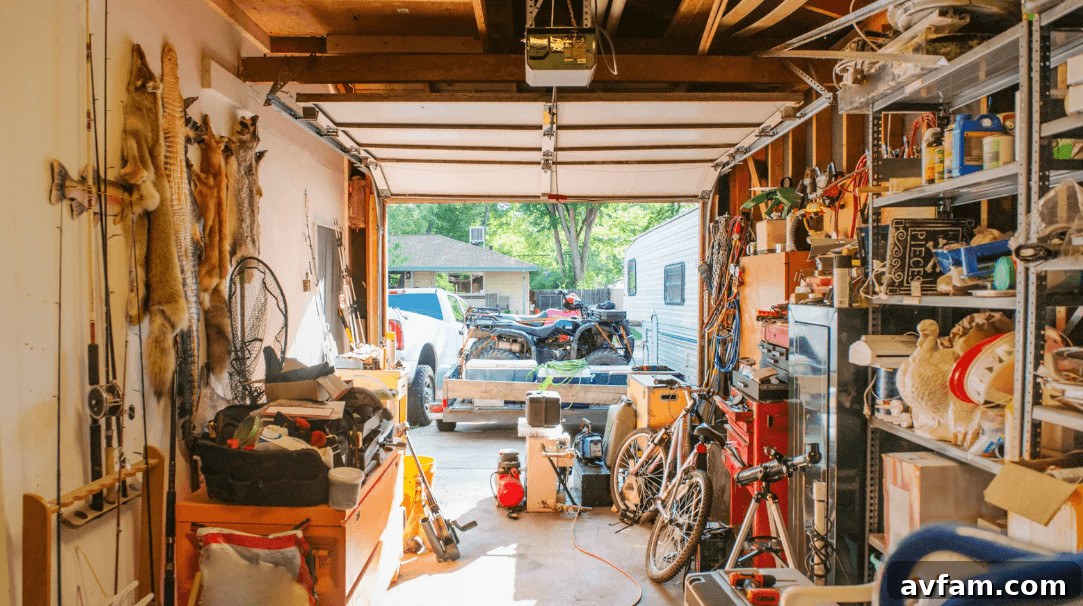
I’ve spent more weekends than I can count in the garage, and if there’s one thing every DIYer notices, it’s how quickly a workshop fills up. A can of stain here, a battery charger there, an extension cord snaking beneath the table saw — all of it represents money and time, and it all sits in one of the most fire-prone rooms in the house.
Most fire-safety guidance is broad: test smoke alarms, don’t leave the stove unattended, keep space heaters away from curtains. That advice is useful, but it often overlooks the hazards unique to a home shop. This article focuses on what actually starts fires in garages and workshops, practical habits that protect your tools and your home, and what to do if prevention fails.
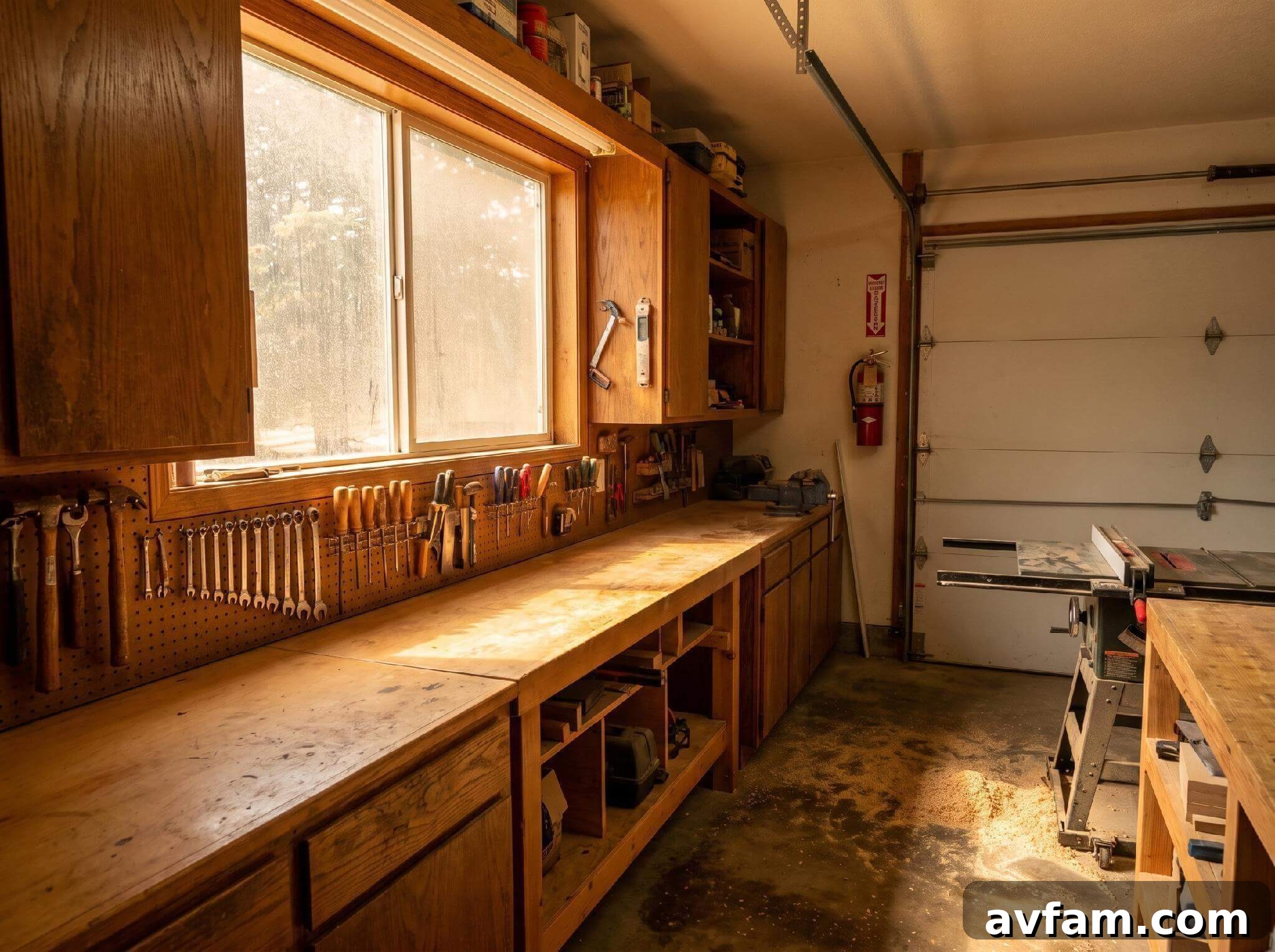
A well-organized home workshop with tools stored safely and a fire extinguisher within easy reach.
Why the Garage or Workshop Is a Fire Risk
A workshop concentrates many fire triggers in a single space. Power tools draw heavy current, lithium-ion batteries may be charging overnight, sawdust accumulates in corners, and rags soaked in stain or linseed oil can self-heat and ignite without a visible spark. These factors combine to make garages and workshops considerably more vulnerable than most rooms in the house.
Government fire-prevention guidance frequently cites flammable-liquid storage, oily rags, and overloaded circuits as common causes of garage and workshop fires. Even with careful habits, a fire can spread rapidly and destroy years of tools in minutes. After firefighters secure the scene, homeowners usually need professional help to board openings, dry out the space, and address smoke and water damage before mold and corrosion make matters worse.
Electrical problems account for a large share of workshop fires. A typical setup — shop vac, air compressor, space heater, and battery charger all plugged into the same outlet strip — is all too common and increases the risk of overheating and electrical failure. Overloaded outlet strips and unattended chargers are frequent mistakes that raise the likelihood of a fire.
None of this means you must give up power tools. It does mean treating electrical load and storage habits with the same seriousness you give to a blade guard or safety glasses.
Prevention Habits That Work in a Home Shop
Most shop fires come from a handful of predictable, preventable habits. Store flammable liquids like stain, paint thinner, and gasoline in an approved metal cabinet rather than on an open shelf near heat or sparks. Dispose of oily rags in a sealed metal can instead of a cardboard box or plastic bag; spontaneous combustion from linseed oil and similar products is a documented cause of shop fires and is easily prevented with a proper container.
Keep any equipment that produces heat — grinders, soldering stations, space heaters — at least 18 inches away from combustible materials. Small flames can become large fires in seconds, and a fully involved house fire can develop in minutes. That leaves almost no time to improvise; having a fire extinguisher already mounted within reach and knowing how to use it can make all the difference.
Other practical habits to build into your routine:
- Mount an ABC-rated fire extinguisher by the exit so it’s accessible at a glance.
- Install interconnected smoke alarms so a garage fire triggers alarms throughout the home.
- Charge lithium-ion batteries on a non-combustible surface, away from exit paths, and avoid leaving chargers unattended overnight in cluttered spaces.
These measures are inexpensive and quick to implement. What they buy you is time — the most valuable resource once a fire starts.
If a Fire Does Happen: Salvaging Tools and Equipment
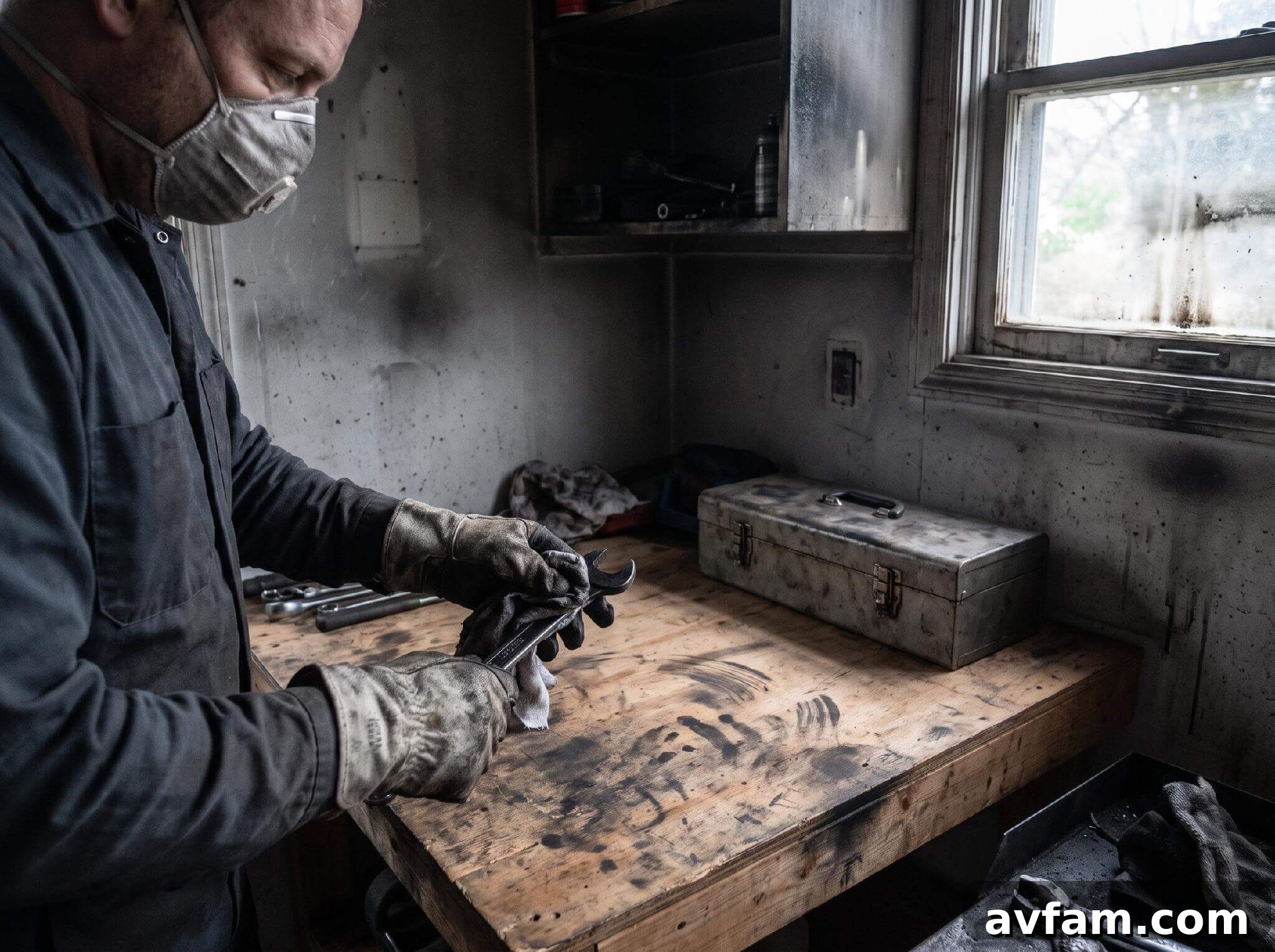
Cleaning soot from metal tools promptly can prevent long-term corrosion.
Metal hand tools often survive surprisingly well. Soot wipes off and a light coat of oil after cleaning prevents rust on blades and cast-iron surfaces. That cleanup can usually be handled safely at home with gloves, a mask, and patience.
Porous materials such as wood, drywall, and insulation retain smoke odor and soot in ways that soap and water won’t fix. Power tools and electronics can appear intact while corrosive soot residues eat away at internal components. Professional restoration services use specialized equipment — HEPA vacuuming, ozone treatment, and thermal fogging — to remove smoke residues and odors that ordinary cleaning cannot address.
Never re-enter a fire-damaged structure until the fire department has declared it safe. Structural damage is not always visible; floors or ceilings that look stable can fail under normal weight.
Rebuilding a Safer Workshop
Rebuilding after a fire is difficult, but it’s also an opportunity to correct layout mistakes that contributed to the damage. Maintain at least 36 inches of clear pathway to every exit, and keep that path free of cords, lumber, and tools so you can get out quickly if needed. Clearly mark exit routes even in a one-car garage.
If your projects include welding, grinding, or any process that produces sparks, create a dedicated, fire-safe zone for that work rather than letting it bleed into woodworking or storage areas. Proper flooring, ventilation, and clearance can greatly reduce the risk of stray sparks igniting nearby materials.
Rebuilding costs time and money, but investing in safer layout and storage is the most effective way to prevent the same incident from happening again.
Conclusion
Your tools and the hours you’ve invested in your workshop deserve protection. Most of the risk in a garage or shop comes down to a simple list of fixable habits: store flammables properly, dispose of oily rags safely, maintain clearance around heat sources, keep a working extinguisher within reach, and ensure smoke alarms cover the garage. Follow these basics, and you’ll prevent the vast majority of workshop fires. If a fire does occur, know what you can clean yourself and what requires professional restoration — that distinction protects the rest of your home and helps you rebuild a safer workshop once the smoke clears.