
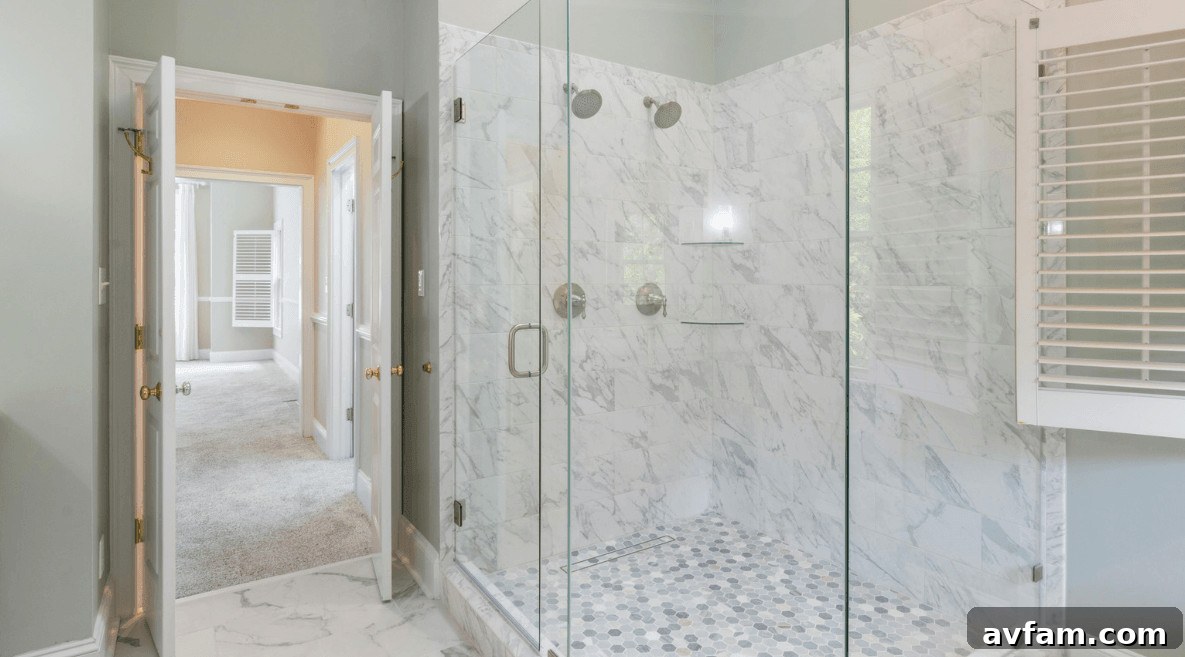
A leaking frameless shower door is one of the most common complaints after installation, and it’s seldom due to a flaw in the glass itself.
Understanding what actually controls water inside a frameless enclosure helps you evaluate an installer’s work and troubleshoot a leak if one develops later on.
Why the Glass Panel Isn’t Usually the Source of Leaks
Tempered glass panels are continuous, solid surfaces that do not leak. When water leaves a frameless shower, it almost always comes from the surrounding details: the seal where a swinging door meets an adjacent fixed panel or wall, the bottom edge where the door meets the shower pan, and the joints where panels meet one another or the curb.
Why the Bottom Sweep Is More Important Than Many Homeowners Realize
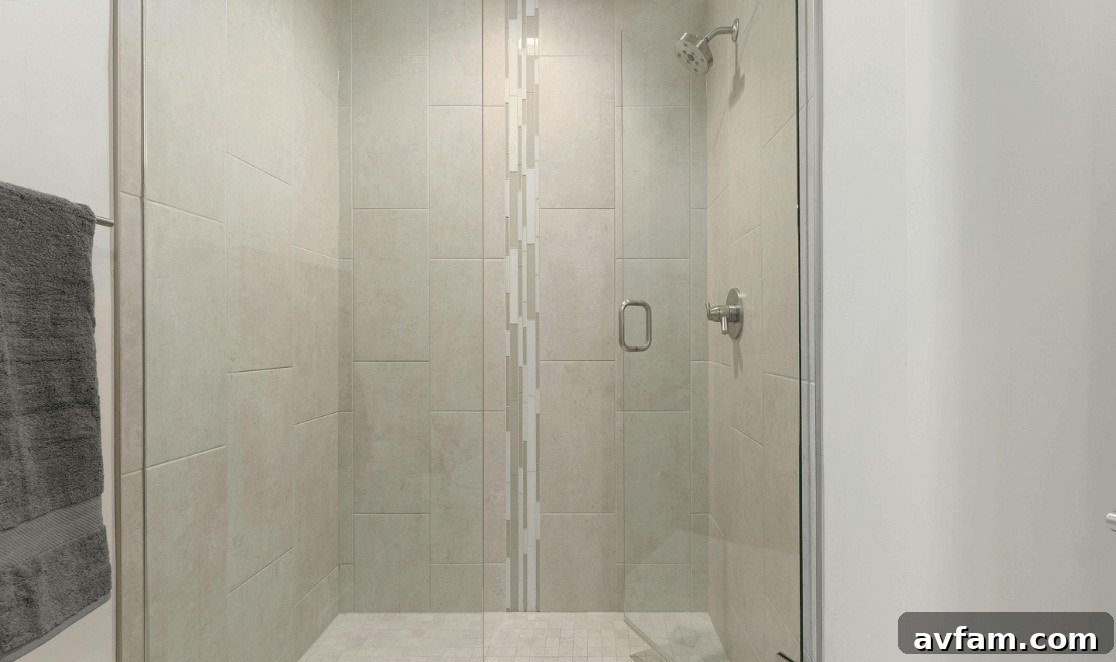
The bottom sweep is a flexible strip attached to the lower edge of the door. It performs a major role in keeping water contained while the shower is in use. If the sweep is worn, the wrong height, or installed without accounting for the actual slope of the shower pan, water will find its way under the door much more easily than most homeowners expect.
New-door leaking complaints often trace back to the bottom sweep. In many cases the repair is straightforward once the cause is identified — replacing or adjusting the sweep, or modifying it to match the actual gap at the bottom of the door — rather than replacing the entire assembly.
How Shower Pan Slope Directly Affects Door Performance
A correctly sloped shower pan channels water toward the drain. If a frameless door is set without verifying that slope, water can collect at the door’s base instead of draining away. That pooled water increases the load on the sweep and any bottom seals, making leaks more likely.
Assessing pan slope during initial site measurement is essential because slope dictates how low or high the sweep should be, and whether additional deflectors or threshold treatments are required to keep water moving toward the drain.
Why Vinyl Strips and Junction Sweeps Matter
Where a swinging door meets a fixed panel or the wall, clear vinyl strips and specialized sweeps create the barrier that stops water from escaping through those gaps. These components do meaningful work every time the shower runs.
They wear with normal use, especially in busy households. Periodic replacement of vinyl strips and sweeps is routine maintenance for a frameless enclosure and not necessarily an indicator of poor installation. Regular inspection will catch worn seals before they lead to noticeable leaks.
Precision Measurement Is the Foundation of Leak Prevention
Before seals and sweeps can function as intended, the base installation must be accurate: walls should be plumb, the curb height measured correctly, and glass panels sized and positioned to match the actual bathroom conditions. Generic, one-size assumptions rarely produce reliable results.
A conscientious installer verifies wall plumb, curb level, and pan slope during the measurement stage, then tailor-fits the glass and seals to those conditions. That approach prevents many common leaks by addressing the root cause rather than relying solely on caulk or flexible seals to mask measurement errors.
Showerhead Direction Is an Often-Overlooked Variable
Beyond the enclosure itself, the orientation and spray pattern of the showerhead determine how much water a seal or gap must resist. A high-pressure or wide-spray showerhead aimed directly at a panel junction or door will stress seals more than a gentler, angled spray.
Good installers consider spray direction when planning an enclosure. Adjusting the door placement, selecting more robust seals, or recommending a different showerhead or angle can reduce leak risk without altering the glass itself.
How to Diagnose and Fix an Existing Leak
If a frameless shower is leaking, the solution is rarely a complete door replacement. Most fixes involve identifying the specific failing component — a worn bottom sweep, an improperly sized vinyl strip, a misaligned panel, or an incorrect curb height — and addressing that element directly. A thorough inspection while the shower operates, observing where water tracks and pools, usually reveals the culprit.
Replacing worn seals, trimming or reattaching sweeps to match the actual gap, and correcting minor alignment issues are common, cost-effective repairs. Where pan slope is the root cause, a more involved adjustment or rework of the threshold may be required, but the glass itself is still usually fine.
What to Ask for When Hiring an Installer
Because leak prevention depends on measurable site conditions rather than the glass, homeowners should ask potential installers how they will check wall plumb, curb slope, pan drainage, sweep selection, and junction seals during the design and measurement process. Ask whether they field-check spray direction and how they handle cases where walls or pans are out of true.
Installers who document measurements, explain seal types, and recommend maintenance timelines offer a more reliable path to a watertight frameless shower. Proper planning and attention to these practical details produce longer-lasting performance and fewer post-installation issues.