Butler Street Foundry: Forging Chicago’s Enduring Spirit in Steel and Time
In the vibrant tapestry of Chicago’s industrial heritage, few threads are as resilient and richly woven as that of the Butler Street Foundry & Iron Co. Established in 1891, this venerable institution is more than just a metal fabrication shop; it is a living chronicle of American craftsmanship, innovation, and unwavering determination. During our recent immersion in the Craftsman Experience in Chicago, we were granted the extraordinary privilege of stepping inside this historic landmark and meeting John Lamonica, the dedicated metalworker who now proudly carries the torch of its remarkable legacy.
John Lamonica, a master of his trade, embodies the profound responsibility of stewarding over a century of industrial history. The Butler Street Foundry isn’t merely a business endeavor; it is an intrinsic part of Chicago’s identity, its very walls echoing with the clang and roar that helped construct one of the world’s most dynamic cities. This article invites you on a journey through the foundry’s storied past, its critical role in shaping the physical and economic landscape of Chicago, the complex challenges it navigates in the modern era, and why the preservation and continued operation of such a unique establishment are so vital to our collective cultural and industrial heritage.
A Phoenix from the Ashes: Butler Street Foundry’s Role in Rebuilding Chicago
The very genesis of the Butler Street Foundry is inextricably linked to one of Chicago’s most defining moments: the devastating Great Fire of 1871. Though the foundry itself was established two decades later, its foundational purpose was a direct response to the monumental task of urban reconstruction. According to insights shared by Mr. Lamonica, the foundry’s primary mission was to provide crucial iron castings – the foundational components vital for erecting a new, more robust Chicago. From the ashes, a modern metropolis began its ascent, block by resilient block, frequently fortified by the strong, reliable iron meticulously crafted within the Butler Street Foundry’s original workshops.
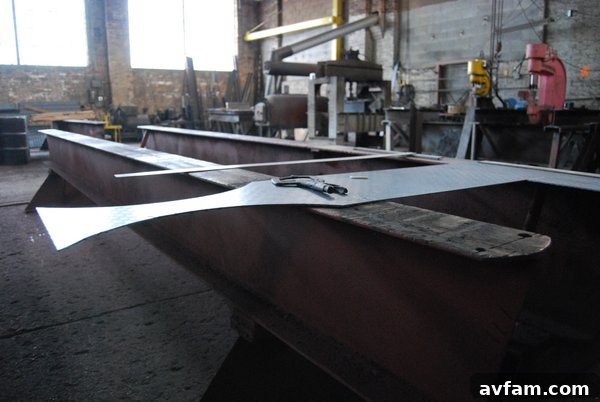
As the 19th century drew to a close, Chicago rapidly solidified its position as a global industrial titan. The Butler Street Foundry & Iron Co. stood at the vanguard of this expansion, playing an indispensable role in the production of structural steel that brought to life the iconic Union Stock Yards. These expansive yards once symbolized the undisputed epicenter of America’s meatpacking industry, a testament to Chicago’s unparalleled economic might. The foundry’s steadfast steel provided the robust infrastructure necessary for this colossal enterprise, quite literally forming the enduring backbone of an industry that sustained a burgeoning nation.
The foundry’s indelible mark extends far beyond industrial complexes, permeating the very fabric of Chicago’s architectural identity. Countless grand, historic edifices that define the city’s celebrated skyline, encompassing diverse commercial structures and pivotal public institutions, were erected with the steadfast steel meticulously forged at Butler Street. The very name of the foundry carries a significant historical resonance, honoring General Benjamin Franklin Butler of the Union Army, a figure of considerable national stature. Local legend suggests that General Butler’s influential backing was instrumental in the foundry’s establishment, firmly grounding its origins in a deep sense of national purpose and civic commitment.
Resilience Through Turbulent Times: A Century of Service to Chicago and the Nation
The dawn of the 20th century ushered in an era of unprecedented global upheaval, yet the Butler Street Foundry consistently demonstrated its remarkable capacity to adapt and contribute. During the tumultuous years of World War I, the foundry seamlessly recalibrated its operations, channeling its expertise into supporting the national war effort by supplying vital metal components—critical for defense manufacturing. This profound commitment to national service would be robustly reaffirmed in subsequent decades, showcasing the foundry’s unwavering patriotism.
Even amidst the profound economic devastation of the 1930s, a period when the Great Depression brought countless American businesses to their knees, the Butler Street Foundry not only persevered but thrived. It played a significant, tangible role in the construction of Chicago’s ambitious “A Century of Progress” Exposition. This seminal World’s Fair, held from 1933 to 1934, served as a powerful beacon of hope, innovation, and forward-thinking spirit, majestically showcasing pioneering advancements in science, technology, and industry. The foundry’s active involvement underscored its deep-seated resilience and its enduring contribution to shaping Chicago’s progressive identity, even amidst the darkest chapters of economic hardship.
As the nation found itself once again embroiled in a global conflagration, entering the Second World War, the Butler Street Foundry & Iron Co. stood ready, a steadfast pillar of industrial might. Mirroring its contributions in WWI, it emerged as a critical supplier of steel, delivering essential materials to the U.S. military and its allies, thereby directly contributing to the eventual Allied victory. This consistent readiness to serve, from the arduous task of rebuilding a city from devastation to the crucial mission of defending a nation on the global stage, profoundly illustrates the foundry’s unwavering commitment and its deep, invaluable integration into the very fabric of American industry and national pride.
A Century of Family Legacy and the Dawn of a New Era Under John Lamonica
For more than a remarkable century, the Butler Street Foundry & Iron Co. proudly operated as a cherished family-run enterprise. This extraordinary generational continuity is a testament to the profound dedication, unparalleled skill, and visionary foresight of its founding family—a rare and commendable feat in the often turbulent and fiercely competitive industrial landscape. Their steadfast commitment ensured that the foundry’s distinguished legacy of quality craftsmanship, meticulous attention to detail, and robust production endured through countless decades of transformative societal shifts, groundbreaking technological advancements, and unpredictable economic fluctuations.
The year 2005 marked a pivotal and deeply significant transition in the foundry’s long history. The founding family, recognizing John Lamonica’s undeniable passion for the traditional craft of metalworking and his profound, unwavering respect for the foundry’s storied past, made the momentous decision to transfer ownership to him. As an accomplished metalworker in his own right, John was universally regarded as the ideal successor, entrusted with the weighty responsibility of upholding the revered standards of exceptional quality and meticulous workmanship that had defined Butler Street Foundry & Iron Co. as an iconic fabrication leader for 115 years. This thoughtful transition heralded the dawn of a new chapter, one firmly committed to harmoniously blending time-honored traditions with the evolving and demanding requirements of the 21st century under the guidance of a skilled, dedicated, and deeply respectful hand.
However, assuming the mantle of stewardship in the contemporary industrial landscape comes with its own unique and formidable array of challenges. As John Lamonica regretfully acknowledges, despite the foundry’s extraordinary resilience in overcoming cataclysmic events like the Great Depression and two World Wars, it now grapples with a different, equally intense kind of battle. The relentless and accelerating pace of technological innovation, the volatile and often exorbitant price of raw steel, and the broader, pervasive effects of current economic downturns have collectively transformed the operation of a traditional, hand-crafted foundry into an increasingly difficult and precarious endeavor. These contemporary pressures pose a significant threat not only to the future viability of Butler Street Foundry but also to the very essence and continued existence of traditional metalworking industries across the entire nation.
The Fabric of the Community: Missed Opportunities and Immigrant Legacies in Chicago
The historic Butler Street Foundry is strategically positioned just a stone’s throw from the revered site of the former Comiskey Park, an iconic and deeply beloved landmark etched into the heart of Chicago’s South Side. Mr. Lamonica recounts with a palpable sense of wistfulness that during the construction of the new Comiskey Park in 1990, the foundry, a venerable cornerstone of local industry and community pride, found itself inexplicably overlooked. A profound sense of disillusionment arose as no contracts were made available for them to bid on, as local political mechanisms had, perhaps expediently, directed their substantial work orders towards newer, more ‘modern’ companies, promising to fulfill immediate needs with greater perceived efficiency.
While the foundry may not have possessed the colossal capacity to supply every single material for a project of Comiskey Park’s immense scale, the omission transcended a mere lost business opportunity; it represented a profound disservice to the local community and a missed chance to celebrate its own heritage. To exclude a local steel fabrication company that so deeply embodies the historical and industrial fabric of Chicago and its South Side neighborhood was a regrettable oversight, a lost opportunity to honor and seamlessly integrate its enduring legacy into a new civic icon. This incident starkly highlights a recurring and often frustrating struggle for traditional, deeply community-based businesses in an increasingly globalized, competitive, and at times, politically influenced economy.
Another deeply resonant and compelling theme that reverberates throughout the venerable building is the rich and diverse tapestry of the countless men and women who once diligently toiled within its robust walls, and the varied, often challenging, backgrounds from which they hailed. Chicago boasts an exceptionally deep and vibrant history as a quintessential melting pot for immigrants from around the globe. Through the decades, an untold number of newcomers found their very first foothold in America, their initial opportunity, within the welcoming confines of the Butler Street Foundry. As various immigrant communities steadily established themselves and flourished across the city, the foundry consistently emerged as a reliable and vital source of employment, providing much-needed stability, a sense of belonging, and tangible opportunity to generations of hardworking families, thereby shaping the very essence of Chicago’s diverse urban identity.
At various peak points in its long and illustrious history, the foundry vibrated with the energetic activity of an impressive 250 to 300 skilled individuals. These were far more than mere employees; they were the very backbone of the enterprise, each leaving an indelible, personal mark on the space. Many, driven by a deeply personal connection to their workplace, meticulously etched their names into pieces of furniture, boldly scrawled them on walls, or carefully carved them into the very tools they expertly wielded. These faint yet profoundly powerful inscriptions serve as tangible, enduring reminders of the countless human stories, lives, and labor woven into the very structural fabric of the Butler Street Foundry, a testament to the collective efforts that meticulously built both the foundry and, by extension, the magnificent city of Chicago itself.
Adapting the Space: From Horse Power to Modern Industrial Might
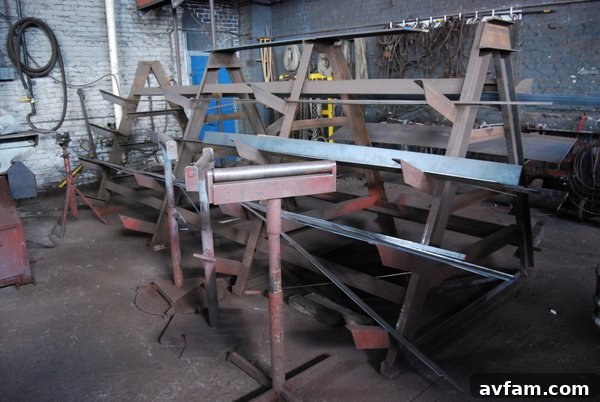
The physical evolution of the Butler Street Foundry building itself narrates a captivating tale of shrewd adaptation and visionary foresight. In an era when the burgeoning advent of automobiles and trucks began to systematically supplant traditional horse-drawn transport, the foundry demonstrated remarkable ingenuity and strategic planning. Its management ingeniously expanded their operational footprint into the adjacent livery stables, which had previously housed the sturdy horses indispensable for transporting heavy steel and other vital materials throughout the sprawling metropolis of Chicago. This clever and timely transformation allowed the foundry to seamlessly integrate evolving logistical paradigms into its operational workflow, powerfully showcasing its innate ability to pivot and prosper with the inexorable tide of changing times.
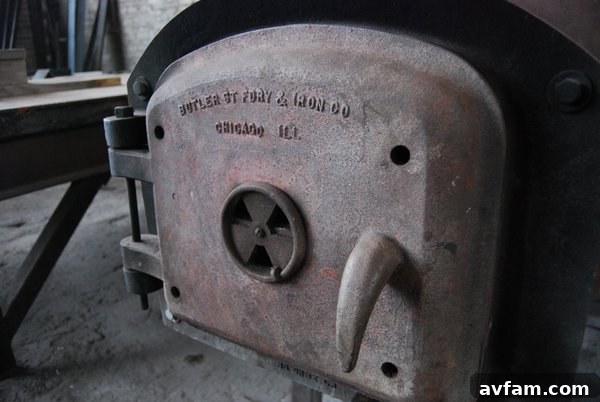
Even in the present day, poignant echoes of this equine past subtly resurface within the foundry’s historic confines. Weathered horseshoes, evocative remnants of a bygone era of urban transportation, are occasionally discovered in some of the building’s hidden nooks and crannies, serving as tangible links to a different epoch. These rustic symbols of diligent hard work and arduous travel have even been thoughtfully repurposed, tastefully incorporated as a decorative element on one of the foundry’s venerable furnaces. This subtle yet profound aesthetic choice serves as a respectful nod to the building’s multi-layered history and its continuous, remarkable journey of transformation and enduring legacy.
The Dilemma of Tools and Talent: Craftsmanship in the Digital Age at Butler Street Foundry
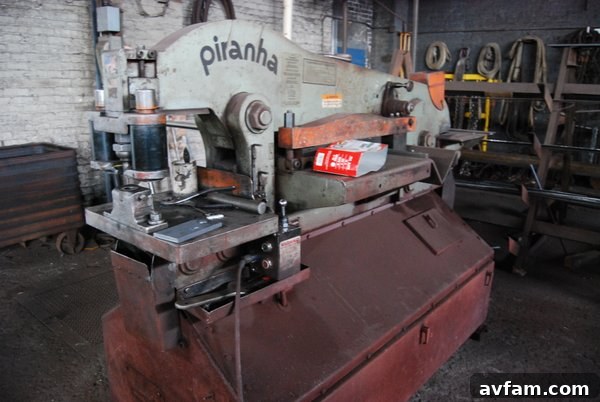
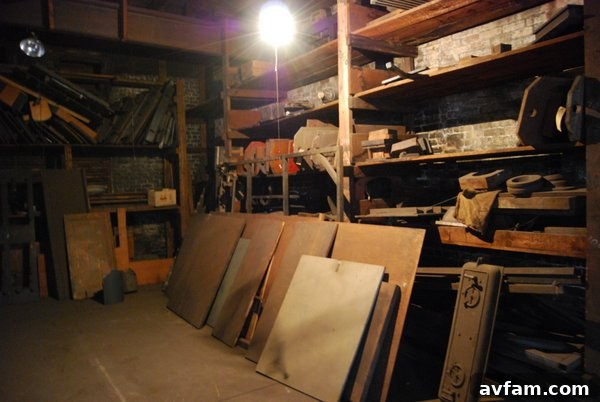
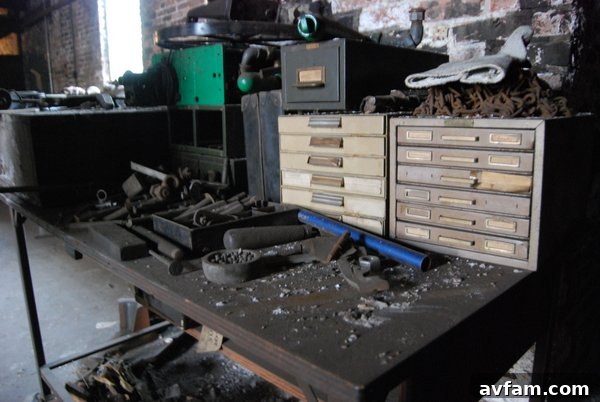
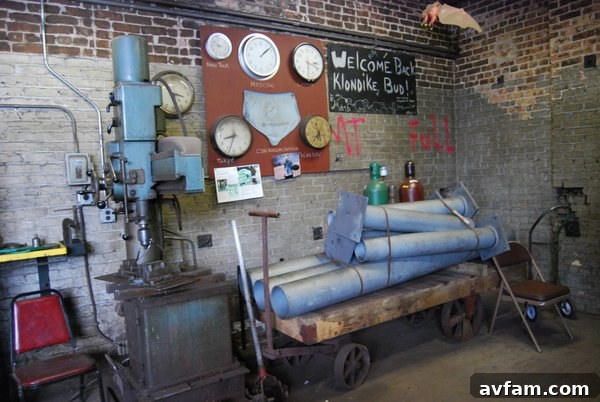
Perhaps one of the most profound and pressing hurdles confronting a traditional, hand-crafted metal shop like Butler Street Foundry, which thrives on executing intricate, large-scale custom jobs, lies squarely in the very technology it steadfastly continues to champion. The vast majority of the robust tools gracing its workshop floors are at least 30 to 50 years old, with many predating even this conservative estimate. These are emphatically not the high-tech, circuit-board-laden, digitally controlled machines ubiquitous in today’s manufacturing landscape; rather, they are enduring, stalwart instruments that rely on the timeless and fundamental principles of hydraulics or air-compression. Devoid of complex electronics, intricate sensors, or delicate fuses, their precise operation demands an entirely different, highly specialized kind of expertise and intuitive understanding.
In theoretical terms, these classic, heavy-duty tools might appear deceptively simple to operate. However, their true mastery necessitates a specific, almost artisanal “touch”—an innate, intuitive understanding that is meticulously cultivated and refined only through years of dedicated practice, constant hands-on experience, and an intimate familiarity with the nuanced characteristics of metal. This profound, almost tactile knowledge is the critical differentiator that elevates a mere machine operator to the esteemed status of a true craftsman.
Consequently, finding qualified and skilled labor possessing the requisite expertise to proficiently operate these specialized, vintage tools has become an increasingly arduous and complex task. The modern landscape of metalworking has undergone a dramatic and sweeping transformation. The new generation of metalworkers often emerges not as traditional, hands-on craftsmen, but rather as highly skilled individuals whose profiles more closely resemble those of sophisticated engineers or adept computer programmers. Today’s dominant metal fabrication industry is largely characterized by highly automated, sophisticated machines that seamlessly interface with complex computer software. Designs are meticulously entered into advanced programs, steel is precisely cut with minimal direct human intervention, and the only direct human touch frequently involves the sequential tasks of placing the raw material into the machine and then carefully retrieving the finished, often pre-programmed, product.
Celebrating a Living Legacy: The Future of Artisanal Metalwork in Chicago
It is nothing short of extraordinary that the Butler Street Foundry has not only persevered but has actively thrived for as long as it has, particularly in an era increasingly defined by rapid mass production, digital automation, and disposable consumerism. Yet, its continued, vibrant existence serves as a profound testament to an enduring truth: there remains a discerning and dedicated clientele who deeply value and actively seek out the unparalleled quality of hand-crafted, artisanal metalwork. This unique craftsmanship offers an intrinsic quality, a singular character, and a robust durability that a computer-fabricated piece, no matter how precisely engineered, simply cannot authentically replicate. The indelible soul of the maker, the subtle and unique imperfections that tell a compelling story, and the unparalleled strength derived from time-honored traditional methods collectively set Butler Street Foundry’s work apart, imbuing each creation with a lasting legacy.
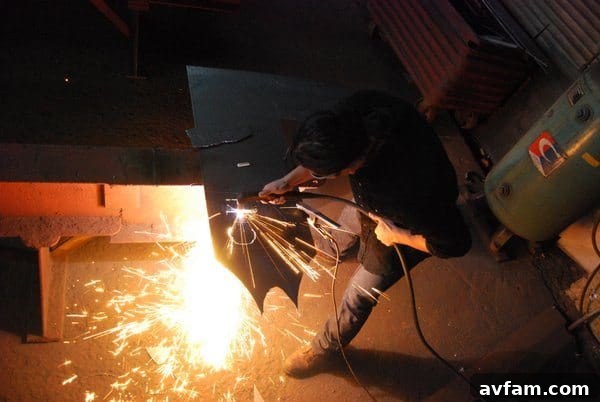
Instead of merely lamenting the gradual, often inevitable, loss of yet another iconic American industry to the relentless and accelerating march of technological progress, we choose wholeheartedly to celebrate the vibrant, living legacy of the Butler Street Foundry. Our carefully curated series of evocative photographs aims to powerfully capture the very essence of this historic place and illuminate the profound dedication of the skilled craftspeople who tirelessly keep its vital fires burning. The Foundry is unequivocally not a static relic of the past; it is a dynamic, active, and absolutely essential operation, forging connections between past and present, tradition and innovation.
If you are in search of truly custom metal fabrication, seeking authentic and meticulously executed metal restoration services that deeply respect historical integrity, or simply keen on meaningfully supporting an independent American business that passionately upholds centuries-old traditions of craftsmanship, we wholeheartedly encourage you to connect with John Lamonica and his exceptionally talented team. Their expertise spans a wide and impressive array of projects, from intricate custom architectural designs to robust industrial components, all meticulously executed with the hallmark quality, precision, and enduring legacy synonymous with the Butler Street Foundry. You can reach them directly at 773-924-2233 or explore their comprehensive services and send inquiries via email through their official website. Supporting the Butler Street Foundry is far more than merely commissioning a piece of metalwork; it is a vital investment in a piece of living history, actively ensuring the continuity of invaluable, time-honored skills and a cherished segment of American industrial heritage.
Echoes of the Past: Hidden Gems and Stories Within the Foundry Walls
Beyond the bustling, active workshops, the Butler Street Foundry holds countless captivating stories, subtly whispered through its aged, robust walls, patiently revealed in silent, evocative corners. One such poignant area is a long-abandoned woodworking room, a fascinating space where time seemingly froze in the year 1947. Here, only the ethereal ghosts of the past can now be truly found, yet all the meticulously preserved tools of the trade remain exactly as the skilled workers left them on their final day of labor. Dust-covered saws, well-worn chisels, and sturdy workbenches stand as silent, profound witnesses to a distinct and different era of craftsmanship, offering a poignant and visceral glimpse into the diverse array of skills once harmoniously housed under this singular, expansive roof.
Further exploration within the foundry’s labyrinthine passages consistently reveals more captivating artifacts and historical insights. A remarkably preserved, vintage 48-star U.S. flag, a powerful symbol of a nation before Alaska and Hawaii officially joined the Union, still hangs proudly from a weathered wall near some ancient front doors. These doors, though long since replaced with more modern counterparts, bear a fascinating and historically significant detail: a Chicago tax stamp meticulously dated 1930, providing a tangible, direct link to the city’s complex municipal history and the stark economic realities endured during the Great Depression era. Each artifact discovered within the foundry serves as a captivating breadcrumb, meticulously guiding visitors through the foundry’s extraordinary, multi-layered timeline.
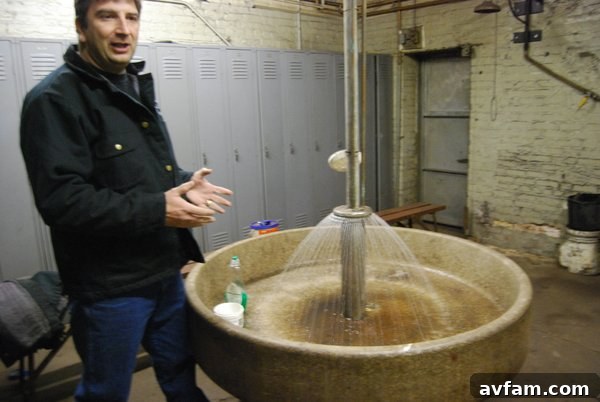
Mr. Lamonica consistently emphasizes and passionately underscores the foundational ideas of community, mutual respect, and collaborative partnership that have historically and powerfully bound fellow craftsmen and metalworkers together within the foundry. This deeply ingrained ethos is beautifully and functionally encapsulated by a distinctive circular sink found within the foundry’s communal areas. Ingeniously designed to be accessed from multiple sides, it subtly yet effectively encourages workers to communicate, share insights, and foster a genuine sense of collective camaraderie during their well-deserved breaks—a stark and compelling contrast to the often isolated, individual stations prevalent in many modern workplaces, thereby highlighting a cherished legacy of workplace culture.
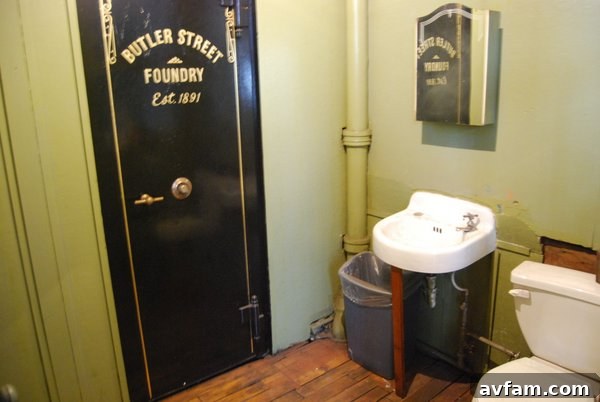
The original owners of the foundry, ever mindful of both their valuable assets and their industrious employees, ingeniously integrated some rather unique and telling features into the building’s intricate layout. For example, discreetly positioned adjacent to the toilet in what was likely the owner’s private bathroom, there is a cleverly designed, subtly placed window. This ingenious architectural detail afforded them the discreet ability to keep a watchful eye on their monetary assets—represented by a formidable, nearby safe—while simultaneously maintaining a subtle, supervisory presence over the bustling workshop floor. This fascinating insight into past management practices offers a unique glimpse into the historical intersection of personal space and astute business oversight in a bygone, yet not forgotten, industrial era, further enriching the tapestry of the Butler Street Foundry’s incredible story.