
Embarking on an overlanding adventure promises unforgettable experiences, breathtaking landscapes, and the thrill of self-reliant exploration. However, venturing into remote territories also brings a unique set of challenges, with communication being paramount among them. The ability to connect with your travel companions, emergency services, or even loved ones back home can be the difference between a minor inconvenience and a serious crisis. For overlanders, robust and reliable communication (comms) solutions are not just accessories; they are non-negotiable safety essentials.
While many might consider a cell phone sufficient, the truth of overlanding reveals significant gaps in conventional connectivity. This comprehensive guide delves into five crucial types of communication devices designed to keep you connected, safe, and informed, no matter how far off the grid your journey takes you. We strongly advocate for a multi-layered approach to communications, utilizing at least one, but ideally several, of these options to ensure redundant and reliable connectivity.
Cell Phones: The Everyday & The Limited
In our modern world, the cell phone is an omnipresent tool, a constant companion that keeps us connected to virtually everything. In urban and even many suburban areas, cellular networks offer impressive coverage, making our smartphones indispensable for navigation, information, and communication. However, the moment you transition from paved roads to rugged trails, from bustling towns to vast wilderness, your cell phone’s reliability as a communication device plummets dramatically.
While you should absolutely always carry your cell phone on any overlanding trip for its GPS capabilities, camera, and the occasional chance of reception, it’s crucial to manage your expectations. Once you venture into truly remote areas – deep canyons, dense forests, expansive deserts, or high mountain passes – cell service quickly becomes spotty, unreliable, or entirely nonexistent. No matter if you’re with AT&T, Verizon, T-Mobile, or Sprint, their extensive networks have limits, and those limits are often found precisely where overlanders seek adventure.
Maximizing Your Cell Phone’s Utility (When Service is Available)
- Offline Maps: Before losing signal, download comprehensive offline maps (e.g., Google Maps, Gaia GPS, iOverlander) for your entire route. Your phone’s GPS can still function without cellular data.
- Inform Contacts: Share your detailed itinerary, including expected routes and timelines, with a trusted contact before you depart.
- Emergency Mode: Remember that even without a SIM card or active service, a cell phone can often still dial emergency numbers (like 911 in the US) if any network signal is detected, regardless of your carrier.
Power Management: Keeping Your Lifeline Charged
A dead phone is useless. Charging cables are a must-have, but relying solely on your vehicle’s power can be risky, especially if you get stranded. Investing in robust, portable power solutions is critical for keeping not just your phone, but all your essential electronics, operational.
Small power banks can offer a few charges, providing temporary relief. However, for extended off-grid trips, a larger, more capable power station is a far superior choice. Products like the Goal Zero Yeti series (e.g., Yeti 400 or larger models) are excellent investments. These versatile units can recharge multiple devices, from phones and tablets to laptops, and even power lights or small appliances. Their greatest advantage lies in their ability to be replenished via solar panels, transforming them into true standalone power sources, perfect for prolonged stays in the wilderness. This independence from your vehicle’s battery ensures you always have a way to power your essential communication and navigation tools.

CB Radios: The Old-School Convoy Communicator
Citizen Band (CB) radios represent a classic form of two-way radio communication, deeply rooted in the history of road travel and still widely used today, particularly by truck drivers and some off-road enthusiasts. Their enduring popularity is both a strength and a weakness for overlanders.
The Good: Accessibility and Basic Connectivity
- No License Required: A significant advantage of CB radios is that they do not require any special license to operate. This makes them an accessible entry point for basic radio communication.
- Widespread Use: The sheer number of CB users, especially on major highways and in certain recreational areas, means there’s a chance someone might be listening if you’re within range and need assistance. Channel 19 is famously used by truckers, and Channel 9 is designated for emergency communications (though professional monitoring is rare outside of specific volunteer groups).
- Convoy Communication: For vehicle-to-vehicle communication within a close-knit overlanding convoy, CB radios can be effective. They allow drivers to relay information about road conditions, upcoming obstacles, or changes in pace without relying on visual signals.
The Bad: Limitations and Frustrations
- Limited Range: CB radios operate on a line-of-sight principle, meaning their effective range is severely limited by terrain, obstacles, and antenna height. In hilly or mountainous areas, their range can shrink to just a few hundred yards. On flat, open terrain, it might extend a few miles, but this is far from reliable for wide-area communication.
- Interference and Chatter: Because CBs are unregulated and widely used, channels can become congested with a lot of chatter, especially near highways or busy areas. This “bleedover” from multiple conversations can make it incredibly difficult to find a clear channel or hear critical transmissions.
- Lack of Privacy: CB conversations are entirely public. You can expect to overhear everything from mundane roadside talk to unsavory language, which might not be suitable for all audiences.
- No Professional Monitoring: While Channel 9 is for emergencies, it’s rarely monitored by professional rescue services. Relying on a passerby to hear your distress call and relay it is a gamble.
For these reasons, while a CB radio can serve as a useful backup or a tool for short-range convoy communication, we generally recommend against using it as your primary communication source for off-grid overlanding. It’s better suited for monitoring traffic or keeping in touch with the lead vehicle directly ahead. A reliable model like those from Cobra, which can be used handheld or integrated with a vehicle-mounted antenna for better range, is a practical addition to your gear list for specific use cases.
FRS/GMRS Radios: Reliable Short-Range Team Communication
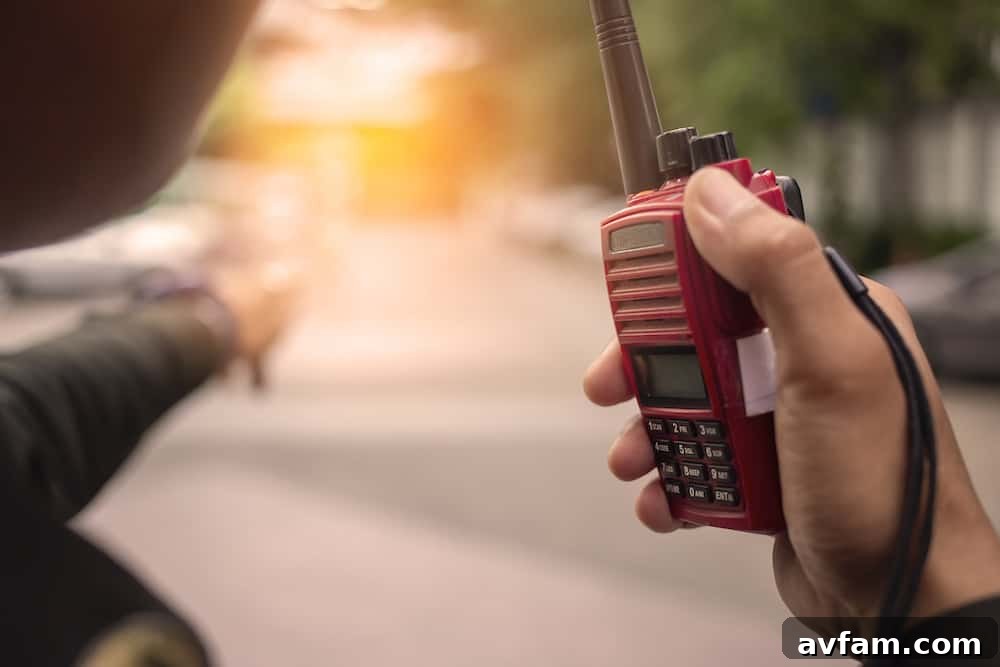
When it comes to keeping in touch with fellow travelers in your caravan, or coordinating activities while hiking, camping, or exploring a local area, FRS (Family Radio Service) and GMRS (General Mobile Radio Service) radios are often the ideal solution. These handheld, two-way radios offer a significant step up in clarity and reliability compared to CBs for short to medium-range group communication.
FRS (Family Radio Service): Simplicity and Convenience
- License-Free: FRS radios require no license to operate, making them incredibly accessible for anyone to pick up and use immediately.
- Reduced Interference: Compared to CBs, FRS radios generally offer clearer audio with less interference, as they operate on UHF frequencies.
- Best for Short Distances: They are designed for short-range, handheld walkie-talkie applications. Think family outings at a theme park, coordinating tasks around a campsite, or keeping track of children. Their practical range is usually less than a mile in most terrains.
GMRS (General Mobile Radio Service): Enhanced Power and Range for Overlanding
GMRS radios are very similar to FRS units, often sharing channels and compatibility, but they come with a crucial difference: increased power output and the capability to use external antennas. This makes them significantly more suitable for the demands of overlanding.
- Greater Power Output: GMRS radios can transmit at higher power levels than FRS, leading to a much improved communication range. While handheld GMRS units might offer 1-2 miles in typical terrain, mobile units equipped with larger, external vehicle-mounted antennas can extend this range up to 5 miles or even more in ideal conditions.
- Repeater Access: A key advantage of GMRS is the ability to access GMRS repeaters, which significantly extend communication range over vast distances, especially in challenging terrain. This requires a bit more technical understanding but can be invaluable.
- Simple Licensing: The FCC requires a license to operate GMRS radios. However, this is a straightforward process, involving an online application and a modest fee. Crucially, a single GMRS license covers an entire family, making it cost-effective for groups. There’s no exam required, unlike Ham radio.
For overlanders and dedicated outdoor enthusiasts, a set of GMRS radios is a highly recommended investment for everyday group communication. They offer a reliable, clear, and relatively long-range solution for keeping your convoy connected, scouting ahead on foot, or coordinating activities around basecamp. Midland is a brand highly favored in the overlanding community for its robust and reliable GMRS radios, such as their 50-channel models, which provide ample options for clear communication.

Ham Radio: The Ultimate Off-Grid Communication Powerhouse
For overlanders who approach communication with the utmost seriousness, understanding and obtaining a license for Amateur Radio, commonly known as Ham radio, is an exceptional investment. Ham radio opens up a world of communication possibilities far beyond what other consumer-grade radios can offer, making it an indispensable tool for serious off-grid exploration and emergency preparedness.
Unparalleled Range and Reliability
One of Ham radio’s most compelling advantages is its vast communication range. Depending on the band used, power output, and antenna setup, Ham radios can communicate locally (tens of miles), regionally (hundreds of miles), or even globally (thousands of miles via HF bands). Unlike other radios that are severely limited by line-of-sight, Ham operators can utilize various propagation methods, including bouncing signals off the ionosphere, to achieve remarkable distances. This means that even in the most remote locations, you have a high likelihood of connecting with someone in any type of emergency.
In larger convoys or when dealing with challenging terrain, Ham radios can maintain connectivity where FRS/GMRS and especially CBs would fail. The ability to use repeaters (often located on high points) further extends local communication networks dramatically.
A Thriving, Supportive Community
Beyond the technical capabilities, the Ham radio community is a vibrant, global network of enthusiasts known for its strong emphasis on education, experimentation, and public service. When you become a licensed Ham operator, you join a supportive community eager to share knowledge, help newcomers learn about operating procedures, and assist in selecting the right equipment. This community is also vital in emergency situations, often forming the backbone of communication networks when traditional infrastructure fails (e.g., ARES/RACES organizations).
The Licensing Process: A Rewarding Endeavor
Obtaining a Ham radio license requires passing a written exam, demonstrating a basic understanding of radio theory, regulations, and operating practices. There are different license classes (Technician, General, Extra), each granting increasing privileges and access to more frequency bands. While it requires more effort than a GMRS license, the knowledge gained and the capabilities unlocked are immensely rewarding for any serious overlander.
Many overlanders begin with a Technician class license, which allows operation on VHF/UHF bands, ideal for local and regional communication, often using repeaters. Portable handheld units like the Baofeng series are popular choices among overlanders and off-roaders for their affordability and versatility, serving as an excellent entry point into the Ham world.
For us, getting our Ham license is a priority. We’re currently in the process and eagerly anticipate joining this knowledgeable community and integrating robust Ham communication systems into our Land Cruiser, further enhancing our safety and connectivity on future expeditions.
GPS Satellite Communicators: Your Emergency Lifeline
When you are truly “off the grid,” beyond the reach of cell towers, CB, FRS, GMRS, and even Ham radio (for immediate emergency response), GPS satellite communicators stand as the ultimate and most reliable way to stay connected, especially in dire emergencies. These compact devices leverage global satellite networks to provide communication capabilities from virtually anywhere on Earth, making them an indispensable piece of gear for any serious overlander.
Essential Features for Off-Grid Safety
- Emergency SOS Button: This is arguably the most critical feature. In a life-threatening situation, pressing the SOS button sends a distress signal with your exact GPS coordinates to a 24/7 global monitoring center (like GEOS for Garmin inReach devices). This center then relays the emergency to the appropriate local search and rescue services, rapidly initiating a rescue operation. This feature provides unparalleled peace of mind when venturing into truly remote areas.
- Two-Way Satellite Messaging: Unlike older SPOT devices that only sent predefined messages, modern GPS communicators offer true two-way text messaging capabilities. This allows you to send and receive text messages to/from cell phones or email addresses, even when you have no cell service. You can keep loved ones updated on your progress, coordinate with your support team, or simply check in, providing comfort and accountability.
- Location Tracking and Sharing: Most satellite communicators can broadcast your location at set intervals, allowing friends, family, or your support team to track your journey online. This is invaluable for safety and for sharing your adventure with others.
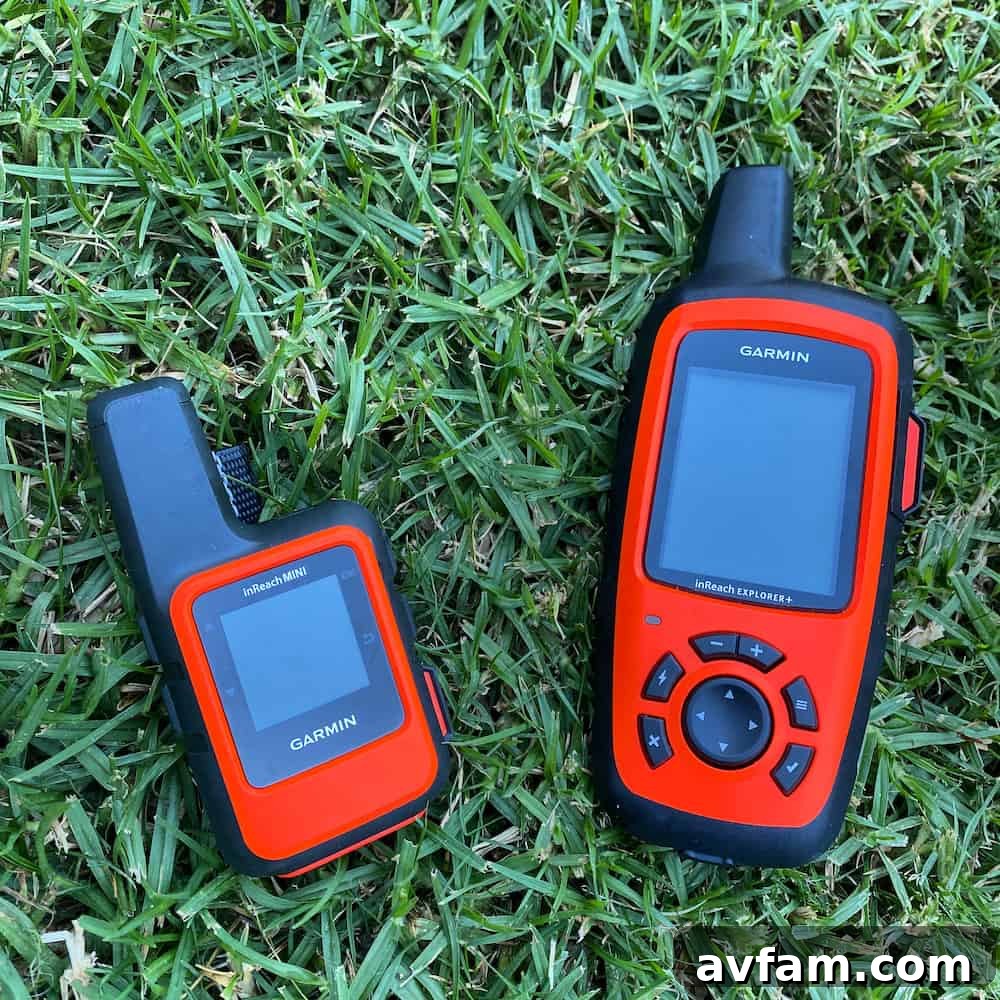
- Navigation and Mapping: Many advanced models, such as the Garmin inReach Explorer+, include built-in topographic maps and navigation features. You can plan routes, set waypoints, track your progress, and navigate accurately even without an internet connection, complementing your phone’s offline maps.
Subscription-Based Service
It’s important to note that GPS satellite communicators require a subscription plan to access the satellite network. These plans vary in cost and features, offering different tiers of messaging, tracking, and SOS services. While an additional expense, the peace of mind and the life-saving potential these devices offer make the subscription a worthwhile investment for any serious off-grid explorer.
Among the various options, the Garmin inReach series (such as the inReach Explorer+ or the compact inReach Mini) is highly regarded by the overlanding community for its robust features and reliable performance. Other notable brands include Zoleo and newer SPOT devices. We consider the Garmin inReach Explorer+ to be a top contender and plan to conduct an in-depth review of it and the Mini in the future, highlighting their specific benefits for adventurers.
Conclusion: A Layered Approach to Unwavering Connectivity
In the world of overlanding, preparedness is paramount, and reliable communication sits at the very heart of safety and success. While each communication device discussed offers unique advantages and fills specific niches, the overarching lesson is clear: no single solution is foolproof, and a multi-layered approach is always best. A cell phone for casual use and navigation in areas with service, robust power solutions to keep all devices charged, GMRS radios for clear convoy communication, a Ham radio for serious long-range and emergency backup, and critically, a GPS satellite communicator for absolute emergency assurance – this combination creates a formidable communication toolkit.
Never underestimate the importance of carrying reliable communication devices beyond just a cell phone on any road trip, especially when venturing off the beaten path. Understanding the capabilities and limitations of each tool, and knowing how to use them effectively, empowers you to explore with confidence, knowing that you can connect when it matters most. Prioritize your safety, invest in your communication setup, and embark on your next adventure with the ultimate peace of mind.