
Lowe’s Holoroom How-To: Revolutionizing DIY with Immersive AR/VR Training
The landscape of home improvement retail is undergoing a profound transformation, driven by evolving consumer expectations and technological advancements. Traditional big-box retailers are navigating this shift by enhancing their online presence, curating stylish design products, and making significant investments in e-commerce. However, Lowe’s, a leading name in home improvement, is venturing into an entirely new frontier: immersive learning through augmented reality (AR) and virtual reality (VR) tutorials. With the introduction of the Lowe’s Holoroom How-To, the company is not just selling products; it’s empowering a new generation of DIY enthusiasts with practical skills in a groundbreaking, interactive environment.
This innovative platform represents a strategic leap forward, addressing the critical need for accessible, engaging, and effective DIY education. As digital natives increasingly seek information and solutions through interactive mediums, Lowe’s is positioning itself at the forefront of this trend. The Holoroom How-To is more than just a marketing gimmick; it’s a meticulously designed learning tool that leverages cutting-edge technology to demystify complex home improvement projects, making them approachable and achievable for everyone.
Step Inside the Future of DIY: The Holoroom How-To Experience
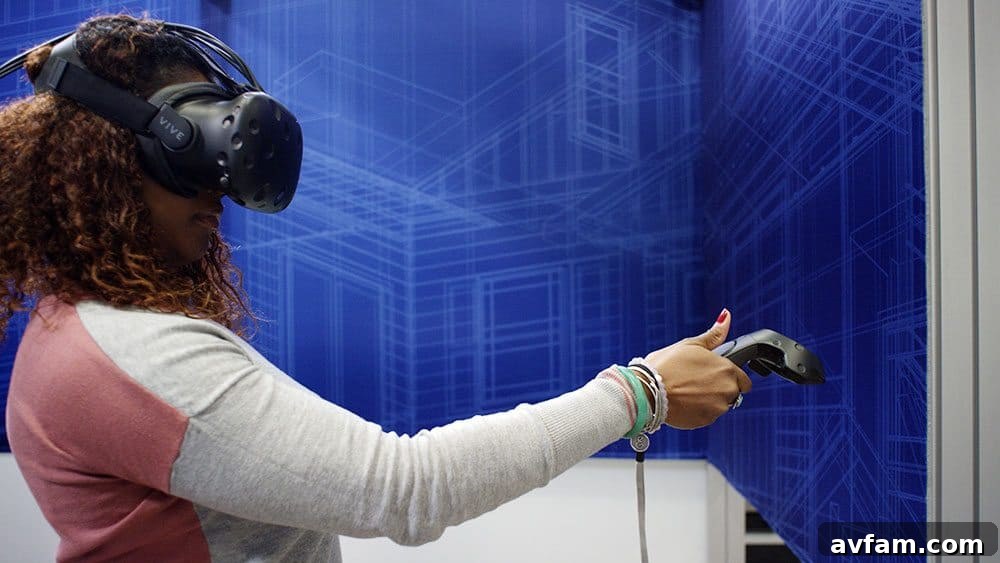
Currently available in an exclusive selection of Lowe’s stores across the East Coast, the Holoroom How-To offers an unparalleled educational experience. Users don an HTC Vive virtual reality headset, instantly transporting them into a dynamic virtual workshop where they are guided through a complete DIY project from inception to completion. This hands-on, simulated environment allows individuals to learn at their own pace, experiment without fear of error, and gain confidence before tackling real-world tasks.
The inaugural project showcased within the Holoroom How-To is the intricate process of tiling a shower. This choice highlights the system’s capacity to break down complex tasks into manageable, easy-to-understand steps. Participants don’t just watch a video; they actively engage with the virtual tools and materials, receiving real-time feedback and visual cues. Imagine selecting tiles, mixing grout, applying adhesive, and setting tiles – all within a safe, controlled virtual space. The immersive nature of VR ensures that learners internalize each step, fostering a deeper understanding than traditional instructional methods could ever achieve. Should the Holoroom How-To garner widespread success and adoption, Lowe’s has ambitious plans to significantly expand its library of projects, encompassing a vast array of home improvement challenges.
Why Immersive Learning is a Game-Changer for DIY
The decision by Lowe’s to heavily invest in AR/VR tutorials is a profoundly intelligent strategic move, particularly when considering the evolving habits of modern consumers. Millennials and Gen Z are constantly seeking new, efficient, and engaging ways to access information and acquire skills. In an era dominated by on-demand services like Handy and Taskrabbit, where skilled labor is readily available at a tap, there’s a perceived decline in the inclination towards traditional DIY. Many young homeowners or renters might feel intimidated by complex projects, lacking the foundational knowledge or confidence to start.
The Holoroom How-To directly addresses this emerging “DIY gap.” By presenting home improvement skills in a highly engaging, interactive, and risk-free virtual environment, Lowe’s effectively lowers the barrier to entry. VR transforms what might seem like a daunting task into an exciting and achievable learning adventure. This approach positions Lowe’s to connect with millions of young, digitally native individuals who possess an innate curiosity and a desire to learn, but simply need the right tools and guidance. The platform taps into their preference for experiential learning, allowing them to practice and master techniques before applying them in a physical space, thereby building genuine confidence.
Empowering the Next Generation of Homeowners
For many, the cost of professional services can be prohibitive, making DIY a financially attractive alternative. However, the lack of confidence or knowledge often deters individuals. The Holoroom How-To fills this void by providing a accessible, no-pressure training ground. It teaches not just the ‘how-to’ but also the ‘why’ behind each step, fostering a deeper understanding of the processes involved. This empowerment translates directly into increased customer loyalty and engagement with the Lowe’s brand. When customers feel capable and supported in their home improvement journeys, they are more likely to return to the retailer that equipped them with those vital skills.
Furthermore, the interactive nature of VR training can dramatically improve retention rates compared to passively watching video tutorials or reading manuals. Users are actively participating, making decisions, and observing immediate virtual consequences, which reinforces learning. This active engagement creates a memorable experience that builds practical muscle memory and cognitive understanding, making the transition to a real-world project much smoother and more successful.
The Strategic Vision: Beyond Tiling a Shower
While tiling a shower serves as an excellent foundational project, the potential for Lowe’s Holoroom How-To extends far beyond this initial offering. The future vision for this platform is expansive, encompassing a vast curriculum of home improvement skills. Imagine learning to install a ceiling fan, repair a leaky faucet, build a deck, or even undertake basic electrical wiring, all within the safety and guidance of a virtual environment. Each new project added to the Holoroom library will unlock new opportunities for customers and reinforce Lowe’s position as a hub for both products and practical expertise.
This initiative also serves as a potent differentiator in a competitive retail market. While competitors focus on price matching or product diversity, Lowe’s is investing in a unique value proposition: education and empowerment. By offering hands-on virtual training, Lowe’s isn’t just selling tools and materials; it’s selling the confidence and capability that allow customers to undertake their dream projects. This creates a powerful connection with consumers, fostering a sense of partnership rather than mere transactional interaction.
Integrating Virtual Training with Real-World Shopping
The synergy between the virtual learning experience and the physical retail environment presents enormous opportunities. After completing a project in the Holoroom, users could receive a personalized shopping list of all the tools and materials required, seamlessly integrating their learning with their purchasing journey. This eliminates the guesswork often associated with DIY projects and ensures customers have everything they need for a successful outcome. Imagine finishing a virtual shower tiling session and having the exact amount of grout, specific adhesive, and correct trowel size automatically added to your Lowe’s app cart for in-store pickup or delivery.
Moreover, the data collected from user interactions within the Holoroom could provide invaluable insights into customer needs and common DIY challenges. This information could then be used to refine existing product offerings, develop new tools, or create even more relevant and effective training modules. It’s a feedback loop that continually enhances both the educational experience and the retail inventory.
The Broader Impact of AR/VR on Retail and Education
Lowe’s Holoroom How-To is not merely an isolated innovation; it’s a pioneering example of how augmented and virtual reality technologies are poised to redefine retail and vocational education across various sectors. By demonstrating the practical applicability of immersive training for complex tasks, Lowe’s is setting a precedent that other industries are likely to follow. From automotive repair to intricate assembly processes, from medical training to culinary arts, the potential for AR/VR to revolutionize skill acquisition is immense.
The benefits extend beyond just technical skills. Immersive environments can also be used for product visualization, allowing customers to “try before they buy” in new and exciting ways. Imagine designing a new kitchen in VR, seeing how different cabinet finishes look, or testing various flooring options in your own home with AR. This level of personalized interaction enhances the shopping experience, reduces buyer’s remorse, and builds greater customer satisfaction.
The challenges of implementing such advanced technology are considerable, including the initial investment in hardware, software development, and content creation, as well as ensuring widespread user adoption and comfort. However, the long-term benefits in terms of customer engagement, brand loyalty, and market differentiation make these investments worthwhile. Lowe’s commitment to the Holoroom How-To underscores a bold vision for the future of retail – one where the customer experience is not just about buying products, but about gaining knowledge, confidence, and the empowerment to create.
Conclusion: Lowe’s Forging the Path to Future DIY
In conclusion, Lowe’s Holoroom How-To stands as a testament to the company’s forward-thinking approach and its commitment to meeting the evolving needs of its customer base. By embracing the power of AR/VR, Lowe’s is not only tackling the challenge of engaging digitally native generations but also establishing itself as a leader in innovative retail experiences. The Holoroom provides a unique, immersive, and effective platform for learning DIY skills, transforming complex projects into approachable tasks and empowering individuals to confidently embark on their home improvement journeys.
As this technology matures and becomes more accessible, we can anticipate a significant expansion of the Holoroom’s capabilities and reach. Lowe’s is not just selling lumber and tools; it’s selling the invaluable skill set and self-assurance that come with mastering home improvement projects. This pioneering initiative marks a pivotal moment in retail, demonstrating how technology can bridge knowledge gaps, foster practical skills, and ultimately redefine the relationship between retailers and their empowered, hands-on customers. The future of DIY is here, and it’s immersive, interactive, and powered by Lowe’s.