
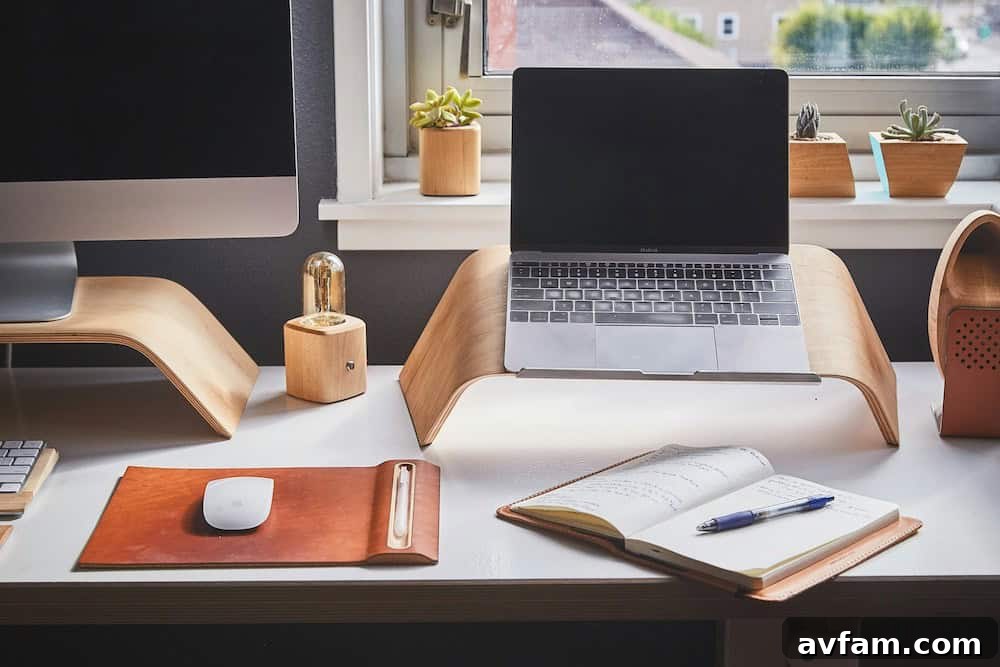
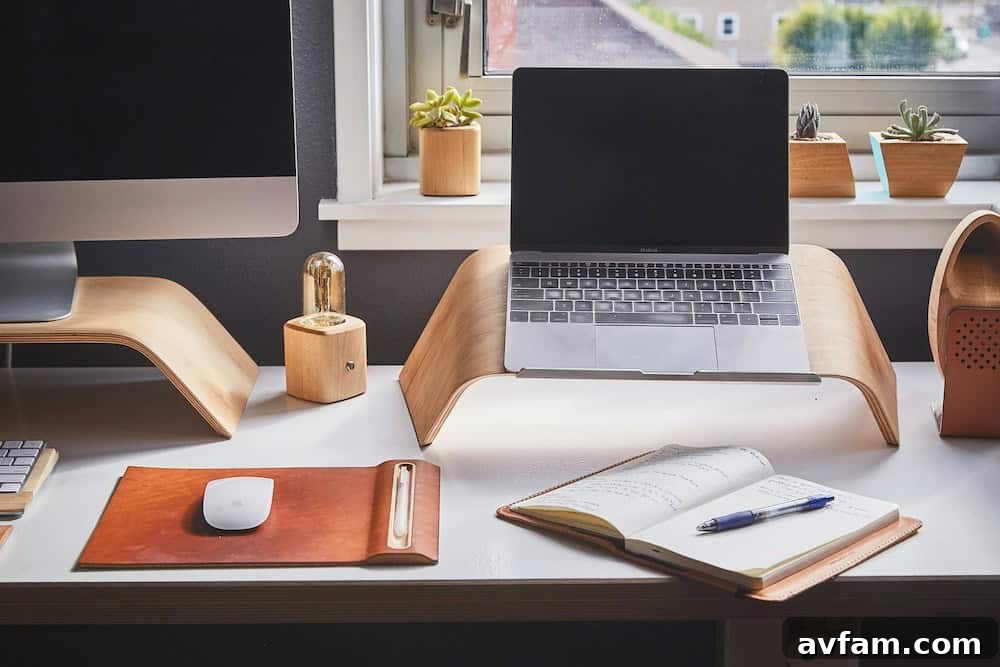
The landscape of work has undergone a monumental shift, with remote work opportunities becoming a staple for millions globally, extending far beyond the initial push of the recent pandemic. This enduring trend highlights the critical need for an optimized and inspiring home workspace.
Drawing from over 15 years of dedicated remote work experience, I understand firsthand that a truly productive home office isn’t merely a luxury—it’s the cornerstone of sustained success and professional growth. However, transforming a spare corner or room into a dynamic hub for creativity and efficiency can be a complex endeavor. This comprehensive guide is crafted to demystify the process, offering actionable insights and proven strategies to design, organize, and personalize your home office, ensuring it empowers you to achieve your best work.
We’ll delve into everything from selecting the ideal location and implementing ergonomic principles to mastering organization and infusing your unique style. Our goal is to equip you with the knowledge to create a home office that not only supports your daily tasks but also ignites your passion, minimizes distractions, and fosters a healthy work-life balance.
Understanding the Importance of a Productive Home Office
A truly productive home office transcends the basic definition of a workspace; it is a meticulously curated environment designed to bolster your performance, elevate your focus, and protect your overall well-being. The intricate details of its design, the thoughtful arrangement of its layout, and its overarching ambiance wield significant power, directly influencing your motivation, concentration, and ultimately, your daily output and long-term career trajectory.
Creating such a space demands a holistic approach, extending far beyond merely placing a desk and chair. It involves cultivating an atmosphere that actively stimulates creativity and champions peak efficiency. Imagine a workspace bathed in invigorating natural light, dotted with vibrant green plants that purify the air and calm the mind, and adorned with subtle motivational cues. These elements work in concert to uplift your spirit, maintain your energy levels, and foster a positive mindset throughout the day, transforming your home office into a sanctuary of professional excellence.
The Impact of Your Environment on Work Efficiency
The immediate environment of your home office profoundly dictates your capacity for efficient work. Consider the stark contrast: a cluttered, disorganized space introduces visual noise and mental friction, fragmenting your attention and making it harder to initiate and complete tasks. The constant search for documents or tools drains valuable cognitive resources, leading to frustration and diminished output. Conversely, a meticulously designed, tidy, and harmonious workspace acts as a catalyst for productivity, fostering mental clarity and allowing you to immerse yourself deeply in your work.
Beyond mere tidiness, personalizing your workspace with items that resonate deeply with you—be it cherished family photographs, inspiring artwork, or meaningful keepsakes—cultivates a profound sense of belonging and significantly enhances your psychological well-being. This emotional connection to your space can mitigate stress and boost morale, making work feel less like a chore and more like an engaging pursuit. Furthermore, a strategic investment in ergonomic furniture, such as an adjustable chair and desk, paired with intelligent organizing tools, not only optimizes your physical comfort but also streamlines your workflow, drastically reducing physical strain and mental fatigue, thereby supercharging your overall productivity.
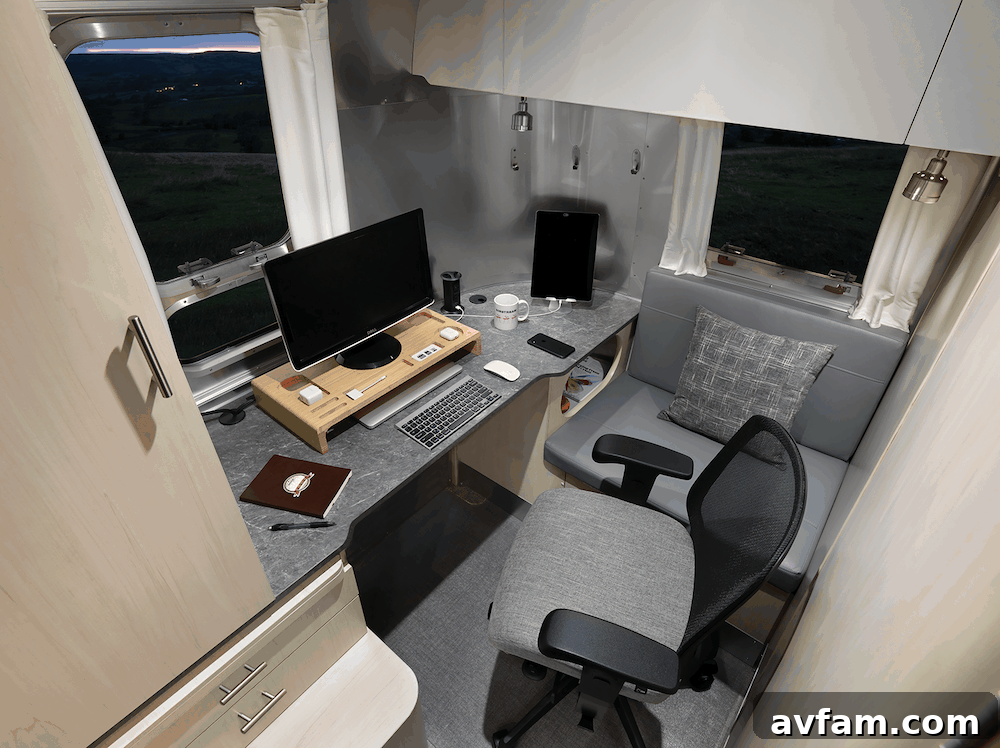
Balancing Home Comforts with Professional Needs
Establishing a professional and dedicated atmosphere within your home office is paramount, yet it is equally crucial to interweave elements of comfort and personal warmth. Striking this delicate balance between domestic solace and professional rigor is key to crafting a space where you feel genuinely motivated, deeply comfortable, and consistently productive. A home office that feels inviting rather than sterile encourages longer periods of focused work and reduces the mental barrier to “getting started.”
To infuse this vital comfort, consider tactile additions like a plush, cozy rug underfoot or inviting, comfortable seating options beyond your primary desk chair, perhaps for reading or contemplation. These elements soften the professional edge, making the workspace more appealing. Moreover, creating a designated micro-zone for breaks—a tranquil reading nook, a serene mini-meditation corner, or even just a well-appointed armchair—provides an essential sanctuary for mental decompression. Such dedicated break areas allow you to effectively recharge your mental batteries and maintain sharp focus throughout demanding workdays. By expertly blending functional efficiency with a nurturing coziness, you can engineer a home office that not only maximizes your output but also significantly contributes to your overall well-being and job satisfaction.
Choosing the Right Location for Your Home Office
The strategic selection of your home office’s location is a foundational decision that will profoundly influence your daily productivity and long-term work satisfaction. This section guides you through the essential considerations for choosing an optimal room or area, and crucially, provides innovative solutions for navigating common space constraints, ensuring you can create an effective workspace no matter the size of your home.
Beyond mere practicality, the ambiance of your chosen space plays a vital role. A room offering a calming view of nature, or one adorned with a soothing color scheme, can dramatically elevate your creativity, reduce stress levels, and boost your overall sense of well-being. Thinking creatively about how your environment affects your mood is key. Further enriching this ambiance, the deliberate personalization of your workspace with elements like living plants, inspiring artwork, or cherished meaningful decor can transform a functional area into a wellspring of inspiration and motivation, making every workday more engaging and less arduous.
Factors to Consider When Selecting a Room
When embarking on the crucial task of choosing the ideal room for your home office, a multi-faceted evaluation is essential. Prioritize rooms with abundant natural light, as direct exposure to daylight is proven to enhance mood, regulate circadian rhythms, and significantly boost productivity and alertness. Equally important are the noise levels; a quiet sanctuary, strategically isolated from household distractions, is paramount for maintaining uninterrupted focus on complex tasks. Consider the flow of foot traffic and the proximity to potential noise sources within your home.
Furthermore, carefully assess the room’s layout and how it naturally aligns with your unique work style. Are you someone who thrives in an expansive, airy environment, benefiting from a feeling of openness and collaborative energy? Or do you find greater concentration and comfort within a cozy, more enclosed space that offers a sense of privacy and seclusion? Understanding these inherent preferences is invaluable in guiding your selection, ensuring the chosen room naturally complements your working habits and fosters an environment where you can perform at your absolute best. Additionally, consider factors like temperature control, ventilation, and the potential for a strong, reliable internet connection.
Dealing with Space Constraints
Having limited space should never be a barrier to cultivating a highly efficient and inspiring home office. On the contrary, space constraints often ignite innovative design solutions. There’s a wealth of ingenious, space-saving strategies available to help you maximize every square inch. Embrace vertical storage options—think tall shelving units, wall-mounted organizers, and floating shelves—to draw the eye upward and free up valuable floor space. Even the smallest nooks, such as under-stair areas, closet interiors, or unused corners, can be cleverly reimagined and transformed into remarkably functional workspaces.
The key lies in smart, multifunctional furniture. Explore options like desks equipped with integrated storage compartments, foldable workstations that can be neatly tucked away when not in use, or even mobile carts that serve as both storage and a flexible work surface. By thinking innovatively and adopting a “less is more” philosophy, prioritizing essential items and embracing clever design, you can overcome spatial limitations. This allows you to construct a home office that not only meets all your functional requirements but also inspires creativity and promotes efficiency, regardless of its modest footprint.
Designing Your Home Office for Maximum Productivity
Crafting a home office that consistently delivers maximum productivity demands a deliberate and thoughtful design approach. This process involves meticulously engineering a workspace where comfort, functionality, and aesthetic appeal converge to create an environment conducive to deep work and sustained focus. Here, we delve into the foundational principles that underpin optimal office design, exploring the crucial role of ergonomics, the strategic selection of furniture, and the transformative power of expertly utilized lighting.
It’s vital to recognize that achieving peak productivity in your home office transcends purely physical considerations. The psychological dimensions of your workspace—how it makes you feel, the subtle cues it sends to your brain—are equally influential in shaping your work performance. A space consciously designed to inspire creativity, minimize distractions, and cultivate a sense of calm focus can dramatically enhance your daily output, problem-solving abilities, and overall job satisfaction. By addressing both the tangible and intangible aspects, you can forge a home office that is not just efficient, but genuinely empowering.
The Role of Ergonomics in Office Design
Ergonomics is not merely a buzzword; it is a critical discipline vital for safeguarding your physical well-being and, consequently, dramatically enhancing your long-term productivity. Investing in superior ergonomic solutions is paramount. This includes a high-quality office chair meticulously designed with proper lumbar support and a full range of adjustability, ensuring your spine maintains its natural curve and pressure points are alleviated. Complement this with an adjustable desk, ideally a sit-stand model, allowing you to fluidly alternate between sitting and standing positions throughout the day, which boosts circulation and reduces fatigue. Furthermore, integrate ergonomic accessories such as a properly angled keyboard, a comfortable mouse, and a monitor arm that positions your screen at eye level. These adjustments collectively prevent repetitive strain injuries, minimize muscle fatigue, and enable you to work comfortably and productively for extended periods.
Beyond foundational furniture, the principles of biophilic design—integrating elements of nature—can further augment your ergonomic setup. Placing live plants strategically within your home office or incorporating natural materials like wood and stone can significantly reduce stress and foster a profound sense of well-being. Numerous studies underscore the positive impact of even modest exposure to nature on cognitive function, creativity, and overall mental resilience. This blend of physical comfort and natural immersion creates a restorative and highly effective workspace.
Selecting the Right Furniture for Your Workspace
The judicious selection of office furniture is a cornerstone for constructing an exceptionally efficient workspace. Your choices must be deeply informed by your specific workflow, the nature of your tasks, and the amount of equipment you utilize daily. When choosing your desk, consider its size and configuration: do you require an expansive surface for multiple monitors and paperwork, or would a compact, minimalist desk suffice? L-shaped desks can maximize corner space and provide distinct zones for different tasks, while standing desks offer dynamic flexibility.
Beyond the desk, your storage solutions must be equally strategic. Assess whether you primarily handle physical documents, requiring filing cabinets and drawer units, or if your work is largely digital, benefiting from shelves for books and decorative items. Effective cable management is also crucial; unsightly and tangled wires not only create visual clutter but can also pose safety hazards. Opt for furniture designed with integrated cable trays or invest in cable clips and sleeves to maintain a clean, organized appearance. Ultimately, selecting functional pieces that cater precisely to your professional needs will optimize your workflow, minimize disruptions, and significantly boost your productivity.
The Power of Lighting in Enhancing Productivity
Lighting is an often-underestimated yet profoundly powerful element in dictating your energy levels, focus, and overall mood within the home office. Maximizing natural light exposure is paramount; position your desk strategically near a window to harness the mood-boosting and circadian rhythm-regulating benefits of daylight. Natural light not only reduces eye strain but also contributes to greater alertness and a more positive outlook throughout the workday. Supplement this with a layered lighting strategy to ensure comprehensive illumination.
This strategy involves three key layers: ambient lighting (general overhead light for overall room brightness), task lighting (a focused desk lamp or monitor light bar to illuminate your immediate work area without glare), and accent lighting (decorative lights to add depth and personality). Consider incorporating dimmable lights or adjustable fixtures that allow you to customize the intensity and color temperature of your artificial light. Cooler white light (around 4000-5000K) is ideal for maintaining focus and alertness during intensive tasks, while warmer tones (2700-3000K) can be beneficial for breaks or winding down. This adaptability helps mitigate eye strain and fatigue, enabling you to work more comfortably, efficiently, and for longer durations.
Organizing Your Home Office for Efficiency
An impeccably organized workspace is far more than just aesthetically pleasing; it is an absolute imperative for peak productivity and mental clarity. A well-structured home office fosters an environment where your mind can focus solely on the task at hand, free from the insidious distractions of clutter. Effective storage solutions and a steadfast commitment to a clutter-free environment are your primary allies in this endeavor, enabling you to swiftly locate necessary items and maintain an unbroken flow of concentration.
Implementing Effective Storage Solutions
The foundation of a highly efficient home office lies in intelligent and personalized storage. Invest wisely in a diverse range of storage options that perfectly align with the volume and type of items you manage. This might include robust shelving units for books and reference materials, secure filing cabinets for sensitive documents, or innovative wall-mounted organizers for smaller essentials and tools. The guiding principle should be: “a place for everything, and everything in its place.”
Strategically position frequently used items within immediate arm’s reach to minimize disruption and wasted time. Employ a consistent labeling system for files, drawers, and containers to create a streamlined, intuitive organizational structure. Beyond physical items, extend this meticulous approach to your digital realm: utilize cloud storage for easy access and backup, establish clear folder hierarchies on your computer, and maintain a tidy desktop. This holistic approach to organization, both physical and digital, reduces cognitive load and allows for uninterrupted focus.
Keeping Your Workspace Clutter-Free
Clutter is a formidable enemy of productivity, acting as a constant visual and mental distraction that actively impedes your ability to concentrate and perform effectively. The presence of unnecessary items on your desk or around your workspace can contribute to decision fatigue and a pervasive sense of overwhelm. To combat this, establish a consistent routine for decluttering: regularly sort through paperwork, digitally archive or discard unnecessary documents, and remove any items that do not directly contribute to your current tasks or overall workspace functionality.
Adopt habits such as the “one-touch” rule for incoming items—handle mail, documents, or new supplies immediately, either filing, discarding, or taking action. Dedicate 5-10 minutes at the end of each workday to reset your workspace, tidying up and preparing for the next day. A clean, minimalist, and organized environment not only fosters a greater sense of calm and control but also significantly enhances your ability to maintain sharp focus and work with sustained efficiency, transforming your home office into a powerful engine for accomplishment.
Personalizing Your Home Office
Your home office should be far more than just a functional space; it ought to be a vibrant reflection of your unique personality and a dynamic catalyst for inspiration and creativity. This final, yet crucial, stage of design focuses on infusing your workspace with elements that resonate deeply with you, transforming it into an environment that not only supports your professional endeavors but also nurtures your personal well-being.
Incorporating Elements of Your Personal Style
To truly make your home office your own, integrate personal touches that authentically align with your individual style, passions, and interests. This goes beyond mere aesthetics; it’s about crafting an environment that feels intrinsically yours. Display artwork that speaks to your soul, showcases photos of loved ones, or features meaningful objects from your travels or hobbies. Incorporate items that genuinely inspire you—perhaps a unique sculpture, a collection of vintage books, or an award that signifies a past achievement.
Infusing your workspace with these elements of your personality creates an emotional connection, significantly enhancing your motivation, boosting your morale, and contributing to overall job satisfaction. When your surroundings reflect who you are, work feels less like an obligation and more like an extension of your authentic self, fostering a positive and empowering professional experience.
Using Decor to Inspire Creativity and Focus
Strategic decor choices can act as powerful psychological tools, actively fueling your creativity and sharpening your focus. When selecting decorative elements, prioritize items that evoke specific positive responses and align with your work goals. Integrating living plants is an excellent choice; they not only purify the air and add natural beauty but also have a proven calming effect, reducing stress and improving cognitive function. Consider specific plants known for their air-purifying qualities or their visually soothing presence.
Additionally, pay close attention to the color scheme of your office. Colors have a profound psychological impact: tranquil blues can promote a sense of calm and focus, vibrant yellows can infuse energy and optimism, while muted greens are often associated with balance and harmony. Choose hues that uplift your mood and support the mental state required for your work. Furthermore, consider incorporating elements like a vision board to keep your goals front and center, or a small water feature for soothing ambient sound. By carefully curating your decor, you transform your office into a stimulating, supportive, and truly inspiring sanctuary.
By thoroughly understanding the profound importance of a well-designed and productive home office, and by diligently applying these comprehensive guidelines, you are empowered to forge a workspace that not only significantly boosts your productivity but also robustly supports all your professional aspirations. The intentional process of designing and organizing your home office for maximum efficiency will yield multifaceted benefits, from tangibly improving your work performance and fostering greater output to ultimately contributing to a far more enjoyable, fulfilling, and sustainable work-from-home experience.