
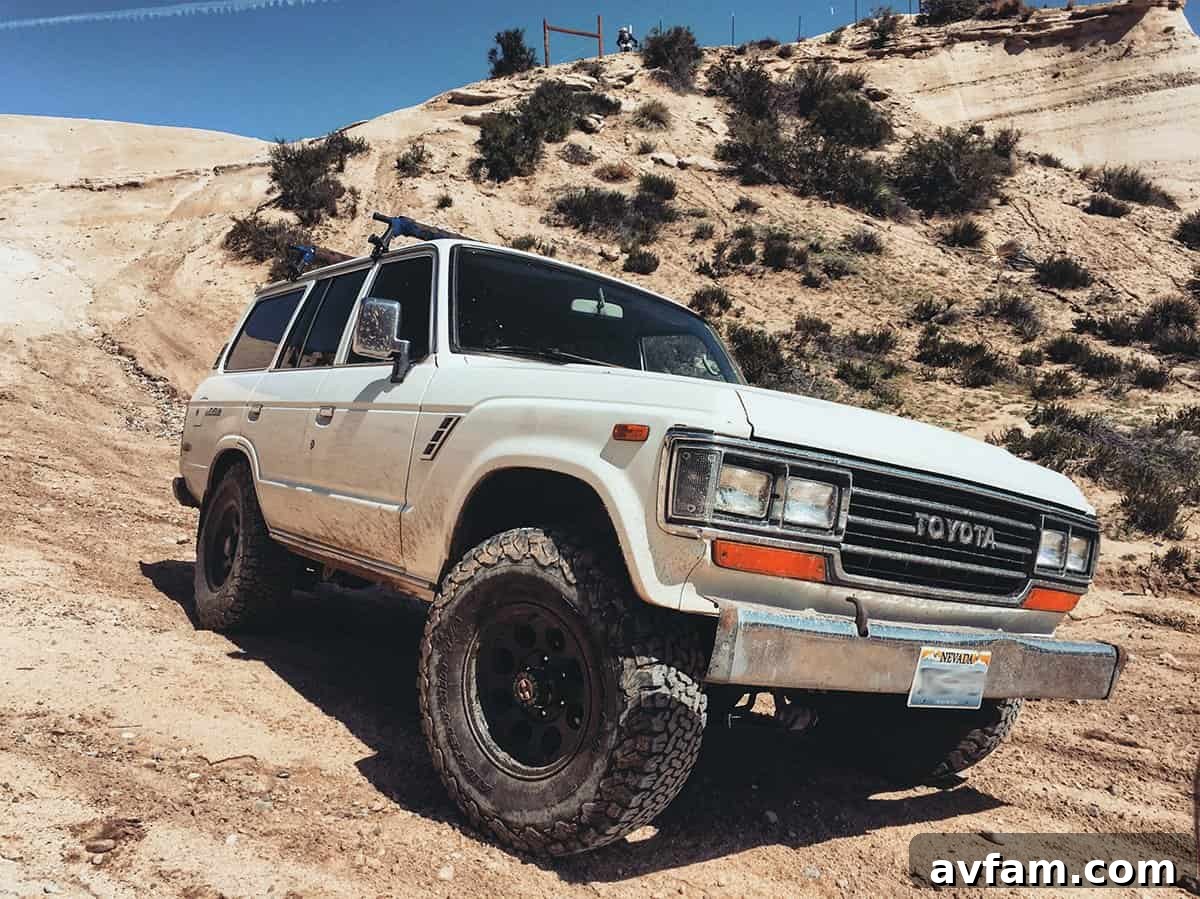
The quest for a truly capable and characterful off-road vehicle often leads enthusiasts down a path less traveled, away from modern conveniences and towards the enduring legacy of classic 4x4s. For me, that journey culminated last December with an exciting drive to Tucson, Arizona. My mission: to inspect and potentially acquire a remarkably well-preserved 1989 FJ62 Toyota Land Cruiser. The moment I saw it, I knew I had found my next adventure machine. It was pristine, robust, and ready for a new chapter. The following day, I embarked on the scenic drive back to Los Angeles, the proud new owner of a legendary Land Cruiser, marking the beginning of an exciting overlanding build.
Rekindling the Flame: My Love Affair with Classic 4x4s
The allure of vintage off-roaders has always held a special place in my heart, a sentiment that goes back more than 15 years to when I reluctantly parted ways with my beloved 1970 Ford Bronco. That Bronco was more than just a truck; it was a symbol of raw, unfiltered adventure, albeit one with its own set of charming quirks. It was truly rough around the edges, equipped only with a bikini top that offered minimal protection from the elements. I had moved the three-on-the-tree shifter to the floor, a modification that, while improving ergonomics, did little to mitigate the significant heat radiating from the floorboards.
Living in Las Vegas at the time, driving that Bronco during the scorching summer months was an exercise in endurance. Yet, despite the heat, the rudimentary amenities, and its general ruggedness, I absolutely adored that vehicle. It offered an unparalleled connection to the road and the environment, a feeling that modern vehicles often struggle to replicate. However, when life took me to New York, the practicalities of city living and a cross-country move necessitated its sale. The void it left lingered, constantly reminding me of the unique thrill only a classic 4×4 can provide. Ever since, I’ve been on the lookout for another iconic vehicle that could reignite that passion for authentic off-road exploration and weekend escapes.
Embracing the Legend: The Toyota Land Cruiser FJ62
My initial search for a new classic 4×4 often gravitated towards the smaller, more nimble FJ40 Land Cruisers. I have fond memories of two friends in high school who owned FJ40s, and their rugged simplicity and unmistakable charm always appealed to me. However, finding a clean, unmolested FJ40 today often comes with a hefty price tag that can be prohibitive for many enthusiasts looking to build a capable overlanding rig. This led me to expand my horizons and consider other iconic models within the Land Cruiser lineage.
The four-door FJ62, with its slightly more refined yet equally robust character, gradually moved into focus. While not as cheap as some might hope, it presented a more accessible entry point into the world of classic Land Cruisers. I managed to acquire my FJ62 for a very reasonable $5,000, a price that, considering its condition and the current market trends, felt like a significant win. I knew there was potential to double that value in the thriving Los Angeles classic car market, but my intention was never to flip it. My goal was, and remains, to transform this already formidable machine into a bespoke overlanding marvel.
The FJ62 is more than just an old SUV; it’s a living legend. Renowned globally for its unparalleled durability, reliability, and capability, these vehicles have traversed some of the planet’s most challenging terrains, from the vast deserts of Africa to the rugged mountains of South America. Its inline-six engine, solid axles, and robust body-on-frame construction are engineering marvels designed for longevity and resilience. This reputation for traversing harsh environments is precisely why it’s the ideal foundation for my overlanding project. Its heritage provides a proven canvas upon which to build a vehicle capable of taking me far off the beaten path.
Upon acquisition, my FJ62 was remarkably stock, showing 190,000 miles on the odometer – a testament to the longevity of these Toyota workhorses. In the ten months since, it has quickly become my primary mode of transportation, accumulating an additional 10,000 miles as my daily driver. Despite its age and inherent ruggedness, it has proven to be a surprisingly comfortable and reliable companion for everyday commutes. Of course, I still maintain my 2008 F-150, which serves as a more fuel-efficient and family-friendly option for longer trips or when hauling larger loads. However, the satisfaction of driving a classic, analog machine like the FJ62 every day is a pleasure that a modern pickup simply cannot match. It’s a constant reminder of the adventures that lie ahead, and it stands ready to transition from daily commuter to weekend warrior at a moment’s notice.
Laying the Foundation: Initial Assessments and Essential Upgrades
Before diving into any significant modifications, the first crucial step was to perform a thorough “baselining” of the vehicle. This involves a comprehensive inspection of all major systems – engine, transmission, axles, brakes, steering, and suspension – to identify any immediate maintenance needs or worn components. As expected with a vehicle of its age, a few items required attention. The most significant finding was the need for a rebuilt steering box. A precise and responsive steering system is paramount for both on-road safety and off-road control, so addressing this was a top priority to ensure the FJ62’s handling was up to par and ready for more demanding use.
With the steering addressed, I moved onto some immediate, impactful upgrades. The stock wheels and tires, while functional, were not suited for the overlanding aspirations I had for the FJ62. I quickly opted for a set of rugged 16-inch aluminum black rims, paired with aggressive 33-inch by 10.5-inch all-terrain tires. This combination offers a significant boost in traction, ground clearance, and a more aggressive stance, which are all vital for navigating challenging trails. A common challenge with larger tires on classic vehicles is clearance. In my case, I did have to install wheel spacers to ensure the new rims and tires cleared the steering knuckle, preventing any rubbing issues during turns or suspension articulation. These initial modifications not only enhanced the FJ62’s aesthetics but also laid the groundwork for its transformation.
My overarching vision for this FJ62 is clear: to transform it into a highly capable and self-sufficient weekend overlanding and camping vehicle. While some enthusiasts dream of month-long expeditions, my current goal is to create a rig perfect for 3-4 day excursions into the wilderness. The focus is on self-sufficiency, meaning the vehicle should be equipped to handle recovery situations, carry all necessary gear, provide comfortable shelter, and navigate challenging terrain without external support. This involves careful planning of systems for water, power, and storage, all while ensuring the vehicle remains reliable and enjoyable to drive. It’s about escaping the daily grind and immersing oneself in nature, even if only for a few days at a time.
The FJ62 Overlanding Build: From Stock to Expedition-Ready
The journey to build an ultimate overlanding machine is a methodical one, starting with fundamental upgrades that enhance both protection and capability. My next significant addition will be upgraded front and rear bumpers from 4Plus Products. Their designs strike a perfect balance between rugged functionality and aesthetic appeal, offering the sharpest looking bumpers tailored precisely for my needs. Heavy-duty bumpers are indispensable for overlanding, providing crucial protection against trail obstacles, serving as robust recovery points, and offering convenient mounting solutions for auxiliary lights and other essential gear.
Complementing the new front bumper, I’ve already secured a Warn VR 10000 winch from 4 Wheel Parts. A winch is arguably one of the most vital pieces of recovery equipment for any serious off-road vehicle. The Warn VR 10000, known for its reliability and pulling power, will be instrumental in self-recovery situations, ensuring that I can extract myself from challenging stuck scenarios. Once the front bumper is installed, the winch will be mounted, giving me the confidence and tools necessary to venture into more adventurous and potentially challenging terrains.
Upgrading the Ride: Suspension for Performance and Comfort
Perhaps the most critical upgrade for any overlanding vehicle is the suspension system. The original suspension on my FJ62, after decades of service, is completely “flat,” meaning it has lost much of its intended lift height and damping capability. This results in a harsh ride, limited articulation, and an inability to properly support the additional weight of overlanding gear and accessories. Therefore, an Old Man Emu (OME) lift kit is a very high priority on my build list.
Old Man Emu, a division of ARB, is renowned for producing high-quality, durable suspension systems specifically designed for off-road and heavy-duty applications. While the current ride quality “sucks” due to the worn-out components, the OME lift kit will offer more than just an increase in ride height. It will significantly improve the vehicle’s “workable travel” and “articulation.” Increased travel allows the wheels to move up and down further, absorbing bumps and maintaining tire contact with uneven terrain. Better articulation ensures that all four wheels stay planted on the ground for maximum traction over obstacles, rather than lifting a wheel into the air. While a lifted suspension might not magically make the ride silky smooth – especially with a solid-axle vehicle like the FJ62 – it will undeniably enhance its off-road performance, handling capabilities under load, and overall driving dynamics for adventure travel.
I plan on implementing the deluxe heavy kit from Cruiser Outfitters, a highly respected name in the Land Cruiser community. The choice of a “heavy” duty kit is deliberate and essential. With the significant weight of the heavy-duty front bumper and the Warn winch, the front end of the FJ62 will be considerably heavier than stock. A heavy-duty suspension system is engineered to properly support this added mass, preventing premature sagging and maintaining optimal ride height and performance. Similarly, as I save for and eventually install the rear bumper and tire carrier – which will also add substantial weight from spare tires, fuel cans, and other gear – the heavy-duty rear springs will be crucial for maintaining a level stance and proper handling dynamics. This systematic approach ensures that each modification complements the others, building a cohesive and highly capable overlanding platform ready for any adventure.
Future Enhancements: Expanding Capabilities
The overlanding build is an ongoing process, and my FJ62 has a long list of future enhancements planned to further boost its capabilities and comfort. Auxiliary lighting is a top priority; a combination of LED light bars and spot/flood lights will vastly improve visibility during night driving on trails and illuminate campsite setups. Upgraded headlights, beyond their aesthetic appeal, are critical for safety, offering superior light output compared to the dim stock units. A rear locker will be a game-changer for traction, electronically locking the rear differential to provide equal power to both wheels, which is invaluable in slippery or uneven terrain.
For cargo and gear storage, a robust new roof rack is essential. This will serve as a secure platform for fuel, water, recovery boards, and potentially a shovel and axe. The ultimate camping upgrade on my radar is a rooftop tent. A rooftop tent offers quick setup, comfortable sleeping off the ground, and often provides fantastic views, making it an ideal solution for convenient and immersive camping experiences. Each of these planned modifications plays a vital role in transforming the FJ62 from a classic 4×4 into a truly self-sufficient and expedition-ready overlanding vehicle. Be sure to check back as my build continues, and witness the ongoing transformation of this legendary Toyota Land Cruiser.