
Sponsored content supplied by Willow Bath & Vanity.
A bathroom vanity occupies roughly the same visual territory as a sideboard or dresser: a substantial cabinet, a broad top, and a repeated arrangement of doors or drawers. Thinking of a vanity as furniture makes the selection process more deliberate. Overall width determines whether a piece belongs on your shortlist; its silhouette and detailing decide how well it will sit within the room.
This furniture perspective becomes especially important with a double vanity. Across 72 or 84 inches, small design choices repeat over a generous surface. A rounded end, a narrow drawer front, or a deeply defined base can change the character of the entire unit. Compare these relationships side by side before committing to the detail that first caught your eye.
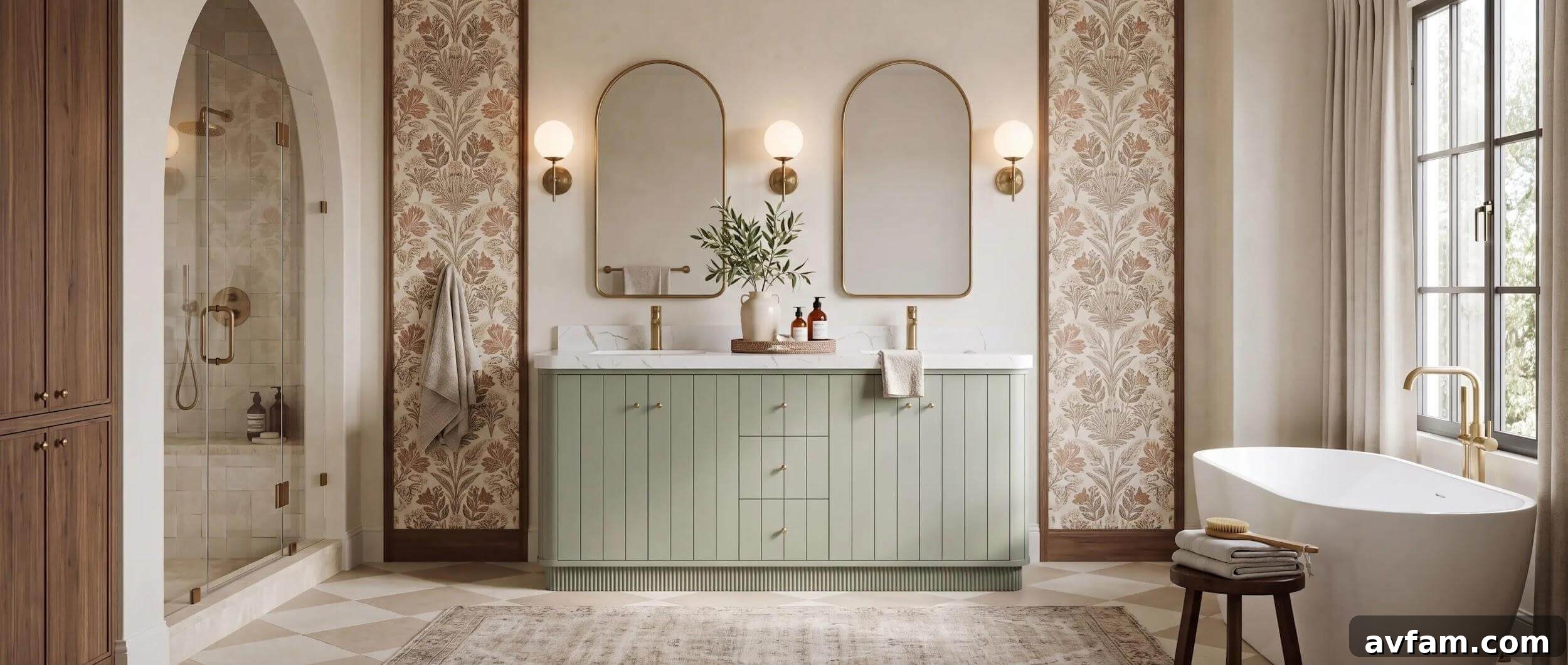
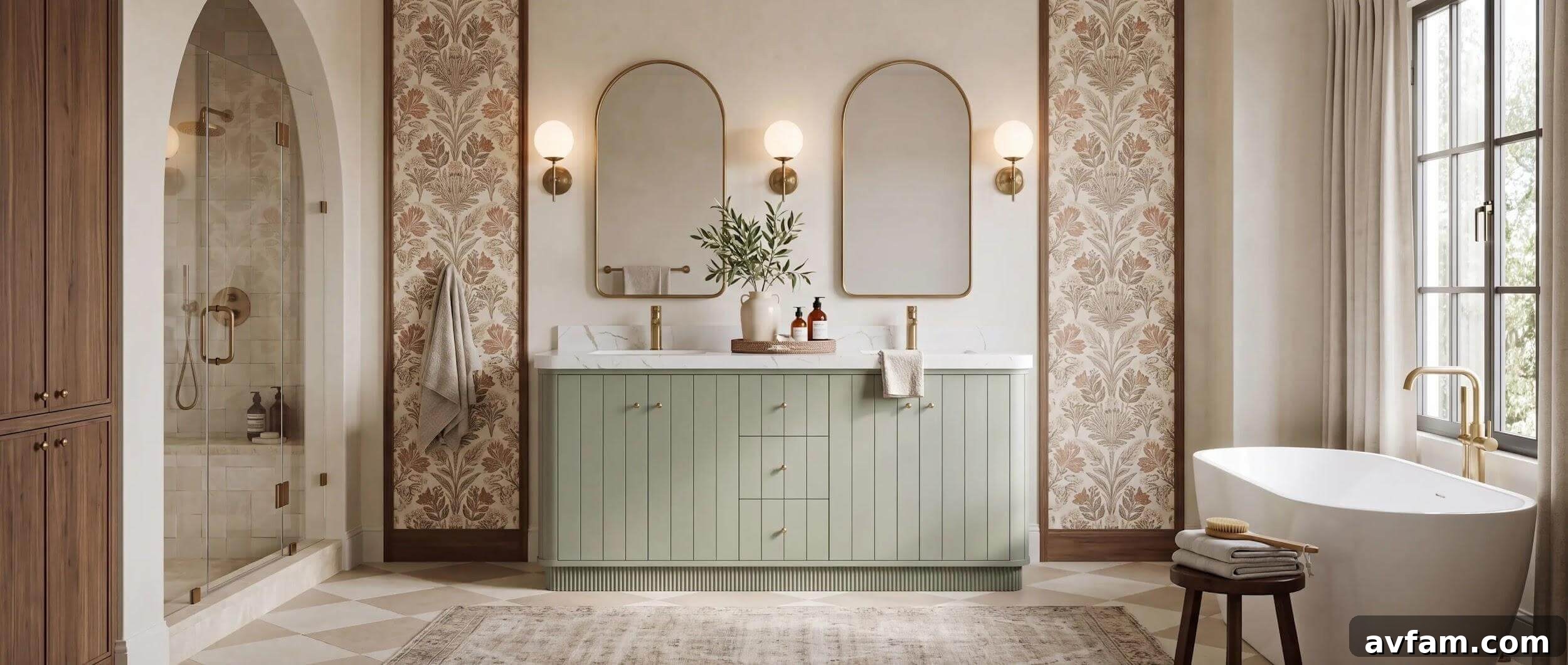
Houston 72-inch double-sink vanity in Evergreen by Willow Bath & Vanity. AI-assisted interior rendering showing a design concept, not a completed installation. Surrounding finishes and furnishings are illustrative.
Read the outline before the decoration
Begin with the simple outline of the cabinet, including its countertop and base. Take in the outside corners, the distance between the cabinet and the floor, and any projection at the top. Those lines create the silhouette you’ll notice from across the room, even when handles and panel details become hard to discern at a glance.
Place a few outlines on the same page, drawn to the same scale. One profile may feel broad and grounded; another may read more open beneath the cabinet. A softened corner gives a long piece a different personality than a sharply rectangular end. Choose the outline you enjoy seeing, then return to the smaller decorative elements to assess how they support that shape.
Notice how the cabinet meets the floor
The base is as influential as the top. A continuous plinth creates a visible foundation beneath the doors and drawers. Individual legs break that foundation into smaller elements, while a recessed base changes the relationship between the cabinet front and the floor. Each approach gives the furniture a distinct profile and presence.
Examine the base from the room’s entrance and from the side, using the product’s photos and drawings. Check how its lines meet nearby trim and any visible floor pattern. A decorative apron may look attractive in a close-up product photo, yet appear different when seen from a standing position. Include that everyday viewpoint in your evaluation.
Follow the rhythm across the front
The face of a double vanity is a composition of repeated and interrupted lines. Doors establish broad vertical areas; drawers introduce shorter horizontal divisions. A central stack of drawers can make the middle feel distinct, while repeating similar sections across the width creates another kind of visual rhythm. Visual organization and actual storage function are separate concerns, so keep interior specifications alongside your stylistic comparison.
Trace the strongest divisions on a printout. Notice whether the center, outer edges, or repeated panels attract your attention first. With wider models, compare the actual arrangement rather than imagining a smaller cabinet simply stretched to fit. An 84-inch model can have different proportions and divisions from a 72-inch option, even when both belong to the same collection.
Treat the countertop as the upper edge of the furniture
The countertop establishes a strong horizontal cap for the cabinet. Its apparent thickness, edge profile, and overhang influence how the whole piece reads. Compare those features with the base and the door proportions below. A top can read as a bold cap to the furniture or sit more subtly within its outline.
Use the specifications for the exact configuration you are considering. A styled photograph may show a different top or accessory and its angle can make an overhang difficult to judge. Put the relevant dimensions on the same sketch as the cabinet so you can evaluate the complete form while keeping photographic styling distinct from what the actual order includes.
Look at hardware in proportion
Knobs and pulls create another pattern across the cabinet. Small knobs leave more of each front visible, while longer pulls introduce a line of their own. Compare the scale of hardware with the panel it occupies. A handle that looks substantial on a narrow drawer may feel different on a broad door, even when the finish matches.
Study a close-up to understand the hardware’s shape, then step back to view the entire cabinet and see how often that element repeats. Confirm which hardware is included with the selected configuration and whether photographs show an optional choice. If you plan to change hardware, ask the supplier to verify compatibility. Keep that practical check separate from the visual preference so an appealing detail does not become an assumed customization.
Let one detail lead
Identify the single feature that makes the piece appealing to you — a curved side, a panel profile, or the handle shape — and then consider how the remaining details support it. When every element competes for equal attention, it becomes harder to appreciate the larger form that initially attracted you.
The Houston 72-inch Evergreen rendering that accompanies this article shows vertical lines across the cabinet fronts and a finely textured lower base. Rounded outer edges soften the outline and demonstrate how several small choices work together to create a cohesive furniture form. The image illustrates a design concept; use verified product information to confirm the specific configuration and construction before you order.
Compare the side view and the front view
A front-facing photograph can hide features that become prominent in a room. Side panels, the depth of an overhang, and the base profile may be visible whenever someone enters. Include those surfaces in your shortlist, especially when an end of the vanity will face an open area rather than abut a wall.
Ask for clear side photographs or dimensioned drawings. If available images leave an important detail uncertain, request clarification before ordering. You should be able to describe the piece from the viewpoints that matter in your bathroom, instead of relying on a single carefully styled shot.
Put the shape back into the room
Draw the proposed cabinet alongside other substantial forms in the bathroom, such as a bathtub or a tall storage cabinet. Compare relative height, depth, and outline. A vanity that feels restrained on its own may become a focal point beside simpler shapes; another may echo an existing architectural line and help the room feel cohesive.
When exploring the double-sink collection from Willow Bath & Vanity, keep the exact model drawings with your room sketch. Mark the proposed footprint with removable tape and evaluate the view from the entrance. Then review the cabinet’s practical fit and interior usability separately. A successful choice balances daily function with a furniture form that belongs in the room.