
A damaged sewer line is one of the more stressful repairs a homeowner can face. In the past, repairing a broken sewer lateral often meant digging a long trench through a lawn, driveway, patio, or garden. That approach was disruptive, slow, and costly to restore.
Today, trenchless sewer repair offers alternative methods that allow plumbers to repair or replace underground sewer lines through relatively small access points. These modern techniques reduce excavation, preserve landscaping and hardscapes, shorten project timelines, and can lower overall restoration costs for homeowners.
Trenchless repair is not a single method and it is not the ideal solution in every case. Choosing the right approach depends on the condition and material of the existing pipe, the type and extent of the damage, access to the line, soil conditions, and the results of a camera inspection. Homeowners should evaluate options carefully and consider a professional diagnostic inspection before selecting a repair method.
What Is Trenchless Sewer Repair and How It Works
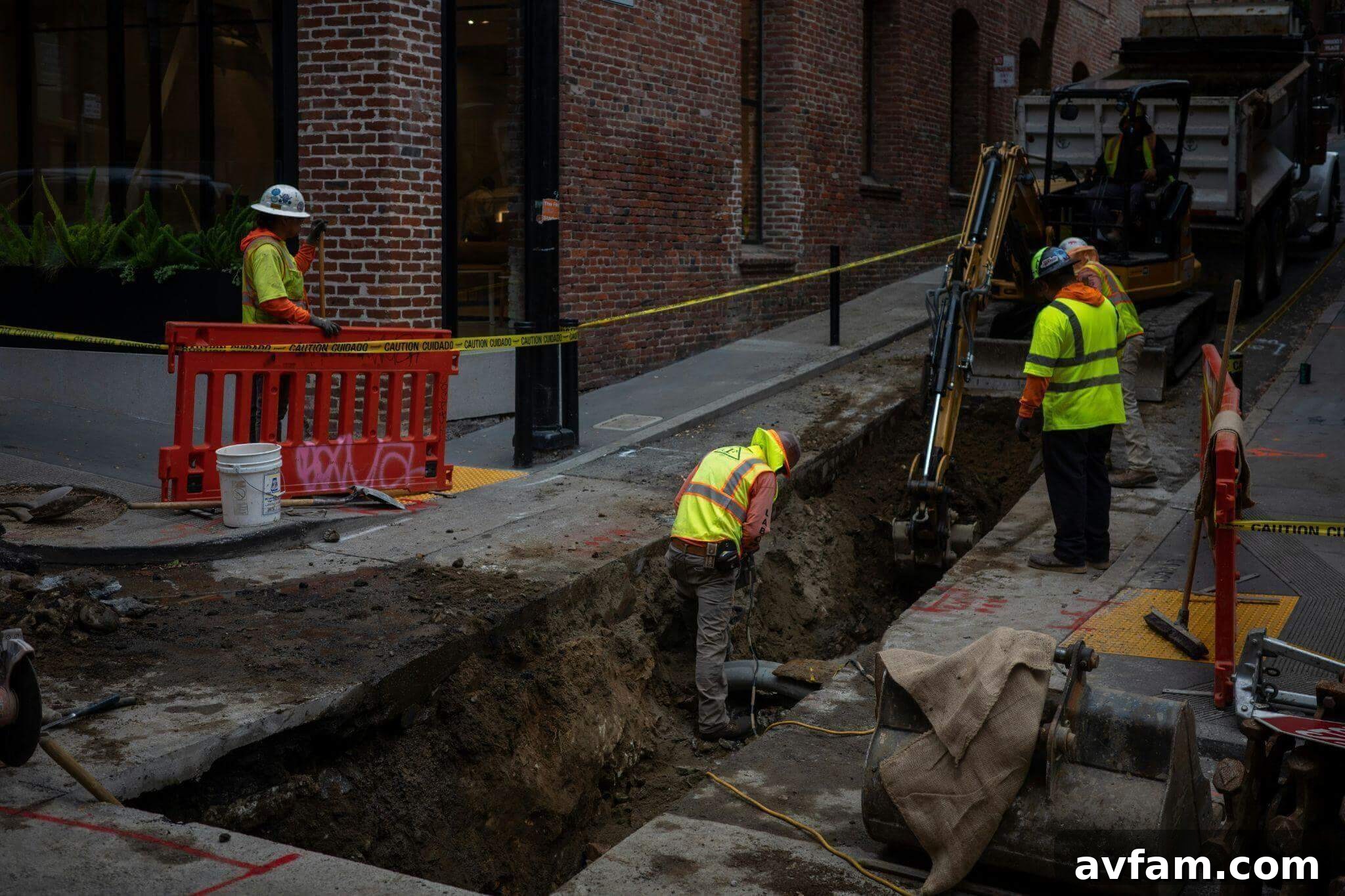
Trenchless sewer repair refers to techniques that restore or replace underground sewer pipes without excavating a trench along the entire pipe run. Instead, plumbers access the line through one or two small entry points and use specialized equipment to perform the work underground.
The main advantage is reduced digging: less disturbance to lawns, concrete, driveways, patios, and landscaping. Different trenchless techniques suit different pipe conditions, so an accurate in-pipe inspection is essential to determine feasibility.
Cured-in-Place Pipe Lining (CIPP)
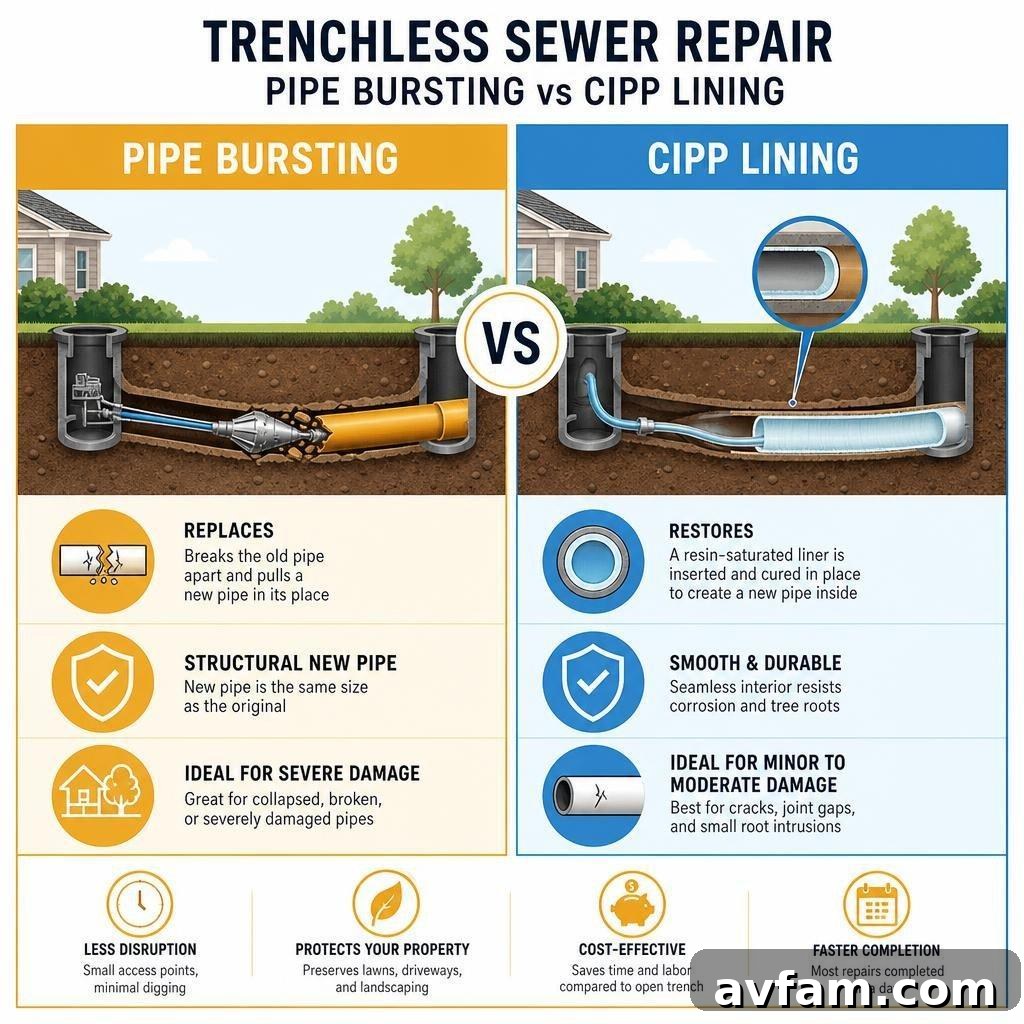
CIPP, commonly called pipe lining, installs a resin-saturated flexible liner into the damaged pipe. The liner is expanded and cured in place using heat, steam, hot water, or ultraviolet light, creating a continuous, smooth new pipe wall inside the original pipe.
CIPP works well for cracking, minor joint separation, small root intrusions, corrosion, and general deterioration when the original pipe is structurally sound enough to host the liner. Because the liner reduces the interior diameter slightly, homeowners should confirm that flow capacity remains adequate for their system.
Pipe Bursting
Pipe bursting replaces an existing pipe by fracturing the old pipe outward while pulling a new pipe into place behind a bursting head. This method limits excavation to access pits at each end of the affected section and is commonly used when the existing pipe is too damaged for lining.
High-density polyethylene (HDPE) is frequently used for replacement pipes because of its corrosion and root resistance, flexibility, and long service life.
Slip Lining and Spin Casting
Other trenchless techniques include slip lining, which inserts a smaller pipe within the existing pipe, and spin casting, which applies a repair material to the interior wall with rotating equipment. These options are less common for typical residential laterals but can be appropriate in specific situations.
Warning Signs Your Sewer Line Needs Inspection
Sewer problems rarely begin with a single dramatic event. Early warning signs can provide an opportunity for repair before the issue worsens. Common signs include whole-house backups, persistently slow drains, gurgling fixtures, persistent sewage odors, and wet or sunken areas in the yard. Any of these recurring indicators justify a professional camera inspection to identify the cause and scope of damage.
How Plumbers Diagnose Sewer Problems
A video camera inspection (CCTV) is the standard diagnostic tool. A camera is fed through the sewer lateral so the technician can see root intrusion, cracks, corrosion, joint separation, collapsed sections, heavy buildup, bellied pipe, and areas where water collects. The footage helps decide whether a trenchless method is appropriate or whether excavation is necessary.
When Trenchless Methods Are Not Suitable
There are situations where traditional excavation is the better option. Fully collapsed segments, severe misalignment, extremely deteriorated pipe materials, major soil instability, or complex pipe layouts may make trenchless techniques impractical or impossible. A contractor should explain why a chosen method fits the pipe’s actual condition rather than recommending trenchless work simply because it is available.
Trenchless vs. Traditional Excavation: Key Differences
Comparing trenchless methods with open excavation clarifies trade-offs. Trenchless repair typically limits property disruption to small access points, often shortens timelines, and reduces landscape impact. Traditional excavation requires extensive digging, which increases labor and restoration costs but can address severe collapse, misalignment, or inaccessible sections. Below is a concise comparison of common factors.
| Factor | Trenchless Repair | Traditional Excavation |
| Property Disruption | Limited to small access points | Full trench along the damaged section |
| Typical Timeline | Often completed more quickly | Longer due to digging and restoration |
| Landscape Impact | Preserves lawn, driveway, garden | May require removal of landscaping and hardscapes |
| Equipment Required | Specialized trenchless machines | Excavators, backhoes, heavy digging gear |
| Restoration Cost | Usually lower | Can include sod, concrete, paving, and landscaping replacement |
| Best Use Case | Accessible pipes with suitable structural conditions | Severe collapse, misalignment, or unsuitable pipe conditions |
Costs, Value, and When to Replace Instead of Repair
Trenchless repair is not always cheaper on its face. Specialized equipment and materials can make the plumbing portion costly. The meaningful comparison is total project cost, including post-repair restoration. Traditional excavation may add significant expenses to replace sod, irrigation, patios, concrete, or driveways. Trenchless options often reduce restoration labor and associated costs.
Deciding between repair and replacement depends on the sewer’s age, material, extent of damage, history of repairs, and long-term serviceability. A localized problem in a generally healthy pipe may be suited to repair, while a line with widespread deterioration or repeated root intrusion may be better replaced. Homeowners should review camera inspection footage with their contractor to understand whether the recommendation addresses a single defect or systemic pipe issues.
Property and Environmental Benefits
Because trenchless methods disturb less soil, they protect mature trees, gardens, irrigation systems, patios, and driveways. Reduced excavation also lowers the need for heavy machinery, which can lessen temporary environmental impact. For properties where the lateral passes under established landscaping or hardscapes, trenchless repair often preserves valuable outdoor investments.
How to Choose the Right Contractor
Trenchless sewer work requires diagnostic skill, appropriate licensing, and experience with local permit requirements. Homeowners should verify a contractor’s license, request proof of insurance, insist on a camera inspection before accepting recommendations, and demand a clear written scope of work that outlines materials, timelines, warranties, and restoration responsibilities.
Ask contractors specific questions: which trenchless methods they use and why, what the camera inspection showed, whether you can review the footage, what permits apply, who obtains them, what materials will be used, what warranties are provided, whether restoration is included, and what could cause the final price to change.
Red Flags
Be cautious if a contractor offers a firm price before inspecting the line, skips a camera inspection for recurring problems, provides no written scope of work, repeatedly clears drains without identifying the root cause, pressures you to approve work immediately, or gives a suspiciously low estimate without details.
Conclusion
Trenchless sewer repair expands homeowners’ options and can avoid much of the disruption associated with conventional excavation. However, it works best when matched to the actual condition of the pipe. A reliable decision starts with recognizing warning signs, obtaining a professional camera inspection, comparing repair and replacement options, getting a detailed written proposal, and verifying contractor licensing and insurance. When chosen for the right reasons and installed correctly, trenchless repair can provide a durable, less disruptive solution for sewer line problems.