
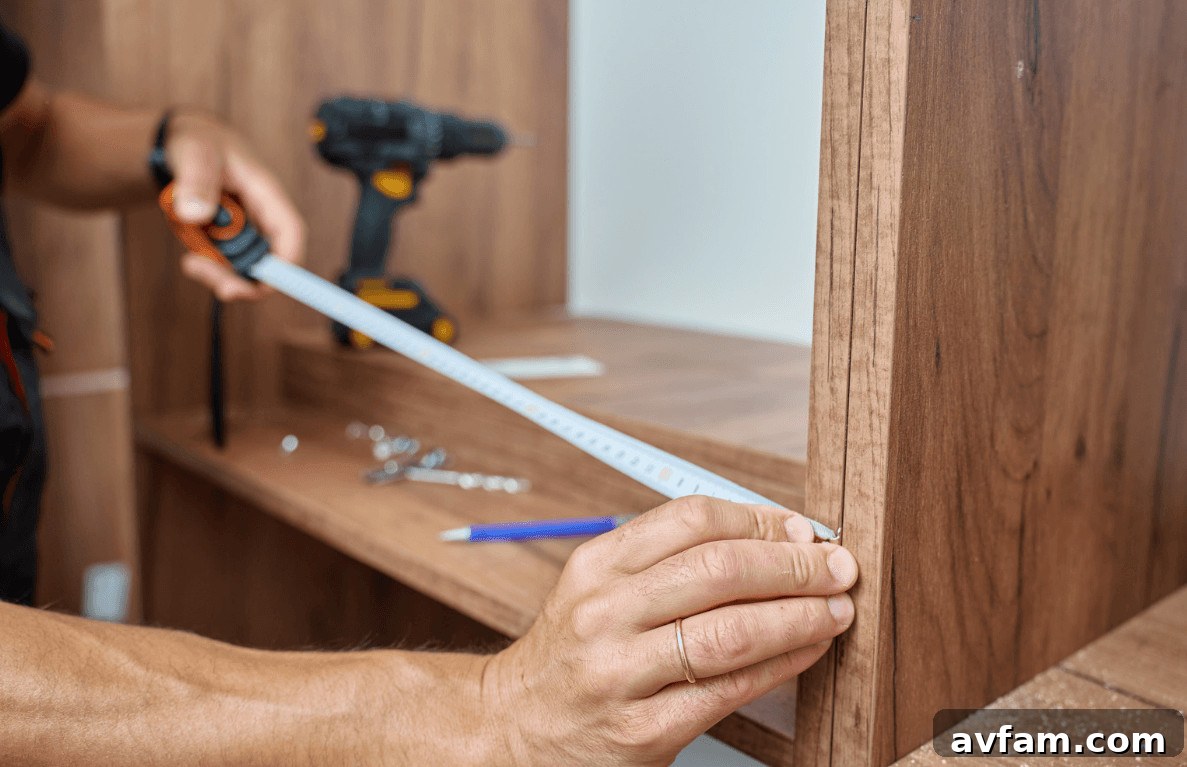
Most weekend projects don’t fail in the driveway or at the register. They start to unravel earlier—usually in the kitchen—when you decide you “probably remember” the size well enough.
An errand that sounds simple—grab a few boxes of garage tiles, pick up pavers for the patio, add a couple of wall panels for a work area, and toss a mat in the cart—can quickly become complicated when the details don’t align with memory.
At the store aisle the doubts creep in: was that wall just under 12 feet or closer to 11? Did the patio widen by the steps or by the grill? Were you really covering one garage bay or both?
That half-remembered walk between the house and the store is where small jobs often become expensive. A quick measurement walk before you buy does more than protect the budget; it also reduces waste. Source reduction—using less material and preventing waste before it starts—is a top priority in sustainable construction and demolition management.
For homeowners, source reduction can begin with a tape measure, a notepad, and half an hour spent paying closer attention to the space.
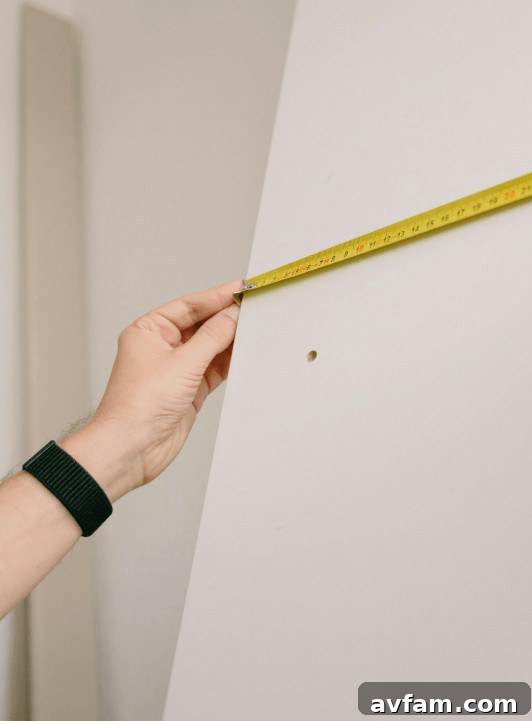
Start with the surfaces that cost money.
People often assume a rough sense of a room’s size is enough. It’s usually fine for describing a space, but it’s not enough to buy for it. The costly part is the surface you’re covering: the garage floor, a patio slab, a wall behind a workbench, a mudroom strip, or paneling around built-in storage. Those surfaces will expose a guess faster than almost anything else.
Begin by measuring the exact areas where material will meet the house. That could be the floor inside a single parking bay, the rectangle under a shed, the seating area inside a patio border, or the wall section that will actually get slatwall or paneling.
The first pass has one job: prevent buying from memory.
Measure repeated areas on their own.
Trying to save time by lumping identical-seeming areas into one rough total usually creates problems. Two matching garage walls, two work zones, a pair of planting-side walkways, or a patio border split into sections can look identical until you spot a post, a step, or a slightly shorter run.
Write each section down separately. That does two things: it catches the spot that only looks identical and it tells you whether a product sold by the box will leave a small, manageable remainder or a pile of unusable leftovers you can’t return.
Many cases of overbuying start with repeated spaces that were never measured separately.
Write down the parts people forget.
Main dimensions aren’t usually the issue—edges are. Door swings, posts, steps, floor drains, cabinet overhangs, thresholds, narrow returns, and odd notches by a freezer or utility sink often vanish during the first round of measuring and then resurface later when the material is already in the truck.
A garage is a good example. From the driveway it can read like one clean slab, but inside it becomes a collection of distinct elements: the workbench footprint, the side door landing, the water heater corner, a clear walking path, and the space a cabinet door needs to open. Those details affect usable floor area far more than many expect.
Bring this on the walk.
You don’t need a complicated system. Take these simple items:
- A tape measure long enough for the longest wall or floor run;
- A notepad or phone note with clear labels for each area;
- Painter’s tape or chalk to mark start and stop points;
- A quick photo of each space after measuring;
- A simple sketch, even if it’s rough.
That sketch pays off. Six numbers with no shape beside them get surprisingly hard to trust when you’re standing in bright store lighting trying to remember which one belonged to the back wall and which belonged to the side return.
Turn dimensions into a buying plan.
This is where measurements start saving real money. Once you have width, length, and any repeated sections noted, run a quick area-and-cost check before you buy. That gives a clearer read on how much surface you’ll cover and what the material will cost across the whole footprint.
Two products that look close in price per box can land very differently when you calculate the full square footage. Garage floor coatings, modular tiles, peel-and-stick planks, pavers, and wall panels can all seem reasonable one box at a time; the full-area math often changes the picture.
Accurate dimensions also make smarter choices easier: maybe the project should start with one garage bay instead of two; maybe the patio border can wait for phase two; maybe the workshop only needs paneling behind the bench, not across the entire room.
Make these decisions before you’re standing in the return line with unopened boxes. It’s cheaper and less stressful to refine scope while the project is still a few numbers on a page.
Keep one note for the next project.
Save measurements in a single running house note: garage floor, back patio, shed pad, mudroom wall, workshop corner, side yard walkway. Add a photo and one line about what you planned there. Months later, those dimensions will save you from walking the same space again.
Keeping a house measurement log also improves sequencing. Homeowners who already know patio size, garage work zone, and shed footprint tend to make calmer decisions about what to tackle first. The work feels less scattered and weekends stop running together.
Before you head to the store…
Weekend projects rarely fail because the idea was too ambitious. They more often stumble because of one missing dimension, one forgotten corner, or a rough guess that sounded close enough while standing in the house.
A 30-minute measurement walk fixes more than most people expect. It sharpens the shopping list, reduces waste, and makes the project feel manageable before the first box is loaded.
When you arrive at the home center with labeled dimensions and a rough sketch in your pocket, you’re buying for the space you actually have—not the one you half-remember. That’s the best way to start any project worth finishing.