
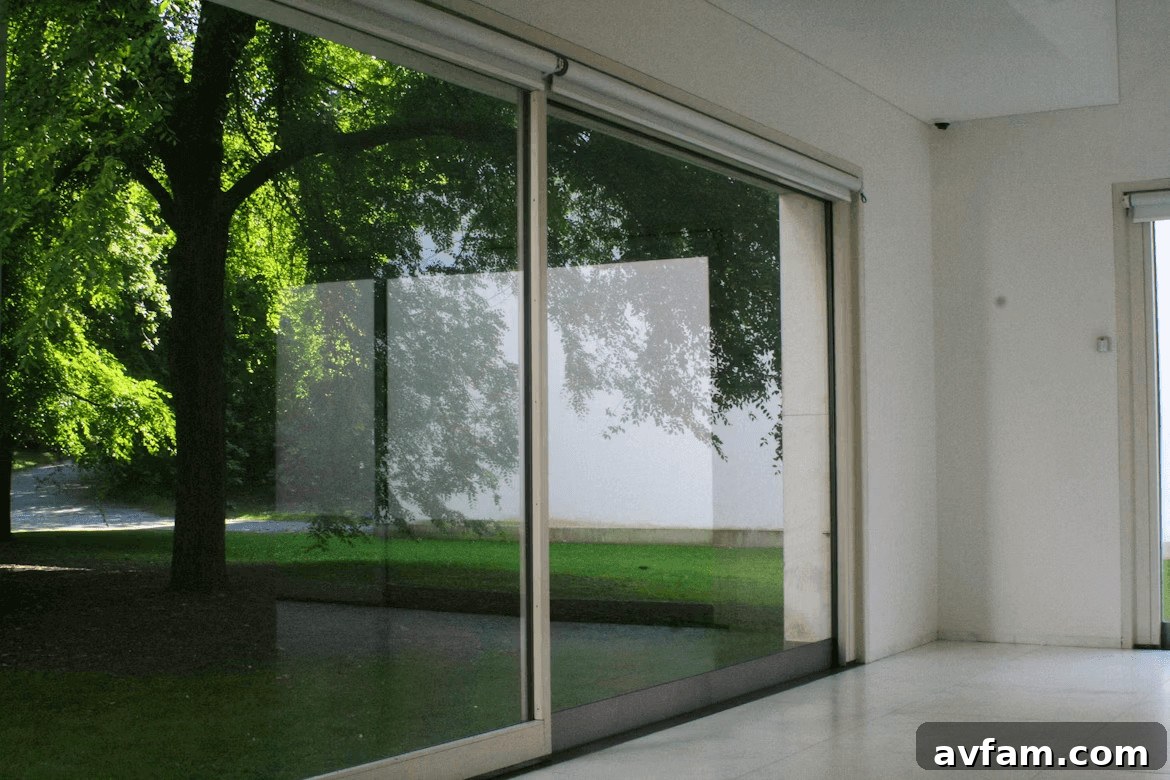
Most homeowners renovating or building today share a clear goal: open the home to the outdoors while keeping control over the indoor environment. Fresh air, natural light, and a patio that truly feels like part of the house are priorities, not mere style choices. Achieving that balance requires more than a pair of French doors. It takes the right combination of glass, structure, and screening to make the transition seamless and functional.
Retractable screen doors change that equation. Instead of choosing between a fully open doorway and a permanently screened one, retractable screens let you have both: an unobstructed view when you want it and an insect- and sun-protected space when you need it. When not in use, the screens disappear into compact housings, preserving sightlines and architectural details. That seemingly small mechanical advantage transforms how often people use transitional spaces and how comfortable those spaces feel.
Why Indoor-Outdoor Living Needs Better Screening
The move toward indoor-outdoor living has reshaped how architects and homeowners design floor plans. Connecting a living room to a covered patio or a kitchen to an outdoor dining area creates a sense of space that interior renovations alone cannot match. For entertaining, the benefits are obvious: guests flow between areas, and the boundary between inside and outside ceases to feel like a barrier.
Open spaces are enjoyable only when conditions are right. Direct sun can overheat interiors, insects drift in on breezes, and weather shifts quickly. Fixed screens solve some problems but create others: they can block views, collect dust, and make an opening feel closed in even when the weather is ideal. Retractable motorized screens restore real-time control—lower them for protection, retract them for full openness—so the opening is as useful and comfortable as the moment requires.
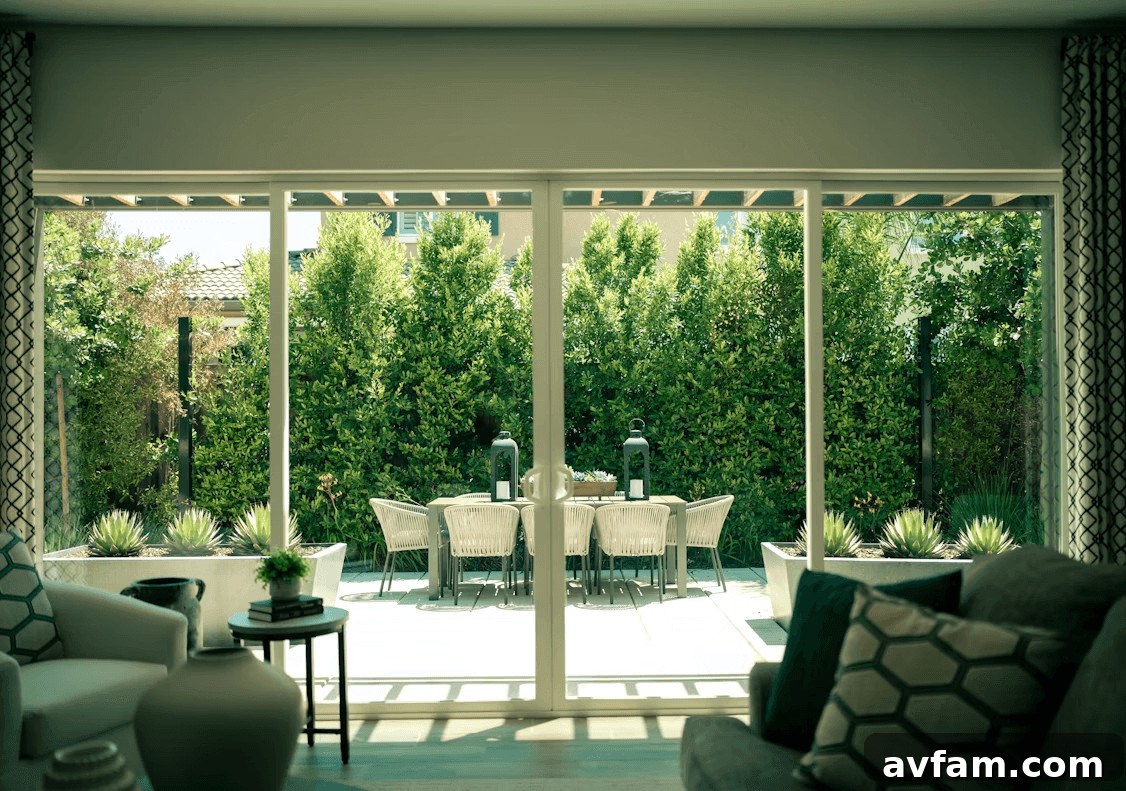
That adaptability separates truly usable indoor-outdoor spaces from those that look great in photos but rarely get used. The best designs remove friction: you don’t have to plan in advance whether to open or close the space. The transition happens naturally, and the outdoor room becomes part of everyday life.
What Retractable Screens Do for a Home
Retractable screens are more versatile than most people expect. They work on single doors, wide French doors, sliding panels, and multi-panel folding walls that open an entire side of a room. This flexibility lets the same solution scale from a modest back door to a 20-foot opening onto a pool deck.
Ventilation is a major advantage. Allowing air to circulate reduces reliance on mechanical cooling during spring and fall because the home stays comfortable naturally. Quality mesh keeps insects out while preserving airflow and visibility, eliminating the common tradeoffs of traditional fixed screening.
Sun control is another benefit. Solar-rated mesh reduces UV transmission and lowers interior temperatures during peak hours, protecting floors, furniture, and fabrics from fading. For south- or west-facing rooms, this is a practical necessity that reduces cooling demand and extends the life of interior finishes.
Beyond function, retractable screens significantly affect how a space feels. An opening that can be fully exposed to the landscape without the visual bulk of a fixed screen reads as larger and more connected to the outdoors. That expanded sense of space is hard to quantify but immediately noticeable, and it’s one reason homeowners use retractable systems more frequently than fixed alternatives.
Design and Installation Considerations
Retractable screens work best when integrated into the design from the start, but retrofits are also effective. In new construction or major renovations, motorized screens can be recessed into ceiling or wall framing so the housing is invisible when retracted. The result is a clean opening with no visible hardware—just a screen that appears when needed and disappears when not.
Retrofit options are compact and can be color-matched to existing trim so they don’t dominate the opening. The important factors are choosing a system whose proportions suit the opening and whose finish complements surrounding materials. A well-matched retrofit can be nearly as clean visually as a recessed installation and is generally less disruptive to install.
Equally important is how the outdoor space is designed. Screens protect an area but do not replace thoughtful planning. Outdoor rooms that serve specific purposes—dining, relaxing, gathering—and feel as considered as interior rooms are far more likely to be used year-round. Retractable screens help maintain those uses by removing the conditions that otherwise drive people indoors.
Privacy, Comfort, and Everyday Use
Privacy is an underrated advantage. Denser meshes and specialty privacy fabrics offer a visual barrier from the outside while preserving views from within. On tighter lots or in denser neighborhoods, this allows patios to feel private without heavy fences or dense planting.
The emotional comfort of being able to open a space easily matters too. The sound of wind, the scent of rain, and the quality of natural light all shape how people experience a home. Removing hesitation—worry about bugs or sudden weather—encourages more frequent use. For families with children or pets, one-button or voice-activated operation eliminates friction and makes the outdoor connection part of daily life rather than a feature reserved for special occasions.
Selecting the Right System
Choosing the right system depends on opening size, how the space is used, and the level of automation desired. Large folding walls and wide covered patios often call for motorized systems that can span distances manual screens cannot and integrate with home automation. Standard doors and windows commonly use manual retractable screens, which remain a cost-effective and easy-to-maintain option.
Material quality matters: aluminum frames resist rust and maintain shape, while durable mesh resists tearing and sagging. A well-built system operates quietly and reliably for years. Ask about warranty terms and replacement mesh availability—these are reliable indicators of long-term support and product quality. Professional installation is recommended for large or motorized systems to ensure proper alignment and smooth operation.
Maintenance and Longevity
One practical advantage of retractable screens is that much of their life is spent safely stored. When retracted, mesh is protected from weather, debris, and UV exposure, extending its lifespan and reducing cleaning frequency. Routine maintenance is simple: wipe tracks with a damp cloth and clean mesh with a soft brush or vacuum attachment. These quick tasks keep the system operating smoothly and prolong its service life.
Over time, a quality retractable screen system adds value by extending the usable season of outdoor spaces, reducing interior wear from sun exposure, and enhancing market appeal. Homes that offer a functional connection between inside and outside stand out in many markets, and retractable screens are a cost-effective way to deliver that experience.
Conclusion
Creating a genuine indoor-outdoor connection requires more than removing a wall. It requires managing light, air, insects, and heat without sacrificing views or the sense of openness that makes the design appealing. Retractable screens offer that control and then disappear when not needed. Whether building new or upgrading an existing home, they remain one of the most practical investments for making both sides of the glass livable and enjoyable.