
In recent years, an exciting and accessible sport has taken America by storm, rapidly claiming the title of the nation’s fastest-growing athletic pursuit: Pickleball. This captivating paddle sport masterfully blends elements from badminton, tennis, and table tennis, creating a unique and engaging experience that captivates players of all ages and skill levels. Its meteoric rise is a testament to its inherent fun, social appeal, and ease of entry, making it an ideal activity for individuals and families seeking a new way to stay active and connect.
The Phenomenal Rise of Pickleball: America’s Fastest-Growing Sport
Pickleball’s journey from a backyard pastime to a national phenomenon is nothing short of remarkable. Invented in 1965 on Bainbridge Island, Washington, by Joel Pritchard, Bill Bell, and Barney McCallum, the sport was conceived as a family-friendly activity that anyone could enjoy. They improvised with ping-pong paddles, a perforated plastic ball, and a badminton net, laying the groundwork for what would become a global sensation. Today, millions of Americans have embraced pickleball, drawn to its unique blend of strategic depth, physical activity, and unparalleled social interaction. It’s more than just a game; it’s a community, a workout, and a source of endless enjoyment for a diverse demographic.
What Exactly is Pickleball? A Quick Overview
At its core, pickleball is an accessible paddle sport played on a court similar in size to a badminton court, but with a modified net. The objective is simple: use a paddle to hit a plastic ball, resembling a Wiffle ball, over the net and into your opponent’s court. The rules borrow familiar elements from other racquet sports, yet they are simplified to ensure a quick learning curve and immediate gratification for newcomers. Whether you’re an experienced athlete or picking up a paddle for the very first time, pickleball offers an engaging challenge that can be enjoyed at any pace.
The Court, Equipment, and Fundamental Rules
Understanding the basics of pickleball begins with familiarity with its specific setup and regulations:
- The Court: A pickleball court measures 20 feet wide by 44 feet long, identical to a doubles badminton court. A net is stretched across the middle, set at 36 inches high at the sidelines and dropping to 34 inches in the center. Unlike tennis, pickleball features a distinctive area known as the “Non-Volley Zone,” often referred to as “the Kitchen,” extending seven feet back from the net on both sides. Players are prohibited from volleying the ball while standing in this zone, a rule that adds a unique strategic layer to the game.
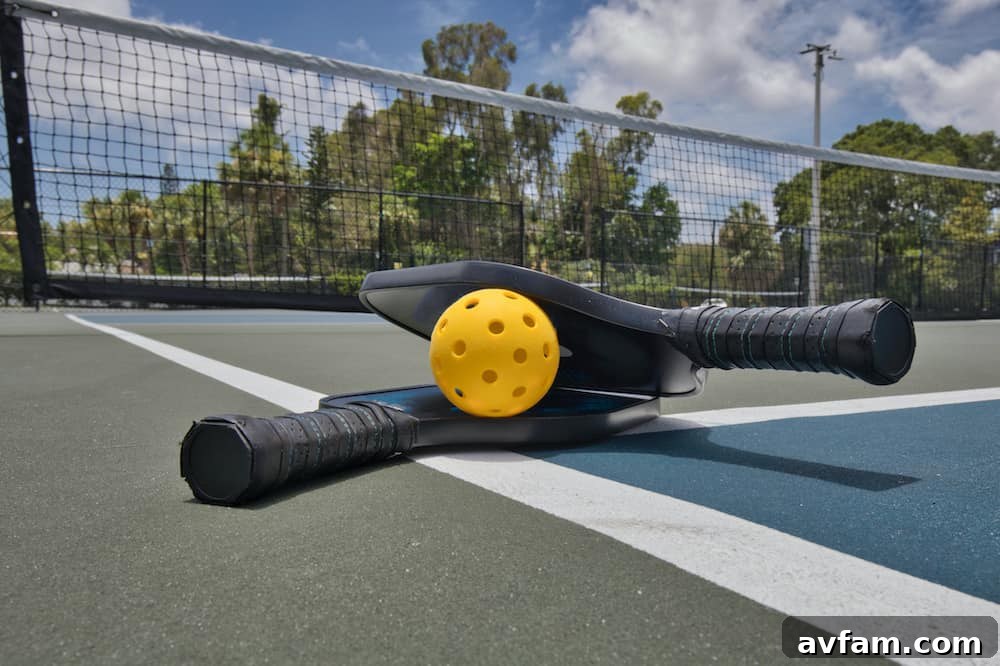
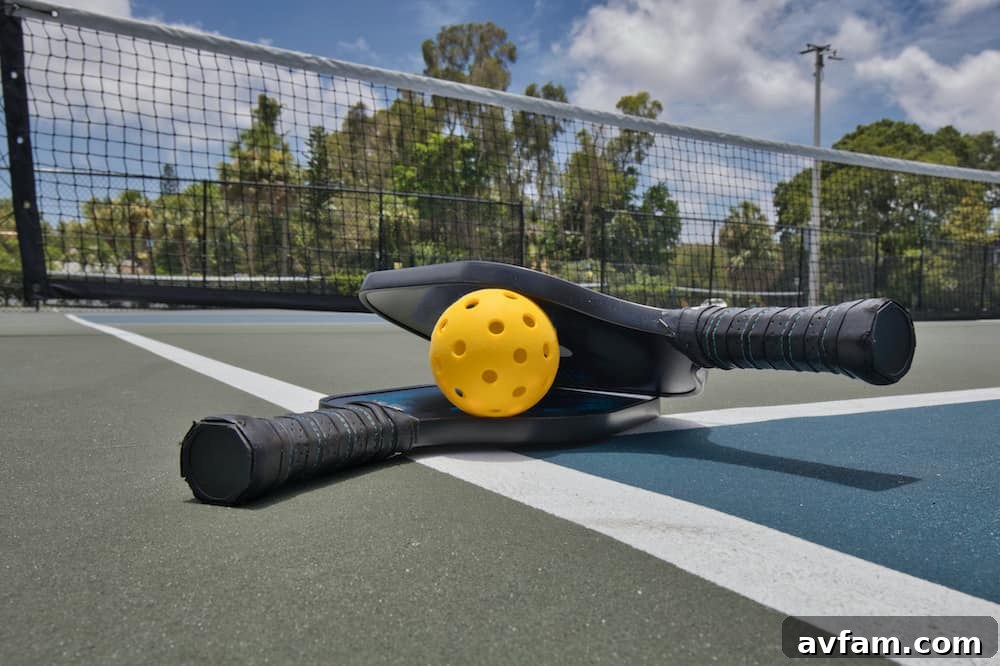
- The Equipment: Players use solid paddles, traditionally made from wood, but increasingly crafted from lightweight composites like graphite or carbon fiber, offering enhanced power and control. The pickleball itself is a lightweight, perforated plastic ball, slightly larger than a tennis ball, designed for slower flight and a softer bounce, which contributes significantly to the sport’s accessibility.
- Serving and Scoring: Play begins with an underhand serve, hitting the ball below the waist, into the opponent’s diagonal service court. A crucial “two-bounce rule” dictates that the ball must bounce once on each side after the serve before players can volley (hit the ball out of the air). Points are scored only by the serving team, and typically, games are played to 11 points, winning by a margin of at least two points.
- Singles vs. Doubles: While pickleball can be played as singles, with one player per side, it is most commonly enjoyed as doubles, featuring two players per team. The doubles format significantly enhances the social aspect and strategic interplay, making it a favorite for recreational and competitive play alike.
Why Pickleball’s Popularity is Exploding
The explosive growth of pickleball isn’t attributable to a single factor but rather a perfect storm of elements that make it incredibly appealing to a broad audience. From its straightforward nature to its health benefits and vibrant community, pickleball offers something for everyone, cementing its status as a recreational powerhouse.
1. Incredibly Easy to Learn and Play
One of the primary drivers behind pickleball’s widespread adoption is its remarkably low barrier to entry. Unlike sports such as tennis or golf, which often require extensive lessons and practice to achieve a basic level of proficiency, pickleball allows newcomers to grasp the fundamental rules and techniques within minutes. The smaller court size means less ground to cover, the lightweight paddle is easy to wield, and the slower, perforated ball is less intimidating and easier to hit. This ease of learning translates into immediate enjoyment, fostering a sense of accomplishment and fun from the very first game. Beginners can quickly engage in rallies, understand basic strategies, and experience the thrill of the game without the frustration often associated with mastering complex sports. This rapid gratification encourages continued participation and helps to quickly integrate new players into the sport’s enthusiastic community.
2. Exceptional Health and Fitness Benefits
Pickleball is far more than just a casual pastime; it’s a fantastic full-body workout that delivers numerous health and fitness benefits, all while being incredibly enjoyable. Classified as a low-impact sport, it is gentle on the joints, making it an excellent option for individuals of all ages, including older adults or those recovering from injuries, who might find high-impact sports too strenuous. Despite its low-impact nature, pickleball provides a robust cardiovascular workout, improving heart health, stamina, and overall endurance through sustained rallies and dynamic movement. Furthermore, the constant need for quick reflexes, agile footwork, and precise paddle control significantly enhances balance, coordination, and reaction time. Beyond the physical advantages, pickleball also offers significant mental health benefits. Engaging in a fun, competitive activity can reduce stress, boost mood, and provide a healthy outlet for mental focus and strategic thinking. It’s an active way to maintain physical fitness and mental acuity simultaneously.
3. A Truly Inclusive and Social Sport
Perhaps one of pickleball’s most defining characteristics is its exceptional inclusivity and strong emphasis on social interaction. The sport inherently welcomes players of all ages, skill levels, and backgrounds, fostering an environment where grandparents can play alongside grandchildren, and beginners can share a court with seasoned veterans. This diverse participation is reflected in pickleball’s unique community culture, which often prioritizes sportsmanship, mutual respect, and camaraderie over fierce competition. Many pickleball venues operate on an “open play” model, where players rotate partners and opponents, ensuring everyone gets a chance to play and interact. This setup naturally cultivates new friendships, strengthens community bonds, and provides a valuable platform for social engagement. It’s common to see players cheering each other on, sharing tips, and gathering socially off the court, highlighting pickleball’s role as a powerful connector.
4. Accessible and Affordable
In addition to its other advantages, pickleball stands out for its accessibility and affordability. Compared to sports like tennis, golf, or skiing, the initial investment required to start playing pickleball is relatively modest. A basic paddle and a few balls are all that’s needed to get started, with comfortable athletic wear being the only other necessity. Many public parks and recreation centers are rapidly converting existing tennis courts or creating dedicated pickleball courts, making facilities widely available and often free or low-cost to use. The sport’s ability to be played both indoors and outdoors further enhances its accessibility, ensuring year-round play in various climates. This combination of minimal equipment cost and widespread court availability lowers the barrier to entry significantly, making pickleball a sport for the masses.
The Vibrant Pickleball Community and Its Resources
The robust growth of pickleball is not only driven by its intrinsic qualities but also by a large, active, and highly supportive community. This extensive network of players, clubs, and organizations provides invaluable resources that help newcomers get started and seasoned players continue to improve and engage with the sport.
- Local Engagement: Across North America and increasingly globally, local pickleball clubs and leagues are flourishing. These groups organize regular open play sessions, clinics for skill development, and friendly tournaments, providing ample opportunities for players to connect, compete, and improve. Websites like Meetup and local recreation department listings are excellent resources for finding nearby pickleball communities.
- National and International Organizations: The sport’s national governing body, USA Pickleball Association (USAP), plays a crucial role in promoting, organizing, and developing pickleball. USAP sanctions tournaments, establishes official rules, and provides a wealth of educational materials, including instructional videos and guides for players and organizers. Similar organizations are emerging in other countries, reflecting pickleball’s global expansion.
- Professionalization of the Sport: The rise of professional pickleball tours, such as the Professional Pickleball Association (PPA) and Major League Pickleball (MLP), has brought increased visibility and excitement to the sport. These tours feature top-tier athletes competing for significant prize money, showcasing the sport’s highest level of play and inspiring a new generation of players. Events like the US Open Pickleball Championships draw thousands of participants and spectators, highlighting the sport’s growing professional appeal.
Looking Ahead: The Future of Pickleball
The trajectory of pickleball’s growth shows no signs of slowing down. With millions of participants already enjoying the sport, forecasts predict continued exponential expansion in the coming years. This growth is fueled by ongoing court construction, increasing media coverage, product innovation in paddles and balls, and a dedicated community constantly welcoming new members. The professionalization of the sport will likely attract more talent and investment, raising its profile even further. As pickleball continues to spread globally, it promises to become a significant international sport, uniting people across cultures through its simple rules and profound joy. The future of pickleball is bright, promising even greater accessibility, innovation, and community building.
Conclusion: Why You Should Try Pickleball Today
In summary, pickleball has firmly established itself as America’s fastest-growing sport for compelling reasons. It offers an unparalleled combination of being easy and fun to learn, providing excellent low-impact exercise benefits, fostering an inclusive and welcoming social environment, and being supported by a vibrant, active community. Its accessibility, affordability, and ability to engage players of all ages and skill levels make it truly unique. Whether you are seeking a new sport to master, a fun way to improve your fitness, or simply a great avenue for social connection, pickleball presents itself as a perfect fit. Grab a paddle, head to a local court, and discover the infectious joy of pickleball – you might just find your new favorite activity.