
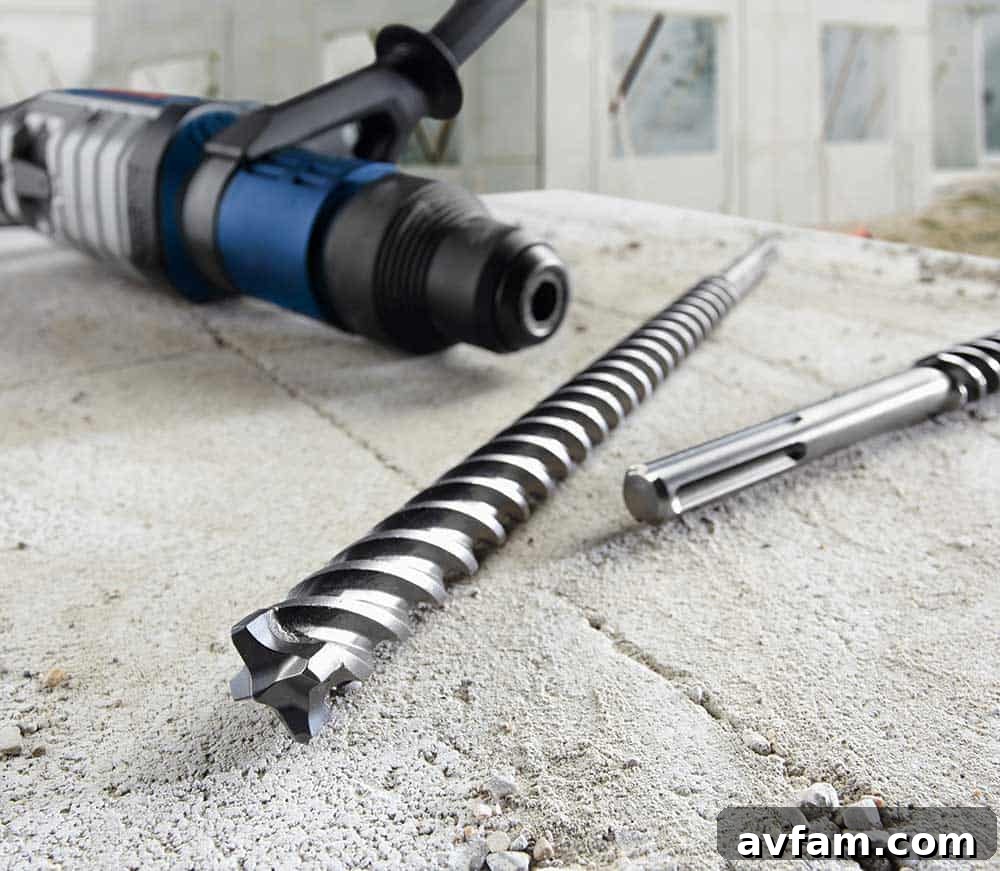
Mastering Concrete & Masonry: The Indispensable Role of Carbide Drill Bits
In the demanding world of construction and DIY projects, the success of any drilling task hinges significantly on selecting the right tools. From the sharpness of the bit to its manufacturing material, every detail contributes to efficiency, safety, and the overall quality of your work. When it comes to drilling into challenging materials like concrete and masonry, a standard drill bit simply won’t suffice. This is where carbide drill bits emerge as the undisputed champion, offering unparalleled performance and durability for professionals and serious DIY enthusiasts alike.
Choosing the correct drill bit isn’t merely a matter of convenience; it’s a critical decision that impacts project timelines, labor costs, and most importantly, safety on the job site. For high-performance concrete applications, the robust properties of a carbide drill bit are not just recommended, but absolutely essential. These specialized bits are meticulously engineered to withstand the extreme forces, abrasive wear, and high temperatures generated during the drilling of hard aggregates, ensuring clean, precise holes and significantly prolonged tool life.
To shed light on the intricate world of carbide in drilling applications, we turn to leading industry experts. Tom Grego, a distinguished Group Manager at Bosch, has shared invaluable insights into the effective use, diverse applications, and critical best practices for carbide in modern drilling. His comprehensive “Carbide 101” Q&A session provides a foundational understanding of what carbide truly is, why it’s so widely adopted, and how it consistently elevates performance in even the toughest drilling and cutting tasks across various construction scenarios.
What Exactly is Tungsten Carbide? The Foundation of Superior Drilling Technology
At its core, tungsten carbide (WC) is not a simple metal but a sophisticated chemical compound, primarily formed from equal parts tungsten and carbon atoms. Its remarkable journey begins as a finely milled powder, which is then meticulously formulated with other materials and critical binding agents, most commonly cobalt. Through an advanced industrial process known as sintering, these compacted powders are pressed and heated to extreme temperatures, fusing them into an incredibly dense, solid, and exceptionally robust material. This unique metallurgical transformation creates a substance with a microstructure that boasts extraordinary hardness and wear resistance, ranking second only to natural diamond.
In the highly competitive power tool industry, tungsten carbide is strategically employed in components subjected to the most severe wear and tear. It forms the crucial tip of high-performance drill bits, the resilient cutting edges of industrial saw blades, and other specialized accessories designed for aggressive material removal. Its primary attributes—extraordinary robustness, superior longevity, and remarkable resistance to high temperatures, impact, and abrasive forces—make it utterly indispensable for harsh applications, particularly when contending with the unyielding hard aggregates commonly found in concrete, stone, and masonry.
The historical trajectory of tungsten carbide, from its initial discovery in the late 19th century to its ubiquitous industrial application today, stands as a profound testament to its revolutionary properties. Initially recognized for its extreme hardness, continuous advancements in manufacturing techniques have allowed for precise control over its composition, grain size, and binder content, leading to the development of customized grades of carbide optimized for specific drilling and cutting challenges. This unparalleled adaptability and engineered versatility are fundamental reasons for its widespread presence and market dominance in demanding construction, mining, and heavy industrial environments worldwide.
The Universal Acceptance of Carbide in Concrete: A Revolution in Performance and Durability
The widespread adoption of carbide in concrete and masonry applications isn’t merely a fleeting trend; it’s an undeniable endorsement of its superior performance advantages. There’s a deeply ingrained perception within the construction industry that any product featuring carbide offers significantly better performance, and this perception is unequivocally rooted in tangible reality. Consider, for instance, the dramatic difference in performance between a circular saw blade equipped with standard steel teeth and one fortified with carbide teeth; the latter delivers substantially faster, cleaner cuts and maintains its critical sharpness for significantly longer periods. This principle of enhanced performance extends consistently across a wide array of cutting accessories, including oscillating blades, intricate jigsaw blades, and powerful reciprocating saw blades.
For the demanding task of drilling holes in concrete, stone, and masonry, carbide has become the unequivocal industry standard. Its inherent material properties provide the unmatched robustness, resilience, and longevity required to endure prolonged exposure to highly abrasive materials, intense frictional heat, and high impact forces. While “carbide” has evolved into a broad, almost generic term within the industry, experienced users and seasoned professionals instinctively understand that not all carbide is created equal. Although they may not possess a deep understanding of the nuanced metallurgical differentiators or manufacturing processes, they unequivocally recognize the tangible improvements in real-world results: consistently faster drilling speeds, impeccably cleaner holes, and significantly extended bit life, translating directly into enhanced productivity.
It is crucial to understand the distinct roles of the carbide tip and the drill bit’s body. Whether it’s a standard concrete drill bit designed for a traditional three-jaw chuck tool, an SDS-plus bit optimized for lighter rotary hammers, or a heavy-duty SDS-max bit for larger demolition hammers, the main body—the shank—is typically a solid piece of high-grade, heat-treated steel. This robust steel shank is precisely engineered with helical flutes, which are absolutely crucial for efficiently removing drilled material (dust and debris) from the bore hole. The critical point of contact with the workpiece, however, where the actual cutting, pulverizing, and crushing action takes place, always features some form of tungsten carbide, meticulously engineered to tackle the toughest materials.
Exploring Diverse Carbide Drill Bit Designs for Optimal Drilling Performance
The continuous evolution of carbide drill bit design reflects an ongoing commitment to innovation aimed at enhancing speed, durability, and versatility across the entire spectrum of concrete and masonry drilling challenges. Understanding the unique characteristics and intended applications of these designs is paramount for selecting the most appropriate bit to achieve optimal results for your specific project requirements.
The Two-Cutter Design: Speed, Simplicity, and Specific Applications
The most common and traditionally recognized design in concrete drill bits is the two-cutter. While many users may not refer to it by its technical designation, they instantly recognize the two prominent, distinct cutting edges positioned at the bit’s tip. The standard manufacturing process for these bits involves precisely milling out a specific section of the steel shank at the end, followed by the secure attachment of a pre-shaped carbide chip, featuring these two cutting edges, through a meticulous welding or brazing process. This well-established method, commonly referred to as “embedded carbide,” effectively fuses the durable carbide to the robust steel body. Two-cutter bits are generally renowned for their speed in pure concrete drilling scenarios, making them a popular and cost-effective choice for straightforward tasks where encounters with embedded rebar or other metallic obstructions are highly unlikely.
The Four-Cutter Design: Enhanced Durability, Stability, and Rebar Resistance
The next significant and highly impactful iteration in concrete bit design is the four-cutter. This advanced configuration introduces two additional notches into the steel body on either side of the original carbide chip, or in more contemporary designs, a single, intricately shaped piece of carbide is meticulously notched and bonded into the steel bit to form the four-cutter configuration. The strategic presence of more cutting edges and a substantially more robust tip structure provides several distinct advantages:
- Improved Stability and Accuracy: The four cutting points distribute the intense impact and rotational forces more evenly across the drilling surface, significantly reducing bit wobble and dramatically improving the overall accuracy and concentricity of the drilled hole.
- Enhanced Material Removal Efficiency: With more active cutting edges, the pulverization of concrete is faster and more efficient, leading to quicker hole progression and reduced drilling time.
- Increased Rebar Resistance: While not engineered specifically for continuous, aggressive rebar cutting, four-cutter bits exhibit significantly better resilience and resistance to accidental encounters with rebar compared to their two-cutter counterparts. They are considerably less prone to jamming, binding, or premature failure when hitting steel reinforcement, thereby enhancing both the bit’s longevity and critical user safety.
Professionals and experienced users intuitively understand that “more carbide at the end of the bit invariably represents a better, more robust, and longer-lasting concrete drill bit,” even if they don’t fully grasp the complex engineering intricacies differentiating two-cutter from four-cutter designs. This design offers a compelling and highly sought-after balance of drilling speed, enhanced durability, and significantly improved resilience against rebar impacts.
Full-Head Carbide: The Apex of Robustness, Longevity, and Unyielding Performance
For the most demanding and critical applications, where extreme durability, unparalleled longevity, and absolute rebar resilience are paramount, the full-head carbide design stands as the undisputed champion. Unlike designs where notched carbide pieces are merely set into the steel shaft, this advanced design features a 100 percent solid carbide tip that is intricately interwoven or permanently bonded with the steel shank through sophisticated high-temperature brazing or welding techniques. This advanced bonding process creates an exceptionally strong, monolithic structure that virtually eliminates the weak points inherent in designs where carbide is simply attached.
Full-head carbide bits are recognized as the most robust and longest-lasting option available, performing exceptionally well when drilling into extremely hard aggregate or concrete heavily laden with embedded rebar. They are meticulously engineered to drill directly through rebar rather than bind or deflect, making them utterly indispensable for professional contractors working on critical infrastructure projects, high-volume commercial builds, or any application where downtime due to bit failure is prohibitively costly. The visual difference between these three primary options is often clear, with full-head carbide bits typically presenting a seamless, solid carbide front, indicative of their superior construction.
While some manufacturers explore innovative designs that incorporate six or even more cutting edges into the carbide head, often as an alternative to achieving a truly solid piece, these designs can be challenging to execute correctly without introducing new points of weakness. While such multi-edged bits might offer marginal improvements in drilling speed or more efficient dust removal in very specific conditions, they often tend to be more of an aesthetic differentiation or a marketing strategy rather than a revolutionary leap in extreme performance or fundamental rebar resistance compared to the proven full-head carbide design. The true value lies in the integrity and composition of the carbide itself, not just the number of cutting points.
Identifying Quality: Understanding Carbide Grades and Bit Performance Metrics
The ultimate performance of a carbide drill bit is not solely dependent on its architectural design but is also profoundly influenced by the intrinsic grade and quality of the tungsten carbide material employed. Users, especially experienced professionals, can often discern the quality of a bit through its real-world performance characteristics and its predictable degradation profile over time. Sub-par carbide is frequently characterized by its inherent brittleness; it tends to fracture, chip easily under stress, or, if the critical welding or brazing process is inferior, the entire bit head can catastrophically break off, pop off, or twist off the steel shank under operational load. These highly visible and premature failures are unequivocal indicators of low-quality materials, inadequate manufacturing processes, or improper bit selection for the application.
Every concrete drilling bit design, regardless of its inherent sophistication or technological advancements, possesses distinct strengths and unavoidable weaknesses:
- Two-Cutter Design: While exceptionally fast and efficient in pure, uncontaminated concrete, this design is inherently highly vulnerable to unexpected encounters with embedded rebar. Its aggressive cutting action can cause it to snag violently, leading to rapid wear, severe tool kickback, or catastrophic bit failure upon impacting steel reinforcement.
- Four-Cutter Design: Offers significantly improved resistance and resilience to accidental rebar hits, providing a commendable balance of drilling speed and enhanced durability. However, it typically does not quite match the ultimate lifespan and unyielding rebar-piercing capability of a true full-head carbide bit. Its embedded carbide sections, while robust, can still be subjected to localized stress concentrations and accelerated wear over prolonged use in concrete that is heavily laden with rebar.
- Full-Head Carbide Design: This design is unequivocally considered the pinnacle for heavy-duty, continuous applications where maximum durability and rebar-drilling capability are paramount. The very best concrete drill bits available today, particularly in SDS-plus or SDS-max configurations, commonly feature full-head carbide. These bits are meticulously engineered not just to resist, but to actively drill through rebar, maintaining their structural integrity and peak performance even in the most arduous conditions. It is an absolute critical safety and performance rule to remember that a two-cutter bit is explicitly not intended, nor designed, for drilling into rebar.
Astute professionals and contractors often evaluate bit quality based on concrete performance metrics such as the average number of holes drilled per bit, consistent drilling speed under varying loads, and overall resistance to abrasive wear, impact fatigue, and thermal degradation. A higher-grade carbide bit will consistently outperform and substantially outlast lower-grade alternatives, delivering measurable long-term value and efficiency on any job site.
The Cost-Benefit Analysis: Justifying the Investment in Premium Carbide Bits
At first glance, premium carbide drill bits may appear to carry a higher upfront cost compared to their conventional counterparts. However, a comprehensive and realistic cost analysis consistently reveals that investing in higher-quality, professional-grade carbide bits is almost always a financially astute decision for professionals. It’s important to remember that the single largest and most impactful cost factor on any construction job site is labor. When skilled workers are forced to halt their progress due to equipment failure, such as a broken or worn-out drill bit, that critical downtime translates directly into substantial monetary losses and project delays.
Consider the cumulative and often hidden costs associated with using inferior drill bits:
- Exacerbated Downtime Expenses: If a bit unexpectedly breaks and an immediate, suitable replacement isn’t readily available, workers may spend invaluable time searching for one across the job site, or worse, the entire workflow can grind to a complete, unproductive halt. This unproductive time directly inflates project budgets, extends timelines, and can lead to significant contractual penalties.
- Significantly Reduced Efficiency: A premium bit engineered with five times longer life allows workers to remain continuously focused on their primary task for extended periods, drastically reducing the frequency of disruptive bit changes. This enhanced operational efficiency directly converts into substantial savings over the entire lifespan of a project, increasing daily output.
- Enhanced Worker Welfare and Precision: Construction workers are frequently required to drill numerous holes for anchors in concrete from awkward, physically demanding, and often strain-inducing positions. Rotary hammers utilized for these tasks can be powerful and heavy, and environmental conditions might range from oppressive extreme heat to bitter cold. A highly reliable, long-lasting bit ensures that the worker can complete the demanding job successfully and with superior precision in the shortest possible time, minimizing physical strain. Breaking a drill bit when accidentally hitting rebar or simply prematurely wearing out an inferior bit prolongs these arduous tasks, leading to increased worker fatigue, a higher probability of errors, and an elevated risk of injury.
- Avoidance of Project Delays and Penalties: Beyond the direct costs of labor, frequent bit failures can easily lead to unforeseen project delays, which often come with severe contractual penalties, reputational damage for the contractor, and strained client relationships.
Ultimately, the slightly higher initial investment in a premium carbide drill bit is not merely an expense; it is a strategic investment in unparalleled job site efficiency, significantly reduced operational costs, superior work quality, and the overall professional standing of the contractor. It is a discerning choice that consistently pays substantial dividends in terms of enhanced productivity, improved safety, and long-term profitability for any serious construction professional.
Carbide Bits and User Safety: A Critical and Often Underestimated Connection
Beyond the undeniable benefits of efficiency and durability, the informed choice of carbide drill bit profoundly impacts user safety on the job site. A compelling demonstration vividly reveals the inherent and serious dangers when a conventional two-cutter bit unexpectedly strikes rebar embedded within concrete. The aggressive cutting action and limited contact points of a two-cutter bit can cause it to bind or jam violently in the rebar, leading to severe and potentially dangerous tool kickback. This sudden, uncontrolled wrenching motion can result in serious injuries to the user’s arm, wrist, or shoulder, or even cause them to lose their balance and fall, particularly if working at height or in precarious positions.
Leading tool manufacturers like Bosch directly address this critical safety concern with advanced proprietary technologies such as their innovative Kickback Control. This intelligent safety feature actively senses a sudden binding event in the workpiece and instantly stops the tool’s rotation, helping to prevent serious injury to the user. However, the fundamental choice of drill bit itself offers an even more proactive and intrinsic safety measure:
- Four-Cutter Bits: These advanced bits are meticulously designed to significantly reduce the inherent risk of binding when encountering rebar. While they may still suffer potential bit failure, such as a broken head or unusable cutters, if repeatedly subjected to extreme stress against rebar, they offer a considerably safer alternative to two-cutter bits. Their design allows the tool to continue rotating rather than locking up, thereby preventing the dangerous and abrupt kickback experienced with two-cutters, even if the bit itself is ultimately compromised.
- Full-Head Carbide Bits: Represent the ultimate and most robust safety solution for drilling into rebar-laden concrete. These cutting-edge bits are precisely engineered not just to resist, but to simply drill directly through the rebar, maintaining continuous, uninterrupted operation without any risk of binding, kickback, or significant bit damage. This eliminates the need for time-consuming and potentially hazardous bit changes, the requirement for specialized rebar cutters, and dramatically reduces the overall risk of injury from severe tool kickback.
The traditional alternative to using a rebar-resistant bit involves a multi-step, often cumbersome process: first, switch to a dedicated rebar cutter bit, drill through the rebar section, and then switch back to the concrete bit to complete the hole. This method, while effective in isolating the rebar, is inherently time-consuming, requires multiple tool and bit changes, and introduces additional handling risks and opportunities for error. Full-head carbide bits ingeniously streamline this entire process, allowing for continuous, safer, and far more efficient drilling through both concrete and embedded rebar in a single, fluid operation.
The Professional’s Perspective: What Concrete Pros Truly Need to Know About Carbide
For the seasoned concrete professional, the intricate nuances of carbide engineering or specific metallurgical compositions might often be less critical than the tangible, real-world benefits that these bits consistently deliver on the job site. While many professionals possess a fundamental understanding of what carbide is, their overriding and pragmatic expectation is clear and direct: more carbide, specifically high-quality carbide, invariably equates to a better, more reliable, and ultimately more cost-effective drill bit. And in essence, their experience-driven assessment is fundamentally correct.
What discerning professionals truly demand from their carbide drill bits is unwavering performance, steadfast reliability, and predictable longevity under the most challenging conditions. They require a bit that:
- Resists Intense Heat: The extreme temperatures generated during prolonged drilling can rapidly degrade inferior materials. A truly quality carbide bit must possess exceptional thermal stability, withstanding intense frictional heat without losing its critical hardness, structural integrity, or cutting efficiency.
- Conquers Embedded Rebar: Accidental or intentional encounters with tough rebar should never result in catastrophic bit failure or dangerous tool kickback. The bit must either be engineered to drill through rebar effectively and smoothly or, at a minimum, resist binding and safely allow the tool to continue operation.
- Endures Extreme Abrasion: The hard aggregate found in concrete is notoriously abrasive. A truly durable carbide bit must exhibit superior wear resistance, maintaining its sharp cutting edge and precise geometry over extended periods of demanding use, thereby ensuring consistent drilling speed, accurate hole quality, and optimal dust removal.
It’s a “show-me” industry driven by results and reputation. Users will be genuinely satisfied and loyal to bits that consistently perform as promised, significantly reduce costly downtime, demonstrably enhance job site safety, and ultimately help them complete their complex projects on time, within budget, and to the highest standards of quality. For the modern concrete professional, investing in high-quality carbide drill bits isn’t merely about purchasing a tool; it’s about making a strategic investment in unparalleled productivity, uncompromising safety, and the long-term, sustainable success of their demanding craft.