
California, along with many other regions globally, continues to grapple with severe drought conditions, turning water conservation from a recommendation into a critical necessity. In such challenging times, every drop of water saved makes a difference. This heightened awareness extends to all aspects of daily life, including maintaining our vehicles. For many, a clean car isn’t just about aesthetics; it’s about preserving the vehicle’s finish, ensuring safety, and simply making daily interactions with our cars more pleasant. But how do you achieve that sparkling clean look without contributing to the water crisis? This comprehensive guide will walk you through the most effective and water-efficient methods for washing your car during a drought, ensuring your vehicle stays pristine while you play your part in conserving our most precious resource.
Washing Your Car Responsibly During a Drought: A Comprehensive Guide to Water-Wise Car Care
The prolonged absence of significant rainfall, exemplified by phenomena like the failure of El Niño to deliver substantial precipitation, has transformed our landscapes and our habits. We’ve become accustomed to the visible signs of drought: parched lawns, reduced reservoir levels, and constant reminders to conserve. For many homeowners, this has meant shutting down sprinklers, embracing drought-tolerant landscaping, and finding innovative ways to reduce daily water consumption. One area that often presents a dilemma is car maintenance. While we strive to be mindful of our environmental impact, the desire for a clean vehicle remains strong. A dirty car isn’t just an eyesore; accumulated grime, dust, and pollutants can actually degrade your vehicle’s paint over time, not to mention the practical inconvenience of transferring dirt from a grimy vehicle to your clothes when loading tools, groceries, or simply leaning against it. This guide aims to bridge the gap between responsible water usage and effective vehicle cleanliness.
The Urgency of Water Conservation: Why Every Drop Counts
Droughts have far-reaching consequences, impacting agriculture, ecosystems, and urban water supplies. In regions like California, where the current drought has lingered for an extended period, every drop of water saved contributes to the collective effort to preserve this vital resource. While a single car wash might seem insignificant, aggregated over millions of vehicles, the water consumption quickly becomes substantial. Therefore, adopting water-saving practices for car washing is not merely a suggestion but a crucial step towards sustainable living, demonstrating a commitment to environmental stewardship.
The challenge lies in balancing the desire for a clean, well-maintained vehicle with the imperative to conserve water. Leaving a car unwashed for extended periods can lead to the buildup of corrosive elements like bird droppings, tree sap, and road salt, which can damage the paint finish. Moreover, dirty windows and mirrors can impair visibility, posing a safety risk. The solution isn’t to stop washing your car entirely, but rather to adopt smart, water-efficient methods that deliver excellent results with minimal environmental impact.
Rethinking Traditional Car Washing Methods
Before diving into water-wise techniques, it’s important to understand why conventional car washing often conflicts with conservation goals.
The Drawbacks of Commercial Car Washes
Many traditional automatic car wash facilities, while convenient, are notorious for their significant water consumption. They often operate with continuous flows, drenching vehicles with thousands of gallons of water per wash, much of which is not effectively recycled or reused. Furthermore, the harsh chemicals used in some commercial washes can contaminate local water systems if not properly treated, posing an additional environmental concern. While some modern facilities boast advanced water recycling systems, many still fall short of truly efficient practices, making them a less ideal choice during severe drought conditions.
The Limitations of Self-Serve Facilities
Self-serve car washes offer a degree of control over water usage compared to fully automated systems. You can stop the flow, focus on specific areas, and generally be more mindful. However, they often come with their own set of frustrations. The coin-operated timers can be unforgiving, leaving you scrambling for more change just as you’re about to finish a critical rinse. This pressure often leads to hurried washing, potentially compromising the cleanliness or even the safety of your vehicle’s finish due to inadequate rinsing or improper technique. Moreover, even self-serve washes, if not used judiciously, can still consume a considerable amount of water.
Embracing a Water-Wise Solution: The Home Pressure Washer
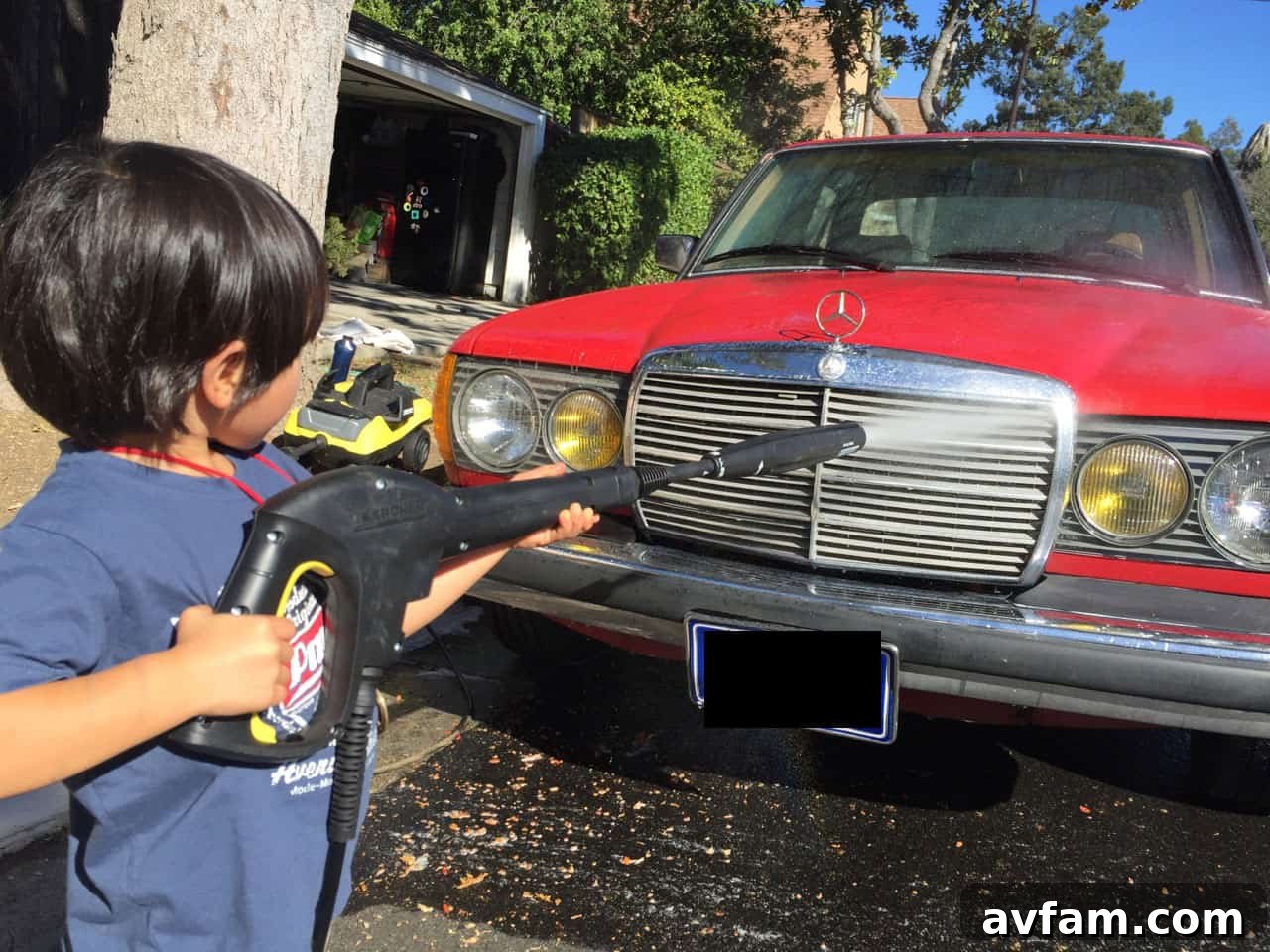
The most effective and eco-friendly solution for washing your car during a drought often lies in taking the process into your own hands at home, specifically by utilizing a pressure washer. Investing in a quality pressure washer transforms your car washing routine, allowing for a thorough clean with significantly less water than a standard garden hose or many commercial options. This tool becomes your ally in responsible vehicle maintenance.
How Pressure Washers Conserve Water
The magic behind a pressure washer’s efficiency lies in its ability to deliver a high-velocity stream of water at a much lower volume. Unlike a garden hose that relies on a continuous, moderate flow to dislodge dirt, a pressure washer uses concentrated force. This intense pressure effectively blasts away dirt, grime, and stubborn contaminants with a fraction of the water volume. A typical garden hose can consume anywhere from 6 to 12 gallons per minute, whereas a well-used pressure washer might use just 1.2 to 2.0 gallons per minute, resulting in substantial water savings over the course of a wash.
Choosing the Right Pressure Washer for Your Vehicle
When selecting a pressure washer for car washing, you don’t necessarily need the most powerful industrial-grade model. In fact, too much power can be detrimental. Look for electric pressure washers in the range of 1500-2000 PSI (pounds per square inch) with a flow rate (GPM – gallons per minute) around 1.2-1.8. This range provides ample cleaning power without posing a risk to your vehicle’s paint or delicate components. Gas-powered models offer more power and portability but can be overkill for car washing and are often louder. Consider features like adjustable pressure settings, various nozzle tips (especially a 40-degree white tip or a dedicated foam cannon nozzle), and a comfortable handle for ease of use. A higher quality pressure washer will also offer better durability and a more consistent spray pattern.
Safety First: Protecting Your Vehicle’s Finish
While a pressure washer is a fantastic tool, improper use can lead to paint damage, scratches, or even broken trim. Always start with the lowest pressure setting and gradually increase it if needed. Maintain a safe distance, typically 12-18 inches, between the nozzle and your car’s surface. Avoid using a zero-degree (red) nozzle, as this highly concentrated stream can easily strip paint or damage seals. Instead, opt for wider fan patterns (like 25 or 40 degrees) which disperse the pressure more evenly. Never aim the spray directly at mirrors, sensors, or rubber seals from a close range. The goal is to gently lift dirt, not to aggressively blast it away.
Essential Tools and Supplies for an Eco-Friendly Car Wash
Beyond the pressure washer, having the right arsenal of car care products is crucial for achieving a spotless, protected finish while minimizing water usage. High-quality products not only deliver better results but also make the washing process more efficient, meaning less time (and less water) spent on each step.
-
High-Quality Pressure Washer
As discussed, this is your primary tool for efficient rinsing and pre-soaking. Ensure it has adjustable settings and appropriate nozzles for safe car washing.
-
Microfiber Wash Mitts and Cloths
Unlike sponges or old rags, microfiber is designed to trap dirt particles within its fibers, rather than pushing them across the paint and causing scratches. Invest in several plush microfiber wash mitts for washing and a selection of high-quality microfiber towels for drying and detailing. They are highly absorbent, lint-free, and gentle on your car’s finish.
-
pH-Neutral Car Wash Soap
Choose a dedicated car wash soap that is pH-neutral. Household detergents can strip away wax protection and damage your vehicle’s paint. A good car soap will create rich suds that lubricate the surface, allowing the wash mitt to glide smoothly and safely lift dirt. Many car wash soaps are also biodegradable, making them an even better choice for eco-conscious washing.
-
Specialized Brushes for Wheels and Tires
Wheels and tires collect the most brake dust, road grime, and harsh contaminants. Using a separate set of brushes specifically designed for these areas prevents transferring abrasive particles to your car’s body paint. Look for soft-bristled wheel brushes that can reach into spokes and around lug nuts, and a stiffer brush for tire scrubbing.
-
Tire Cleaner and Wheel Cleaner
These specialized cleaners are formulated to safely and effectively dissolve brake dust and road grime without damaging wheel finishes. Choose acid-free wheel cleaners for painted or clear-coated wheels. Tire cleaners help remove browning and old dressing, preparing the tires for a fresh dressing.
-
Streak-Free Glass Cleaner
For crystal-clear windows, a dedicated automotive glass cleaner is essential. These formulas are designed to cut through stubborn film and leave no streaks or residue, crucial for optimal visibility and a professional finish.
-
Drying Towels (Microfiber Waffle Weave)
Preventing water spots is paramount. Large, absorbent microfiber waffle weave towels are ideal for drying your vehicle quickly and completely. Their unique weave maximizes absorption, allowing you to dry large sections with fewer towels.
-
Grit Guards and Multiple Buckets (The Two-Bucket Method)
This is a cornerstone technique for a scratch-free wash and also helps in conserving water by keeping your wash solution cleaner for longer. You’ll need two buckets: one for your soapy wash solution and another for rinsing your wash mitt. Each bucket should have a grit guard at the bottom to trap dirt and debris, preventing it from being picked up by your mitt and potentially scratching your paint.
-
Protective Car Wax or Sealant
After a thorough wash, applying a coat of wax or a synthetic paint sealant provides a protective barrier against environmental contaminants, UV rays, and helps water bead off the surface, making future washes easier and protecting your paint during infrequent cleaning cycles.
You can find these essential car cleaning supplies at automotive retail stores like AutoZone, where you can compare various products in person and select the best options for your specific needs and budget.
Step-by-Step Guide: Your Water-Efficient Car Wash Routine
By following this detailed, water-wise process, you can achieve a professional-level clean while conserving precious water during drought conditions.
Step 1: Preparation is Key
Start by gathering all your supplies: pressure washer, buckets, grit guards, wash mitts, soap, cleaners, and towels. Choose a shaded area to wash your car; direct sunlight can cause soap and water to dry too quickly, leading to streaks and water spots. Ensure your car’s surface is cool to the touch before you begin.
Step 2: The Initial Rinse and Pre-Soak with Pressure Washer
Using your pressure washer on a low-to-medium setting (e.g., 40-degree nozzle), thoroughly rinse your vehicle from top to bottom. This initial rinse removes loose dirt, dust, and debris, preventing them from scratching your paint during the washing phase. For heavily soiled vehicles, consider using a foam cannon attachment with your pressure washer to apply a layer of car wash soap. Let the foam dwell for a few minutes (without letting it dry) to break down and lift stubborn grime. This pre-soak significantly reduces the effort and time needed for scrubbing.
Step 3: Implementing the Two-Bucket Method for a Scratch-Free Clean
This is the most critical step for a scratch-free and water-efficient wash. Fill one bucket with your pH-neutral car wash soap and water (the “wash” bucket) and the other with clean water (the “rinse” bucket), both equipped with grit guards. Dip your clean microfiber wash mitt into the wash bucket, starting from the top of your vehicle (roof, windows). Wash one section at a time using straight-line motions, not circular, to minimize the risk of swirling. After cleaning a section, immediately rinse your mitt thoroughly in the “rinse” bucket, rubbing it against the grit guard to release trapped dirt. Then, re-dip into the “wash” bucket for the next section. Work your way down the vehicle, leaving the dirtiest lower panels for last.
Step 4: Focusing on Wheels and Tires
Since wheels and tires are often the dirtiest parts, it’s best to address them separately, either before the main body wash or immediately after rinsing the body, using their dedicated brushes and cleaners. Apply wheel cleaner, allow it to dwell as per product instructions, then agitate with your wheel brush. Use a tire cleaner and a tire brush to scrub the tire sidewalls. Rinse thoroughly with the pressure washer on a lower setting, ensuring all chemicals are flushed away.
Step 5: Thorough Rinsing for a Spotless Finish
Once you’ve washed the entire car, switch your pressure washer to a clean rinse (or remove the foam cannon if you used one). Starting from the top, thoroughly rinse the entire vehicle from top to bottom. Pay close attention to all nooks and crannies, ensuring no soap residue is left behind, as this can lead to streaking and water spots. The pressure washer’s focused stream helps ensure a complete and efficient rinse with minimal water waste.
Step 6: Immediate Drying to Prevent Water Spots
After the final rinse, immediate drying is crucial to prevent hard water spots, especially during hot or sunny weather. Use large, clean microfiber waffle weave drying towels. Gently lay the towel over a section and pat or drag it lightly across the surface to absorb water. You can also use a leaf blower or a dedicated car dryer to blow water off the surface, which is extremely effective and completely touch-free. Work quickly and systematically until the entire vehicle is dry.
Step 7: Applying a Protective Wax or Sealant
Since you are likely washing your vehicle infrequently due to drought conditions, applying a protective layer of wax or sealant is highly recommended. This step adds a brilliant shine and creates a hydrophobic barrier that repels water, making future washes easier and protecting your paint from environmental contaminants like bird droppings, tree sap, and road grime. Follow the product instructions for application and removal, ensuring a thin, even coat for optimal results.
Beyond the Wash: Maintaining a Clean Car During Drought Conditions
In between full washes, there are several water-saving practices you can adopt to keep your car looking good:
- **Spot Cleaning:** Keep a spray bottle with a waterless wash product or quick detailer and a microfiber towel handy. Use it to quickly wipe away fresh bird droppings, bug splatters, or light dust on small sections.
- **Car Covers:** If your car is parked outdoors, a breathable car cover can significantly reduce the accumulation of dust, pollen, and debris, extending the time between washes.
- **Interior Care:** Regularly vacuum your interior and wipe down surfaces with dedicated interior cleaners. A clean interior enhances the overall feel of a well-maintained vehicle.
Conclusion: Driving Clean, Driving Green
Navigating car care during a severe drought requires a conscious shift in our routines and a commitment to water-wise practices. By investing in the right tools, particularly a pressure washer, and adopting efficient techniques like the two-bucket method, you can keep your vehicle pristine without guilt. This approach not only ensures your car remains a source of pride but also reinforces your role as a responsible steward of our environment. Embracing these eco-friendly car washing methods allows us all to drive clean, drive safe, and contribute meaningfully to water conservation efforts, proving that even in challenging times, responsible choices can lead to sparkling results.