
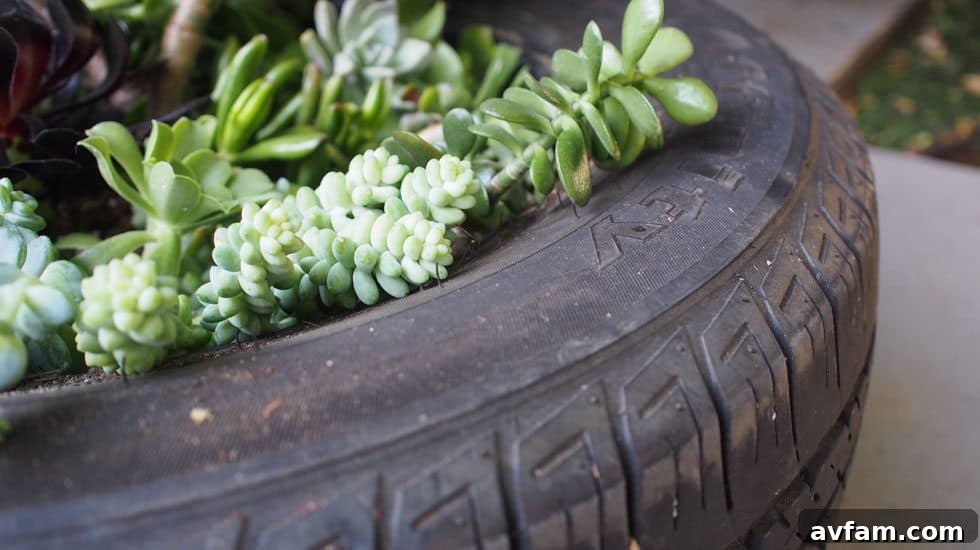
Transforming Old Tires: An Eco-Friendly DIY Succulent Planter Project
As Earth Day approaches (April 22nd), it reminds us of the importance of sustainable practices and giving new life to discarded items. In the spirit of honoring our planet, we embarked on an exciting upcycling project in collaboration with America’s Tire: transforming a used tire into a beautiful and functional succulent planter. This project is not just a creative endeavor; it’s a statement about responsible waste management and the beauty of recycled materials in gardening.
Upcycling old tires for garden projects is a fantastic way to reduce waste, prevent tires from ending up in landfills, and add a unique, rustic touch to any outdoor space. Tires, durable and weather-resistant, are surprisingly versatile materials for various DIY projects. Turning them into planters addresses environmental concerns by giving them a second purpose and preventing them from leaching harmful chemicals into the ground if improperly disposed of. This initiative showcases how simple steps can lead to significant environmental benefits, aligning perfectly with the ethos of Earth Day.
Choosing Your Tire: The Foundation of Your Eco-Planter
Our journey began with a visit to America’s Tire in North Hollywood. We were impressed by their commitment to responsible tire management, evident in their organized collection of used tires. These tires, no longer fit for the road, were perfect candidates for repurposing. Selecting the right tire is crucial for any DIY tire planter project. We opted for the smallest tire we could find. This decision was driven by two practical considerations: managing the overall size of the planter in our yard and ensuring we had enough soil to fill it without excessive cost or effort. A smaller tire is also easier to handle and move, making it ideal for a first-time upcycling project or for those with limited space.
When selecting a tire, consider its size, condition, and aesthetic appeal. While all used tires offer an opportunity for recycling, a clean tire with minimal damage provides a better starting point. Engaging with local tire shops like America’s Tire not only provides access to these materials but also supports businesses that contribute to environmental sustainability. They often have a steady supply of tires that would otherwise be destined for recycling centers, making them an excellent resource for aspiring upcyclers.
Essential Materials and Tools for Your DIY Tire Planter
Before diving into construction, gathering all necessary materials and tools ensures a smooth and efficient project. For our recycled tire succulent planter, we assembled a specific list of items, each serving a critical function in creating a durable and functional home for our plants. Understanding the purpose of each component will help you customize your own sustainable garden project.
Here’s what you’ll need:
- A Used Tire: The star of our project, acquired from America’s Tire. Ensure it’s clean and free of sharp debris.
- 1/2″ Plywood: This will serve as the base of your planter, holding the soil and providing stability. Marine-grade plywood is an excellent choice for outdoor projects due to its water resistance, ensuring the planter’s longevity.
- 1 1/2″ Self-Tapping Screws: These are ideal for securely attaching the plywood base to the tire. Self-tapping screws eliminate the need for pre-drilling pilot holes in many cases, saving time and effort, but always test on a scrap piece first.
- Succulent/Cactus Soil Mix: Essential for healthy succulent growth. This specialized mix provides excellent drainage and aeration, crucial for preventing root rot in succulents.
- Water Permeable Weed Fabric: This fabric is used to line the bottom of the planter, allowing water to drain while preventing soil from escaping through the drainage holes. It also acts as a barrier against weeds.
- Succulent Cuttings: The living element of your planter! Choose a variety of succulents for visual interest and texture.
- Pot Dolly or Small Wheels (Optional): If you want your planter to be easily movable, a pot dolly or a set of small, durable wheels can be attached to the bottom of the plywood base. This is particularly useful for large planters or for rearranging your garden space.
Beyond these materials, you’ll need a few common tools: a measuring tape, a pencil, a jigsaw for cutting the plywood, a drill with a hole saw bit for drainage holes, and a screwdriver or drill for attaching screws. Safety gear, including gloves and eye protection, is also highly recommended when working with tools and tires.
Constructing the Planter Base: Precision and Durability
The base of your tire planter is crucial for its structural integrity and for holding the soil effectively. Our approach prioritized both stability and ease of construction. We began by fabricating a simple, yet effective, compass. This can be done by tying a string to a pencil and a nail, allowing you to draw a perfect circle on the plywood. The key here is precise measurement. We drew a circle on the plywood that was approximately an inch smaller than the interior diameter of the tire. This deliberate sizing ensures that the plywood base makes direct and firm contact with the tire’s sidewall, providing ample material for the screws to bite into, creating a secure and stable bottom for the planter. This slight reduction in diameter also helps prevent the wood from warping or becoming dislodged once the weight of the soil and plants is added.
Assembly, Drainage, and Lining: Critical Steps for Plant Health
With our circle drawn, the next step was to cut out the plywood base using a jigsaw. When operating a jigsaw, always ensure a stable surface for the plywood and wear appropriate safety gear, including eye protection. After carefully cutting the circular base, we positioned it inside the tire. It should fit snugly, making firm contact with the tire’s inner sidewall. We then secured the plywood base to the tire using the self-tapping screws, driving them at regular intervals around the circumference. This creates a robust and stable bottom for the planter.
Proper drainage is paramount for succulent health. Without it, roots can rot, leading to plant failure. To address this, we used a hole saw attachment on our drill to create several drainage holes evenly spaced across the plywood base. The number and size of holes can vary, but generally, a few 1-inch to 1.5-inch holes are sufficient for adequate water flow. Following this, we lined the interior of the planter with water-permeable weed fabric. This fabric is essential as it allows excess water to drain freely while preventing the soil from washing out through the drainage holes. It also acts as a barrier against any potential weeds trying to sprout from beneath. Cut the fabric to size, allowing it to extend slightly up the tire’s inner wall, ensuring full coverage.
Filling and Planting: Bringing Your Succulent Garden to Life
With the base secured and the drainage fabric in place, it was time to fill our upcycled tire with soil. We opted for a specialized succulent/cactus mix, known for its excellent drainage properties, which is vital for these drought-tolerant plants. In retrospect, for larger tire planters, one could strategically fill the bottom cavity with a layer of regular soil or even lightweight filler material to reduce the amount of expensive succulent mix needed, topping it off with the specialized mix where the plants will root. However, for our modest-sized planter, we had sufficient succulent mix to fill the entire tire, providing an optimal growing environment from the start.
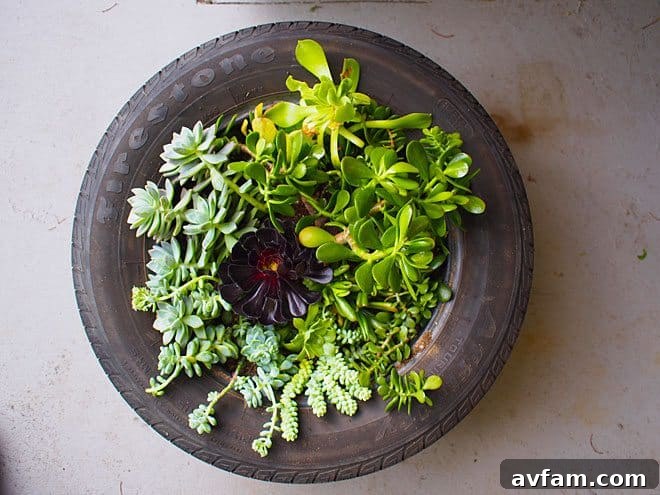
Our yard is blessed with an abundance of various succulents, making it the perfect source for our clippings. We gathered a selection of Jade, Aeonium, and Burro’s Tail, among other hardy varieties. This part of the project became a delightful family activity. My three-year-old son eagerly assisted, enjoying the use of pruning shears (under close supervision, of course) and engaging in conversations about plant health and the concept of starting new life from recycled materials. This hands-on experience not only created a beautiful planter but also instilled valuable lessons in sustainability and gardening in a young mind. When planting, arrange your succulent clippings aesthetically, considering their eventual growth habits and light requirements. Allow some space between plants to prevent overcrowding as they grow.
Succulent Care and Future Outlook
Succulents are remarkably resilient plants that thrive year-round, often surprising gardeners with their gorgeous spring blooms. After planting our clippings, we gave our new tire planter a thorough initial watering. For optimal succulent care, it’s crucial to allow the soil to dry out completely between waterings, typically once every week or two depending on your climate and the amount of sunlight the planter receives. Overwatering is the most common cause of succulent demise, so err on the side of underwatering rather than overwatering. Position your planter in a spot that receives plenty of bright, indirect sunlight for several hours a day. With proper care, these resilient plants will flourish.
We are excited to witness the transformation of our eco-friendly planter over the coming months. We envision it overflowing with a vibrant cascade of green, demonstrating the beautiful potential of upcycled garden decor. This project is a testament to how simple ideas and repurposed materials can contribute to a greener planet and add unique charm to your garden. We encourage everyone to consider embarking on their own DIY gardening projects using recycled items.
Our sincere gratitude goes out to America’s Tire for their invaluable partnership in this Earth Day project. Their North Hollywood store managers were a pleasure to work with, providing not only the essential materials but also embodying a spirit of community and environmental responsibility. We wholeheartedly recommend America’s Tire to our friends and family for honest assessments and exceptional service for all their tire needs. Their support made this sustainable initiative a reality, and we are proud to showcase the results of our collaboration.