
Ultimate DIY Home Security: Reinforcing Sliding Windows and Doors with a Simple Dowel Rod
In today’s world, ensuring the security of your home is paramount. While modern homes come equipped with various locking mechanisms, many homeowners find themselves questioning the true effectiveness of these systems, especially when it comes to sliding windows and sliding glass doors. These entry points, common in many residences, are often perceived as weak links in a home’s security chain. The thought of a potential intruder easily bypassing a standard lock can be unsettling, leading to sleepless nights and constant worry. But what if there was an incredibly simple, affordable, and effective solution to dramatically enhance the security of these vulnerable areas?
You might believe your sliding windows and sliding glass doors are securely closed and locked. However, for complete peace of mind, it’s wise to go beyond standard locks. This article will introduce you to a remarkably effective, budget-friendly security trick that will remove all doubt about your home’s vulnerability, providing an unyielding physical barrier against forced entry. Discover how a simple wooden dowel rod can become your ultimate home security ally.
The Genius of the Dowel Rod: An Unbreakable Barrier
The concept is brilliantly simple yet profoundly effective. A wooden dowel rod, strategically placed, transforms your sliding window or door from a potential weak point into an impenetrable fortress. This isn’t just a supplementary measure; it’s a fundamental physical barrier that renders your window or door unmovable, regardless of whether its primary lock holds up against tampering or not.
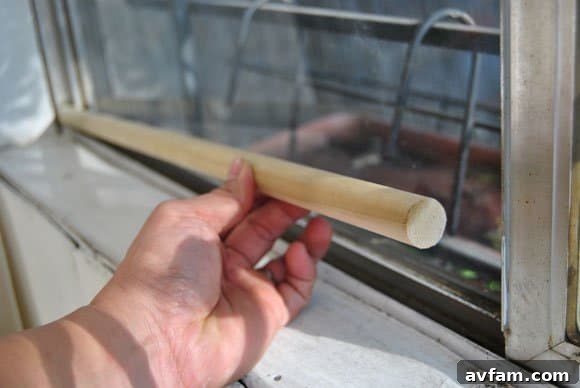
When a sliding window or door is fully closed and locked, there’s often a remaining exposed portion of the lower track. This track is designed to allow the window or door to slide open. By inserting a precisely cut dowel rod into this exposed track space, you physically prevent the window or door from moving. Even if a burglar manages to pick the lock, jimmy it open, or even break it, the solid dowel rod acts as a secondary, internal barricade, blocking any attempt to slide the panel open. It’s an old-school solution that leverages physics to outsmart modern security vulnerabilities.
Step-by-Step Guide: Implementing Your Dowel Rod Security System
Implementing this robust security upgrade requires minimal effort and tools. Here’s how you can secure your sliding windows and doors:
Materials You’ll Need:
- A wooden dowel rod (available at any hardware store, typically for less than $2)
- A tape measure
- A pencil or marker
- A hand saw or miter saw (for a cleaner cut)
- Sandpaper (optional, for smoothing rough edges)
Installation Process:
- Close and Lock Your Window/Door: Ensure your sliding window or glass door is completely closed and its primary lock is engaged.
- Measure the Exposed Track: Carefully measure the exact length of the exposed window or door track between the frame and the edge of the sliding panel. This measurement is crucial for ensuring a snug fit. For instance, if you have a sliding window, measure the length from the vertical frame edge to the edge of the glass panel that slides. For a sliding glass door, measure from the door frame to the edge of the sliding door.
- Mark the Dowel Rod: Transfer your measurement onto the dowel rod using a pencil or marker. Double-check your measurement to avoid cutting too short or too long. A rod that is too short can be easily removed; one that is too long won’t fit.
- Cut the Dowel Rod: Using your hand saw or miter saw, carefully cut the dowel rod at your marked line. A clean, straight cut is best for a tight fit. If desired, lightly sand the cut ends to remove any splinters.
- Place the Dowel Rod: Insert the cut dowel rod horizontally into the bottom track, ensuring it sits snugly against both the frame and the sliding panel. The dowel should be firm enough that it cannot be easily removed from the outside, even with force.
- Test the Security: Try to slide the window or door open from the outside. You should find it completely immobilized by the dowel rod.
Once installed, always keep the dowel in place whenever the window or door is closed and you want maximum security. Remember, for ventilation, you can cut a second, shorter dowel to allow the window/door to open a few inches while still being secured against full entry.
Why the Dowel Rod Method Stands Out
In an age of advanced security gadgets, why does this humble dowel rod remain such a highly recommended and effective method? Its strengths lie in its fundamental simplicity and undeniable practicality:
- Unbeatable Cost-Effectiveness: At less than $2, a dowel rod offers a level of security that often rivals more expensive, complex locking mechanisms or even basic alarm systems for specific entry points. It’s an investment that pays dividends in peace of mind without breaking the bank.
- Effortless Implementation: You don’t need to be a DIY expert to install this. With basic tools and minimal time, anyone can secure their sliding windows and doors. There are no wires, batteries, or complicated instructions.
- Reliable Physical Barrier: Unlike electronic systems that can fail due to power outages or technical glitches, a physical dowel rod remains an unyielding obstacle. It does not rely on sensors, signals, or power, making it incredibly dependable.
- Versatility Across Sliding Entry Points: Whether you have sliding windows in bedrooms, a sliding glass door leading to your patio, or an old sliding closet door that connects to an attic, this method works universally for any horizontally sliding panel.
- Immediate Security Boost: Once installed, the dowel rod provides an instant and tangible increase in your home’s security. This immediate enhancement can significantly reduce anxiety about potential intrusions.
- Deterrent Factor: While often unseen from the outside, the knowledge that such a robust internal barrier exists can deter opportunistic burglars who often look for easy targets. The slight delay or difficulty in entry can send them searching for an easier home.
Beyond the Dowel: A Comprehensive Approach to Home Security
While the dowel rod is a fantastic first line of defense for sliding entry points, true home security is achieved through a layered approach. Think of your home as having multiple security concentric circles, each offering an additional layer of protection. Here are other essential DIY tips to fortify your home:
Enhancing Your Windows and Doors:
- Upgrade Primary Locks: For all doors, consider installing deadbolt locks with a 1-inch throw and reinforced strike plates with longer screws (3 inches) that penetrate the door frame studs.
- Window Pin Locks/Ventilation Locks: For sliding windows, consider adding metal pin locks that drill into the frame and the sliding sash, allowing for partial opening for ventilation while remaining secure.
- Security Film for Glass: Apply shatter-resistant film to windows and glass doors. This film holds the glass together even if it’s broken, preventing easy entry and delaying intruders.
- Auxiliary Window Bars: For particularly vulnerable basement windows or ground-floor windows, consider installing decorative or removable security bars.
Exterior Deterrents:
- Motion-Sensor Lighting: Install bright motion-activated lights around your home’s perimeter, especially near potential entry points. Burglars prefer to work under the cover of darkness.
- Strategic Landscaping: Trim bushes and trees that could provide cover for intruders near windows or doors. Avoid tall fences or dense shrubbery that could hide a burglar from view.
- Visible Security Signage: Display signs indicating you have an alarm system or security cameras, even if they are simple DIY systems. This alone can deter many criminals.
- Door Reinforcement: Beyond strike plates, consider door frame reinforcement kits that strengthen the entire frame, making kick-ins much harder.
Technological and Behavioral Safeguards:
- Affordable Security Cameras: Modern wireless security cameras (e.g., Ring, Arlo, Wyze) are affordable and easy to install, providing live monitoring and recording.
- DIY Alarm Systems: Explore cost-effective DIY alarm systems that offer door/window sensors, motion detectors, and smartphone alerts without monthly fees.
- Maintain an Occupied Look: Use timers for lights and radios when you’re away. Have neighbors collect mail and newspapers.
- Secure Valuables: Don’t leave expensive items visible from windows. Consider a safe for important documents and jewelry.
Addressing Common Concerns and Myths
While the dowel rod method is incredibly effective, some homeowners might have lingering questions:
- “My Existing Locks Are Good Enough”: Standard sliding window and door locks are often designed more for convenience than robust security. They can be easily jimmied, forced, or even lifted off their tracks with a pry bar. The dowel provides a secondary, independent layer of physical security that doesn’t rely on the integrity of the primary lock.
- “It Looks Unsightly”: For many, a simple wooden dowel is unobtrusive. You can paint it to match your window frame or simply place it discreetly in the track. For sliding glass doors, it’s often barely noticeable. The aesthetic compromise is minimal compared to the significant security gain.
- “What About Emergency Egress?”: In an emergency, a dowel rod is easily and quickly removed from the inside. Unlike permanently installed security bars, it doesn’t impede escape. This ease of removal is one of its key advantages, ensuring safety without sacrificing access in critical situations.
Choosing the Right Dowel for Maximum Security
The type of dowel you choose can slightly impact its effectiveness and durability:
- Material: While wood dowels are most common and cost-effective, you can also find metal rods (e.g., aluminum or steel) if you desire even greater strength and durability. However, wood is generally sufficient for most applications.
- Diameter: Opt for a dowel with a diameter that fits snugly into your track without being too tight to remove easily or too loose to be effective. A thicker dowel offers more resistance against attempts to break it.
- Source: Dowels are readily available at virtually any hardware store, home improvement center, or even craft stores. Look for straight, knot-free pieces for optimal performance.
The Priceless Benefit of Proactive Home Security
Investing a little time and a few dollars into home security, starting with simple but powerful solutions like the dowel rod, offers immeasurable benefits:
- Unwavering Peace of Mind: Knowing that you’ve taken proactive steps to secure your home allows you to sleep better, travel without constant worry, and feel truly safe within your own space.
- Powerful Deterrence: Most burglars are opportunists. They seek quick and easy entry. A home that shows signs of being well-secured, even with hidden measures like dowels, is often bypassed in favor of an easier target.
- Protection of Valuables: Beyond the sentimental value of your possessions, the financial cost of replacing stolen items can be substantial. Good security safeguards your assets.
- Safety of Loved Ones: The most important aspect of home security is protecting the people inside. Preventing forced entry ensures the safety and well-being of your family.
Don’t leave your home’s security to chance or rely solely on standard locks. The dowel rod security trick is a testament to the fact that effective home protection doesn’t have to be complicated or expensive. It’s a simple, robust, and reliable method to make your sliding windows and doors unmovable, providing an essential layer of defense against intruders. Embrace this easy DIY hack today and couple it with other smart security practices to create a truly secure sanctuary for yourself and your family.