Choosing the Best Wood for Your Outdoor Projects: A Comprehensive Guide to Redwood, Cedar, Douglas Fir, and Pine
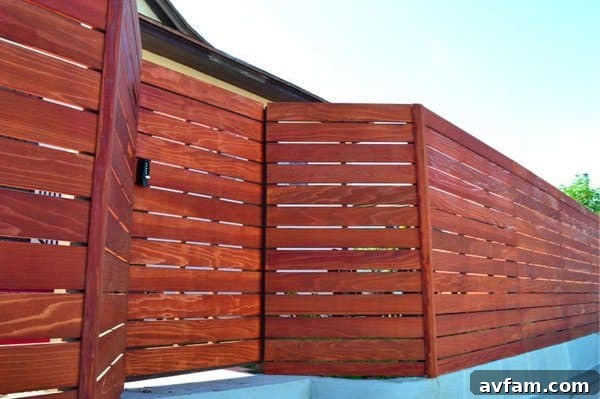
Embarking on any home improvement project, especially those involving outdoor structures, invariably brings one crucial decision to the forefront: which wood species to choose? The right selection can significantly impact the longevity, aesthetic appeal, and overall success of your endeavor. Recently, we collaborated with a trusted local contractor to enhance our property, undertaking the installation of elegant wood fencing atop an existing brick wall and constructing a custom swinging gate. This project illuminated the diverse world of lumber options available to homeowners.
Our contractor presented a variety of wood options, each with its unique benefits and considerations. After careful evaluation of factors such as initial cost, expected performance against the elements, and desired aesthetic, we ultimately settled on redwood. This decision was informed by extensive research and a desire for a material that offered both beauty and resilience. Understanding these choices is vital, whether you’re building a fence, a deck, or tackling any other woodworking project.
For many homeowners, local suppliers like Home Depot serve as an invaluable resource, stocking a wide array of major lumber options, often with variations in quality and grade to suit different budgets and project requirements. To help you navigate this decision-making process, we’re providing an in-depth exploration of four popular wood species: redwood, cedar, Douglas fir, and pine. This guide will delve into their individual characteristics, ideal applications, and why each might be the perfect choice for your next outdoor or indoor project.
Redwood: The Enduring Classic for Outdoor Elegance
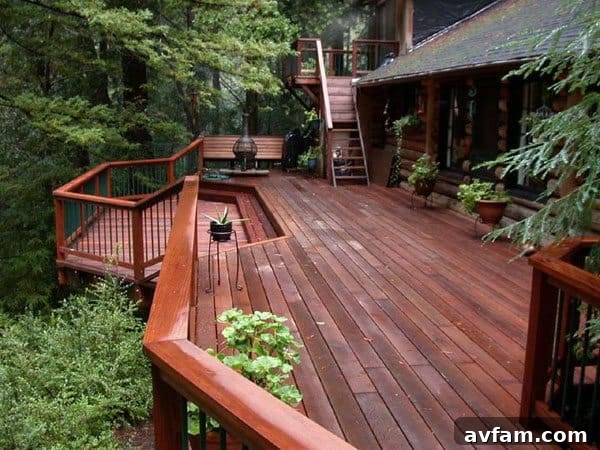
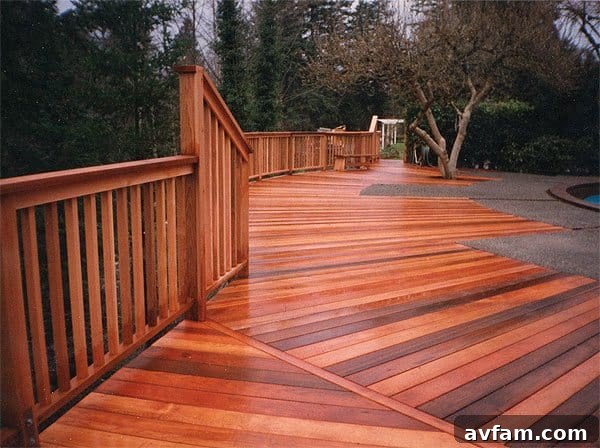
Redwood stands as a premium choice among building materials, a wood truly in a class of its own. Decks, fences, and other structures crafted from redwood possess a unique beauty that is both striking and remarkably long-lasting. Renowned for its distinctive reddish-brown hue, fine grain, and impressive dimensional stability, redwood naturally resists warping, checking, and splitting, making it an ideal candidate for environments where wood is consistently exposed to the elements.
What sets redwood apart is its inherent durability. This wood is packed with natural tannins and oils that act as built-in preservatives, granting it exceptional resistance to decay, rot, and insect infestations. This natural resilience means redwood holds up remarkably well under challenging conditions, whether facing intense sun, heavy rain, or accumulating snow, solidifying its reputation as a top choice for discerning builders and homeowners alike. Its ability to maintain its integrity and appearance over decades, even in harsh climates, makes the initial investment worthwhile.
Beyond its performance, redwood is also highly regarded for its environmental credentials. In many regions, you can readily purchase FSC-certified redwood, ensuring that the lumber originates from sustainably managed forests. This commitment to responsible forestry means you can enjoy its beauty and performance with peace of mind, knowing your choice supports ecological balance. Furthermore, redwood is a completely recyclable material, reducing its overall environmental footprint.
The versatility of redwood extends to a wide range of grades and finishes, catering to virtually any project requirement or budget. From highly economical grades perfect for utilitarian applications to luxurious, clear-grade lumber designed for the most sophisticated architectural statements, there’s a redwood option for every vision. Whether you’re envisioning a simple, functional deck or a complex, creatively designed outdoor living space that pushes the boundaries of aesthetic design, redwood offers the flexibility and quality to bring your dream to life. Its natural beauty also means it can be left unfinished to weather gracefully to a soft, silvery-gray patina, or easily stained and sealed to preserve its rich, natural color.
Cedar: Aromatic Beauty and Natural Protection
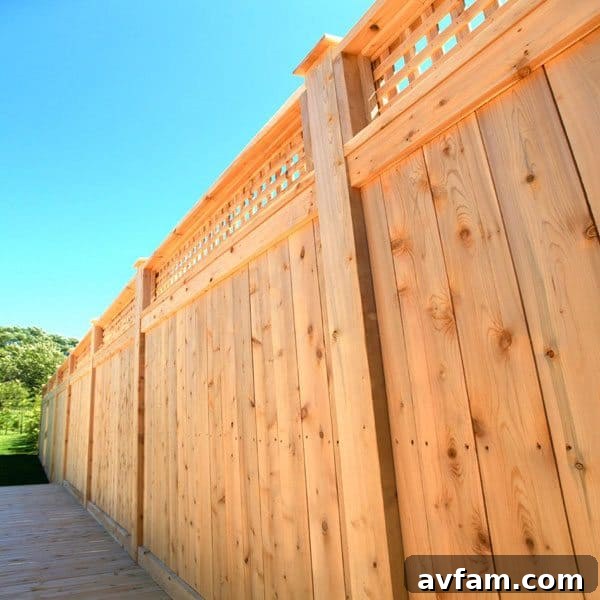
Cedar boards are celebrated for their exceptional versatility, undeniable attractiveness, and enduring performance. This remarkable wood species is widely acclaimed for its consistent appearance, superior stability, long-term durability, and impressive resistance to weather. Cedar is truly ideal for a diverse array of applications, particularly for outdoor projects where lumber is directly exposed to environmental factors, maintaining its charm and structural integrity year after year.
One of cedar’s most notable attributes is its natural defense system. The wood contains unique aromatic oils and natural preservatives that actively repel moisture, making it highly resistant to rot, decay, and fungal growth. These inherent properties also deter insects, including termites and carpenter ants, which can be devastating to other wood types. This makes cedar an excellent, low-maintenance choice for fences, siding, decks, and even garden beds. Its resistance to algae and mildew ensures it remains clean and appealing with minimal upkeep.
Visually, cedar is distinguished by its appealing tannish-brown coloration, which can vary subtly depending on the specific type (e.g., Western Red Cedar often has a richer, more varied tone). The grain pattern of cedar is typically tight and consistent, punctuated by very few knots, especially in higher grades. This fine, uniform texture provides a smooth surface that not only looks beautiful but also readily absorbs stains and paints, allowing for excellent finishing possibilities. Whether you aim to highlight its natural beauty with a clear sealant or match specific outdoor decor with a vibrant paint, cedar provides an excellent canvas.
Beyond its aesthetic and protective qualities, cedar is also remarkably lightweight and easy to work with. Its soft yet stable nature makes it easy to cut, nail, and screw, which significantly streamlines the construction process for DIY enthusiasts and professional builders alike. This workability, combined with its resistance to splitting and warping, ensures a smooth and efficient build, resulting in a robust and beautiful finished product. From privacy fences and decorative pergolas to intricate gazebos and exterior siding, cedar brings a harmonious blend of natural beauty, aromatic charm, and resilient performance to any project.
Douglas Fir: The Powerhouse of Western Softwoods
Douglas Fir is unequivocally one of the most robust and dependable western softwoods available on the market, consistently demonstrating exceptional strength pound for pound. Its remarkable durability and structural integrity have made it a cornerstone of the construction industry, leading to its use in the manufacturing of more diverse products than virtually any other lumber species. This powerful, reliable, and highly workable wood is an excellent choice for a wide spectrum of projects, both structural and aesthetic.
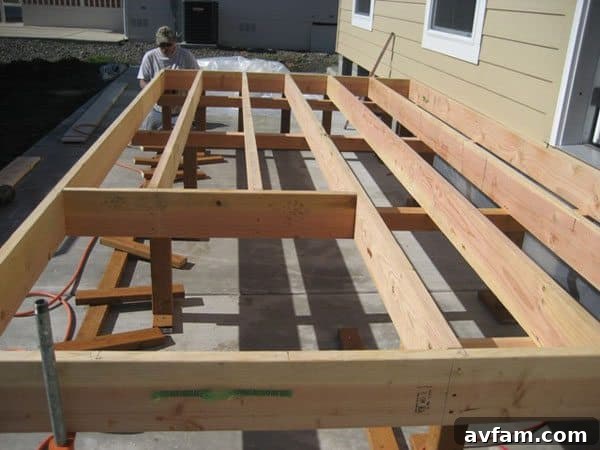
Originating primarily from the Pacific Northwest, Douglas Fir boasts a high strength-to-weight ratio, which makes it incredibly efficient for large-scale construction. Its dense grain and straight fibers contribute to its superior bending strength and stiffness, qualities that are paramount in framing, joists, beams, and other load-bearing applications. Architects and builders frequently specify Douglas Fir for its consistent performance and predictable behavior under stress, ensuring the long-term stability and safety of structures.
Despite its impressive strength, Douglas Fir is also surprisingly lightweight and possesses excellent cutting properties. This combination makes it exceptionally user-friendly for a variety of home improvement tasks, allowing for easier handling, precise cuts, and more efficient installation. Whether you’re cutting complex joinery or simply trimming boards to size, its workability minimizes fatigue and maximizes productivity. Furthermore, Douglas Fir exhibits outstanding screw and nail holding properties, providing secure fastenings that contribute to the overall strength and longevity of any construction.
Another significant advantage of Douglas Fir is its versatility regarding treatment and application. This wood can be purchased kiln-dried and left untreated for interior applications where it will not be exposed to moisture or pests, such as flooring, trim, and interior framing. When properly treated with preservatives, Douglas Fir also becomes an excellent option for outdoor use, including decking, pergolas, and structural components that face the elements. Its natural resistance to decay is moderate, so for exterior applications, pressure treatment is recommended to extend its lifespan significantly. Its warm, reddish-brown tones and distinctive grain patterns also make it an attractive choice for visible architectural elements, offering both strength and a pleasing aesthetic.
Pine: Versatility and Value for Interior Craftsmanship
Pine boards are a widely accessible and incredibly versatile lumber option, available in numerous varieties such as Radiata Pine, White Pine, and Southern Yellow Pine. While certain varieties like pressure-treated Southern Yellow Pine are engineered for outdoor resilience, the highest grades of pine, particularly those free of knots, are supremely ideal for a vast range of interior applications. These premium boards offer exceptional usability and aesthetic appeal, minimizing waste and providing excellent value for money on any woodworking project.
One of the most compelling advantages of selecting higher-grade, knot-free pine is the complete usability of every part of the board. Unlike lower grades where knots can be a source of structural weakness, aesthetic imperfection, or require tedious cutting around, knot-free pine ensures that every inch can be utilized effectively. This eliminates the need for wasteful, annoying cutting and significantly reduces material loss, making it a highly economical choice for projects where material efficiency is key. For furniture, shelving, cabinetry, or intricate trim work, the absence of knots ensures a consistently smooth and uniform surface.
The knot-free surface of high-grade pine also lends itself to exceptionally easy finishing. Whether you plan on painting, staining, or varnishing your project, the smooth, even texture of the wood allows for uniform absorption and a flawless finish every time. This makes pine a favorite among DIY enthusiasts and professional woodworkers alike who seek a material that is forgiving and yields professional-looking results with minimal effort. Its relatively light color also means it can take on a wide array of stains, from light natural tones to rich, dark hues, allowing for significant design flexibility.
Among the various types, Radiata Pine is particularly well-known for its excellent workability. Originally hailing from Monterey, California, this fast-growing species is now primarily sourced from commercially grown, sustainably managed tree farms in New Zealand. These forests are meticulously managed and often FSC (Forest Stewardship Council) certified, signifying that they operate on a completely renewable basis. Radiata Pine is praised for its ease of nailing and screwing, its strong glue-holding capabilities, and its superb paint finish, making it a top choice for fine woodworking and general construction where ease of use and a high-quality finish are paramount. Its consistent grain and soft texture make it a pleasure to work with, from initial cuts to the final sanding and finishing touches.