
Revolutionize Your Lawn Care: The Ultimate Guide to Zero-Turn Mowers
For homeowners seeking an unparalleled blend of speed, precision, and efficiency in their lawn maintenance, zero-turn mowers have become an increasingly popular and indispensable tool. Often spotted at home centers with their distinctive twin control arms, these machines are transforming the way people approach yard work. Their reputation for superior performance stems from a unique design that allows them to pivot on their own axis, offering a level of maneuverability unmatched by traditional riding mowers. This guide will delve into what makes zero-turn mowers stand out, how to master their operation, and why they might be the perfect addition to your lawn care arsenal.
What Sets Zero-Turn Mowers Apart from Traditional Riding Mowers?
At first glance, both zero-turn mowers and conventional riding mowers appear to serve the same purpose: cutting grass efficiently from a seated position. However, their operational philosophies and design principles are fundamentally different, leading to distinct advantages and disadvantages for various users and landscapes.
Traditional Riding Mowers: Familiarity and Comfort
Typical riding mowers are engineered for simplicity and familiarity, often mimicking the driving experience of a car. They feature a standard steering wheel, a comfortable seat, and foot pedals for acceleration and braking. Many models come equipped with a range of creature comforts, including adjustable seats, padded armrests, tilt and telescoping steering wheels, integrated driving lights, convenient cup holders, DC power outlets, and even onboard storage compartments. These features enhance user comfort during longer mowing sessions, making them a suitable choice for users who prioritize a relaxed, car-like experience, especially on simpler, open lawns.
Zero-Turn Mowers: Performance and Precision at the Forefront
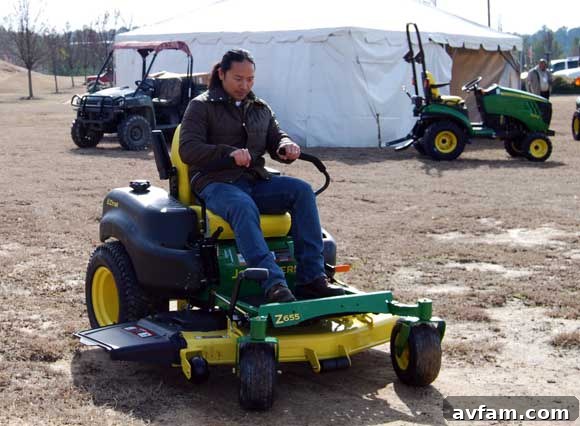
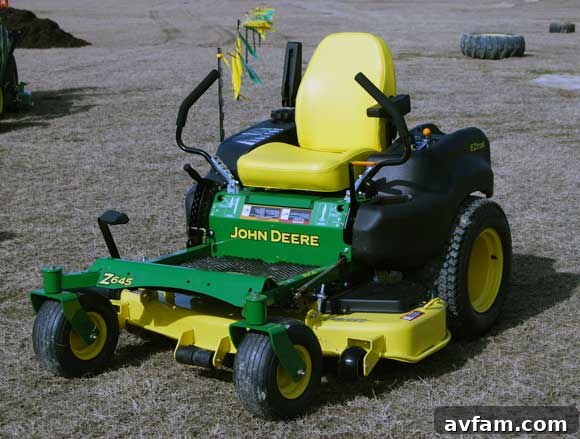
In contrast, zero-turn mowers prioritize raw performance and unparalleled precision. While they may offer fewer “creature comforts” in their most basic forms compared to some high-end traditional riders, they more than compensate with their core capabilities. The defining feature of a zero-turn mower is its unique steering mechanism, typically involving two independent control arms (often called lap bars) that control the speed and direction of each drive wheel. This independent control is the secret behind their name: a zero-degree turn radius. This means the mower can literally pivot 180 degrees in place, spinning around its own center, allowing for incredibly tight turns and unmatched maneuverability. With top speeds often reaching up to 9 mph, zero-turn mowers are leaders in fast, efficient, and exceptionally precise grass cutting, significantly reducing mowing time for large or complex properties.
Mastering the Controls: How to Operate a Zero-Turn Mower
Operating a zero-turn mower is a distinct experience that, while initially different, quickly becomes intuitive and incredibly rewarding. Unlike traditional mowers with pedals and a steering wheel, everything on a zero-turn mower is controlled via its two iconic lap bars. These control arms typically wrap around each side of the operator and extend to the top, where they are easily grasped.
Adjusting for Comfort and Safety
Before starting, ensure the mower is properly adjusted for your body. Many advanced models, such as the John Deere Z series, feature control arms that can be adjusted closer or further away from the driver, accommodating operators of various sizes for maximum comfort. Seats are also often adjustable for height and fore/aft position. Once comfortably seated and secured (if your model has a seatbelt), you’re ready to learn the fundamentals of motion.
Moving in a Straight Line: Forward and Reverse
To move forward in a straight line, grasp each control arm firmly and push both arms forward equally. It’s crucial to do this gradually and smoothly, as these mowers can accelerate quickly. Engaging the controls gently will prevent jerky movements and maintain a straight path. To engage reverse, simply pull both control arms back towards you equally. This action will engage both drive wheels at the same speed, allowing for controlled backward movement. Practice these basic movements in an open area to get a feel for the responsiveness of the machine.
The Art of Turning: Unlocking Zero-Degree Maneuverability
The true beauty and primary advantage of zero-turn mowers lie in their exceptional turning capabilities. Unlike a car, where turning involves a steering wheel, a zero-turn mower turns by varying the speed of its independent drive wheels. Here’s how to execute different types of turns:
- Gentle Turns: To execute a gradual turn, slightly ease back on the control arm corresponding to the direction you wish to turn, while maintaining a steady forward push on the other arm. For example, to turn left, slightly pull back on the left control arm while continuing to push the right arm forward. This slows down the left wheel, causing the mower to arc left. The degree of difference in arm positions dictates the sharpness of the turn.
- Sharp Pivots (Zero-Degree Turn): To perform a true zero-degree turn, where the mower spins in place, you’ll push one control arm forward while simultaneously pulling the other control arm fully back. This causes one wheel to drive forward and the other to drive backward at the same speed, making the mower pivot around its own center axis. For instance, pushing the right arm forward and pulling the left arm back will cause the mower to turn sharply to the left. This maneuver is incredibly effective for navigating around obstacles, tight corners, or reversing direction without having to make wide, sweeping turns. With practice, you can literally turn on a dime, creating perfectly clean mowing lines around trees, flower beds, and intricate landscape features.
Advanced Operation and Safety Tips
Once you’ve mastered the basic controls, you can start exploring advanced mowing patterns and techniques. The maneuverability of a zero-turn mower sets it miles apart from a traditional riding mower or even a push mower. You can mow perfectly straight lines, make precise turns at the end of each pass, and significantly reduce the amount of uncut grass that typically requires string trimming. Remember these essential safety tips:
- Always read your mower’s operator manual before use.
- Wear appropriate personal protective equipment (PPE), including hearing protection, eye protection, and sturdy footwear.
- Familiarize yourself with your lawn’s terrain, identifying any slopes, obstacles, or uneven ground that might require extra caution.
- Engage and disengage the mower blades only when safe and appropriate, typically when stationary or at a slow, controlled speed.
- Never operate the mower on excessively steep slopes, as this can lead to loss of control or rollovers.
Why Choose a Zero-Turn Mower? The Undeniable Advantages
The growing popularity of zero-turn mowers isn’t just a trend; it’s a testament to their tangible benefits for a wide range of homeowners and property sizes. If you’re considering upgrading your lawn care equipment, here’s why a zero-turn might be your best investment:
- Unmatched Efficiency: Zero-turn mowers significantly cut down mowing time. Their higher ground speeds, combined with the ability to make instant turns, eliminate the need for cumbersome three-point turns or backing up to align for the next pass. This means more grass cut in less time, freeing up your weekend for other activities.
- Superior Cut Quality and Finish: The precision offered by zero-turn steering allows operators to create perfectly straight lines and crisp edges around obstacles. This results in a cleaner, more professional-looking lawn that will be the envy of your neighborhood. Less uncut grass also means less follow-up trimming is required.
- Exceptional Maneuverability: No tree line is too wavy, no flower bed too intricate for a zero-turn mower. Their ability to pivot in place allows you to navigate tight spaces and complex landscapes with ease, dramatically reducing the amount of hand-trimming or push mowing needed after the main cut.
- Comfort on Large Properties: While traditional riding mowers offer creature comforts, the speed and efficiency of a zero-turn reduce the overall time spent mowing, which can translate to less fatigue on large properties. Many modern zero-turns also offer advanced suspension seats for enhanced comfort.
- Durability and Power: Zero-turn mowers are typically built with robust frames and powerful engines designed for demanding use, ensuring longevity and reliable performance season after season.
Considerations Before Making Your Purchase
While the benefits are compelling, choosing the right zero-turn mower involves a few considerations:
- Lawn Size and Terrain: Zero-turns excel on larger properties (half an acre or more) with varied landscapes. For very small, simple lawns, a push mower or basic riding mower might suffice. Be mindful of very steep hills, as not all zero-turns are rated for extreme inclines.
- Budget: Zero-turn mowers typically represent a higher initial investment than basic riding mowers. However, the time savings and professional results often justify the cost over time.
- Deck Size: Mower deck width impacts both cutting time and maneuverability. Larger decks cover more ground faster, while smaller decks offer greater agility in confined spaces.
- Engine Power: A more powerful engine will handle tough grass and varied terrain with greater ease, ensuring consistent performance.
- Comfort and Features: Look for models with comfortable seats, easily adjustable controls, and any additional features that enhance your specific mowing experience, such as headlights or hitch plates.
Finding Your Perfect Zero-Turn Mower
The market for zero-turn mowers is robust, with many leading manufacturers offering a wide array of models to suit various needs and budgets. Reputable brands like John Deere, Toro, Cub Cadet, Husqvarna, Ariens, and Exmark are all well-known for their quality and innovation in the zero-turn segment.
If your local home center carries riding mowers, it’s highly probable they will also feature a selection of zero-turn models, as most manufacturers now produce both types. Large retailers like Home Depot, for instance, typically stock models from popular brands, allowing you to compare features and even sit on different machines to get a feel for their ergonomics. Visiting a dedicated lawn and garden dealer can also provide expert advice and a broader selection of professional-grade models.
In conclusion, for homeowners serious about efficient, precise, and professional-looking lawn care, a zero-turn mower is an investment that truly pays off. Its unique steering system, speed, and unmatched maneuverability make it a game-changer, transforming what can be a tedious chore into an enjoyable and highly satisfying experience. Take the time to understand their operation, explore the options, and you’ll be well on your way to a perfectly manicured lawn with less effort and in less time.