

Home Depot Embraces the Future: MakerBot 3D Printers Bring Innovation to Every Home

A significant shift is underway in the retail landscape, signaling a clear path for cutting-edge technology to reach the everyday consumer. Home Depot, America’s beloved home improvement giant, is making a groundbreaking move by introducing MakerBot 3D printers to 12 of its retail stores nationwide this month. This strategic rollout marks an initial, yet crucial, test phase before a potential full nationwide launch, indicating a strong belief in the transformative power of additive manufacturing for the modern homeowner.
The decision to bring 3D printers into physical stores comes on the heels of robust online sales of MakerBot products via the Home Depot website. Bre Pettis, the visionary founder of MakerBot, emphasized that this direct retail channel is a logical progression. The expectation is for MakerBot to command a prominent presence, likely an interactive end-cap display similar to those of established brands like RYOBI and Milwaukee Tool. These displays will not just showcase the printers but will feature dedicated MakerBot “experts” actively demonstrating the 3D printing process, turning a complex technology into an engaging, tangible experience – a critical selling point for consumers unfamiliar with the concept.
Democratizing Innovation: 3D Printing Enters the Mainstream
While MakerBot 3D printers have been accessible through Microsoft stores for the past year, their debut in Home Depot represents a monumental leap. This is the first time a major big-box retailer focused on home improvement and DIY has fully committed to integrating this technology into its core offerings. This strategic partnership is poised to propel 3D printing deeper into the collective consciousness of the American consumer, making it less of a niche tool for hobbyists and more of a practical device for every household.
The real significance of this collaboration lies in Home Depot’s unequivocal bet on 3D printing. By stocking these innovative machines, Home Depot is actively positioning itself as the go-to resource for a technology that, while still evolving, promises to revolutionize home repairs, DIY projects, and personal customization. Just as it has become the default destination for lumber, tools, and garden supplies, Home Depot aims to become the essential hub for digital fabrication needs, solidifying its role as a pioneer in the evolving retail landscape.
The Future of Home Repair and DIY: Printing Your Own Solutions
One of the most compelling applications of 3D printing, and one that holds immense promise for the average homeowner, is the ability to fabricate replacement parts for appliances and various household items. Imagine the frustration of a cracked hinge on a dryer, a broken tab on a smoke detector, or a missing knob on a dishwasher. Traditionally, such minor damages would necessitate an expensive service call, scouring the internet for an often-discontinued part, or even worse, the premature replacement of an otherwise functional appliance. With an in-home 3D printer, this paradigm shifts dramatically.
Consumers could conceivably visit a manufacturer’s website, download the specific 3D plan for the needed part, and print it themselves within hours. This empowers individuals with unprecedented control over their home maintenance, fostering a culture of self-sufficiency and immediate problem-solving. Beyond mere replacement, consider the potential for custom modifications: creating bespoke organizers for kitchen drawers, designing personalized hooks for the garage, or even prototyping innovative solutions for smart home device integration. The possibilities are truly boundless, turning every homeowner into a potential inventor and problem-solver.
Benefits for Consumers and Retailers Alike:
- Enhanced Customer Service: Manufacturers can provide digital files, reducing the need for physical inventory and shipping of small parts.
- Cost Savings: Consumers save money on service calls and the cost of new appliances.
- Reduced Waste: Extending the life of appliances through printed parts contributes to environmental sustainability by minimizing landfill waste.
- Empowerment: DIY enthusiasts gain a powerful tool for customization and immediate repairs.
- Inventory Management: Retailers and manufacturers no longer need to hold extensive inventories of obsolete parts for out-of-production units.
While the immediate focus often gravitates towards practical repairs, the utility of 3D printing in a home environment extends far beyond. From crafting personalized gifts and decorative items to developing educational tools for children or creating functional prototypes for personal projects, the versatility of these machines is extraordinary. It’s truly exciting to witness a market leader like Home Depot championing a technology that, while still a few years from achieving universal household status, is rapidly proving its indispensable value.
Understanding the Technology: What is 3D Printing?
For those new to the concept, 3D printing, also known as additive manufacturing, is a revolutionary process that creates three-dimensional solid objects from a digital file. Unlike traditional subtractive manufacturing, which cuts away material from a larger block, 3D printing builds an object layer by successive layer until the entire physical object is created. This method allows for the creation of intricate geometries and complex designs that would be impossible or prohibitively expensive using conventional techniques.
How it Works:
- Design: An object is designed using Computer-Aided Design (CAD) software or by scanning an existing object.
- Slicing: The digital 3D model is then “sliced” into hundreds or thousands of horizontal layers by specialized software. This software generates instructions (G-code) for the 3D printer.
- Printing: The 3D printer reads these instructions and deposits or fuses material layer by layer, building the object from the ground up. Common materials for consumer 3D printers include PLA (polylactic acid) and ABS (acrylonitrile butadiene styrene) filaments.
The beauty of 3D printing lies in its ability to transform digital ideas into physical realities with relative ease. It democratizes manufacturing, moving it from large factories to individual desktops, opening up a world of possibilities for innovation and personalization at the consumer level.
MakerBot Offerings and Market Impact
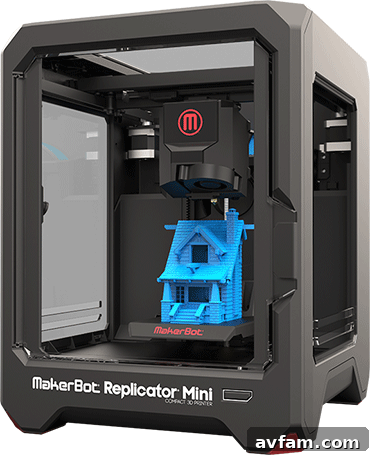
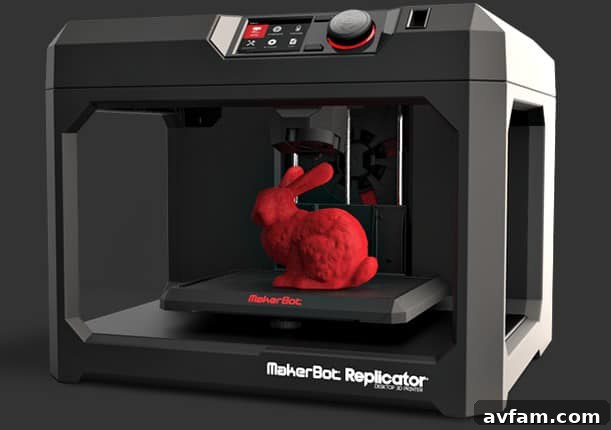
At Home Depot, consumers will have access to two flagship MakerBot models: the MakerBot Replicator, priced at $2,899, and the more compact MakerBot Replicator Mini, available for $1,375. The Replicator series is renowned for its reliability and ease of use, making it an excellent choice for both experienced makers and enthusiastic beginners. The Replicator offers a larger build volume and more advanced features, catering to users with more ambitious projects, while the Replicator Mini provides an accessible entry point into 3D printing, perfect for smaller projects and those with limited space.
This pricing strategy, combined with Home Depot’s widespread reach, makes 3D printing an attainable reality for a broader segment of the population. It positions these tools not as exotic gadgets, but as practical investments for modern homes, comparable to other high-value appliances or power tools found in the store. The availability of these printers in a physical retail environment also addresses a common barrier to adoption: the desire to see, touch, and understand a product before committing to a purchase, especially for a technology as novel as 3D printing.
The Road Ahead: A Future Shaped by Home Innovation
Home Depot’s venture into selling 3D printers is more than just a new product offering; it’s a profound statement about the future of home improvement and consumer technology. It signifies a future where repairs are immediate, customization is standard, and individual creativity is unleashed through digital fabrication. As 3D printing technology continues to advance, becoming faster, more affordable, and capable of handling a wider array of materials, its integration into daily life will only deepen.
This partnership with MakerBot paves the way for Home Depot to evolve beyond a mere retailer of goods into a genuine innovation hub, offering not just products but also solutions for the challenges of modern living. It envisions a world where a broken part no longer means a trip to the dump, but a quick print from a digital file. By embracing 3D printing, Home Depot is not just selling a product; it’s selling empowerment, efficiency, and a glimpse into a more sustainable and creative future for every home. The initial test in 12 stores is just the beginning of what promises to be a transformative journey for both the retail giant and the consumers it serves, democratizing access to a technology that holds immense potential to reshape how we interact with and maintain our homes.