
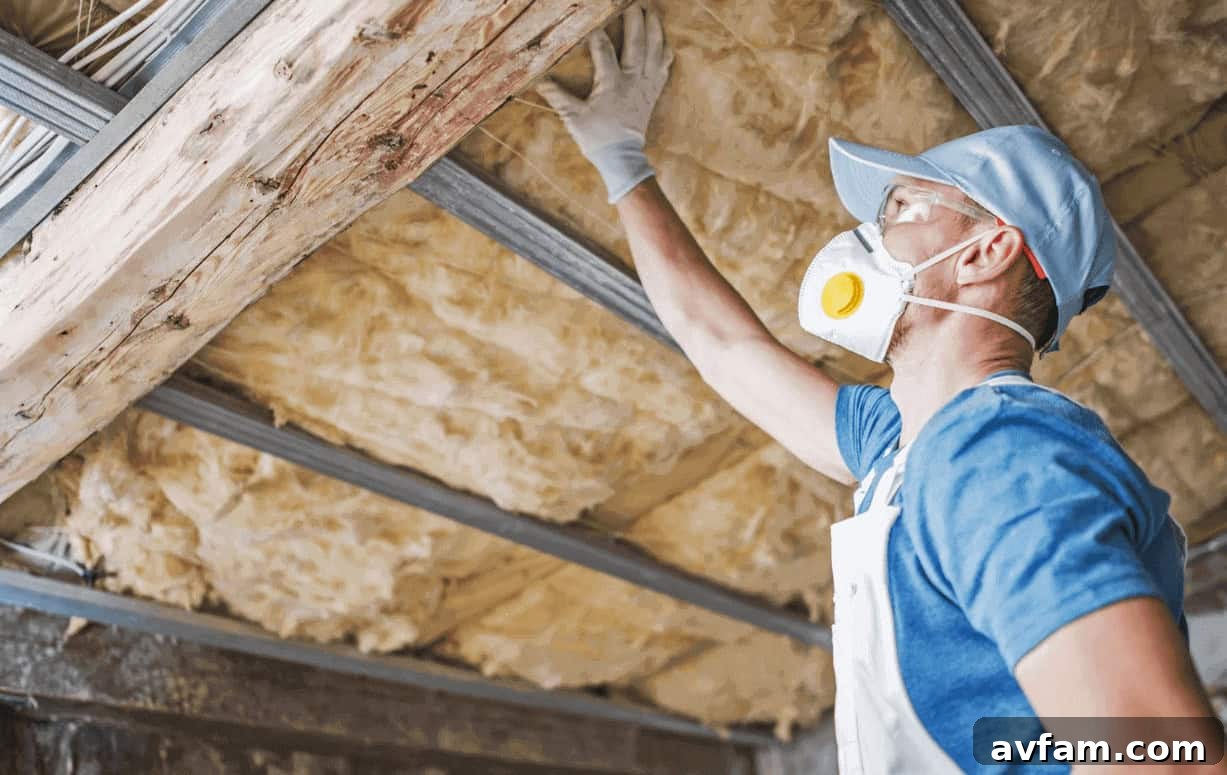
Step into an unfinished attic on a hot summer day, and the intense heat is immediately palpable. It’s not merely the air temperature; a pervasive warmth radiates downwards, a tangible force pressing from the roof deck above. This fundamental distinction between heated air and radiating surfaces is crucial for understanding effective attic heat management.
In the peak of summer, the overwhelming majority of heat that infiltrates an attic space originates from radiant energy. The sun’s powerful rays relentlessly beat down on your roof, causing its surface and the underlying roof deck materials to absorb solar energy and heat up significantly. Once superheated, these surfaces begin to emit that stored energy into the attic in the form of infrared radiation. Traditional insulation materials, while excellent at slowing the conductive transfer of heat through solids and convective transfer through air pockets, are notably less effective at blocking or redirecting radiant heat flow.
This is precisely where the specialized technology of reflective insulation, commonly known as a radiant barrier, enters the picture to deliver substantial improvements in energy efficiency. Unlike conventional insulation that focuses on resisting heat flow, a radiant barrier is specifically engineered to reflect radiant heat away, preventing it from entering your attic in the first place.
When strategically installed within the attic’s thermal envelope, reflective insulation drastically diminishes the volume of radiant heat permeating the attic environment. The direct consequence of this reduction is a noticeable drop in overall attic temperatures, which, in turn, significantly lessens the workload and energy demands placed upon your home’s cooling system. This leads to reduced electricity bills and enhanced indoor comfort throughout the warmer months.
For homeowners diligently comparing various insulation solutions, it’s imperative to concentrate on the core attributes that define a product’s performance. These include exceptionally low emissivity, precise and correct installation techniques, and the absolute necessity of maintaining an open air space adjacent to the reflective surface. Products utilizing foil-based reflective insulation, meticulously designed for superior energy efficiency, achieve their remarkable effect by actively reducing the radiant heat transfer that typically radiates from the intensely hot roof deck down into the living spaces below.
Why Roof Spaces Become Extreme Heat Traps
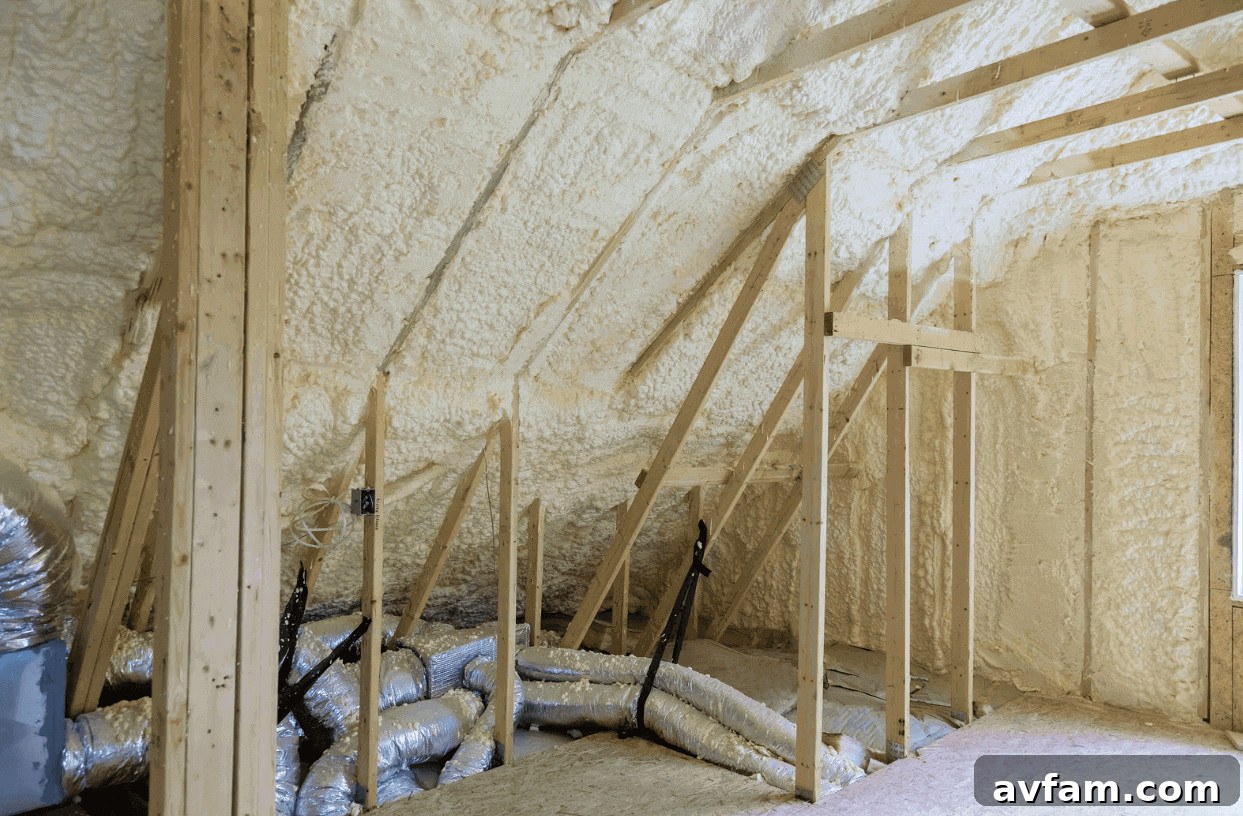
Radiant Heat Dominates Summer Attic Temperatures
On any given sunny day, the surface of your roof can reach astonishing temperatures, often exceeding 150°F, with darker colors and poor ventilation contributing to even higher readings. This extreme heat is then efficiently transferred from the roof’s exterior into the attic space. Understanding how this heat moves is fundamental to controlling it.
Heat transfer occurs through three primary mechanisms:
- Conduction: This is the transfer of heat through direct contact between solid materials. The sun heats the roof shingles, which conduct heat to the roof deck, and then to the attic framing.
- Convection: This involves the transfer of heat through the movement of fluids (liquids or gases). Hot air rising from the roof deck can circulate within the attic, transferring heat to cooler surfaces and components. Proper attic ventilation aims to remove this hot, convective air.
- Radiation: This is the transfer of heat through electromagnetic waves, such as infrared radiation. Unlike conduction or convection, radiation does not require a medium for transfer; it travels through space. A hot roof deck radiates heat waves towards everything below it—insulation, ductwork, framing, and the attic floor.
In the vast majority of overheated attic environments, especially during summer, radiation stands out as the predominant mode of heat transfer. The superheated roof deck acts like a giant broiler, incessantly radiating thermal energy towards every cooler surface within the attic. This includes your existing bulk insulation, the wooden framing, any exposed ductwork, and ultimately, the attic floor directly above your living areas.
While conventional insulation materials like fiberglass batts or blown cellulose are highly effective at slowing heat transfer by conduction and minimizing air movement (convection), they possess a limited ability to block or reflect radiant heat. This significant gap in performance is precisely what reflective insulation is engineered to address, providing a targeted solution where traditional materials fall short.
The Science Behind Reflective Insulation
Low Emissivity: The Key to Reflecting Radiant Heat
The core principle that underpins the efficacy of reflective insulation lies in a unique material property known as low emissivity. Emissivity refers to a surface’s ability to emit, or radiate, energy. Materials with low emissivity emit very little radiant heat; instead, they reflect a large portion of it.
This is why materials like polished aluminum foil are so effective. Their shiny, low-emissivity surface does not readily release radiant heat into the attic. Instead, when faced towards the heat source (the hot roof deck), it reflects the vast majority of that heat back towards its origin. When properly integrated into the attic system, reflective insulation significantly curtails the amount of heat energy that would otherwise radiate downwards and accumulate within the attic space.
To put it simply, reflective insulation functions much like a mirror for invisible infrared heat waves, bouncing them away rather than absorbing and re-emitting them. This physical barrier to radiant heat transfer is what keeps attic temperatures significantly cooler.
The Critical Importance of an Adjacent Air Gap
A crucial, often misunderstood, aspect of reflective insulation’s performance is the absolute necessity of an open air space immediately adjacent to the reflective surface. Without this air gap, the material’s effectiveness is severely compromised.
If the reflective foil is pressed directly and tightly against another solid surface, such as the roof deck or existing insulation, it loses its ability to effectively block radiant heat. When in direct contact, heat can transfer from the hot surface to the foil primarily through conduction, bypassing the reflective property. The air space acts as a vital buffer, preventing conductive heat transfer to the reflective surface itself and allowing the low-emissivity foil to perform its intended function of reflecting radiant energy.
This fundamental requirement underscores why the specific details of installation are just as paramount as the quality and characteristics of the reflective insulation material itself. Proper spacing ensures optimal performance and maximum energy savings.
Integrating Reflective Insulation into Your Roof System
Optimal Performance When Paired with Bulk Insulation
It’s important to clarify a common misconception: reflective insulation is not designed to replace traditional bulk insulation. Instead, it serves as a powerful complementary component within a comprehensive attic insulation strategy.
Traditional bulk insulation materials, such as fiberglass batts, mineral wool, or blown cellulose, excel at slowing heat movement primarily through conduction and convection. They create a thermal resistance (R-value) that impedes the flow of heat through their mass. Conversely, a radiant barrier’s primary role is to reduce the radiant heat flux emanating from the superheated roof deck. By tackling different modes of heat transfer, these two types of insulation work synergistically.
In many residential applications, integrating both bulk insulation and a radiant barrier delivers the most superior results in terms of overall thermal performance and energy efficiency. For instance, if your HVAC ductwork traverses a hot attic, significantly lowering the attic’s ambient temperature via a radiant barrier can drastically reduce the heat gain inside those ducts. This ensures that the conditioned air traveling through the ducts remains cooler, delivering more comfortable and energy-efficient cooling to your home’s living spaces.
Climate Considerations Influence Performance
The effectiveness and economic benefits of reflective insulation are heavily influenced by the prevailing climate. This technology demonstrates its most impressive performance and provides the greatest return on investment in hot, sunny climates where roof surfaces routinely experience extreme temperatures and intense solar radiation.
In colder climates, while reflective insulation can still offer some minor benefits by reflecting heat back into the living space, its overall impact may be considerably smaller compared to its performance in hot climates. In regions where the primary energy concern is heat loss during winter, addressing fundamental issues such as pervasive air leaks (through comprehensive air sealing) and boosting the overall R-value of bulk insulation often yield more significant and immediate energy savings. The optimal insulation solution, therefore, is a tailored one, carefully determined by your specific climate zone, the architectural design of your attic, and your home’s overall energy profile.
Installation Details: The Key to Unlocking Performance
Even the most technologically advanced and highest-quality reflective insulation will fall short of its potential if it is not installed meticulously and correctly. Proper installation is not just a recommendation; it is absolutely critical for achieving the promised energy savings and comfort benefits.
When planning or executing an installation, prioritize these fundamental aspects:
- Preserve Ventilation Pathways: Ensure that existing ventilation channels, typically running from the soffit vents at the eaves to the ridge vents at the peak of the roof, remain unobstructed. Good attic ventilation is crucial for removing heat and moisture.
- Maintain the Air Space: As previously emphasized, it is paramount to preserve the required air space adjacent to the reflective surface. This typically means ensuring there is a gap of at least 3/4 inch to 1 inch between the foil and any solid surface.
- Secure and Overlap Seams: All seams where sections of the reflective material meet must be properly overlapped and securely fastened, typically with reflective tape. Gaps or unsealed seams can significantly compromise the radiant barrier’s integrity.
- Clearance from Heat Sources: Maintain adequate clearance between the reflective material and any potential heat sources or fire hazards within the attic, such as recessed light fixtures, chimneys, exhaust flues, or electrical conduits. Always consult manufacturer guidelines for specific clearance requirements.
- Adhere to Codes and Instructions: Always follow local building codes and diligently adhere to the manufacturer’s detailed installation instructions. These guidelines are designed to ensure safety, optimal performance, and compliance.
It’s also worth noting that over extended periods, dust accumulation on the reflective surface can gradually diminish its reflectivity. Maintaining proper attic ventilation not only helps manage heat but also reduces the buildup of debris and supports the long-term effectiveness of the radiant barrier.
Reflective Insulation: A Component of a Holistic System
While lowering attic temperatures is a highly beneficial outcome, it’s crucial to understand that reflective insulation is a specialized tool. It addresses a specific problem (radiant heat transfer) and will not miraculously resolve other underlying issues within your home’s energy envelope. To achieve truly significant and sustainable energy savings, it’s essential to approach the attic as an integrated, complete system.
For maximum energy efficiency and indoor comfort, address these foundational elements in conjunction with, or even prior to, installing a radiant barrier:
- Seal Air Leaks: Meticulously identify and seal all air leaks, especially around penetrations for plumbing vents, electrical wiring, light fixtures, and attic hatches. Uncontrolled air infiltration and exfiltration can account for a significant portion of heat loss or gain.
- Repair and Seal Duct Leaks: If your HVAC ductwork runs through the attic, it’s highly probable that there are leaks in the ducts. Leaky ducts can waste a tremendous amount of energy by allowing conditioned air to escape and unconditioned attic air to be drawn into the system. Sealing and insulating ducts are critical.
- Ensure Adequate Bulk Insulation Levels: Confirm that your attic possesses sufficient levels of traditional bulk insulation (fiberglass, cellulose, etc.) to meet or exceed recommended R-values for your climate zone. This provides the primary resistance against conductive and convective heat flow.
- Confirm Proper Ventilation: Verify that your attic has adequate and balanced ventilation (e.g., soffit and ridge vents). Proper ventilation helps to remove heat and moisture that can lead to problems like mold growth and degraded insulation performance.
Once uncontrolled air movement and insufficient bulk insulation are brought under control, managing radiant heat with reflective insulation becomes exponentially more effective, contributing to a truly energy-efficient and comfortable home environment.
The Bottom Line: Smart Strategy for a Cooler Home
Reflective insulation, or a radiant barrier, offers a highly effective solution for managing attic heat because it directly targets radiant heat—a major and often overlooked source of heat gain in attic spaces, particularly during warm weather. Its specialized design and functionality provide a critical advantage where traditional insulation methods may fall short.
The overall effectiveness and performance of reflective insulation are critically dependent on three fundamental factors:
- Low Emissivity: The material’s inherent ability to reflect radiant heat rather than absorb and emit it.
- Proper Installation: Meticulous attention to detail, including maintaining air gaps and sealing seams, is non-negotiable for optimal performance.
- An Open Air Space: The essential buffer that allows the reflective surface to function as intended, preventing conductive heat transfer.
When intelligently employed in the appropriate climate—especially hot, sunny regions—and integrated within a holistic attic energy strategy that includes robust bulk insulation and comprehensive air sealing, a radiant barrier can dramatically reduce the attic’s thermal load. This translates directly into lower cooling costs, decreased strain on your HVAC system, and significantly improved comfort levels throughout your entire home.
If your attic feels indistinguishable from an oven during the summer months, it is highly probable that radiant heat transfer is a substantial contributor to the problem. Reflective insulation stands as a practical, powerful, and scientifically proven tool to mitigate this issue, providing lasting benefits. However, its success hinges entirely on correct installation and its seamless integration into a thoughtfully designed and well-maintained roof and attic system.