
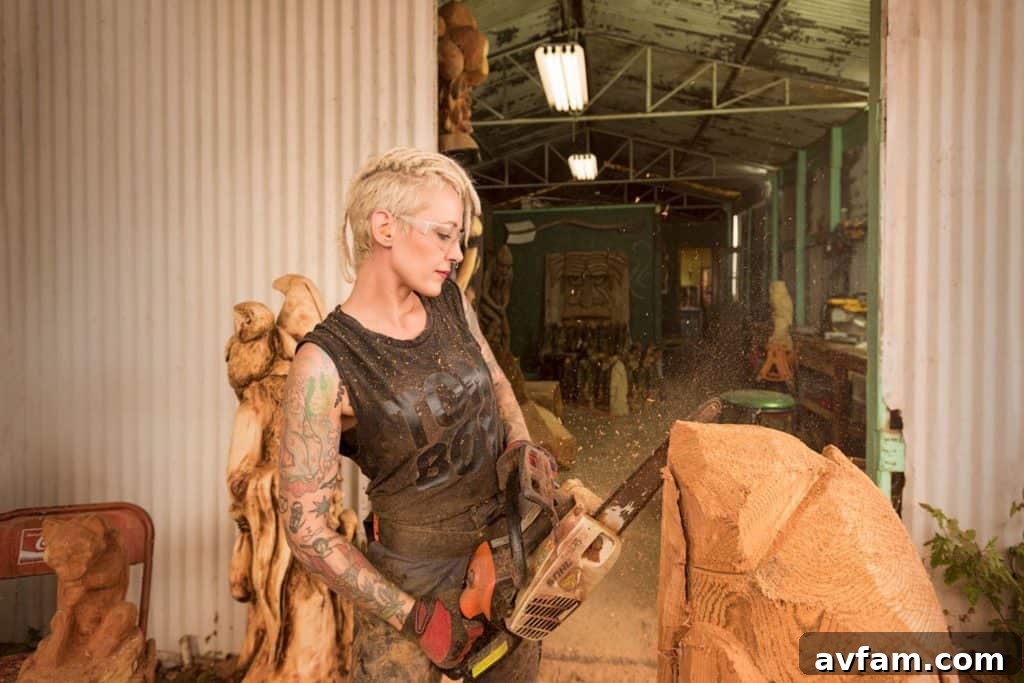
In a world where art often conjures images of delicate brushstrokes or intricate digital designs, Griffon Ramsey stands out as a pioneering force, wielding a chainsaw with the precision of a surgeon and the vision of a sculptor. This Austin, Texas-based artist has carved a unique niche, transforming raw logs into breathtaking works of art, not only with wood but also with ice. Her journey is a testament to embracing the unconventional, demonstrating how a powerful tool, traditionally associated with heavy labor, can become an instrument of intricate artistic expression. Ramsey’s global adventures, from competitive arenas to live demonstrations, have established her as one of the premier chainsaw carvers worldwide.
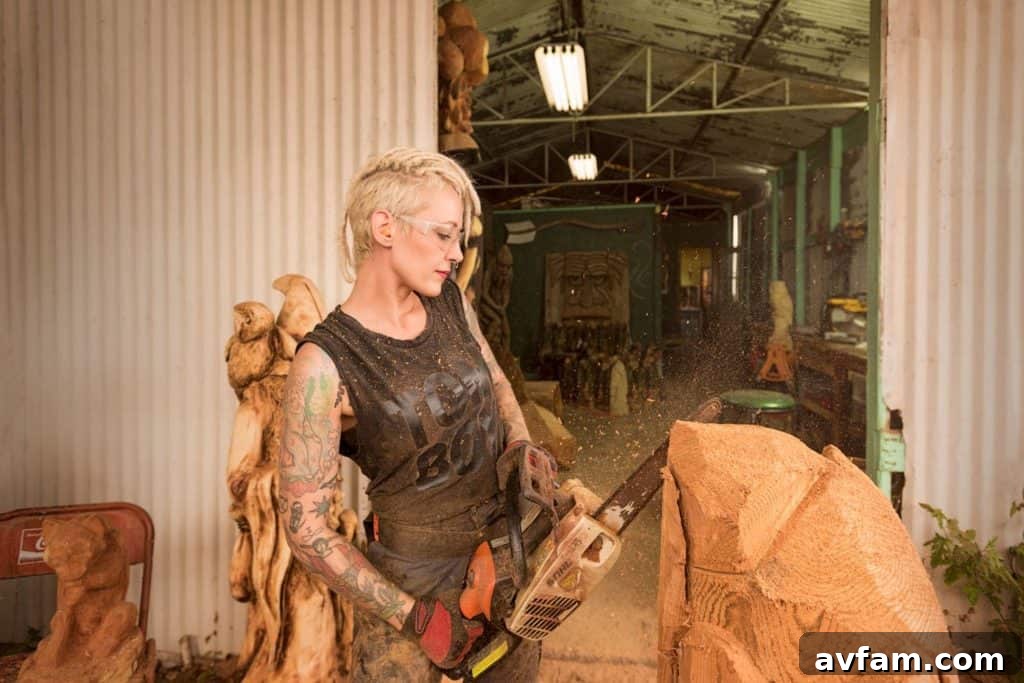
The Unconventional Canvas: Griffon Ramsey’s Journey into Chainsaw Artistry
Griffon Ramsey’s path to becoming a world-renowned chainsaw carver is as unique and compelling as her art itself. Her background, steeped in the performing arts and digital content creation, provided an unexpected foundation for a career that now involves heavy machinery and raw timber. It all began with an intriguing thought: what if the power of a chainsaw could be harnessed for artistic expression?
From Pen to Power Tool: An Artist’s Evolution
Before the roar of a chainsaw became her primary medium, Griffon Ramsey was an artist and creator in a more conventional sense, using pens, keyboards, and her talents in theater to bring ideas to life. Her work in set construction had already instilled a foundational comfort with tools and the practicalities of building. However, the transition to a chainsaw was a leap of faith, spurred by a desire to explore a new, impactful form of creation upon leaving a job in online content. The initial goal was simple: to create a single, powerful video for her online audience, showcasing a pop culture-inspired prop. She envisioned carving the iconic Gears of War logo, given the game’s Lancer gun, a chainsaw-equipped rifle, provided perfect thematic synergy.
In 2011, Griffon picked up her first chainsaw, an Echo homeowner model, a Mother’s Day gift from years prior. What started as an experiment quickly evolved into a profound passion. The immediate satisfaction and cathartic nature of carving wood with such a powerful tool were unlike anything she had experienced. It was a rapid, visible transformation of material, offering a unique blend of physical exertion and creative flow. This initial foray into chainsaw carving, captured on video, marked the unexpected genesis of her career, leading her down an entirely new, fulfilling artistic path.
Finding Mentorship and Community in the Chainsaw World
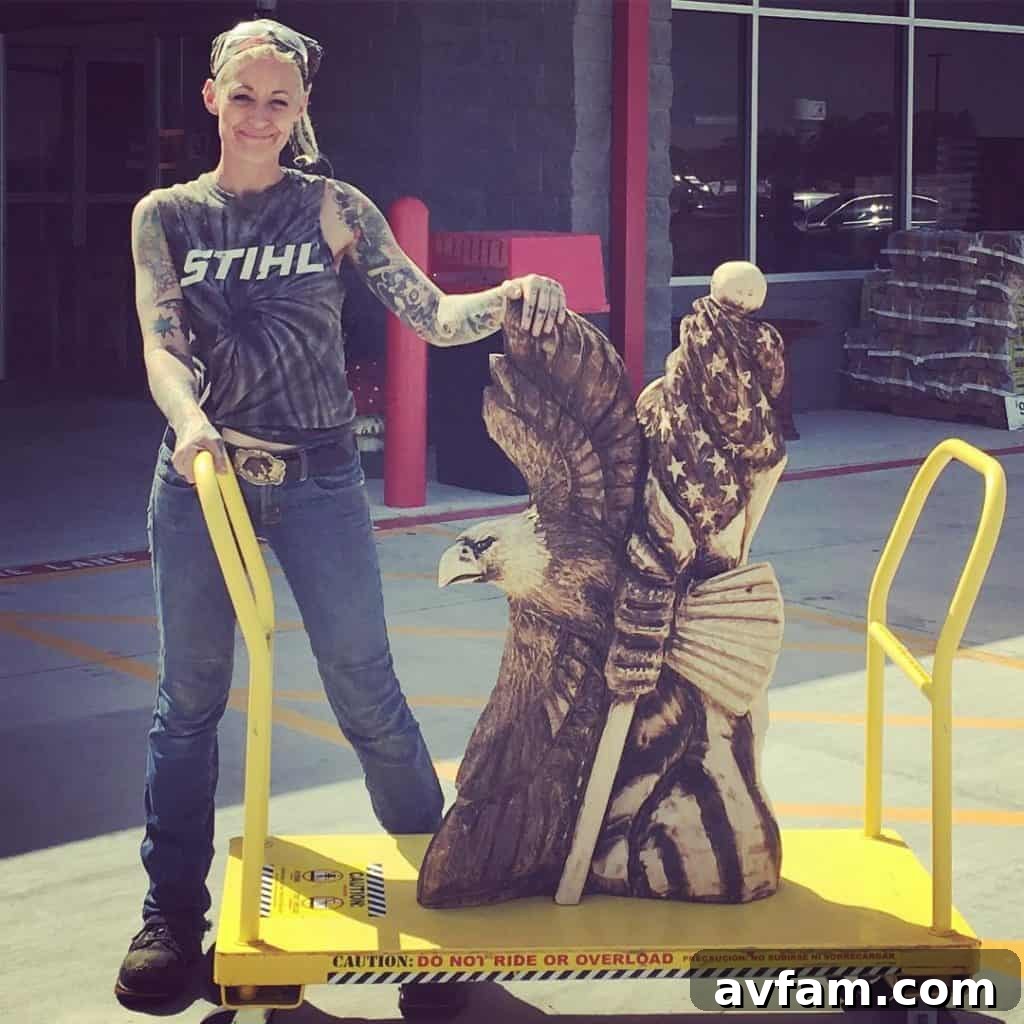
The journey into chainsaw carving, while initially self-taught through trial and error, was significantly enriched by the discovery of a vibrant, unconventional community. Griffon quickly realized the value of mentorship in mastering this specialized art form. Her search led her to RL Blair, a seasoned carver with an incredible legacy, living just outside Austin. Blair, initially hesitant to teach, eventually became an invaluable mentor, his lessons sometimes “paid for” with cases of Lone Star beer, as Griffon humorously recounts. This unconventional apprenticeship provided not only technical skills but also a deep dive into the unique culture of chainsaw artists.
RL Blair’s history is as fascinating as Griffon’s own discovery. He spent two decades as one of the primary carvers for Disneyland, crafting iconic pieces like the Pirates of the Caribbean figureheads and various Tiki Room characters and totem poles. His work shaped the immersive environments not only in California but also in other Disney parks globally. Remarkably, Blair was also instrumental in creating Sea Gulch in Seal Rock, Oregon, a quirky, unsanctioned amusement park filled with mesmerizing totem poles and mechanized carvings. This was the very place that had first captivated a young Griffon in her childhood, igniting her fascination with wood carving decades before their paths serendipitously crossed in Texas. This full-circle moment underscored a sense of destiny in her artistic calling, reinforcing the profound connection between passion and possibility.
The chainsaw carving community itself proved to be a diverse group of “self-starter, fringe entrepreneurial artists”—tough, wild, and often semi-nomadic individuals who travel the world pursuing their craft. This camaraderie, the shared passion, and the continuous travel opportunities that emerged through this network further fueled Griffon’s dedication, solidifying her place within this unique artistic subculture.
The Tools of the Trade: Gas vs. Battery and Specialized Chainsaws
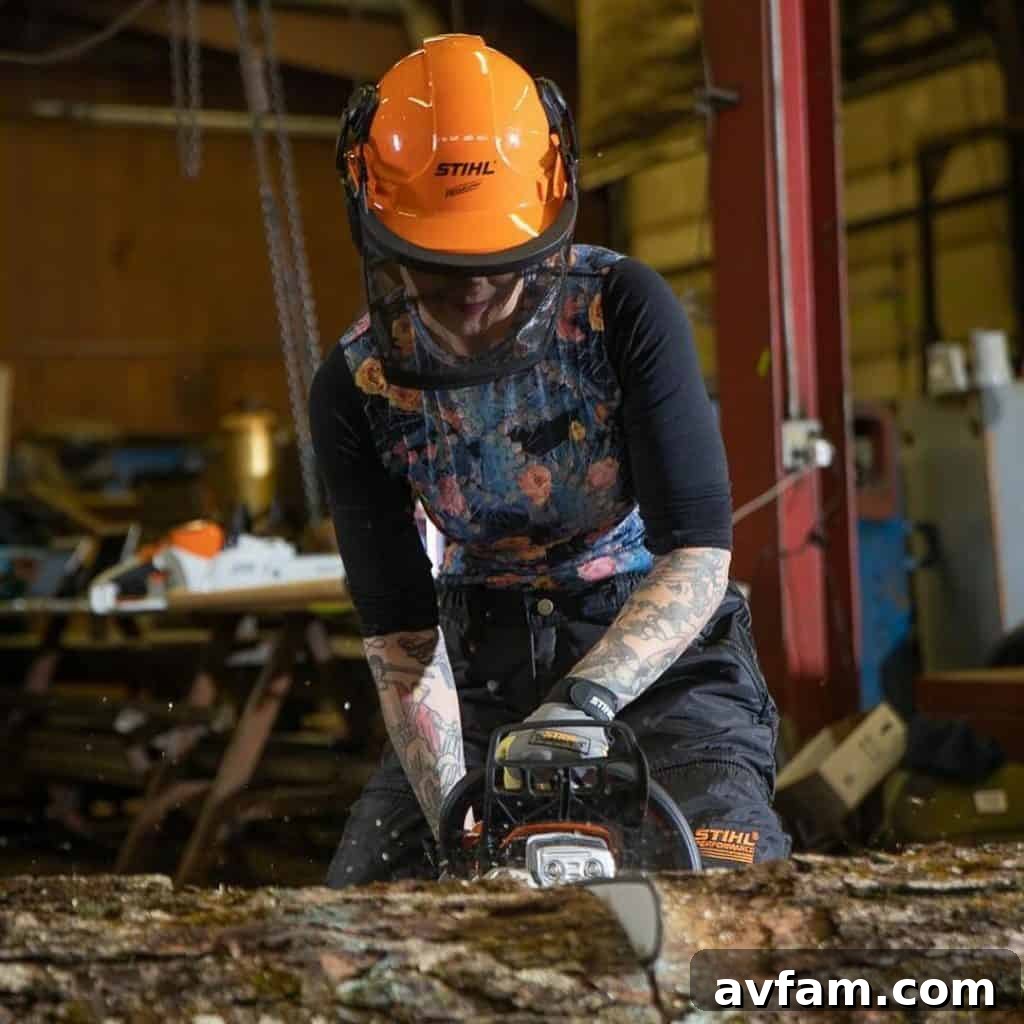
The evolution of chainsaw technology has significantly impacted the art of wood sculpture, making it more accessible and versatile. Griffon Ramsey utilizes a diverse arsenal of tools, each chosen for its specific capabilities in transforming raw logs into intricate art. Her collection has grown from that initial small Echo saw to a remarkable array of 11 or 12 chainsaws, primarily Stihl models, reflecting a strategic adaptation to various projects and conditions.
Power and Precision: Adapting to Artistic Demands
For large-scale outdoor projects, gas-powered chainsaws remain the workhorses, offering unmatched power and endurance. However, advancements in battery technology have introduced revolutionary options. Electric and battery-powered saws, initially seen as less powerful, are now integral to Griffon’s toolkit. They are indispensable for indoor demonstrations, where exhaust fumes are a non-starter, and their quieter operation is a significant advantage. Moreover, for detailed work or when fatigue sets in, the instant start of a battery saw is a welcome convenience, eliminating the effort of cranking a gas engine. This accessibility is attracting a new generation of carvers, including those without traditional lumberjack backgrounds, who appreciate the reduced intimidation factor and increased maneuverability.
Specialized Bars and Attachments for Fine Artistry
The secret to achieving the intricate details in chainsaw carving lies in specialized equipment. Griffon employs various carving bars, each designed for specific cuts:
- Quarter-tip and Dime-tip bars: These narrow bars, named for the size of their tips, allow for incredibly fine, precise cuts, essential for delicate features and intricate details.
- Toonie bar: Slightly larger, this bar offers the best of both worlds – the ability to make substantial cuts like a regular chainsaw while retaining the curved cutting capabilities of a carving bar, akin to a jigsaw. This versatility is crucial for complex forms.
Beyond bars, Griffon integrates other power tools. A favorite is the power gouge attachment, essentially a mini stump grinder. This specialized tool creates stunning textures and organic patterns quickly, giving the illusion of countless hours of hand-carving. This enables artists to add rich detail and complexity to their pieces, making a sculpture truly stand out in competitions or gallery settings. The multitude of saws in her collection allows her to have different bars and attachments pre-set, saving valuable time during projects and live demonstrations where efficiency is key.
Maintenance and Modern Challenges
Maintaining such a diverse collection of chainsaws is a critical, albeit time-consuming, aspect of Griffon’s work. While she relies on the expertise of her local Stihl dealership for complex tuning and chain ordering, she continuously strives to learn more about small engine mechanics and routine maintenance. The increasing sophistication of modern chainsaws, now often incorporating computer chips for environmental reasons, presents new challenges for self-repair, highlighting the blend of traditional craft and advanced technology in her field. Basic tasks like sharpening, cleaning filters, and changing bars, however, remain essential skills for any serious carver.
The Art of Competition: Speed, Strategy, and International Stages
Chainsaw carving is not just about solitary creation; it thrives in dynamic competition and live performance settings. Griffon Ramsey is a prominent figure on the international circuit, participating in prestigious events that test both her skill and endurance. These experiences offer not only opportunities to showcase her talent but also invaluable insights into diverse carving techniques and global artistic trends.
Live Performances and the Essence of Speed Carving
Many of Griffon’s engagements involve live carving shows for tool companies or public events. Here, the art form takes on a “performance art” dimension, as audiences watch a sculpture materialize from a raw log in a matter of hours. This demand for speed highlights two primary carving philosophies:
- Speed Carving: This approach focuses on rapidly blocking out the basic silhouette of a design, then dedicating the remaining time to adding details. It requires clear pre-visualization and decisive cuts, ideal for quickly consumable, crowd-pleasing pieces.
- Discovery Carving: In contrast, this method is more exploratory. Carvers “whittle in,” allowing the form to evolve as they work, preserving more material to enable complex details or spontaneous design changes. While slower, it allows for greater intricacy and conceptual depth.
Griffon, who traditionally prefers the “discovery” method in her studio, is actively honing her speed carving skills to meet the demands of her increasingly performance-oriented business. It’s a strategic adaptation that requires immense stamina, not just for holding heavy tools but for maintaining mental clarity and fluid movement under pressure.
Global Arenas and Learning from the Best
Griffon’s competitive spirit has taken her across continents, facing off against top carvers worldwide:
- Chatwin’s (British Columbia): An invitation-only event, considered one of the highest-status chainsaw carving competitions globally. Chatwin’s is notable for its progressive stance, welcoming contemporary and abstract art in contrast to the traditional wildlife focus of many other events. This allows Griffon to explore more unconventional designs and push artistic boundaries, often with the help of an assistant to manage crowd interaction and finishing touches.
- Japan (Zero Cap in Hokkaido): A three-day international competition where she competed, experiencing different cultural approaches to the art.
- Germany (Husky Cup): Here, Griffon joined a multinational “Czech” speed carving team, competing against formidable German carvers. These trips are often more about professional development than competition, providing unparalleled learning opportunities. It was in Germany that she discovered the efficiency of “ripping chain” – a specialized chain with a shallower angle (around 10 degrees) designed for cutting along the grain of the wood, significantly faster for carving vertical logs than the standard cross-cut chains. She also learned the counter-intuitive technique of leveraging the weight of a heavy saw, like the powerful Stihl MS 660, allowing it to “drag itself down” through the wood with minimal effort from the carver, dramatically saving energy. This revelation highlighted how even seemingly powerful tools can be wielded with greater efficiency through refined technique.
- Australia: An event with stringent safety regulations, where a combination of late arrival and an aversion to asking for help meant Griffon blocked out a massive log with a tiny 12-inch carving bar, a testament to both her stubbornness and adaptability.
While she admires the extreme athleticism of Timber Sports competitors, Griffon maintains that her focus remains on the artistic application of chainsaws, though she did confess to a less-than-stellar performance at axe throwing, a related lumberjack discipline.
Sourcing the Soul of the Sculpture: Wood and Its Challenges
The raw material—wood—is the very soul of Griffon Ramsey’s sculptures, and its acquisition is a crucial part of her process. Unlike traditional woodworkers who seek seasoned, kiln-dried timber, chainsaw carvers often prefer fresh logs with higher moisture content, as they are softer and easier to cut. This unique requirement shapes her sourcing strategies, particularly from her home base in Austin, Texas.
In Austin, Griffon primarily works with Eastern Red Cedar, a readily available and “carvable” species. She frequently sources from Wampler Sawmill in Bastrop, about an hour outside the city. However, a significant portion of her material comes from individuals through platforms like Craigslist. Homeowners often reach out after storms, eager to see their fallen trees transformed into art rather than mulch. This allows her to acquire unique pieces, though she has become increasingly selective after early experiences with bug-infested hackberry logs. Recently, she has also been carving Cypress, salvaged from flash floods on the Blanco River, showcasing an adaptability to local circumstances and available resources.
One of the intriguing aspects of chainsaw carving is its sustainable nature. Sawmills often discard irregularly shaped logs – those with branches, forks, or unusual curves – because they cannot be processed into standard lumber. For carvers, these “salvage materials” are treasures. Their unique geometries can spark inspiration, guiding the artist to create organic, one-of-a-kind sculptures that wouldn’t be possible with perfectly uniform wood. This makes chainsaw carving a remarkably eco-conscious art form, repurposing material that would otherwise be discarded. While log acquisition can be an expense, it’s often more affordable than fine art supplies, especially when sourcing these non-traditional pieces.
The Business of Chainsaw Art: A Viable Path for Creators
Beyond the artistic and technical challenges, Griffon Ramsey offers a compelling perspective on the economic viability of chainsaw carving as a full-time artistic pursuit. Unlike many art forms where material costs can quickly outstrip potential earnings, chainsaw carving presents a unique financial model.
Griffon notes that a single log purchased from a sawmill for around $100 can often be cut into five smaller chunks. Each of these chunks, once carved, can sell for $400-500. This stark contrast to other art disciplines – where a small bag of paints or brushes can easily exceed $100, often resulting in artwork that sells for less than the cost of materials – highlights the potential for profitability in chainsaw art. This favorable cost-to-value ratio makes it an attractive, albeit demanding, path for artists seeking to monetize their craft.
However, this lucrative potential comes with its own set of logistical challenges. The primary hurdles are the sheer size and weight of the materials and finished pieces. Carvers require significant storage space for logs, a dedicated workshop, and robust transportation capabilities. These practical considerations can become substantial overhead, especially in rapidly gentrifying cities like Austin, where studio rent is ever-increasing. Griffon herself is contemplating downsizing her current shop and exploring the idea of a mobile studio on a trailer, a testament to the need for flexibility and adaptability in this unique profession. She also envisions partnering with local maker spaces, leveraging shared resources for larger equipment like CNC machines and band saws, fostering collaboration and community among artists.
Austin’s Creative Pulse and Future Ambitions
Austin, Texas, Griffon Ramsey’s home base, is renowned for its vibrant, entrepreneurial, and often quirky spirit, encapsulated by the unofficial slogan “Keep Austin Weird.” This environment has fostered a strong “Buy Local” culture, encouraging independent businesses and artists to thrive. While Austin, like many creative hubs, is experiencing rapid growth and gentrification, it still retains an underlying current of innovation and community support that benefits artists like Griffon.
The city’s event-centric nature, from annual music and tech festivals like South by Southwest (SXSW) to various rallies and gatherings, means Austin is perpetually buzzing with activity. SXSW, in particular, has evolved into a massive convergence of interactive technology, film, and music, drawing global talent and attention. While increasingly commercialized with major brands and established artists, it remains a powerful platform for networking and creative inspiration. Griffon’s future plans reflect this dynamic environment, combining her artistic passion with practical business strategies.
Looking ahead, Griffon has a packed schedule of international engagements and personal projects. The invitation to Chatwin’s in British Columbia is a significant highlight, offering a chance to compete against elite contemporary carvers and push her artistic boundaries. Confirmed trips to France and Germany also await, serving as invaluable opportunities for professional development, where she can observe and learn advanced techniques from Europe’s fastest and most innovative carvers. These experiences, often driven by a quest for knowledge rather than prize money, fuel her continuous improvement and mastery of the craft.
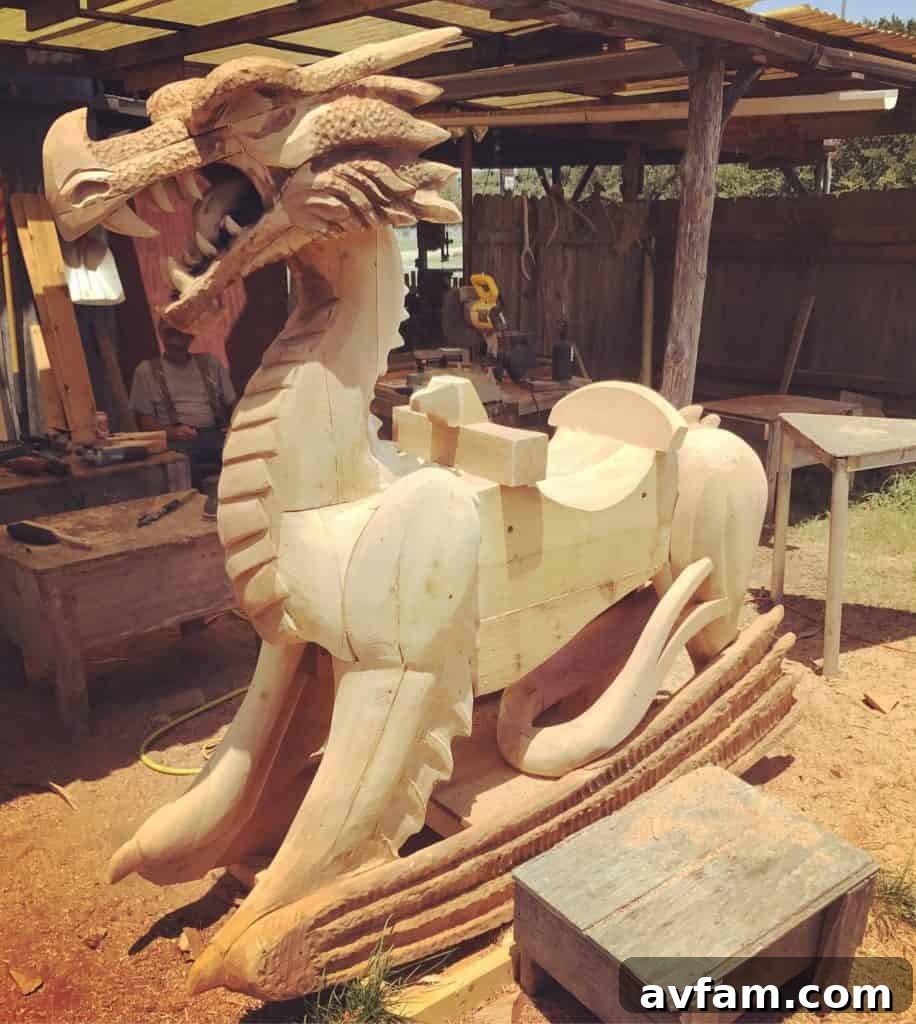
Beyond competitions, Griffon continues to refine her skills, incorporating new tools and techniques. She’s learned the benefits of ripping chain for faster, more efficient carving and mastered the art of handling heavier saws to conserve energy. Her collaborative spirit, demonstrated through past projects like a Bartow (Romani wagon) and a giant rocking dragon with RL Blair, hints at future partnerships and innovative creations. As Austin evolves, so does Griffon Ramsey, continuously adapting her artistic practice, embracing community, and solidifying her position as a visionary in the exciting world of chainsaw art.
Connecting with Griffon Ramsey: Follow Her Artistic Journey
To witness Griffon Ramsey’s incredible talent and follow her global carving adventures, connect with her on her various platforms. She regularly shares updates, behind-the-scenes glimpses, and mesmerizing videos of her creations.
GriffonRamsey.com
YouTube
Instagram
Facebook