
Ultimate Guide to Home Security: Comprehensive Burglary Prevention Strategies
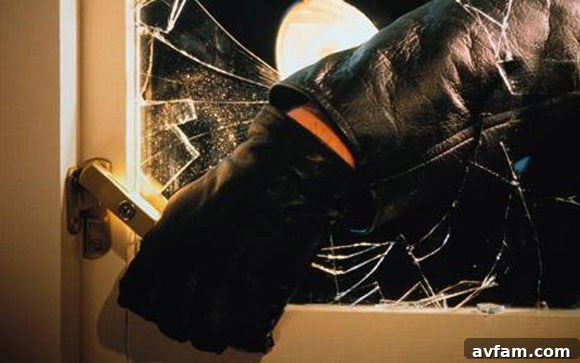
The thought of someone unlawfully entering your home or business is deeply unsettling. Burglary isn’t just about material loss; it’s an invasion of privacy, a violation of personal space, and a profound breach of security. While professional criminals meticulously “case the joint” – a slang term for carefully scouting a property before a robbery – opportunistic thieves often act on impulse. By implementing fundamental security measures, you can deter the majority of these spur-of-the-moment criminals. However, to truly safeguard your sanctuary against more determined individuals, a robust and layered approach to home and property security is essential.
Drawing insights from recent neighborhood watch safety meetings and invaluable discussions with local law enforcement, we’ve compiled a comprehensive guide to help you fortify your home or business. These expert tips are designed to make your property a less appealing target, significantly increasing the risk and difficulty for potential intruders, and ultimately keeping your loved ones and valuables safe.
Creating Barriers to Burglary: Fortifying Your Property
Burglary is predominantly a crime of opportunity. The primary goal of any effective security strategy is to eliminate these opportunities by making your property appear difficult, risky, and time-consuming to breach. Every additional minute an intruder spends trying to gain entry increases their chance of being caught, making them far more likely to abandon their attempt and move on to an easier target.
Your First Line of Defense: Exterior Visibility and Landscape Management
A burglar’s greatest allies are anonymity and concealment. Visibility, therefore, becomes your strongest deterrent. Criminals seek cover, often using overgrown landscaping or high, solid fences to hide their activities from neighbors and passersby. The key is to create a secure perimeter that effectively keeps trespassers out while ensuring your property remains highly visible to outside observers.
- Strategic Fencing Choices: Opt for fences that provide a clear view into and out of your yard, such as picket fences, ornamental iron, or chain-link fences. These types of barriers define your property lines without offering convenient hiding spots. While seemingly less formidable, a transparent fence makes an intruder feel exposed, which is often enough to deter them. Avoid tall, solid fences or privacy hedges right up against the house, as these can inadvertently provide excellent cover for criminal activity.
- Proactive Landscape Management: Regularly trim shrubs, bushes, and trees, especially those located near windows, doors, and walkways, to waist height or below. This practice eliminates potential hiding places for intruders. Ensure that tree branches are not close enough to your home to be used as a makeshift ladder to access upper-story windows or balconies. Consider planting thorny bushes directly under accessible windows as an additional deterrent. Gravel pathways can also serve as an effective auditory deterrent, alerting you to approaching footsteps with their distinctive crunch.
- Exterior Lighting Integration: Implement bright, motion-activated floodlights around your entire property, paying particular attention to all entry points, dark corners, and secluded areas. Good lighting eliminates shadows and creates an unwelcome spotlight for anyone attempting to tamper with your home. We’ll delve deeper into comprehensive lighting strategies later in this guide.
Fortifying Entry Points: Securing Doors and Windows
Statistical data consistently shows that over 80% of burglars gain entry through doors or windows. These are the primary targets, making reinforcement of these critical points an absolute top priority in your home security plan. A strong defense at these access points significantly reduces the chances of a successful break-in.
Doors: Your Primary Shields Against Intrusion
The front, back, and garage doors are the most common points of entry for intruders. Investing in robust doors and high-quality, professional-grade locking mechanisms is paramount for comprehensive home security.
- Advanced Locking Systems for Doors:
- Heavy-Duty Deadbolt Locks: These are the cornerstone of door security. Look for deadbolts with a minimum 1-inch throw bolt, ideally containing a hardened, saw-resistant steel insert to resist cutting. The strike plate, which secures the bolt into the door frame, is equally critical. It must be attached with 3- to 4-inch screws that penetrate deep into the wall stud, not just the decorative door frame. This prevents the frame from splintering under forced entry.
- Double Cylinder Deadbolts: These locks require a key from both the inside and outside to operate. They are particularly effective for doors with glass panels or side-lights, as they prevent a burglar from breaking the glass, reaching in, and simply turning a knob. However, a significant safety consideration is their potential to impede emergency exit during a fire or other crisis. Always check local fire safety regulations and consult with your local law enforcement or building inspector to determine if these are permitted in your area and how to ensure safe emergency egress.
- Robust Cylinder Guards: Ensure the lock’s cylinder (the part where the key is inserted) is protected by a steel guard – a rotating or tapered ring around the key section. This design prevents intruders from gripping the cylinder with a wrench and twisting it out of the door.
- Hinge Security for Outward-Swinging Doors: Doors that swing outwards have their hinges exposed on the exterior, making them vulnerable to hinge pin removal. To counteract this common tactic, remove a center screw from each side of the hinge. Replace one screw with a metal pin or a headless screw, ensuring it protrudes slightly. Then, drill a corresponding hole on the opposite hinge leaf so that when the door is closed, the pin fits snugly into the receiving hole. This simple yet effective modification ensures the door remains securely bolted to the frame even if the hinge pins are removed, preventing it from being lifted off.
- Robust Padlock and Hasp Combinations: For overhead doors, receiving doors, or garage doors that rely on padlocks for security, choose wisely. Select sturdy, case-hardened padlocks with a 3/8-inch shackle that resist cutting and smashing attempts. Crucially, opt for padlocks that do not release their key until the padlock is securely locked – this prevents accidental key retention. The hasps, the metal plates to which the padlock attaches, are just as vital as the padlock itself. They must be bolted securely to a metal plate, with all mounting bolts concealed when the padlock is in its closed position. Exposed bolts are an invitation for compromise.
- Door Construction and Reinforcement: A flimsy door is an open invitation for a break-in. Replace hollow core doors, often found on side or back entrances, with solid core doors made of wood, fiberglass, or steel. If full replacement isn’t feasible, consider reinforcing existing doors with metal sheets on the interior. Similarly, weak door frames can be easily kicked in. Reinforce them with steel plates or concrete where possible. If your door incorporates glass panels, protect them with decorative steel bars, mesh, or by applying a clear polycarbonate sheet over the glass on the inside. This makes the glass shatter-resistant and incredibly difficult to breach.
Windows: Addressing Vulnerabilities and Implementing Solutions
Windows are another common entry point, especially those that are easily accessible, obscured by landscaping, or located on lower floors. They require similar attention to detail and reinforcement as doors to ensure comprehensive home security.
- Physical Window Barriers: Install decorative grates, grillwork, or bars over accessible windows, particularly on the ground floor, basement, or those facing secluded areas. These visible deterrents often discourage burglars simply by signaling increased difficulty and risk.
- Polycarbonate Sheeting for Windows: For a less intrusive yet highly effective option, cover the inside of vulnerable window panes with a clear polycarbonate sheet. This material is virtually unbreakable and extremely resistant to impact. The sheet should extend at least 1-1/2 inches beyond the perimeter of the glass and be securely bolted to the window frame, with bolts spaced approximately every 3 inches for maximum strength.
- Advanced Safety Glass Options: While typically more expensive, unbreakable safety glass or laminated glass offers superior protection. It’s specifically designed to withstand significant impact without shattering into dangerous shards, holding together even if severely cracked.
- Reinforced Window Locks: Ensure all windows have sturdy, auxiliary locks beyond the standard factory latches. For double-hung windows, auxiliary locks like sash locks, jimmy-plate locks, or pin locks can provide significant additional security. Never rely solely on factory-installed latches, as these are often easily bypassed with simple tools.
Securing Less Obvious Entrances and Implementing Robust Key Control
Burglars often target entry points that are out of sight, believing they are less secured and therefore easier to exploit. It’s crucial not to overlook these potential vulnerabilities when assessing your property’s overall security.
Other Entrances: Skylights, Ventilation Ducts, and Fire Escapes
- Skylights and Ventilation Ducts: These elevated openings are tempting targets because they are usually not visible from the street. Protect skylights with sturdy metal grates, security film, or impact-resistant materials. Large ventilation ducts should also be secured with strong metal grates or bars that are bolted firmly into the surrounding structure to prevent unauthorized entry.
- Fire Escapes: If your property has a fire escape, ensure the first rung is too high for an average adult to reach comfortably from the ground, or consider installing a retractable ladder for the lower section. The door or window leading to the fire escape should be equipped with appropriate security measures. Crucially, any window guards or bars leading to a fire escape must incorporate emergency exit features – they should be easily removable, hinged, or quick-release from the inside to allow for a rapid escape during a fire. Keys to these specific locked windows or doors should always be kept nearby in an easily accessible, but concealed, location known to all occupants.
Mastering Key Control: The Unsung Hero of Security
A lock is only as strong as its key management system. Poor key control is a common security oversight that can inadvertently negate all other security efforts, making it a critical aspect of your overall security posture.
- Smart Key Labeling Practices: Avoid descriptive labels like “Front Door,” “Back Gate,” or “Office Main” that could aid an intruder if keys are lost or stolen. Instead, use coded systems that only you and authorized individuals understand. For commercial properties, use discreet internal codes (e.g., “K-1,” “S-A”) indicating ‘receiving door,’ ‘display case,’ etc., rather than explicit, easily understood labels.
- “Do Not Duplicate” Engraving & Restricted Keyways: Have “Do Not Duplicate” or similar warnings engraved on all essential keys. While not entirely foolproof, it serves as a strong deterrent against unauthorized copying at most locksmiths or hardware stores. For ultimate security control, consider implementing a restricted keyway system where key blanks are only available through authorized dealers and require specific authorization for duplication. This provides an audit trail and tight control over key creation.
- Restrict Access and Maintain Detailed Logs: Limit key access to the fewest possible individuals whom you trust implicitly. For businesses, maintain a detailed log to record the issuance, removal, and return of keys, including timestamps and signatures. This accountability dramatically reduces the risk of misplaced or unauthorized keys and helps track responsibility.
- Proactive Re-keying After Personnel Changes: Whenever an employee, tenant, or service provider who had access to keys leaves your business or home, it is prudent and highly recommended to have your locks re-keyed immediately. This simple step completely eliminates the risk associated with unreturned or clandestinely copied keys.
Advanced Deterrents and Monitoring: Layering Your Security
Beyond physical barriers, integrating active deterrents and electronic monitoring systems adds crucial layers of security, enhancing your overall protection and peace of mind.
Professional Security Guards: A Visible Presence
For larger properties, multi-unit businesses, or neighborhood associations, professional security guards can be an invaluable asset. Consider collaborating with neighboring businesses or joining a community security initiative to collectively hire uniformed guards from a reputable and licensed security company. Always conduct thorough background checks and verify references for the security firm. The security staff should be well-acquainted with your employees, operating hours, and specific security policies, including those for shoplifting or internal theft, to provide effective surveillance and rapid response.
Strategic Lighting: An Underrated and Powerful Deterrent
Light is a remarkably effective crime deterrent. Burglars prefer to operate under the cloak of darkness, where they feel less exposed. Many states and municipalities even have minimum standards for exterior lighting, recognizing its importance in both public and private safety.
- Illuminate All Vulnerable Areas: Ensure every potential hiding spot, especially around all doors, windows, garage, and perimeter fences, is brightly lit. Motion-activated lights are particularly effective as they suddenly illuminate an intruder, startling them and drawing attention to their presence.
- Dusk-to-Dawn Lighting Solutions: Consider installing dusk-to-dawn sensors for consistent ambient lighting throughout the entire night. This ensures there are no dark zones that could invite trouble, creating a continuously inhospitable environment for criminals.
- Community-Wide Lighting Initiatives: If your business or residential area suffers from poor public lighting, proactively engage with other merchants or neighbors. Petition local government for improved street lighting, or pool resources to underwrite the cost of installing additional lights yourselves. A well-lit community is inherently a safer community.
Alarm Systems: Your Silent Watchmen and Early Warning System
Before investing in an alarm system, carefully weigh the cost against your specific needs, the value of your possessions, and the potential risks in your area. Once installed, don’t keep it a secret; prominently display warning signs and decals in windows and at entrances to alert potential burglars that your property is protected. These visual deterrents often act as a significant initial barrier.
Every reliable alarm system should include several core features:
- Fail-Safe Battery Backup: Essential for continuous operation during power outages or if an intruder attempts to cut the main power supply.
- Integrated Fire-Sensing Capability: Many modern alarm systems integrate smoke and carbon monoxide detectors, providing a critical dual layer of fire safety in addition to intrusion detection.
- Feedback Device and Remote Monitoring: A system that provides feedback on its operational status (e.g., if a sensor is faulty or a door is ajar) and allows for remote monitoring and control via a smartphone app offers invaluable peace of mind and greater flexibility. Professional monitoring services ensure that emergency services are dispatched immediately upon an alarm trigger, even if you’re not home.
For a truly expert appraisal of your unique security needs, consider requesting a premise security survey from your local law enforcement agency. Many police departments offer this service free of charge to residents and businesses. Alternatively, consult with a reputable, licensed security consultant who can design a tailored and comprehensive system for your home or business.
Operation Identification: Deterring Theft and Aiding Recovery
Operation Identification is a highly effective program that helps deter theft and significantly increases the chances of recovering stolen property. By marking your valuables, you make them less appealing to thieves and easier for law enforcement to trace and return to you.
- Permanent Property Marking: Permanently mark your valuable property – from office machinery, personal electronics, and power tools to heirlooms and bicycles – with a unique identifier. In many regions, this involves using your driver’s license number (often preceded by a state code, e.g., “CA” for California) or a unique Operation ID number provided by local authorities. Engrave, micro-etch, or use invisible UV marking pens on items that might be targeted.
- Prominent Warning Decals: Obtain “Operation I.D.” decals from your local law enforcement agency and prominently display them on all windows and doors. These decals serve as a clear warning to potential burglars that your property is identifiable and traceable, significantly reducing its appeal on the black market.
- Comprehensive Inventory and Documentation: Maintain a complete, meticulously updated inventory of all your merchandise and personal property. This should include detailed descriptions, serial numbers, models, purchase dates, photographs, and even video recordings. Store a copy of this inventory in a secure location away from your business site or home, such as a safe deposit box, a trusted friend’s home, or a secure cloud-based storage service. This documentation is absolutely invaluable for both insurance claims and police investigations in the unfortunate event of a theft.
Establishing Security Routines and What to Do If the Worst Happens
The Critical Importance of a Consistent Security Routine
Even the most sophisticated locks, cutting-edge alarm systems, and robust physical deterrents are rendered useless if they are not consistently engaged. Establish a strict, non-negotiable routine for “closing up shop” or securing your home each day. This should include systematically checking and locking all doors and windows, activating all alarm systems, and ensuring all outdoor lights are functioning correctly. Consistency in these actions eliminates oversights and significantly strengthens your overall security posture.
Visibility as an Internal Deterrent (Especially for Businesses and Retail)
For businesses and retail establishments, visibility isn’t just about the exterior. The layout and presentation of your interior space can also act as a powerful deterrent to opportunistic theft and burglary. Well-lit, open spaces, low counters, and large, uncluttered display windows ensure that any activity inside your premises is highly visible from the outside, even after hours. This “spotlight effect” discourages intruders who prefer to operate unobserved.
- Strategic Cash Register and Safe Placement: Position your safe and cash register near the front of your store, visible from the street or main entrance. This makes any attempt to tamper with them immediately apparent, increasing the risk for the burglar.
- Empty and Open Cash Drawers: At closing, make it a standard practice to empty all cash drawers completely and leave them visibly open. This signals to a potential burglar that there’s no cash to take, removing the temptation to smash or pry them open, thereby preventing unnecessary damage to your property.
- Secure Safes: Anchor all safes in concrete or bolt them securely to the floor to prevent them from being physically carried away. Always use combination locks for safes, as key-operated safes are generally easier to compromise.
- Interior Door Security: Install locks on all interior doors, especially those leading to valuable inventory, offices, or sensitive areas. If feasible, integrate these interior locks into your alarm system. Always verify with local fire regulations before installing such locks to ensure they don’t impede emergency egress pathways.
If You Suspect a Burglary: Prioritizing Your Safety and Evidence
Your personal safety and the preservation of potential forensic evidence are paramount if you suspect a break-in has occurred or is currently in progress. Act cautiously and follow these critical steps:
- Do Not Enter the Property: Under no circumstances should you enter a property if you suspect a burglar may still be inside. Confronting an intruder can be extremely dangerous and can quickly escalate the situation to violence. Your life is more valuable than any possession.
- Do Not “Open for Business” or Alter the Scene: If it’s a commercial property, do not open for business, and instruct all employees not to touch anything or attempt to clean up. For homes, resist the urge to immediately clean up or thoroughly assess the damage. Employees, customers, or even you could unwittingly alter or destroy valuable forensic evidence (fingerprints, footprints, DNA) that is crucial for the police investigation.
- Call the Police Immediately: From a safe location (e.g., a neighbor’s house, your car, or a nearby public place), call emergency services (e.g., 911 in the US) without delay. Provide them with your exact location and any details you may have observed (e.g., strange noises, suspicious vehicles, descriptions of individuals, signs of forced entry). Remain calm and follow their instructions precisely.
- Wait for Law Enforcement: Wait in a safe place, at a distance from the property, until law enforcement officers arrive and confirm the premises are clear and secure. They will then take control of the scene and begin their investigation.
By diligently adopting and maintaining these comprehensive home and business security strategies, you are not merely installing locks and alarms; you are creating a formidable, multi-layered defense system that actively deters criminals and protects what matters most – your safety, your peace of mind, and your valuables. Remember, continuous vigilance and the consistent application of these measures are your strongest allies in maintaining a secure environment.