
Comprehensive Home Protection: Safeguarding Your Electronics from Destructive Power Surges
In our increasingly digital world, homes are filled with a myriad of sophisticated electronics. From smart TVs and high-performance computers to advanced kitchen appliances and intricate HVAC systems, our daily lives revolve around these technological marvels. We invest significant financial resources in acquiring these devices, expecting them to enhance our comfort, entertainment, and productivity. Yet, despite this substantial investment, a critical oversight often leaves these valuable assets vulnerable: inadequate protection against the relentless threat of power surges.
Many homeowners mistakenly believe that standard power strips offer sufficient defense against power fluctuations. While these strips might provide a basic level of protection, they are woefully inadequate for comprehensive home electronics security. Relying on weak or outdated power strips is akin to using a band-aid for a deep wound when faced with the sudden, violent jolt of a power surge. Such events can instantly fry sensitive circuitry, corrupt data, and significantly shorten the lifespan of your expensive appliances. To truly protect your investments and data, a robust, whole-house surge protection system is not just an option—it’s a necessity.
The Hidden Threat: Understanding Destructive Power Surges
What exactly is a power surge, and why is it so damaging? A power surge, or transient voltage, is a brief spike in electrical voltage or current that can occur in a home’s electrical system. While most people associate surges with lightning strikes, which are undoubtedly powerful and destructive, the vast majority of surges are actually much smaller and more frequent. These everyday surges often originate from within your own home:
- Internal Surges: These are caused by the cycling on and off of high-power appliances like air conditioners, refrigerators, washing machines, and even vacuum cleaners. Each time these motors kick in or shut down, they create minor voltage spikes that travel through your home’s wiring. While individually small, these cumulative surges can degrade your electronics over time, leading to premature failure.
- External Surges: Beyond lightning, external surges can result from utility grid switching, downed power lines, or even problems with your local power company’s equipment. While less frequent than internal surges, they can be significantly more powerful.
- Lightning Strikes: The most dramatic and feared cause of power surges. A direct lightning strike to your home or even a nearby electrical line can send thousands of volts through your wiring, causing catastrophic damage to unprotected electronics and potentially posing a fire hazard.
The damage from surges isn’t always immediate or obvious. While a large surge can instantly destroy a device, smaller, more frequent surges can cause gradual degradation, slowly eroding the performance and lifespan of your electronics until they inexplicably fail. This “electronic rust” often goes unnoticed until it’s too late, leaving you with costly repair or replacement bills.
Why Common Power Strips Fall Short of Real Protection
The ubiquity of multi-outlet power strips with built-in surge protection gives many a false sense of security. While better than nothing, most conventional surge protectors designed for individual outlets offer only limited defense:
- Limited Capacity (Joule Rating): Every surge protector has a Joule rating, indicating the amount of energy it can absorb before failing. Most power strips have relatively low Joule ratings, meaning they can only withstand a few minor surges or a single moderate surge before their protective components are compromised. Once this capacity is exhausted, the strip continues to function as a power strip but offers no surge protection whatsoever, leaving connected devices completely exposed.
- Clamping Voltage: This refers to the voltage level at which the surge protector kicks in to divert excess electricity. Lower clamping voltage is better, as it means the protector reacts faster. However, many power strips have higher clamping voltages that still allow damaging spikes to reach sensitive electronics before protection activates.
- Point-of-Use Protection Only: Power strips only protect the devices directly plugged into them. They do nothing for appliances hardwired into your home’s electrical system (like dishwashers, ovens, or HVAC units) or for electronics connected to cable lines, telephone lines, or Ethernet cables that also carry surge risks.
- Degradation Over Time: The metal oxide varistors (MOVs) inside surge protectors, which are responsible for diverting excess voltage, degrade with each surge they absorb. Over time, their effectiveness diminishes, often without any visible indicator, until they offer no protection at all.
The Perils of Overloaded Outlets and Daisy-Chaining
Beyond their technical limitations, power strips often contribute to risky electrical habits. Daisy-chaining—the practice of plugging multiple power strips into each other—is a significant fire hazard. It overloads the electrical circuit, drawing more current than the wiring is designed to handle, leading to overheating and potential fires. While we all know it’s dangerous, many admit to doing it “just this once.” A comprehensive whole-house surge protector, however, can provide a layer of safety even when such mistakes occur, offering protection at the main electrical panel before these overloaded extensions can cause widespread damage.
Elevating Your Home’s Defense with Whole-House Surge Protection
For truly robust protection, the best solution is a whole-house surge protective device (SPD). Unlike individual power strips, a whole-house SPD is installed directly at your home’s main electrical panel, typically where power enters your residence. This strategic placement allows it to intercept surges from external sources—like lightning strikes and utility anomalies—before they can even enter your home’s internal wiring and reach your sensitive electronics. Moreover, a quality whole-house system also helps to suppress internal surges generated by your own appliances, providing a comprehensive shield for your entire electrical system.
This level of protection ensures that every outlet, every hardwired appliance, and every smart device connected to your home’s electrical grid is safeguarded. It’s an investment in the longevity of your electronics, the security of your data, and ultimately, your peace of mind.
Introducing the Intermatic Surge Protective Device (SPD) with Consumable Modules
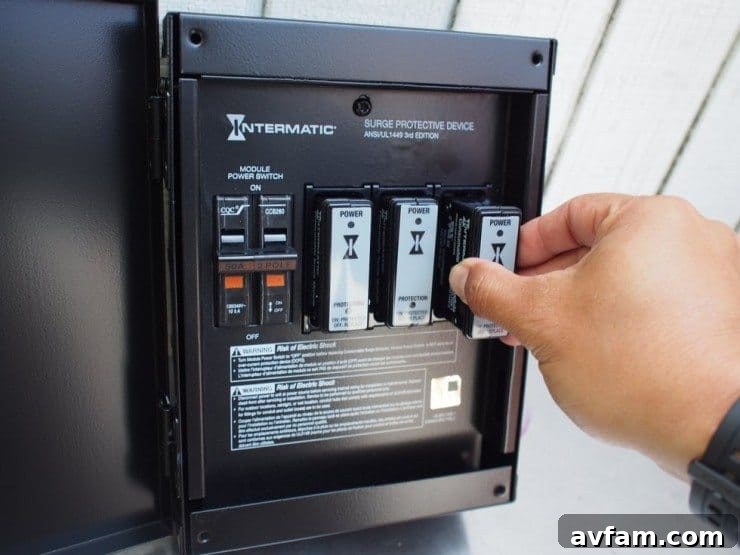
Among the leading solutions in whole-house surge protection is the Intermatic Surge Protective Device (SPD) with Consumable Modules. This innovative system offers comprehensive coverage that extends far beyond what typical power strips can provide, safeguarding 100% of your valuable home equipment.
Unparalleled Protection for All Your Investments
The Intermatic SPD is designed to protect virtually everything connected to your home’s electrical system. This includes not only your precious computers, entertainment systems, and smart home gadgets but also major appliances such as refrigerators, washing machines, dishwashers, and crucial HVAC equipment. By installing the Intermatic SPD, you create a robust barrier against the most destructive surges, preventing costly repairs and replacements across your entire household. Its advanced technology detects and diverts excess voltage, ensuring that only clean, stable power reaches your devices.
The Innovation of Consumable Modules
One of the standout features of the Intermatic SPD is its use of replaceable Consumable Modules. Traditional surge protectors often offer no indication when their protective components have been compromised. Once their internal sacrificial components (like MOVs) are “spent” after absorbing a significant surge or multiple smaller ones, they stop protecting your devices, leaving you unknowingly exposed. The Intermatic SPD addresses this critical flaw with an ingenious solution.
Each module comes with a built-in LED light indicator. When this light goes out, it signals that the module has absorbed a damaging surge and its protective capacity has been compromised. This clear visual cue empowers homeowners to easily identify when a module needs attention. The design allows for simple and safe replacement of individual modules without the need to replace the entire unit or call an electrician for a major service. This modular approach ensures continuous, reliable protection, making maintenance straightforward and cost-effective over the long term. It’s a proactive approach to surge protection that keeps your home continuously safe.
Professional Installation: Ensuring Optimal Performance and Safety
While the concept of whole-house surge protection is straightforward, its installation is not a do-it-yourself project for the faint of heart. Unless you possess extensive experience and are highly adept at working within your home’s main electrical panel, it is strongly recommended to entrust the installation to a qualified and licensed electrician. Working with high voltage electricity can be extremely dangerous and poses serious risks of injury or even fatality if not handled correctly. An experienced electrician can typically install an Intermatic SPD unit in less than an hour, ensuring it is properly wired and grounded for maximum effectiveness and safety.
For those with the necessary expertise and a thorough understanding of electrical codes, should you decide to undertake the installation yourself, meticulously follow all instructions provided with the unit. Critical considerations include placing the surge protector as close as possible to the load (your main electrical panel) and minimizing all wire lengths. Shorter wire runs reduce inductance, allowing the SPD to react faster and divert surges more efficiently, thereby maximizing its protective capabilities. Incorrect installation can render the device ineffective or even create new hazards, underscoring the importance of either professional help or rigorous adherence to safety protocols and manufacturer guidelines.
Seeing is Believing: How It Works
For a clearer understanding of how the Intermatic SPD system operates and provides superior protection, watch this informative video:
Invest in Peace of Mind: Safeguarding Your Digital Life and Home
In conclusion, the modern home is a hub of sophisticated and expensive electronics, all susceptible to the damaging effects of power surges. Relying on inadequate individual power strips is a risk many homeowners can no longer afford to take. A whole-house surge protective device, such as the Intermatic SPD with Consumable Modules, offers the most comprehensive and reliable defense available. By installing such a system, you are not just protecting individual devices; you are safeguarding your entire home’s electrical ecosystem, preserving your investments, securing your valuable data, and ensuring the continued functionality of all your essential appliances.
Don’t wait for a devastating surge to remind you of the importance of robust protection. Invest in the longevity of your electronics and the tranquility of your home by embracing whole-house surge protection today. For more detailed specifications and product information, please visit Intermatic’s official website.