
When embarking on any journey, whether a short trip to the hardware store or an epic off-road adventure, securing your cargo effectively is paramount. While traditional methods like bungee cords, basic rope, or even cargo nets have served their purpose for years, the modern world of transport demands a more reliable, versatile, and ultimately safer solution. Investing in a high-quality set of tie-down straps is not just about convenience; it’s a critical safety measure that protects your valuable gear, your vehicle, and other road users.
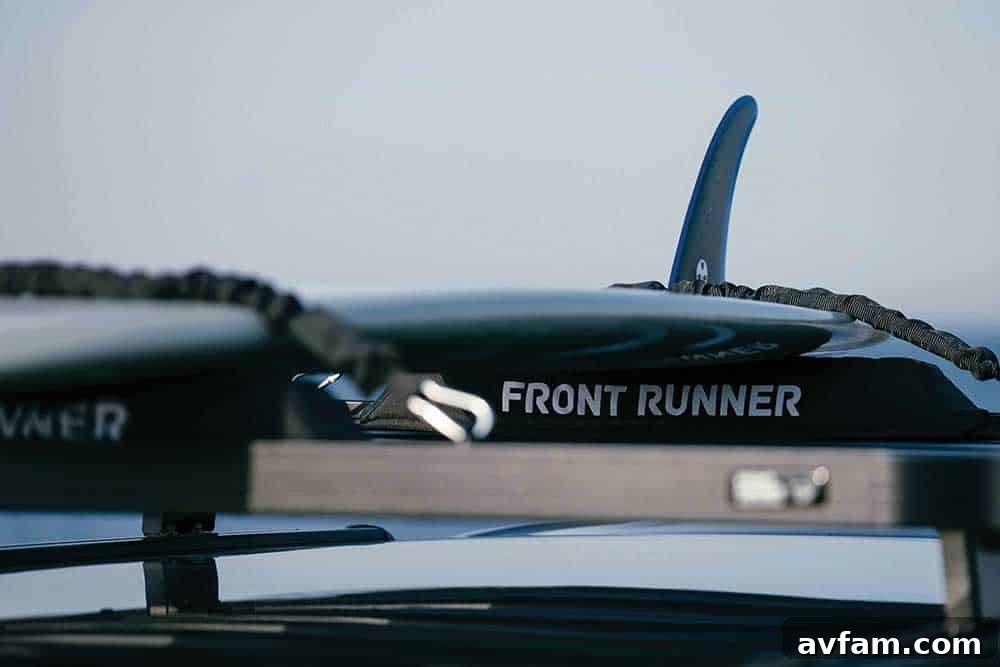
Our trusted collaborators at Front Runner Outfitters, seasoned experts in vehicle-based adventures and gear management, understand the nuances of securing equipment better than most. They recently unveiled their innovative Stratchit and Stratchit Shorty tie-downs, designed to revolutionize cargo securing. Building on their extensive experience, they’ve shared invaluable insights to help you navigate the often-overlooked yet crucial decision of choosing the right tie-down straps for your specific needs.
Understanding Tie-Down Material & Construction
The foundation of any reliable tie-down strap lies in its materials and construction. Compromising here can lead to equipment failure, potential damage, and dangerous situations on the road. Always prioritize quality to ensure your cargo remains secure throughout its journey.
The Right Materials for Durability and Performance
Your tie-down straps are constantly exposed to the elements, abrasion, and tension. Therefore, the choice of materials is non-negotiable for long-term reliability. Look for straps crafted from high-grade polyester webbing, known for its excellent strength, minimal stretch, and superior resistance to UV degradation and moisture absorption compared to nylon. UV protection is especially critical, as prolonged sun exposure can significantly weaken strap fibers, leading to premature failure. Ensure the webbing is thick, tightly woven, and resistant to cuts and abrasions that can occur during use.
Equally important are the metal components of your straps. Buckles, hooks, and adjusters should be made from corrosion-resistant materials such as stainless steel or galvanized steel. Rust not only compromises the structural integrity of the metal but can also stain your vehicle’s paintwork, leading to unsightly and costly damage. Always inspect these components for any signs of rust or deformation before each use. Furthermore, ensure that any metal parts that might come into contact with your vehicle are rubberized or padded to prevent scratches, dents, or annoying rattles while driving.
Secure Connection Points: Beyond the “S” Hook
The connection point between your strap and your vehicle or rack is a critical link in the security chain. While open “S” hooks are commonly found on inexpensive bungee cords, they are inherently less secure. They can bend under pressure, slip out of attachment points, or detach unexpectedly, especially during transit over rough terrain or sudden stops. For maximum security, opt for a closed system like a stainless steel carabiner. Carabiners offer a positive locking mechanism, ensuring a steadfast connection that won’t accidentally disengage. Other secure options include J-hooks, which wrap around attachment points for a more robust hold.
Beware of oversized, heavy-duty S-hooks often found on some ratchet straps. While strong, their bulkiness can easily scratch painted surfaces or delicate gear. For most recreational and general cargo tying needs, a well-designed, coated hook or a carabiner system provides ample strength without the unnecessary risk of vehicle damage.
Achieving Optimal Tension: The Goldilocks Zone
The goal of a tie-down strap is to hold your cargo firmly in place, not to crush it. Achieving the “Goldilocks zone” of tension – tight enough to secure, but not too tight to damage – is crucial, and the type of strap you choose significantly impacts this capability.
The Limitations of Bungee Cords and Overkill of Ratchet Straps
Bungee cords, with their elastic nature, offer convenience for a wide range of loads. However, their inherent stretchiness is also their biggest limitation. It’s challenging to achieve precise tension; they can be difficult to stretch over large loads, and conversely, it’s hard to get them tight enough on smaller items. They provide very little control over load compression and are best reserved for light, non-critical items or securing tarps, where minor movement is acceptable.
On the other end of the spectrum are ratchet straps. These robust tools are indispensable for hauling extremely heavy machinery, vehicles, or industrial loads where maximum tension and minimal stretch are required. Their mechanical advantage allows for immense tightening force. However, for everyday tasks like securing camping gear, bicycles, or surfboards, ratchet straps can be overkill. It’s incredibly easy to over-tighten, with an extra click or two potentially crushing fragile cargo, cutting into soft materials, or even deforming lightweight equipment. This risk of damage often outweighs their benefit for general recreational use.
The Versatility of Cam Buckle Straps and Innovative Solutions
For the majority of general cargo securing, a cam buckle strap often hits the sweet spot. These straps allow for manual tightening, giving you precise control over the tension without the risk of over-compressing your load. They are quick to operate, simple to adjust, and provide a secure hold for light to medium-weight items. They offer the flexibility needed for various cargo shapes and sizes, providing a controlled cinching system that is far superior to a bungee cord.
Even more advanced solutions, like the Front Runner Stratchits, bridge the gap further. These innovative tie-downs combine the flexibility and stretch of a bungee cord with the controlled cinching capability of a buckle system. This hybrid design allows for dynamic tension that can adapt to changing load conditions (e.g., fuel sloshing, gear settling) while still providing a firm and secure hold. They effectively tighten loads without the risk of breakage, making them ideal for a wide range of outdoor and vehicle-based equipment.
Managing Excess Strap Length: Safety & Convenience
Once your cargo is securely fastened, the job isn’t quite done. Excess strap length, often overlooked, poses significant risks and inconveniences. It’s easy to focus solely on the load and forget about the potential havoc unruly straps can wreak.
At driving speeds, loose strap ends can whip violently against your vehicle’s roof, body panels, and windows, causing scratches, dents, and paint chips. This “lashing” effect is not only damaging but also creates distracting noise. In more extreme cases, a rogue strap can become entangled in wheels or even fly off, posing a danger to other drivers. While you can manually roll up, tuck, and tie excess strapping, this is often time-consuming, frustrating, and not always fully effective, especially during multiple stops or adjustments.
This is where “strap discipline” comes into play. Look for tie-downs that incorporate an integrated management system for excess webbing. Many quality straps feature a small Velcro strap, an elastic loop, or a buckle system designed to neatly roll up and secure any slack. This simple yet effective feature prevents whipping, eliminates noise, protects your vehicle, and keeps your setup looking tidy and professional. It’s a small detail that makes a big difference in both safety and user experience.
Mastering the Dynamics of Load Security
Securing gear isn’t just about strapping it down; it’s about understanding the dynamic forces that act upon your cargo during transit. Gravity is your initial ally, but it’s only one piece of the puzzle. You must consider how your gear will react to every bump, turn, acceleration, and braking maneuver.
Understanding the Forces at Play
While gravity helps hold your load against your roof rack, basket, or cargo bars, other forces are constantly working to dislodge it. When you accelerate, your cargo wants to shift backward. When you brake, it lurches forward. Cornering introduces lateral forces that push your gear sideways. Most critically, bumpy roads, potholes, and washboard sections create significant upward forces. Each jolt can send your gear momentarily airborne, and without proper strapping, it can shift, become loose, or even separate from your vehicle.
Strategic Strapping for Maximum Security
To combat these dynamic forces, strategic strapping is essential. Always use at least two straps per major piece of gear. This provides redundancy and distributes the load, preventing any single strap from bearing the brunt of all forces. Furthermore, whenever possible, crisscross your straps. This technique creates a web-like embrace over your cargo, securing it against movement in multiple directions (forward, backward, left, right, up, and down). Crisscrossing straps also helps to centralize the load and prevent rotation.
Consider the adventure you’re embarking on. If you’re tackling challenging off-road terrain, where aggressive bumps and jarring movements are constant, the “sky’s the limit” for how much force your gear will experience. In such scenarios, even more strapping and careful load distribution become critical. Ensure your heaviest items are placed low and centrally, and all tie-down points on your vehicle or rack are robust and designed for load-bearing. Understanding these principles and applying common sense will ensure your gear stays put, no matter how wild the ride gets.
Strength, Load Ratings, and Maintenance for Longevity
The strength of your tie-down straps is a non-negotiable safety feature. Always be aware of the rated capacity of your straps and how to maintain them to ensure their effectiveness for years to come.
Deciphering Load Ratings and Dynamic Factors
Every quality tie-down strap should clearly indicate its load rating, typically expressed as a Working Load Limit (WLL) and a Breaking Strength (BS). The WLL is the maximum weight a strap is designed to safely hold in a straight pull, with a built-in safety factor. Always ensure the WLL of your straps collectively exceeds the actual weight of the cargo you intend to transport. Never rely on the Breaking Strength for everyday use, as this represents the point at which the strap is expected to fail. It’s crucial to remember that the “weight” of an object isn’t static. External elements like wind resistance at highway speeds, the inertia created by sudden stops or accelerations, and the jolts from rough roads significantly increase the effective force exerted on your straps. These dynamic forces can easily double or triple the static weight of your cargo, so always factor in a substantial safety margin when choosing straps.
Maintenance for Durability and Safety
Even with UV protection and high-quality materials, proper care and maintenance are vital for extending the life of your tie-down straps and ensuring continued safety. Regularly inspect your straps for any signs of wear and tear, including cuts, fraying, pulled threads, sun fading, or any deformation/corrosion of the metal components. Any significant damage warrants immediate replacement. Clean your straps periodically to remove dirt, mud, and salt, which can degrade the fibers over time. After use, allow them to air dry completely before storing them. Even with UV inhibitors, prolonged exposure to direct sunlight when not in use can gradually weaken the material; therefore, storing them indoors or in a protective bag will significantly extend their lifespan. By taking these simple steps, you ensure that your tie-downs remain strong and reliable, trip after trip.
Ultimately, only you truly know the specific conditions of your upcoming road trip – the terrain, the weather, the weight and placement of your load, and the robustness of your vehicle’s attachment points. While these professional tips provide an invaluable framework, balancing them with your common sense and practical experience is key to making informed decisions for transporting your gear securely.
Happy Travels and safe adventures!