
Unleashing Creativity: Exploring the World of 3D Printing and Its Endless Potential
In an era defined by rapid technological advancements, 3D printing stands out as a revolutionary force, continuously demonstrating immense promise and seemingly limitless potential. What began as a niche industrial process has evolved into an accessible tool, empowering innovators, educators, and hobbyists alike. But beyond the fascinating concept, the core question remains: What exactly can a 3D printer do for you?
For many, the allure of 3D printing lies in its ability to transform digital designs into tangible objects. It’s a technology that ignites imagination and offers a unique blend of creativity and practicality. Whether you’re an aspiring inventor, a dedicated maker, or simply curious about the future of manufacturing, understanding the capabilities of a modern 3D printer is key to unlocking its magic.
The Evolving Landscape of Consumer 3D Printers
The journey of 3D printing from an industrial marvel to a consumer-friendly device has been swift and dramatic. Today, the majority of individuals investing in 3D printers are enthusiastic hobbyists, eager to delve into the latest innovations in digital fabrication and additive manufacturing. While 3D printers were once prohibitively expensive, their prices have steadily decreased, making them increasingly accessible to a wider audience. This trend is set to continue, further democratizing access to this incredible technology.
Accessibility and Affordability: Bringing Innovation Home
The market for consumer 3D printers is vibrant and diverse, offering a range of options to suit different needs and budgets. From entry-level machines perfect for beginners to more advanced models designed for intricate projects, there’s a printer for everyone. One of the most recognized names in the consumer 3D printing space is Makerbot, a company synonymous with bringing reliable and user-friendly 3D printers to the masses.
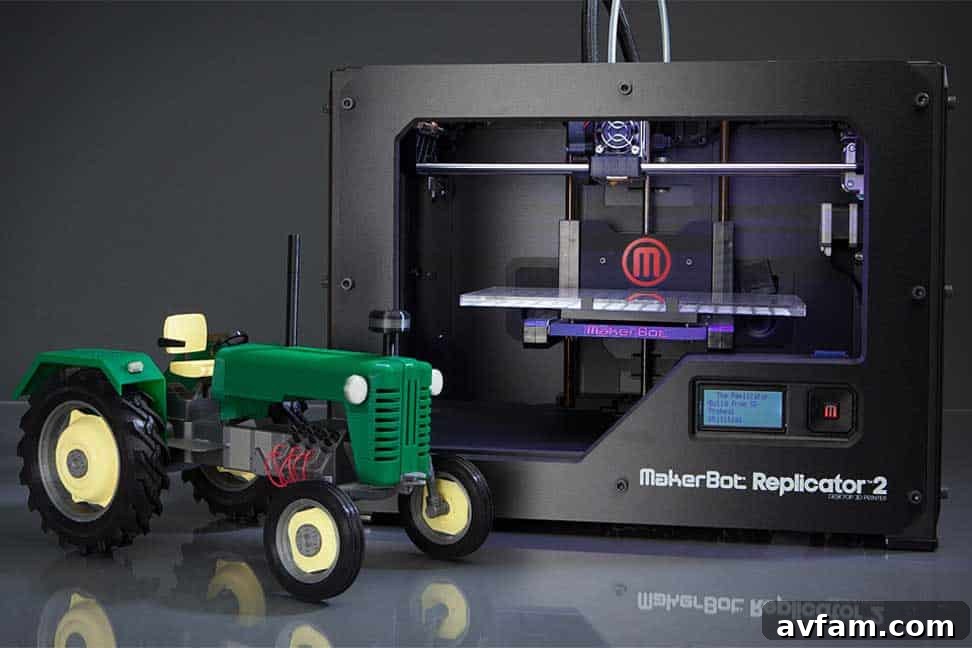
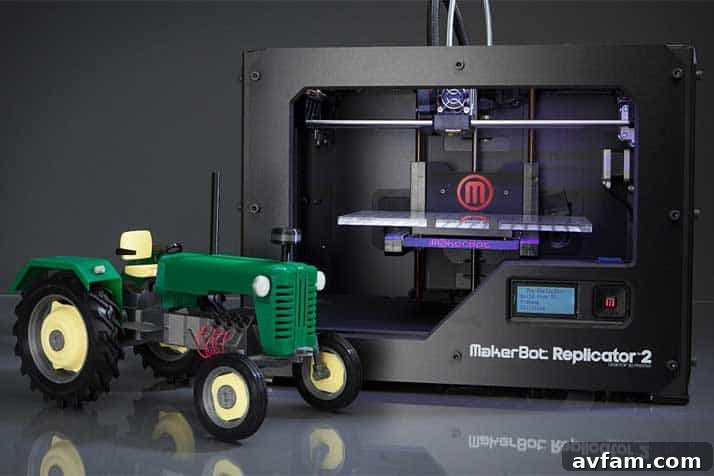
Their top-of-the-line model, the Replicator 2, exemplifies the blend of performance and quality that enthusiasts seek. Priced around $2,199, it represents a significant investment for a home printer, but one that delivers professional-grade results. This particular model boasts an impressive 100-micron layer resolution, meaning it can create incredibly detailed objects with smooth finishes. Furthermore, its robust powder-coated steel body (as shown in the image above) ensures durability and stability, critical for consistent printing over time.
Key Features That Define Performance
The Replicator 2 is also notable for being one of the larger home 3D printers available, offering a generous build volume of 410 cubic inches. This substantial space allows users to create bigger items or batch-print multiple smaller objects simultaneously, expanding the scope of possible projects. When considering a 3D printer, several features are paramount:
- Resolution: Measured in microns, this determines the fineness of the layers and the overall detail of the printed object. Lower micron numbers mean higher detail.
- Build Volume: The maximum physical dimensions of an object that the printer can create. A larger build volume offers more flexibility.
- Material Compatibility: Most consumer printers use PLA (Polylactic Acid) and ABS (Acrylonitrile Butadiene Styrene) filaments. Some advanced models can handle a wider range, including PETG, nylon, and flexible materials.
- Ease of Use: User-friendly software, easy setup, and reliable operation are crucial, especially for hobbyists.
- Durability and Construction: A sturdy frame, like the steel body of the Replicator 2, contributes to print accuracy and longevity.
Beyond Imagination: Practical Applications of 3D Printing
So, with such capabilities, what kinds of items can you truly create? The real power of a 3D printer lies not just in its mechanics, but in the vast universe of designs it can bring to life. One of the most groundbreaking contributions to this universe comes from Makerbot itself: Thingiverse.
Thingiverse: A Global Repository of 3D Designs
Thingiverse is a phenomenal online community and repository where users can discover, share, and collaborate on 3D printable designs. It has recently unveiled a fresh, intuitive new look, making it even easier to find and explore new designs from a global community of creators. This platform is a game-changer because it means you don’t have to be a CAD expert to start 3D printing. You won’t have to start from scratch when making your first model; instead, you can:
- Browse thousands of ready-to-print designs for free.
- Download and print designs directly.
- Customize existing designs to better suit your needs.
- Upload your own creations to share with the world.
This collaborative environment fosters innovation and makes 3D printing accessible to anyone with an idea and a printer.
Everyday Objects to Creative Masterpieces
When it comes to printing in plastic with your own 3D printer, the only genuine limit is your imagination. The versatility of these machines allows for a breathtaking array of creations, impacting various aspects of life:
For the Home and Daily Life:
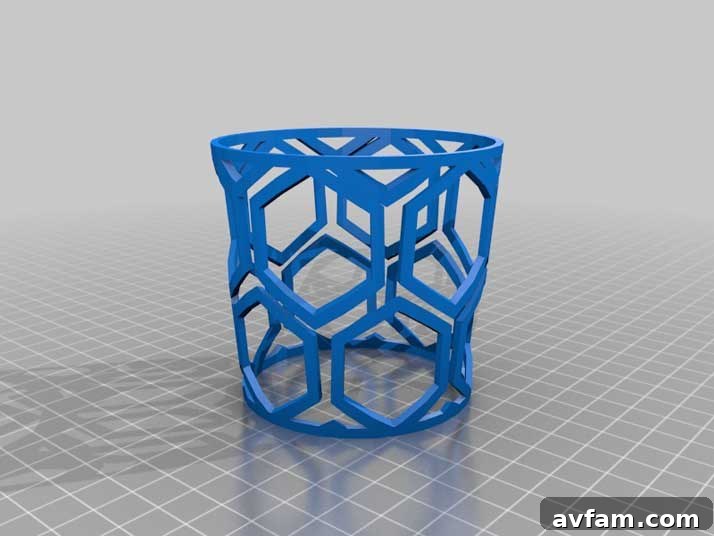
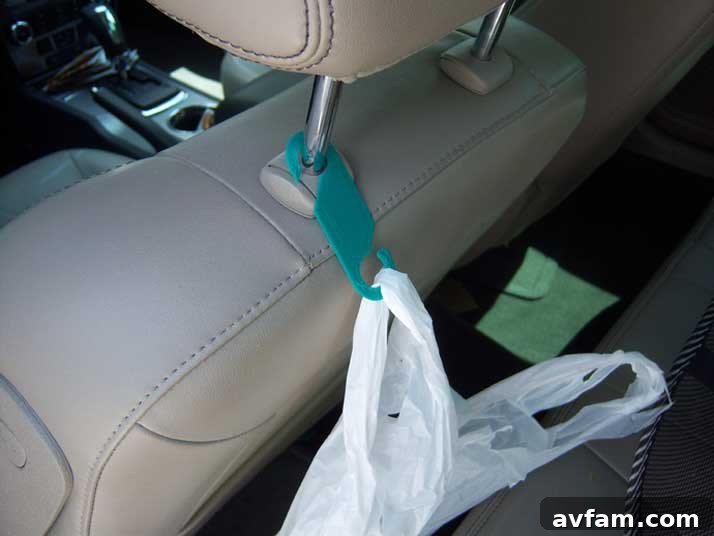
- Practical Solutions: Need a custom hook for your kitchen, a unique organizer for your desk, or a replacement part for a broken appliance? A 3D printer can fabricate it. The custom cup sleeve and garbage hook shown in the images are perfect examples of solving everyday problems with tailored solutions.
- Home Decor: Print decorative vases, intricate lampshades, unique picture frames, or custom planters to personalize your living space.
- Gadget Accessories: Design and print custom phone cases, tablet stands, cable organizers, or mounts for electronic devices.
For Hobbyists and Enthusiasts:
- Toys and Games: From action figures and model kits to board game pieces and intricate puzzles, the world of 3D printed toys is vast. Imagine a future where children find toy plans online and simply send them to their home printer, bringing their digital dreams to life.
- Jewelry and Fashion: Create unique pendants, earrings, bracelets, or even intricate costume pieces that showcase your personal style.
- Prototyping: For engineers, designers, and entrepreneurs, 3D printing offers rapid prototyping capabilities, allowing for quick iterations and testing of product concepts before mass production.
For Education and Learning:
- Educational Models: Teachers can print anatomical models, geological formations, or historical artifacts, providing students with tactile learning experiences.
- STEM Projects: Students can design and print components for robotics, science fair projects, or engineering challenges, fostering critical thinking and problem-solving skills.
If you’ve ever had an idea for a product you’d love to see made, or a problem that a custom solution could fix, then it’s worth considering if a 3D printer will work for you. The ability to iterate on designs quickly and produce bespoke items on demand is a powerful asset in both personal and professional contexts.
Getting Started with Your 3D Printing Journey
Embarking on your 3D printing adventure can be exciting. Here are a few tips to help you get started:
- Research Printers: Understand the different types of 3D printing technologies (FDM, SLA, etc.) and choose a printer that aligns with your budget, desired print quality, and intended use.
- Learn Design Software: While Thingiverse provides many ready-made files, learning basic CAD software (like TinkerCAD for beginners or Fusion 360 for advanced users) will unlock even greater creative freedom.
- Experiment with Filaments: Start with PLA, which is easy to print and environmentally friendly. As you gain experience, explore other materials like ABS for durability or flexible filaments for unique applications.
- Join a Community: Platforms like Thingiverse, online forums, and local maker spaces offer invaluable resources, support, and inspiration from fellow enthusiasts.
The Future is Fabricated: What’s Next for 3D Printing?
The journey of 3D printing is far from over. As materials become more diverse, printers become faster and more precise, and software becomes more intelligent, the applications will continue to expand. From bioprinting organs to building houses, additive manufacturing is poised to reshape industries and redefine our relationship with production. The consumer market will continue to benefit from these innovations, making high-quality, personalized manufacturing a staple in every home.
Do you already own a 3D printer? What exciting projects have you brought to life with it? Share your experiences and inspire others!
We’ve become so enamored with the revolutionary capabilities of 3D printing and digital fabrication that we’ve launched a brand new platform dedicated to covering the latest news, technologies, and innovations in this rapidly evolving field.
Visit MechaMakers.com today for more in-depth articles, expert insights, and community discussions on everything related to additive manufacturing and the maker movement!