
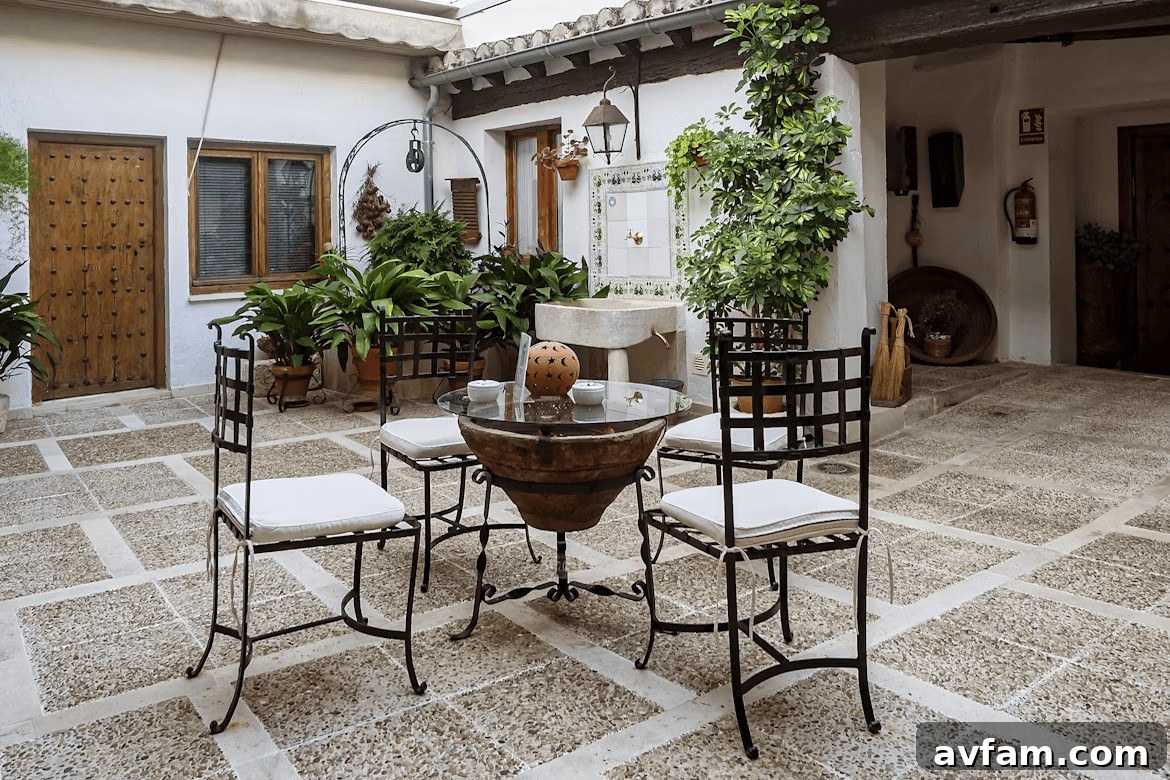
The tile that looked flawless in the showroom can behave very differently once it’s installed outside.
A surface that feels grippy when dry can become slick in the rain, a rich tone may fade a shade under the summer sun, and a hairline crack can appear after the first hard freeze.
None of that is bad luck; it is the predictable result of choosing an outdoor tile for looks alone rather than for performance. A few straightforward checks before you buy will save you time, money, and disappointment. Below are the practical points to run through before you commit a single square foot to your patio.
Fortunately, exterior-rated tile now comes in a wide range of styles, so you rarely have to sacrifice aesthetics for durability. You can shortlist by appearance, then confirm the technical specs to make sure the product will perform where you live. Start with the six checks outlined here.
Is the tile rated for your climate?
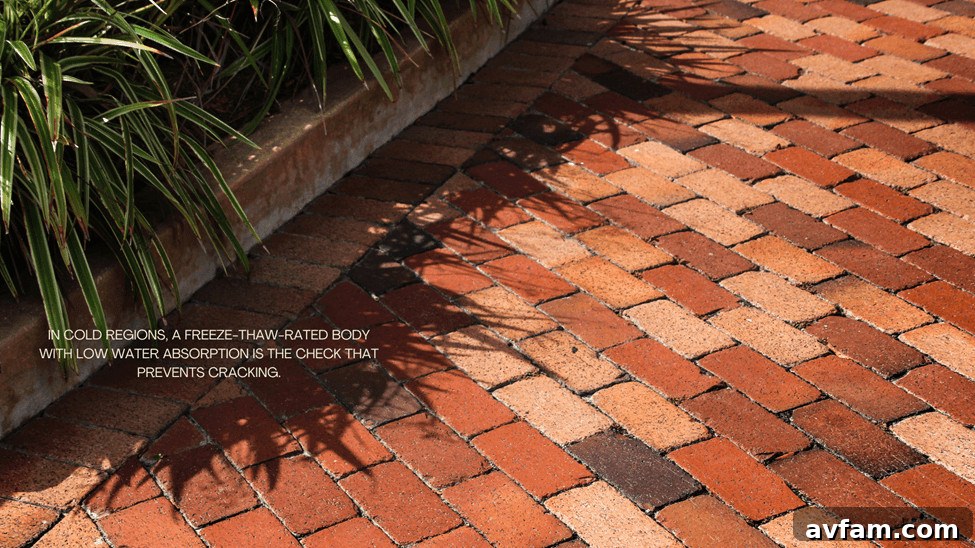
The first question is whether the tile can survive your winters. Water migrates into a tile’s body and, in cold climates, freezes and expands. Repeated freeze-thaw cycles can crack or delaminate tile that absorbs too much moisture.
Look for tiles labeled freeze-thaw rated or frost-proof. Those terms generally indicate a dense body with very low water absorption. In warm, frost-free regions this is less critical, but in most climates it is the single most important factor in preventing a cracked patio a few winters down the line.
Always confirm the rating on the product spec sheet rather than assuming that “outdoor” on a label guarantees freeze-thaw testing.
How slip-resistant is it when wet?
Patios are exposed to rain, splashes, and bare feet, so traction matters more here than in many other rooms. Slip resistance is usually reported as a Dynamic Coefficient of Friction (DCOF). For wet areas, opt for a textured, matte-grip, or higher-traction finish instead of a glossy surface.
This is especially important around pools, steps, and entryways, and it becomes a genuine safety concern as household members age. Ask for the DCOF value and have slip-sensitive areas evaluated and installed by a qualified professional.
Will the color and surface hold up to sun and heat?
Full sun is relentless on outdoor materials. UV exposure will fade pigments that are not UV-stable, and dark tiles can become uncomfortably hot underfoot when exposed to direct sunlight.
Fired-in glazes and through-body colors are more resistant to fading than dyed or surface-coated finishes. Keep in mind that outdoor materials will change over time; the goal is to select tiles that age gracefully rather than disappoint quickly.
Choose a UV-stable, exterior-rated product so the visual change you get is subtle and long-lasting rather than sudden and regrettable.
What is going underneath the tile?
Even the right tile can fail on the wrong base. A durable patio requires a stable, level substrate, a slight slope for drainage (commonly around one to two percent) so water runs off instead of pooling, and setting materials approved for exterior use.
If you are installing over an existing concrete slab, ensure it is clean, sound, and prepared for tile. Many installations benefit from a crack-isolation or decoupling membrane to prevent seasonal movement in the substrate from telegraphing up through the tile.
The same foundation-first thinking behind any durable outdoor build applies beneath a tiled patio: prepare the base well and the surfacing is far more likely to perform for years.
Does it suit how you will actually use the patio?
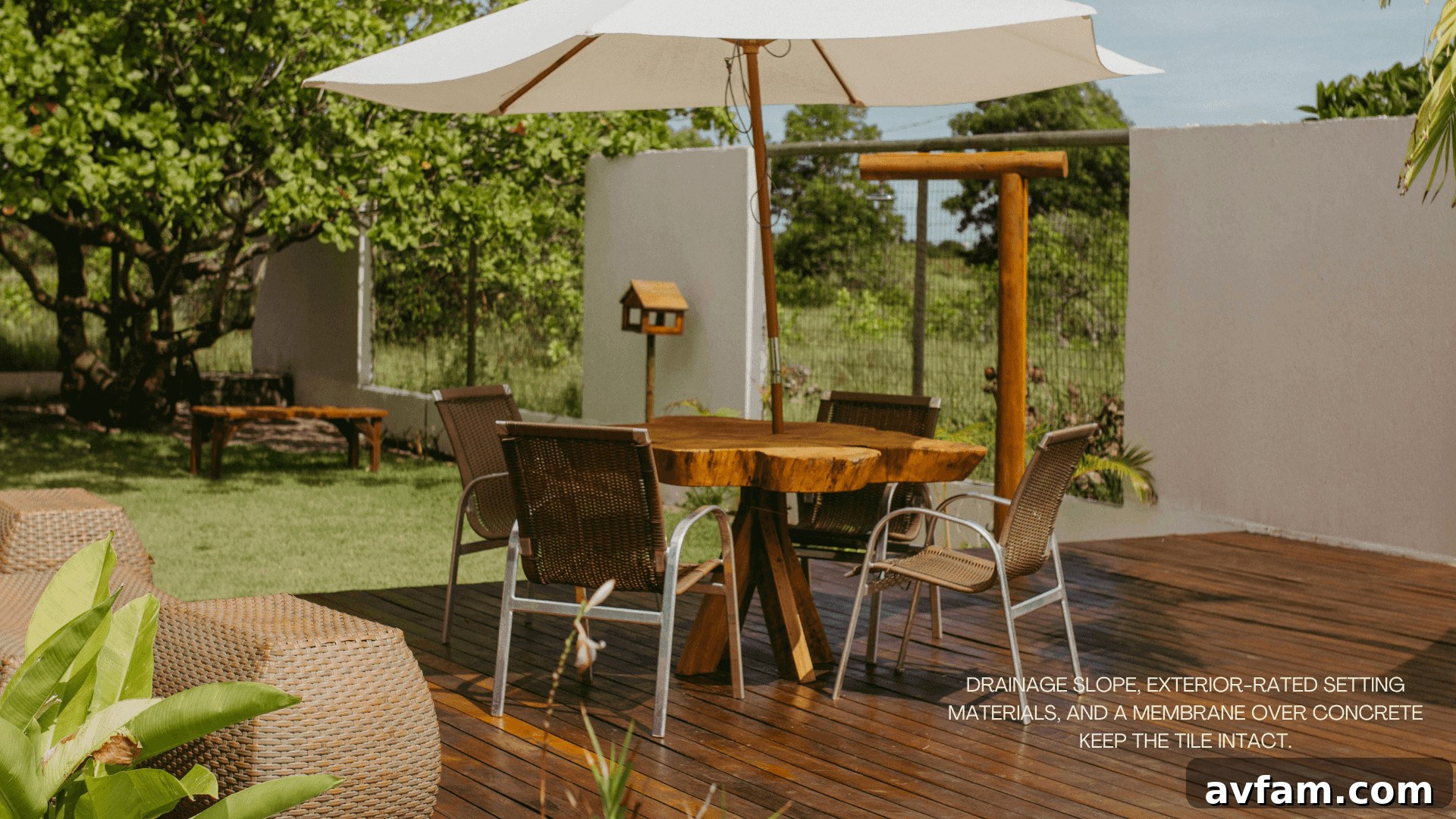
Match the tile to the life of the space. A busy entertaining patio, a quiet reading nook, and a pool surround each demand different things in terms of durability, traction, and tile size. High-traffic areas will benefit from more robust materials and finishes, while intimate spaces can often use finer textures and lighter-duty tiles.
Consider how the patio connects to the house. Repeating a color or material across the threshold helps the outdoor room read as an extension of the home rather than a separate slab. Choosing for actual use, not just the showroom photo, is what keeps a patio functional and enjoyable for years.
Have you checked samples, sealing, and lead time?
Handle the practical details before you order. Always get samples and view them outdoors in the real light next to your existing materials; handmade and natural tiles often vary in tone and finish.
Ask whether the tile requires sealing. Porous materials such as terracotta and some cement tiles usually need sealing at installation and periodic resealing over time. Confirm recommended maintenance intervals so you can budget both time and cost for upkeep.
Finally, confirm lead times early. Artisan or made-to-order outdoor tiles can take weeks to arrive, and delivery times are easy to underestimate when scheduling a project.
The short version
Before you buy based on looks alone, run this checklist: confirm a freeze-thaw rating for your climate, check the wet DCOF for traction, ensure the color and surface are UV-stable, plan the substrate and drainage, match the tile to how you will use the space, and sort samples, sealing, and lead times before ordering.
Get these details right, and the tile you love in the showroom will still be the tile you love several summers down the road.