
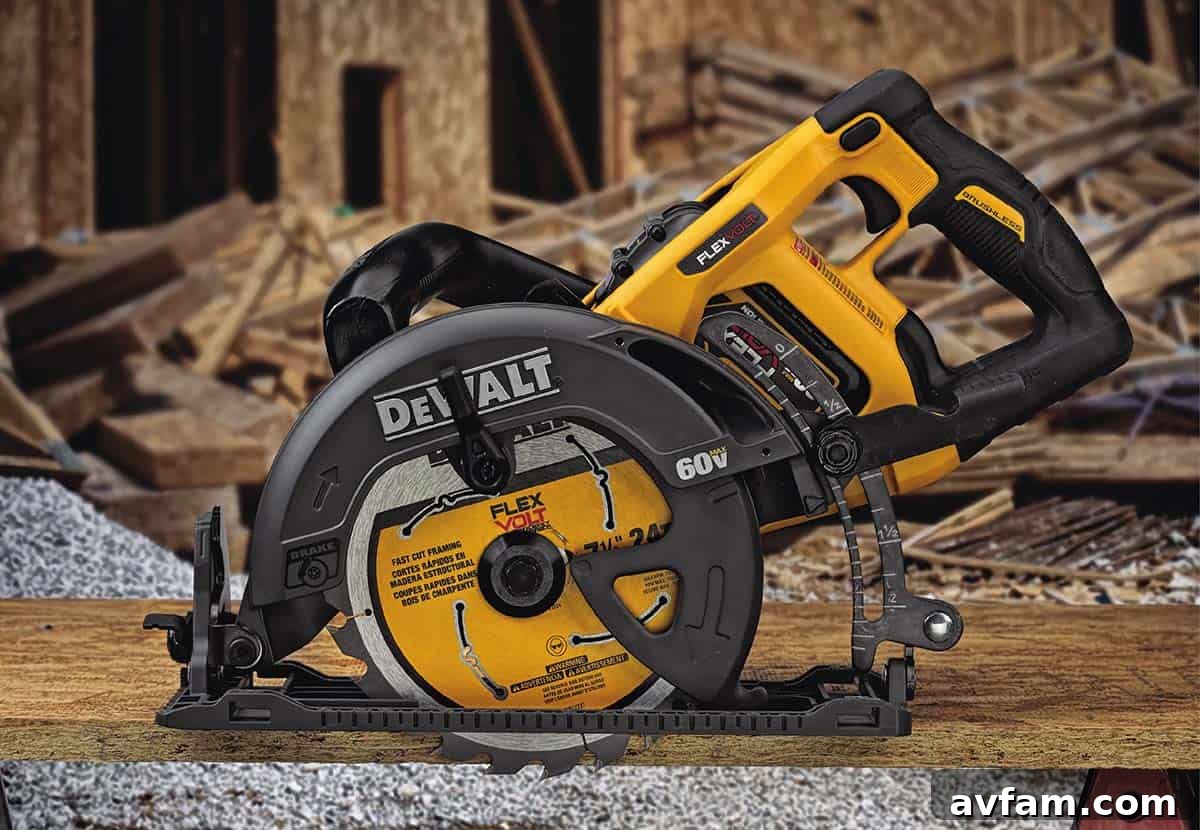
In the dynamic world of power tools, innovation is a constant drive, pushing the boundaries of what’s possible for professionals and DIY enthusiasts alike. Few advancements have been as transformative as the introduction and widespread adoption of brushless motor technology. For years, we’ve championed brushless drills and tools, recognizing their superior capabilities from the moment they first appeared on the market. Initially, the primary hurdle was their higher cost compared to traditional brushed motor alternatives, a factor that often gave pause to budget-conscious buyers. However, as leading tool manufacturers such as Dewalt, Milwaukee, Makita, and Bosch relentlessly advance battery technology, the imperative to extract maximum power and extended runtime from every single battery cell has grown exponentially. In this evolving landscape, the brushless motor stands out as the most optimal and efficient mechanism for converting stored battery energy into tangible tool power, fundamentally reshaping performance expectations.
To truly grasp the profound impact of this technology, it’s essential to understand the underlying principles. We were fortunate to receive an in-depth explanation from Bill Gallagher, the Director of Engineering in Drilling and Vertical Fastening at Stanley Black & Decker. His comprehensive breakdown eloquently illustrates the stark differences between brushless and brushed motors, presenting one of the clearest and most compelling arguments we’ve encountered for embracing brushless tools moving forward. While the initial acquisition cost of a brushed tool might seem more appealing, this perspective often overlooks the long-term value. A brushless tool is engineered for longevity and superior performance, ensuring that your investment will not only pay off but also deliver enhanced productivity and satisfaction over its extended lifespan. This critical distinction in efficiency and durability is why brushless technology is rapidly becoming the industry standard.
Brushless Motors vs. Brushed Motors: A Deep Dive into Power Tool Mechanics
The core distinction between these two motor types lies in their fundamental design and operation, which directly translates into their performance characteristics, efficiency, and lifespan. Understanding these differences is key to making informed decisions when purchasing power tools, whether for professional applications or home projects.
Understanding Brushed Motors: The Traditional Workhorse
Brushed motors represent the classic design that has powered tools for decades. Their operation is relatively straightforward and mechanically driven. At its essence, all that is required is a consistent supply of current and voltage to initiate rotation and produce torque at a desired speed. The ability to reverse the drill’s direction is achieved simply by switching the battery’s polarity to the motor. The term “brushed” directly references the critical components involved: brushes, which are typically made of carbon, and sliding contacts housed within the motor. These brushes play a vital role by conducting electrical power from stationary wires to the rotating “armature” through a “commutator” that is fixed to the armature shaft. The armature itself is wound with numerous copper wire coils, which generate an electromagnetic field when supplied with power.
The copper coils within the armature are wrapped around laminated steel, which becomes either a north or south magnetic pole depending on the brushes’ position relative to the commutator. When these coils are energized, the resulting magnetic forces pull the armature around, attracting it to the opposite pole of the permanent magnets that surround the armature. As the armature turns, the commutator mechanically switches the polarity of the electromagnet, ensuring it is continuously attracted to the approaching permanent magnet of the opposite polarity. This constant switching and attraction create continuous rotational motion. However, this ingenious mechanical system comes with inherent drawbacks: the sliding friction between the brushes and the commutator, the inevitable arcing that occurs during contact, and the electrical resistance of the brushes themselves. These factors collectively generate significant heat and lead to substantial efficiency loss, translating into wasted energy and reduced runtime. Moreover, the brushes are wear-and-tear components that require periodic replacement, adding to maintenance costs and downtime.
Embracing Brushless Motors: The Modern Efficiency Standard
Tools powered by brushless motors represent a significant leap forward in design and engineering, fundamentally diverging from their brushed counterparts. In a brushless motor, the windings—the components that generate the magnetic field—are stationary; these are referred to as the “stator.” Conversely, the permanent magnets are integrated into the “rotor,” which is the spinning part of the motor. This configuration is a direct reversal of the brushed motor’s design. Crucially, there is no mechanical device, such as a commutator or brushes, to conduct power to the windings. This eliminates the primary sources of friction and electrical resistance inherent in brushed motors, leading to a host of performance benefits.
Without the mechanical commutator, the sophisticated electronics of the tool must now assume responsibility for precisely switching the polarity of the stator coils. This function mirrors the role of the commutator in a brushed motor but is performed digitally and with far greater precision. To achieve this, the tool’s electronics must accurately know the rotor’s exact position at all times. This real-time positioning data allows the system to coordinate precisely when to energize the appropriate coil and with what polarity, ensuring seamless and efficient rotation. This positional awareness is typically achieved through specialized components like Hall effect sensors, which can detect the magnetic field created by the rotor magnets or a separate magnetized disc positioned in relation to the rotor. In certain applications, advanced “sensor-less” brushless motors are employed, where the motor controller deduces the rotor’s position by monitoring the back-EMF (electromotive force) generated by the spinning magnets, further simplifying the design without sacrificing precision.
At the heart of a brushless motor’s superior performance are sophisticated algorithms stored within the tool’s electronic controller. These algorithms precisely energize and hold the coils on at the exact right moment to achieve maximum torque, power, and efficiency across the entire RPM range of the motor. This dynamic control can be adjusted on the fly, optimizing output for varying loads and conditions. This unparalleled level of precision translates directly into significantly increased tool performance, including higher torque-to-weight ratios, more consistent power delivery, extended battery runtime, and reduced heat generation. The absence of mechanical friction and the precise electronic control are precisely why brushless motors have exploded in popularity in recent times, revolutionizing everything from compact drills to heavy-duty impact wrenches and circular saws.
The Unmatched Advantages of Brushless Technology
The benefits of brushless motors extend far beyond mere efficiency. Their design inherently leads to:
- Superior Efficiency: By eliminating physical friction from brushes and the commutator, brushless motors convert a higher percentage of battery energy into rotational force. This can result in up to 50% more efficiency compared to brushed motors, directly translating to significantly longer battery life and more work per charge.
- Increased Durability and Lifespan: With no brushes to wear out, no commutator to spark, and less heat generated, brushless motors are inherently more robust and last considerably longer. This reduces the need for replacements and repairs, saving users time and money in the long run.
- Enhanced Performance: Brushless tools deliver higher power and torque for their size and weight. The electronic control allows for more precise speed and torque regulation, providing consistent power under load and preventing slowdowns. This means driving longer screws, making smoother cuts, and tackling tougher materials with greater ease and less strain on the tool.
- Reduced Maintenance: The absence of wear-and-tear components like brushes means virtually no maintenance required for the motor itself. This translates into less downtime and a lower total cost of ownership over the tool’s life.
- Compact and Lighter Design: The stationary windings and rotor-based magnets often allow for a more compact motor design, contributing to lighter and more ergonomic tools that are easier to handle during extended use.
- Improved Safety: Without the sparking associated with brushes, brushless tools are inherently safer to use in environments where combustible materials might be present, or simply for reducing electromagnetic interference.
These multifaceted advantages make a compelling case for choosing brushless tools, transforming them from a premium option to an essential investment for anyone serious about their work.
Investment and the Future of Power Tools
While the initial cost of brushless tools remains a consideration, the long-term investment perspective overwhelmingly favors brushless technology. The upfront expenditure is quickly offset by the tangible savings and productivity gains over the tool’s lifespan. Fewer battery recharges, extended tool life, minimal maintenance, and consistently superior performance mean less downtime, greater output, and ultimately, a more cost-effective solution for both professionals and dedicated hobbyists. The narrative has shifted from “Can I afford brushless?” to “Can I afford not to use brushless?”
The “tool arms race” continues to advance at a breakneck pace, fueled by innovations in both motor design and battery chemistry. Tool manufacturers are constantly pushing the boundaries, integrating smarter electronics, and developing even more powerful and efficient brushless systems. This relentless innovation suggests a clear trajectory: brushed tools, once the industry standard, are increasingly becoming akin to the corded tools of yesteryear—perfectly functional but often overshadowed by more convenient, powerful, and efficient cordless and brushless alternatives. It’s not a stretch to predict that brushed tools will become largely obsolete in many professional and demanding DIY applications within the next few years, confined to entry-level or niche markets.
In conclusion, the transition to brushless motor technology represents a significant evolution in the power tool industry. Its benefits—from unparalleled efficiency and extended battery life to superior durability and precision control—make a clear and compelling case for its adoption. For anyone seeking to maximize productivity, minimize downtime, and invest in tools that will truly stand the test of time, the choice is clear: embrace the brushless revolution. Your work will be more efficient, your tools will last longer, and your projects will benefit from the cutting-edge performance that only brushless technology can provide.