
Amy Devers: Bridging High Design and Hands-On Home Renovation
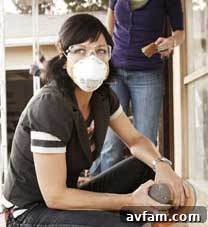
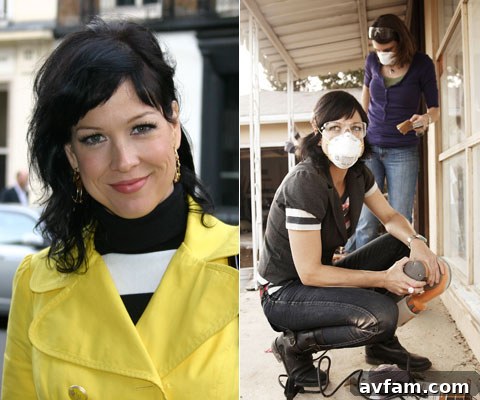
In the dynamic world of home improvement and lifestyle television, few personalities possess the remarkable versatility and authentic expertise of Amy Devers. A true polymath in design and fabrication, Devers effortlessly navigates the spectrum from meticulously crafting custom cabinetry on a DIY show to engaging in profound discussions about avant-garde design with luminaries like Marc Newson. Her distinctive blend of practical carpentry skills and a refined aesthetic sensibility, honed through an MFA in furniture design from RISD (Rhode Island School of Design), positions her as a unique and influential voice in the industry. She understands that a successful home project isn’t merely about functionality; it’s about creating spaces that are both beautiful and genuinely reflect the homeowner’s vision. This comprehensive understanding is precisely what sets her apart and has cemented her status as a rising star in lifestyle television.
This article delves into Amy Devers’ fascinating journey, exploring her unconventional entry into entertainment, the candid realities and unexpected challenges encountered on various DIY television sets, and her insightful perspectives on the evolving landscape of building and design, both in front of the camera and within the broader industry.
From the Workshop to the Worldwide Stage: Amy Devers’ Unique Path to Television
Amy Devers’ transition from a highly trained carpenter and furniture designer to a prominent television personality was, by her own admission, a delightful accident. While her academic background and hands-on experience in carpentry and fabrication were meticulously cultivated, her entry into the world of entertainment began with a friend’s half-joking suggestion. A casting call for a home improvement show sought an individual with legitimate technical knowledge, stipulating that prior acting experience was not a prerequisite. Intrigued by the prospect of glimpsing Hollywood’s casting process and perhaps gaining a humorous anecdote, Devers attended the audition, rhinestone safety glasses in hand, with minimal expectations. To her surprise, she landed the role, which led to her long-standing tenure on DIY Network’s highly successful series, DIY to the Rescue. This show, which ultimately spanned over 100 episodes, became a testament to her authentic expertise and approachable demeanor, proving that genuine skill can resonate powerfully with audiences.
Her academic foundation, particularly her Master of Fine Arts in furniture design from RISD, has been instrumental in shaping her television persona and approach. Unlike many TV contractors who might focus solely on the pragmatic aspects of construction, Devers brings a critical design perspective to every project. This ensures that the finished product is not only structurally sound and functional but also aesthetically pleasing and harmoniously integrated into its environment. This dual competence – the ability to both build with precision and design with vision – is a rare asset that she leverages to educate and inspire viewers, empowering them to pursue home improvement projects with both confidence and style.
Global Design Immersion: Insights from OvationTV’s Designer People
As the esteemed host of OvationTV’s Designer People, Amy Devers embarked on an extraordinary global journey, profiling some of the world’s most influential and renowned designers. This ambitious series offered her unparalleled access to the creative minds and groundbreaking projects that are shaping contemporary design. For Devers, every moment of this experience was a highlight, a profound honor to gain inquisitive access into the inspiring and prolific minds behind iconic works.
Among the celebrated designers she profiled, each offered unique insights into their creative processes:
- Juergen Mayer H.: Devers had the unique opportunity to receive a guided tour of his phenomenally innovative Metropol Parasol project while it was still under construction. This close-up view allowed her to appreciate the intricate engineering and visionary design that went into creating one of the world’s most distinctive urban structures.
- Zandra Rhodes: The legendary fashion designer revealed her distinctive approach of designing textiles first, allowing the patterns and textures to organically influence the shape and structure of her garments. This method highlights a fluid, intuitive connection between material and form.
- Bjarke Ingels: Devers recognized Ingels as a problem-solver of the highest order, whose architectural philosophy brilliantly fuses utopian ideals with pragmatic solutions, resulting in buildings that are both imaginative and incredibly functional.
- Marcel Wanders: Known for his ability to transform fantastical concepts into tangible, functional objects, Wanders exemplifies a playful yet profound approach to design, pushing the boundaries of what everyday items can be.
- Marc Newson: Devers observed Newson’s almost computer-like mental index of shapes and forms, which he seamlessly recalls and applies as needed. This insight underscores the depth of his visual memory and his mastery over industrial design.
- Michael Young: Young’s distinctive talent lies in his ability to push manufacturing processes to accomplish new feats, constantly innovating with materials and production techniques to create objects that are both elegant and technologically advanced.
Devers’ admiration for each designer is palpable, emphasizing the rich diversity of thought and execution within the global design community. The show serves not only as a showcase of extraordinary talent but also as a fascinating exploration of the myriad ways creativity manifests and solves complex challenges across various design disciplines.
The Unfiltered Reality of DIY Television: Challenges Behind the Scenes
For many viewers, Amy Devers is a familiar face from popular shows like Trading Spaces and DIY to the Rescue, as well as her more instruction-focused series, Freeform Furniture. While television productions often appear seamless on screen, the reality behind the cameras is frequently fraught with unforeseen challenges, demanding improvisation and resilience from the cast and crew. Devers candidly shares memorable experiences that truly put her design, carpentry, and hosting skills to the test, offering a glimpse into aspects viewers rarely get to see.
On Freeform Furniture, the production schedule was incredibly demanding, with each episode being shot in a single day. This necessitated Devers having anywhere from seven to nine prototypes in various stages of completion ready at all times, strategically prepared to avoid delays for drying times or other processes. This often meant grueling all-nighters earlier in the week to ensure everything was prepped. Filming days themselves were equally arduous, stretching for 14 to 18 hours under intense hot lights with absolutely no air circulation. For optimal audio quality, all windows had to remain shut and fans turned off, causing temperatures inside the set to soar to approximately 110 degrees Fahrenheit. The conditions became so extreme that Devers had to seek special permission from the network to wear tank tops, famously quipping, “You can have bare arms or sweat marks, pick one.” These moments highlight the physical rigor involved in creating seemingly effortless how-to content.
Perhaps even more profound was a DIY to the Rescue special filmed in New Orleans about a year after Hurricane Katrina devastated the region. The team undertook the ambitious project of rebuilding the home of a 78-year-old woman who had tragically lost her life savings to a fraudulent contractor. This experience, as Devers recounts, was intensely emotional and deeply moving. Beyond the long, laborious days spent working in sweltering heat amid still-toxic conditions, the psychological weight of the surrounding tragedy, fear, and desolation was overwhelming. Devers herself fell severely ill, requiring hospitalization for antibiotics and losing her voice. However, she considers these personal hardships minor compared to the oppressive emotional burden of the community.
The New Orleans project marked a significant shift in Devers’ hosting experience. Traditionally, her interactions were with homeowners who, at most, might be slightly frustrated or overwhelmed by a project. Suddenly, she was thrust into a situation where, through the medium of television, she was providing a platform for devastated individuals who had lost everything to share their stories. This profound experience was incredibly humbling, fostering a deep gratitude for the opportunity to participate in something so meaningful and to offer a glimmer of hope and restoration.
The Evolving Landscape of DIY and Home Improvement Television
The enduring popularity of cable networks dedicated to DIY and home improvement continues to grow, prompting questions about its saturation point and future evolution. Amy Devers believes that the fundamental human need for shelter ensures the perpetual relevance of this genre of programming. It taps into a universal desire to create, improve, and personalize one’s living space, making it a timeless subject for television.
Looking ahead, Devers identifies significant “fertile territory” for future programming, particularly in the realm of sustainable living and retrofitting existing homes and gardens. Areas such as solar energy integration, advanced water-conservation techniques, efficient composting systems, and the burgeoning movement of edible gardening offer rich content potential. As knowledge in these sustainable practices is still relatively new to many homeowners, Devers anticipates that audiences will increasingly gravitate towards shows featuring knowledgeable professionals who offer genuine substance and actionable take-away information, rather than purely entertainment-driven content. This shift underscores a growing demand for practical, impactful knowledge that empowers viewers to make environmentally conscious and cost-effective improvements to their homes.
Beyond the Screen: Personal Design Projects and Creative Inspirations
Despite her demanding television schedule, Amy Devers maintains a connection to her roots in design and fabrication. She continues to create distinctive one-off designs and sculptures, which are available for sale through various galleries. While the time constraints of her television career limit the volume of these bespoke pieces, her passion for hands-on creation remains undimmed. Additionally, Devers is actively developing a small collection of limited-edition pieces, currently exploring distribution channels to make her unique aesthetic accessible to a wider audience. These projects allow her to explore creative concepts unconstrained by television formats, reinforcing her identity as an artist and a designer first and foremost.
Devers’ creative process, whether designing a piece of furniture or seeking an inventive solution to a home improvement challenge, is deeply informed by her academic lineage and a broad spectrum of influences. She consistently draws upon the foundational knowledge and critical thinking skills imparted by her mentors, notably Wendy Maruyama at SDSU (San Diego State University) and Rosanne Somerson at RISD, along with the collective wisdom of faculty at both institutions. These foundational teachings provided her with a robust framework for approaching design problems.
For immediate inspiration, Devers deliberately looks beyond the confines of furniture design and home improvement. She finds fresh perspectives and innovative ideas in diverse fields such as music, sculpture, and documentaries. This cross-pollination of ideas fuels her creativity. She also avidly follows TED Talks, irrespective of the subject matter. The exposure to groundbreaking ideas and diverse viewpoints, she notes, consistently stimulates her intellectual curiosity and “gets her gears turning,” fostering an environment of continuous learning and innovation.
Embracing Sustainable Practices: The “Green” Building Movement
The rise of the “Green” building movement has resonated deeply with Amy Devers’ inherent design philosophy. Her work has always implicitly incorporated sustainable practices, particularly through the frequent use of found objects and salvaged materials integrated into unexpected applications. For Devers, the primary change brought by the green movement has been largely lexical; what she once simply did, people now explicitly refer to as “re-using” or “re-purposing.” Aesthetically, her approach has remained consistent, driven by a commitment to resourceful and imaginative material use.
Practically, however, the movement has provided exciting advancements. Devers has always sought out less-toxic, more planet-friendly paints, glues, and finishes for her projects. She expresses enthusiasm for the continuous improvements in these products, noting their increasing effectiveness and environmental safety. Furthermore, the market now offers a significantly broader range of sustainable materials, empowering designers and homeowners alike to make more eco-conscious choices without compromising on quality or aesthetic appeal. This evolution aligns perfectly with her long-standing commitment to responsible design and construction.
Essential DIY Wisdom and Beyond the Build
When asked to recommend a single DIY skill every homeowner should possess, Amy Devers emphatically suggests owning a cordless drill/driver and mastering its diverse applications. This versatile tool, she explains, is not just for drilling holes; it’s invaluable for assembling furniture, hanging shelves and artwork, tightening loose screws, and tackling a multitude of minor repairs around the house. Its portability and ease of use make it an indispensable asset for any homeowner, unlocking a world of simple yet impactful projects.
For those seeking design and DIY inspiration online, Devers recommends several websites that she frequently checks:
- dezeen.com: A leading online architecture and design magazine showcasing the best international design.
- archdaily.com: The world’s most visited architecture website, offering a wealth of architectural news, projects, and products.
- designobserver.com: A thoughtful and critical resource for design, culture, and society.
- designspongeonline.com: A popular blog dedicated to home and garden design, DIY projects, and creative living.
- etsy.com/shop/TheWhiteMole: A marketplace for unique and handmade goods, including creative DIY supplies and artisan crafts.
Beyond her professional pursuits in home improvement, Amy Devers is deeply interested in a wide array of arts and culture. Her passions span art, architecture, design, fashion, film, music, fiction, and storytelling, all of which likely inform and enrich her primary work. She also professes a great love for food and trying new and interesting culinary experiences, humorously admitting that she is a “terrible cook” herself. Adding a touch of playful eccentricity, she also enjoys sleeveface.com, a website dedicated to creative photographic illusions using record album covers.
Her most impactful DIY tip, delivered with characteristic wit, is simple yet profound: “Don’t drink and do math!” This lighthearted advice subtly underscores the importance of clear-headed precision in any home improvement project, a principle that has undoubtedly guided her throughout her successful career.
Stay Connected with Amy Devers
Amy Devers continues to inspire and educate audiences with her blend of practical expertise and sophisticated design sensibility. You can discover her latest projects and insights by visiting her official website and by following her on Twitter for real-time updates.
Her newest venture, Fix This Yard, helps homeowners transform neglected outdoor spaces that have become neighborhood eyesores into attractive, curb-appeal-boosting landscapes. The show premiered on A&E on Saturday, April 3, at 10:00 am. Additionally, new episodes of Designer People will air on Ovation, beginning the week of April 25.