
Navigating the Terrain: A Comprehensive Guide to All-Terrain, Mud-Terrain, Hybrid Off-Road, and All-Season Tires
Choosing the right tires for your vehicle is one of the most crucial decisions for any driver, directly impacting safety, performance, and comfort. With a myriad of options available, understanding the distinct characteristics of different tire types is essential. This guide dives deep into the world of all-terrain, mud-terrain, hybrid off-road, and all-season tires, helping you discern which set is best suited for your driving style, vehicle, and the challenging environments you encounter. From daily commutes on paved roads to conquering rugged off-road trails, each tire category is engineered with specific purposes and performance capabilities in mind.
Whether you’re an urban driver seeking reliability in varied weather, a weekend adventurer exploring gravel roads, or a hardcore off-roader tackling extreme conditions, the tire you choose will significantly define your driving experience. We’ll explore the unique tread patterns, construction, and rubber compounds that differentiate these popular tire types, providing you with the knowledge to make an informed decision for optimal performance and longevity.
Understanding All-Terrain (AT) Tires: The Versatile Performer
All-terrain tires, often simply referred to as AT tires, are engineered to offer a harmonious balance between on-road comfort and off-road capability. They are a popular choice for drivers who frequently switch between city streets and moderate off-road adventures, such as dirt roads, gravel paths, and light trails. These versatile tires are designed to provide reliable traction across a diverse range of surfaces without making significant compromises in either domain.
Design and Performance Characteristics of All-Terrain Tires
The defining feature of all-terrain tires lies in their innovative tread design. They typically feature larger, more aggressive tread blocks compared to highway or all-season tires, but with tighter spacing than mud-terrain tires. This thoughtful design allows for improved grip on loose surfaces like soil, sand, and gravel, while still ensuring a relatively quiet and stable ride on pavement. Many AT tires also incorporate siping – small, thin slits cut into the tread blocks – which enhances traction in wet conditions and light snow by creating additional biting edges.
Furthermore, all-terrain tires often boast reinforced sidewalls, offering increased resistance against punctures and abrasions when navigating rocky or uneven terrain. This added durability makes them a reliable companion for adventurous drivers. On paved roads, AT tires deliver commendable handling and braking performance, though they might exhibit slightly more road noise and a marginally firmer ride compared to dedicated highway tires. Their fuel efficiency is generally good, balancing the demands of varying conditions without excessive rolling resistance.
Ideal Use Cases for All-Terrain Tires
All-terrain tires are the go-to option for a wide range of vehicles, including pickup trucks, SUVs, and some CUVs whose owners require a tire that can confidently handle both everyday commuting and weekend excursions into nature. They are perfect for drivers who occasionally tow trailers, venture onto unpaved driveways, or enjoy exploring national parks and campsites accessed by gravel roads. If your driving involves a mix of highway miles and light to moderate off-roading, an all-terrain tire will likely provide the best all-around performance and value for your needs.
Exploring Mud-Terrain (MT) Tires: The Off-Road Dominator
Mud-terrain tires, or MT tires, are purpose-built for the most challenging off-road conditions imaginable. As their name implies, these tires excel where other tires falter, providing unparalleled traction in deep mud, loose sand, rocky terrain, and soft soil. They are the ultimate choice for serious off-road enthusiasts and professionals who regularly tackle extreme environments.
Aggressive Design for Extreme Traction
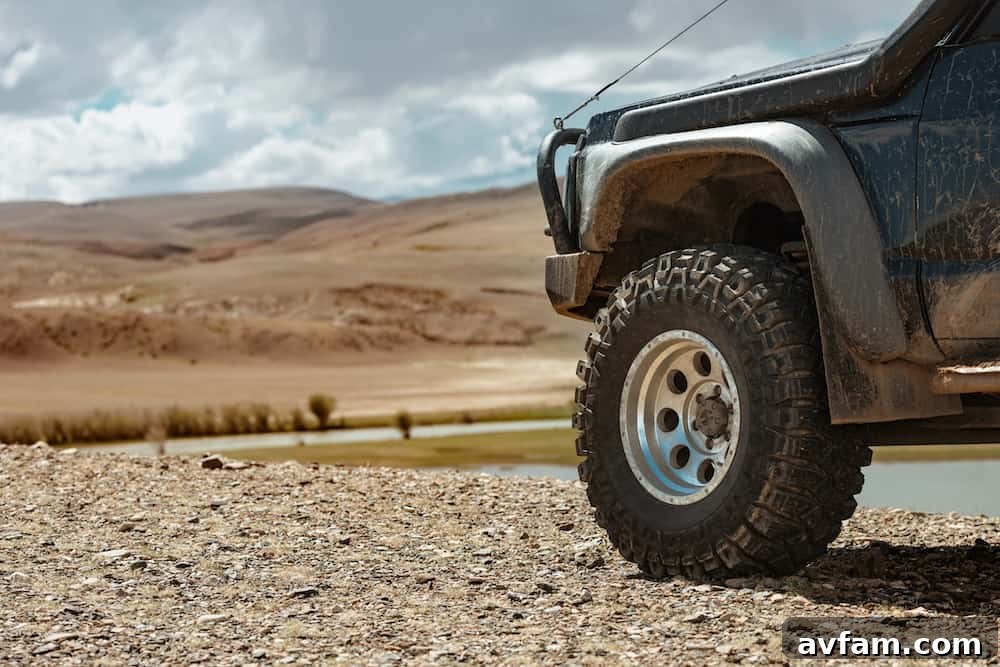
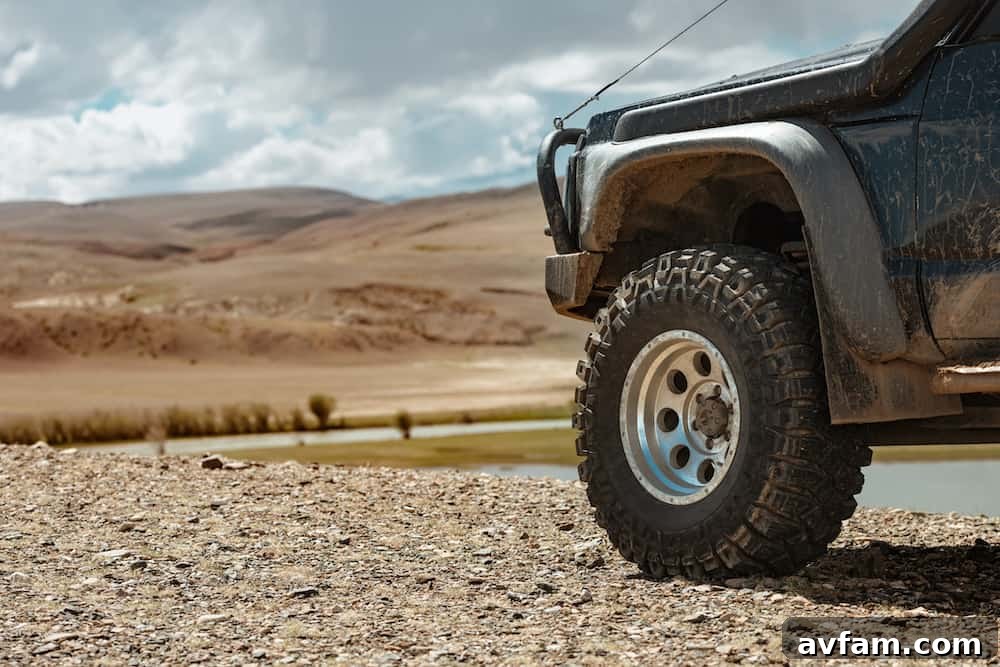
The visual distinction of mud-terrain tires is immediate: they feature profoundly aggressive tread patterns with massive, widely spaced tread blocks and deep voids. This design is crucial for their performance, allowing the tires to effectively dig into and self-clean, expelling mud and debris from the tread to maintain continuous grip. The large lugs provide immense biting power, essential for crawling over rocks and navigating through sticky, thick mud.
Beyond the tread, MT tires are constructed with heavy-duty materials, often featuring multiple plies in the sidewall to protect against punctures and cuts from sharp rocks and branches. Reinforced shoulder blocks and aggressive sidewall patterns also contribute to traction when aired down or in deep ruts, providing grip even when the main tread isn’t fully engaged. These structural enhancements make MT tires exceptionally durable and robust, capable of withstanding the rigors of extreme off-roading.
On-Road Compromises and Specific Applications
While mud-terrain tires reign supreme off-road, their specialized design inevitably leads to compromises on paved surfaces. Drivers can expect significantly increased road noise due to the large, open tread blocks, a less comfortable ride, and reduced fuel efficiency compared to all-terrain or all-season tires. Their aggressive tread also wears more quickly on asphalt, and handling characteristics may feel less precise. Consequently, MT tires are not recommended for vehicles that spend the majority of their time on pavement.
Mud-terrain tires are primarily designed for dedicated off-road vehicles such as modified Jeeps, specialized trucks, and SUVs that are frequently used for rock crawling, mud bogging, or traversing extremely difficult trails. They are essential for adventure seekers who prioritize maximum off-road capability above all else, making no apologies for their rugged appearance and formidable performance.
Introducing Hybrid Off-Road (RT/XT) Tires: The Best of Both Worlds?
Hybrid off-road tires, often marketed as Rugged Terrain (RT) or Extreme Terrain (XT) tires, represent a relatively newer category designed to bridge the gap between all-terrain and mud-terrain tires. They aim to deliver a more aggressive look and enhanced off-road performance than traditional AT tires, without fully embracing the on-road compromises inherent in pure MT tires. This makes them an increasingly popular choice for drivers seeking a balance of formidable off-road aesthetics and capability with acceptable on-road manners.
Design Philosophy and Tread Features
The design of hybrid off-road tires is a careful blend of features from both AT and MT categories. They typically sport a more aggressive tread pattern than standard all-terrains, often featuring larger, more widely spaced tread blocks that extend onto the sidewall for added protection and grip in deep ruts. This gives them a muscular, off-road-ready appearance that many enthusiasts desire. However, unlike mud-terrains, hybrid tires often incorporate smaller sipes and a more refined block design in the center tread to maintain better contact with the road, reducing noise and improving handling on pavement.
The rubber compounds used in hybrid tires are also often optimized to be more durable on asphalt than mud-terrains, contributing to a longer tread life for daily driving while still offering resistance to chips and cuts off-road. This intelligent engineering allows them to shed mud and debris more effectively than ATs, while also providing a smoother, quieter ride than MTs.
Who Benefits Most from Hybrid Off-Road Tires?
Hybrid off-road tires are the ideal solution for drivers who find themselves frequently venturing off the beaten path—perhaps almost every weekend—but who also rely on their vehicle for daily commutes and extended highway travel. If you love the aggressive look and enhanced capability for moderate to challenging trails, but aren’t willing to sacrifice too much in terms of road noise, ride comfort, or tread life for everyday driving, hybrid off-road tires are likely your best choice. They cater to the adventurous spirit that doesn’t want to compromise on practicality.
Demystifying All-Season (AS) Tires: The Pavement Specialist
All-season tires are the most common type of tire found on passenger vehicles, designed to provide reliable performance across a broad spectrum of everyday weather conditions. They are the workhorse for millions of drivers who primarily navigate paved roads, offering a blend of comfort, fuel efficiency, and consistent traction in dry, wet, and light snow conditions.
Tread Design and Performance for Everyday Driving
Unlike their off-road counterparts, all-season tires feature a more refined tread pattern with smaller, more numerous tread blocks and extensive siping. This design maximizes the contact patch with the road, promoting even wear, a quiet ride, and excellent handling characteristics on dry pavement. The intricate siping and circumferential grooves are crucial for channeling water away from the tire’s surface, significantly reducing the risk of hydroplaning and maintaining grip in rainy conditions.
The rubber compound used in all-season tires is formulated to remain flexible in a wide range of temperatures, from warm summer days to mild winter conditions. While they offer adequate traction in light snow, it’s important to understand their limitations. They are not designed for severe winter conditions, such as deep snow or ice, where dedicated winter tires with specialized compounds and tread patterns would perform significantly better.
Ideal Applications and Limitations of All-Season Tires
All-season tires are the standard equipment for most sedans, minivans, crossovers, and many SUVs. They are perfect for drivers who primarily drive on paved roads and experience mild to moderate weather variations throughout the year. They offer a comfortable, quiet ride and contribute positively to fuel economy due to their lower rolling resistance compared to more aggressive tire types.
However, for regions that experience harsh winters with heavy snowfall and icy roads, relying solely on all-season tires can be a safety concern. In such climates, switching to dedicated winter tires for the colder months is highly recommended to ensure maximum safety and performance. Similarly, all-season tires are completely unsuitable for any significant off-road driving, as their tread patterns lack the necessary aggression and durability for loose or challenging surfaces.
Key Factors Influencing Your Tire Choice
Selecting the ideal tire goes beyond just understanding categories; it involves considering several critical factors that directly impact your driving experience and the longevity of your tires:
- Driving Habits and Environment: Are you a daily commuter, a weekend explorer, or an extreme adventurer? The type of roads and terrains you frequent most will dictate the necessary performance characteristics.
- Vehicle Type and Specifications: Heavier vehicles, those with higher horsepower, or specific suspension setups might require tires with particular load ratings, speed ratings, or construction for optimal safety and performance.
- Local Climate and Weather Conditions: Your geographical location and its typical weather patterns (e.g., heavy rain, snow, extreme temperatures) will strongly influence whether an all-season tire is sufficient or if specialized tires (like winter tires, beyond the scope of this article) are necessary.
- Tire Construction and Materials: Beyond tread patterns, the internal construction (e.g., ply rating, belt materials) and rubber compounds significantly affect a tire’s durability, flexibility across temperatures, and resistance to damage.
- Cost and Longevity: While an initial investment in premium tires can be higher, they often offer superior performance, better fuel efficiency, and a longer lifespan, leading to better long-term value.
- Noise and Comfort: For daily drivers, the level of road noise and the smoothness of the ride are crucial comfort factors, with all-season tires generally being the quietest and mud-terrains the loudest.
- Fuel Efficiency: The tread design and rolling resistance of a tire directly impact your vehicle’s fuel consumption, with less aggressive patterns typically yielding better mileage.
Making the Right Choice: A Concluding Thought
The diverse world of tires offers specialized solutions for nearly every driving scenario. All-terrain tires stand out for their adaptability, offering a solid blend of on-road civility and off-road capability for the occasional adventurer. Mud-terrain tires are the undisputed champions for extreme off-road conditions, delivering unmatched traction where others fail, albeit with compromises on pavement. Hybrid off-road tires skillfully bridge this divide, providing an aggressive look and enhanced trail performance without completely sacrificing daily driving comfort. Lastly, all-season tires remain the pragmatic choice for most passenger vehicles, offering reliable performance on paved roads in varied, non-extreme weather.
Ultimately, the best tire for you is one that aligns perfectly with your individual driving needs, your vehicle’s demands, and the specific conditions you encounter. By carefully considering the strengths and limitations of all-terrain, mud-terrain, hybrid off-road, and all-season tires, you can confidently select the set that not only enhances your driving experience but also ensures your safety and satisfaction on every journey.