

Your home already knows when to turn the lights on, adjust the thermostat, and lock the doors. But most smart home systems overlook a critical area: your physical health.
Americans spend roughly 90% of their time indoors, according to the Environmental Protection Agency. That means the environment inside your home has an outsized impact on your wellbeing. If your living space doesn’t support movement, recovery, and healthy habits, motivation alone won’t carry you. The good news: the same connected technology that dims lights at bedtime can also shape a home that actively supports your fitness goals.
Why Your Home Environment Shapes Your Fitness More Than Willpower
Buying a treadmill or clearing space for a yoga mat helps, but the surrounding environment plays a larger role than most people realize.
Indoor air can be two to five times more polluted than outdoor air. Poor ventilation, off-gassing from furniture, and cooking fumes all contribute. If you feel unusually sluggish during a home workout, air quality could be the reason. A smart air quality monitor that tracks particulate matter, CO2, humidity, and VOCs can reveal issues you wouldn’t detect otherwise.
Lighting is another major factor. Research shows that bright, blue-enriched light during the day boosts alertness and performance, while the same light at night disrupts melatonin production and sleep. Smart bulbs that shift color temperature across the day aren’t merely a comfort feature: they influence energy, focus, and recovery.
Temperature also affects performance. Exercising in cooler conditions (around 64–68°F) can improve endurance compared with warmer environments. If your home gym reaches 85°F in summer, you’ll likely struggle more and perform worse. Programming a smart thermostat to cool a workout space before your scheduled session removes a common excuse.
This doesn’t require buying every sensor on the market. The point is to fix environmental barriers first; when the space supports you, workouts become easier.
The Digital Backbone: How Fitness Apps Connect Your Wellness Ecosystem

Smart home devices collect data. Wearables collect data. Data scattered across multiple apps is rarely useful. The real benefit comes when these pieces communicate, and fitness apps often serve as the central hub.
A well-designed fitness app pulls heart rate from your wearable, logs workouts, tracks sleep, and adapts training plans based on recovery metrics. Some apps integrate with smart scales, blood pressure monitors, and nutrition trackers, creating a single dashboard where your home wellness ecosystem makes sense.
Quality matters. A poorly built app creates data silos and frustration; a polished one integrates your Apple Watch, smart scale, air quality monitor, and workout history into a coherent health picture. That ease of integration is why people stick with certain apps long-term.
Market trends reflect this: the global fitness app market reached $1.54 billion in 2023 and continues growing as users adopt connected, personalized tools that outperform generic content.
When choosing fitness apps for a smart home, prioritize:
- Device compatibility: Confirm the app syncs with your wearable, scale, or heart rate monitor.
- Data export and sharing: Prefer apps that let you export or share data rather than locking it in.
- Automation triggers: Look for IFTTT, Apple Shortcuts, or other automation support to link workouts with home systems.
- Offline functionality: Ensure basic tracking works without constant connectivity.
The best system is not the most expensive one; it’s the one where devices communicate without friction.
Room-by-Room Wellness Integration: A Practical Walkthrough
You don’t need a full home gym to make a difference. Small, intentional changes in the rooms you already use can yield measurable results.
1. Living Room
Most home workouts happen in the living room. Short-format and bodyweight routines are popular and fit well in that space.
Options to consider: a smart TV or streaming device for guided workouts, a compact resistance band set stored nearby, and a smart speaker for voice-controlled timers and music. If your fitness app supports Chromecast or AirPlay, you can mirror workouts to the big screen easily.
One effective tactic: schedule a smart plug to cut TV power at a set time. Reducing sedentary screen time by even 30 minutes daily links to measurable cardiovascular improvements, and a short, scheduled workout right after the TV turns off can replace passive habits with active ones.
2. Bedroom
Sleep is where recovery happens. The National Sleep Foundation recommends 60–67°F for optimal sleep. Use a smart thermostat to maintain temperature, add blackout smart blinds, and consider a wake-up light that simulates sunrise. Wearables that track sleep stages and recovery scores can feed this data to your fitness app and help adjust daily training intensity.
3. Kitchen
Nutrition often gets overlooked but matters most for results. Smart kitchen scales that connect to calorie-tracking apps remove guesswork. A countertop smart display can show daily macro targets alongside recipes to simplify meal planning.
4. Garage or Spare Room
Even a 6×8-foot area can serve as a functional gym. Key items:
- A fan or portable AC on a smart plug to cool the space before workouts
- A rubber floor mat to protect flooring and reduce noise
- A wall-mounted tablet or old phone dedicated to your workout app
- An adjustable dumbbell set to cover a wide weight range in a small footprint
- A Bluetooth speaker for cues and motivation
This basic setup typically costs $300–600, often paying for itself compared with monthly gym memberships.
Separating Useful Tech From Expensive Gimmicks
Not all wellness tech is worth the investment. Patterns show which products are kept and which end up unused.
Worth the investment:
- Smart wearables with open APIs (Garmin, Apple Watch, Whoop) that feed multiple apps
- Air quality monitors to identify issues you can address
- Smart lighting with circadian settings backed by research
- Connected scales that track trends over time and sync to your app
Overhyped or unnecessary for most people:
- Smart water bottles that only remind you to drink
- Expensive AI mirrors when a tablet delivers similar content
- Recovery devices with app connectivity where the app adds little value
Ask whether a device solves a real problem for you. A $30 resistance band used consistently beats an expensive item that ends up unused. Also watch for subscription fatigue: calculate the two-year cost including any required monthly fees before purchasing.
Building a System That Runs Without Motivation
Motivation varies. Long-term consistency comes from reducing friction, not sheer willpower. Integrating wellness tech removes barriers: when temperature, music, workout plans, and tracking are already set up, the effort to start is much lower.
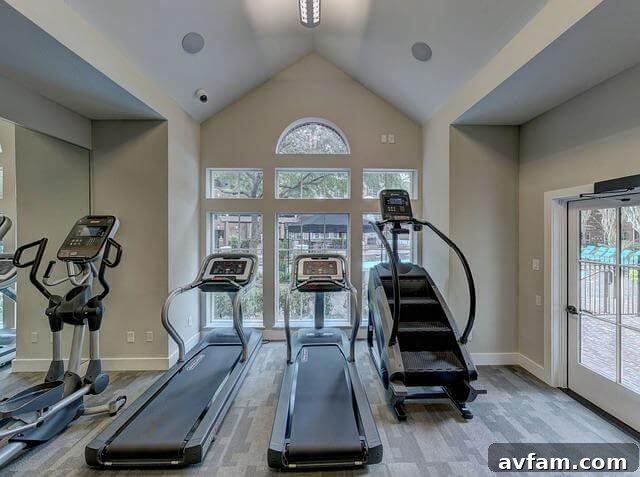
Forming a habit takes time—research suggests an average of 66 days—so minimize friction during that window. Useful automations include:
- Morning trigger: Wake alarm, lights shift to energizing daylight, coffee maker starts, fitness app sends the day’s workout.
- Pre-workout trigger: 15 minutes before exercise, thermostat adjusts the workout area, a smart speaker announces the pending session.
- Post-workout trigger: Workout logged, lights shift to recovery mode, and a display shows hydration and protein targets.
These automations are available through Apple Shortcuts, Google Routines, and Alexa Routines and typically require no advanced technical skills. The goal is to make the healthy choice the default choice; when the easier option is the healthier one, consistency follows.
Start With One Room and One Problem
Resist the urge to overhaul everything at once. Pick the room where you’re most active and solve the single biggest friction point—temperature, a structured plan, or sleep tracking, for example. Use the improvement for a month, then add the next piece.
Homes that genuinely support health aren’t defined by gadget count. They’re defined by clear-purpose technology that connects to a larger system and quietly removes barriers between you and regular exercise.
Tomorrow is a terrible fitness plan. A well-set-up home removes that option and makes progress the default.