
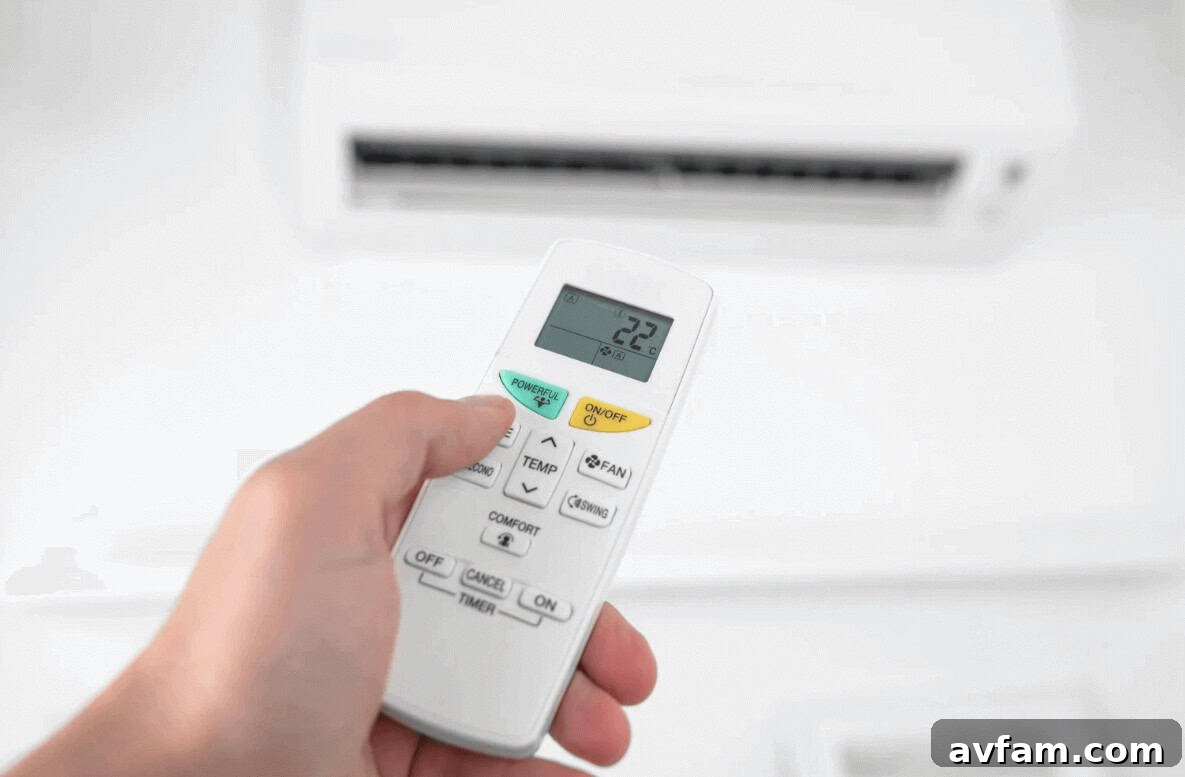
Every summer, the familiar pattern unfolds: the thermostat inches lower, the air conditioning hums longer, and utility bills begin their disheartening ascent. If you’re a homeowner who recognizes this annual struggle, you understand the constant tension between maintaining a comfortable indoor environment and keeping energy costs within reason.
The good news is that achieving relief from soaring cooling expenses doesn’t necessarily require expensive system overhauls or professional contractors. Over the years, I’ve discovered that a series of small, intentional, do-it-yourself adjustments can cumulatively make a substantial difference in monthly utility statements. These aren’t just quick fixes; they are sustainable habits that empower you to take control of your home’s energy footprint.
Mastering the Fundamentals: Seal Leaks and Prioritize Filter Changes
Much of the energy your air conditioning system expends is wasted on efforts that never contribute to cooling your living space. This inefficiency often stems from overlooked air leaks around windows, door frames, electrical outlets, plumbing penetrations, and poorly sealed ductwork joints. These gaps, often barely noticeable to the eye, act as invisible pathways for conditioned air to escape and unconditioned, hot air to infiltrate your home. According to the Department of Energy, air conditioning can account for approximately 12% of total household electricity costs, making even modest efficiency gains translate into significant savings over an entire cooling season.
My journey to lower AC bills began with a simple diagnostic: I walked through my house on a breezy day with an incense stick, carefully observing where the smoke wavered or bent, indicating drafts. This low-tech method quickly revealed numerous problem spots. A few hours and a minimal investment in weatherstripping and caulk later, my home felt noticeably tighter. Sealing these leaks prevents your AC from constantly battling against its own environment, reducing its workload and extending its lifespan.
Another swift victory I nearly overlooked was the regular replacement of air filters. A clogged filter is akin to trying to breathe through a thick blanket. It forces your AC’s blower motor to work significantly harder to push air through a dense barrier of accumulated dust, dirt, and allergens. This increased strain not only consumes more electricity but also reduces airflow, diminishes cooling capacity, and can even lead to more serious system issues like coil freezing. Now, it’s a non-negotiable monthly ritual during the summer months – a two-minute task that costs almost nothing but makes an immediate, palpable difference in airflow at the vents. Different filter types, from basic fiberglass to high-efficiency pleated filters with higher MERV ratings, offer varying levels of filtration and airflow. While higher MERV ratings capture more particulates, they can sometimes restrict airflow more if not changed regularly, making the frequency of replacement even more crucial.
These initial steps – sealing leaks and changing filters – are not one-time projects but foundational habits. Stacking these consistent maintenance routines is one of the most reliable ways to reduce AC energy costs without the expense of replacing major equipment. True savings materialize when you proactively check seals before summer, replace filters on a strict schedule, and address minor issues before they escalate into costly repairs or significant energy waste.
Optimizing Airflow: Empowering Your AC to Work Smarter

Once I addressed the basic issues of air leaks and dirty filters, my attention shifted to how efficiently the conditioned air was distributed throughout my home. Even the most meticulously maintained air conditioning system cannot perform optimally if the air it produces is obstructed or prevented from circulating freely. Understanding and optimizing airflow patterns are critical for consistent comfort and energy efficiency.
I conducted a thorough inspection of my home’s vents, quickly discovering several that were either partially or completely closed, or worse, blocked by furniture. A sofa pushed directly against a supply vent, a tall bookshelf parked squarely in front of a return vent – each of these obstructions created unnecessary resistance. Blocked vents force the system to work harder, creating pressure imbalances and localized hot spots, while delivering less cool air to the rooms that actually need it. The simple act of repositioning furniture just a foot or two away from all supply and return vents made an immediate and noticeable difference. Air circulated more evenly, eliminating stagnant areas, and my AC unit began cycling off sooner because rooms reached their set temperature much more rapidly.
Ceiling fans were another underutilized asset in my quest for lower bills. Many homeowners overlook their potential or use them incorrectly. During the summer, setting ceiling fans to rotate counterclockwise pushes cool air downward, creating a refreshing “wind-chill effect” on occupants. This effect makes a room feel several degrees cooler than the actual thermostat reading, often allowing me to comfortably raise my thermostat setting by two or three degrees without any perceived loss of comfort. A ceiling fan uses only a fraction of the electricity consumed by your air conditioner, so even a modest increase in your thermostat setting, coupled with consistent fan use, translates into significant savings over weeks and months of steady operation. Don’t forget that ceiling fans can also be beneficial in winter when set to clockwise, gently pushing warm air near the ceiling back down into the living space, further optimizing energy use year-round.
Proactive Heat Management: Stopping Heat Before It Starts
Initially, my focus was entirely on making my AC system run more efficiently. However, a pivotal realization shifted my strategy: the smartest approach is to give the AC less work to do in the first place. By actively reducing heat gain before it even enters your living space, your cooling system cycles less frequently and for shorter durations, which is where the most substantial summer savings begin to accumulate.
Windows are typically the biggest culprits for unwanted heat gain in most homes. Sunlight streaming through glass, especially on south- and west-facing windows during peak afternoon hours, can dramatically increase indoor temperatures. I applied reflective window film to these problematic windows, which helps bounce solar radiation away before it can heat the interior. Complementing this, I make a conscious effort to close blinds, shades, or curtains on those sides of the house during the hottest parts of the day. This combination is surprisingly effective and remarkably inexpensive. For bedrooms, especially where darkness is desired, blackout curtains are an excellent investment, providing both thermal insulation and light control.
Beyond structural changes, I also identified and modified several daily habits that were inadvertently working against my cooling efforts. Operating heat-generating appliances like ovens or clothes dryers in the middle of a scorching afternoon directly pumps significant amounts of heat into your home. Your air conditioner then has to work overtime to remove every bit of that added heat. My solution was simple: during the hottest hours, I now opt for stovetop cooking or grilling outdoors, and I run the dryer after sunset or in the early morning. Similarly, dishwashers and even incandescent light bulbs contribute to indoor heat, so consider running dishwashers at night and switching to energy-efficient LED lighting.
The final, and perhaps most impactful, area I addressed was my attic. The attic acts as a crucial buffer zone between your roof, which absorbs intense solar radiation, and your living spaces. Inadequate attic insulation allows this radiant heat to transfer directly downwards, making upstairs rooms uncomfortably warm. I spent a weekend adding another layer of blown-in insulation, ensuring it met recommended R-values for my climate zone. The transformation was remarkable; the upstairs rooms immediately felt significantly cooler and more consistent in temperature with the rest of the house, no longer feeling five degrees warmer. For homeowners genuinely committed to cutting cooling costs, investing in attic insulation and proper attic ventilation often yields a higher return on investment than almost any other home improvement, as it tackles the root cause of heat infiltration.
Smart Thermostat Habits for Real Savings
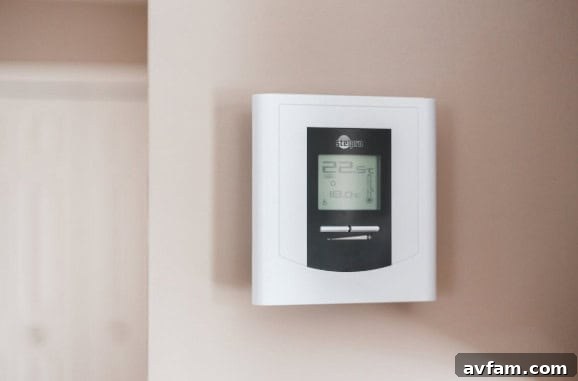
All the effort put into sealing leaks, optimizing airflow, and preventing heat gain will only go so far if your thermostat settings are working against you. How you set your thermostat, and the consistency with which you adhere to those settings, has a direct and profound impact on your utility bills. It’s the central command system for your cooling strategy.
My personal rule of thumb is to maintain a comfortable but energy-efficient temperature of 78°F when I am home and awake. When leaving the house for several hours or more, I bump the setting up by a few degrees, typically to 80-82°F. This strategy ensures the AC isn’t cooling an empty house unnecessarily, but also prevents the indoor temperature from climbing too high, which would require the system to work harder to bring it back down upon my return. A programmable or smart thermostat is an invaluable tool for automating these temperature shifts. It learns your schedule, allows for remote adjustments via a smartphone app, and can even integrate with other smart home devices, eliminating the need to remember manual adjustments or rely on willpower after a long, tiring day. Many smart thermostats also provide detailed energy usage reports, offering insights into your consumption patterns.
One common, yet counterproductive, habit I had to unlearn was the urge to crank the AC down to an excessively low setting like 68°F the moment I walked in the door on a hot day. The crucial point to understand is that an air conditioning system does not cool a space any faster at a lower setting. Instead, it simply runs for a longer duration, relentlessly trying to achieve an unnecessarily cold target, thereby burning through electricity the entire time. A more effective and economical approach is to pair a slightly higher, more realistic thermostat setting (like 78°F) with the strategic use of ceiling fans. The evaporative cooling effect from the fan blades moving air across your skin creates enough perceived coolness that I genuinely do not notice those extra degrees on the thermostat dial, achieving the same level of comfort at a significantly lower operational cost.
Lower Bills Begin with the Power of Small, Stacked Fixes
The beauty of the strategies I’ve outlined is that none of them demand professional expertise, specialized tools, or a hefty budget. Implementing weatherstripping around leaky doors and windows, committing to regular filter changes, strategically utilizing ceiling fans, applying inexpensive window film, and adopting smarter thermostat habits are all straightforward DIY projects. Each of these improvements, taken individually, involves minimal cost and effort.
However, their true power lies in the “stacking effect.” Each small fix independently trims a modest amount from your monthly utility bills. But when combined and consistently applied over an entire cooling season, these individual savings compound in ways that can be genuinely surprising and incredibly rewarding. They create a holistic approach to home cooling that is both efficient and sustainable. If you’ve been deferring these simple yet impactful improvements, there’s no better time than the present to start. Taking control of your home’s energy efficiency not only saves you money but also enhances your comfort and contributes to a more sustainable lifestyle.