
Unlocking the Connected Home: How Lowe’s Iris Revolutionized Smart Living
The landscape of modern living is continuously evolving, with smart home technology rapidly transforming how we interact with our personal spaces. Once a futuristic concept, the connected home has swiftly moved into the mainstream, driven by a booming market and innovative solutions from a diverse range of companies. From tech giants to burgeoning startups, businesses are eager to offer tools that simplify the control and monitoring of essential home systems, encompassing everything from ambient temperature and robust security to efficient energy usage.
In this rapidly expanding arena, a significant and somewhat unexpected player emerged, signaling a major shift in accessibility and adoption: Lowe’s. Not another Silicon Valley titan, but the world’s second-largest home improvement retailer, Lowe’s made a bold entry into the smart home market. Traditionally synonymous with tools, hardware, and essential home goods, Lowe’s strategically repositioned itself, inviting consumers to consider them a purveyor of cutting-edge technology with the introduction of their groundbreaking smart home product: Iris.
Lowe’s Vision: Making Smart Homes Accessible with Iris
Lowe’s strategic move into the smart home sector was underpinned by a clear vision: to democratize advanced home management. As articulated by the company upon Iris’s launch:
“Lowe’s is entering the emerging smart home market, with an affordable, cloud-based home management system: Iris. Iris gives customers the ability to control and interact with their home from anywhere using their smart phone or computer. Iris will be available in Lowe’s stores and on Lowes.com in mid-2012.”
This statement underscored Lowe’s commitment to making sophisticated home automation accessible to a broad audience, moving away from the perception that such technologies were exclusively for the affluent. By leveraging their extensive retail presence and established customer trust, Lowe’s aimed to become the go-to destination for smart home solutions.
Greg Bridgeford, Lowe’s executive vice president of business development, further elaborated on this transformative strategy: “Because of Lowe’s partnerships with manufacturers, utilities and service providers, Lowe’s has the ability to offer a simple, intuitive home management solution at a great value. Lowe’s, through Iris, is working to connect the broadest range of products in the industry and deliver the benefits of a smart home solution that were previously only available to the most affluent consumers.”
This insight reveals the core pillars of Iris’s success: strategic partnerships, intuitive design, and an unparalleled value proposition. By collaborating with a diverse ecosystem of manufacturers and service providers, Iris aimed to achieve extensive product compatibility, a critical factor for widespread smart home adoption. This approach ensured that consumers weren’t locked into a single brand’s ecosystem but could seamlessly integrate a variety of devices under the Iris umbrella.
Comprehensive Control at Your Fingertips: The Power of Iris
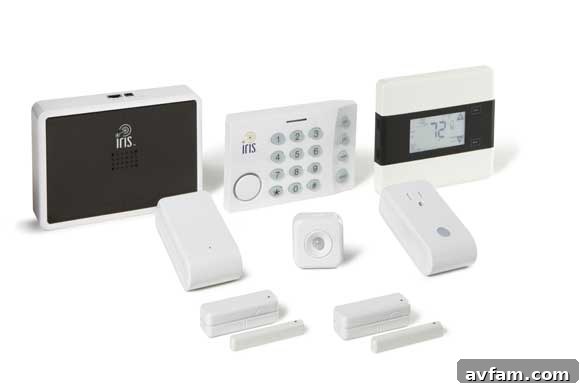
The true appeal of Iris lay in its promise of comprehensive remote control and monitoring capabilities. Lowe’s portfolio of connected products, managed through the Iris system, empowered customers to oversee and manage their homes from virtually any mobile device or computer. This unprecedented level of control encompassed a wide array of functionalities designed to enhance both convenience and peace of mind:
- Climate Management: Users could remotely adjust thermostats, optimizing home temperatures for comfort upon arrival or to save energy while away.
- Enhanced Security: From intelligent door locks that could be secured or unlocked remotely to advanced video cameras offering live feeds and recordings, Iris provided robust security features.
- Smart Lighting: The ability to control lights, whether turning them on or off, dimming them, or setting schedules, allowed for energy savings, convenience, and the creation of personalized ambiance.
- Appliance Control: Certain appliances could be integrated, enabling remote power management and status checks, adding another layer of convenience.
- Proactive Protection: Beyond basic security, Iris incorporated a suite of sensors including door and window sensors, motion detectors, and crucial fire and carbon monoxide sensors, providing real-time alerts and early warnings for potential threats.
This modular and scalable approach was central to Iris’s mass-market appeal. Customers could begin with a starter kit focusing on security or energy management and gradually expand their system by adding more devices as their needs evolved and their budget allowed. This flexibility made smart home technology less daunting and more adaptable to individual lifestyles and financial considerations.
Intuitive Interface: The Gateway to a Smarter Home
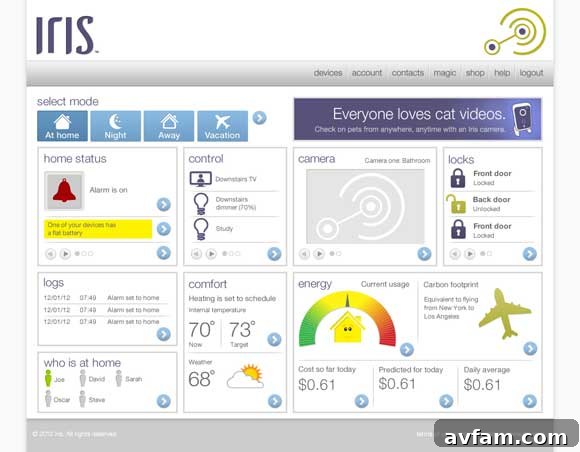
A crucial component of any smart home system is its user interface. Iris excelled in this regard, offering a web and mobile interface that was not only visually appealing but also remarkably slick and easy to navigate. The design prioritized user experience, ensuring that controlling complex home systems felt intuitive rather than complicated.
Central to this ease of use were the customizable dashboards. These allowed users to have a complete overview and control over all integrated systems from a single screen. Whether checking the status of a locked door, monitoring indoor temperature, or reviewing security camera footage, the dashboard provided a centralized hub for managing every aspect of the connected home. The visual layout, often utilizing clear icons and straightforward commands, minimized the learning curve, making sophisticated home automation accessible even to those less technologically inclined.
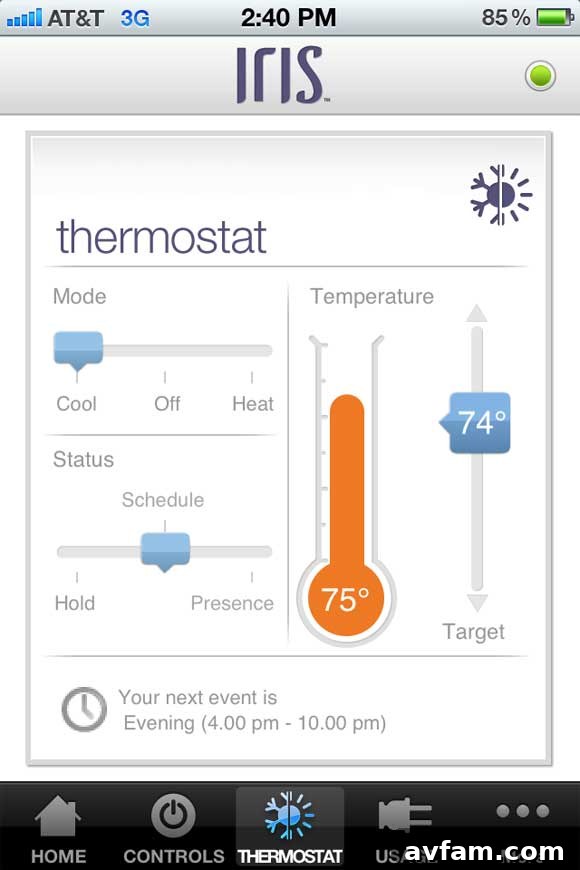
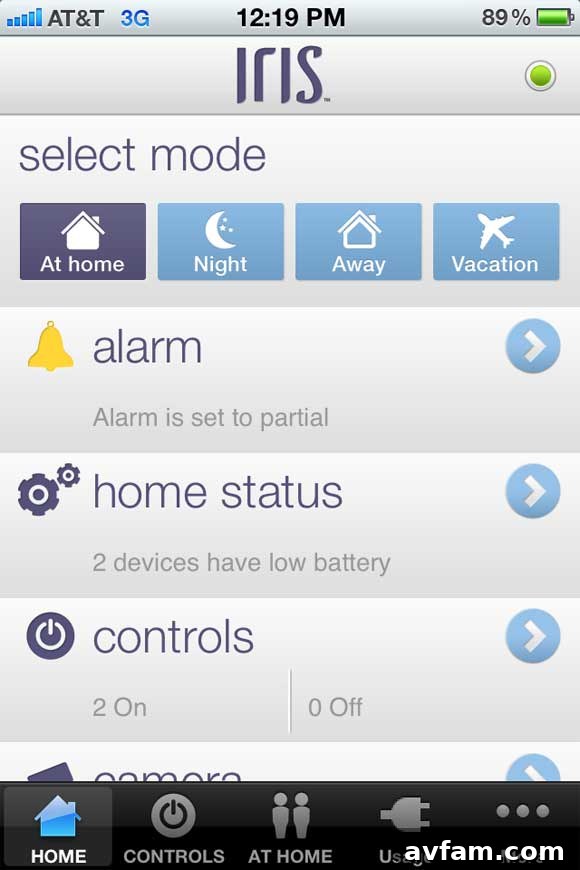
The mobile applications, available for both iOS and Android devices, mirrored the web interface’s functionality and aesthetic, ensuring a consistent and seamless user experience across platforms. This multi-platform accessibility was vital for users who constantly shift between their computers and mobile devices, providing uninterrupted control over their smart home environment.
Real-World Impact: Enhancing Security and Convenience
Beyond the technical specifications, the true value of Iris became apparent in its practical applications, particularly concerning security and daily convenience. Many users found its security features to be a game-changer for peace of mind, especially when away from home. The frustration of forgetting to set light timers before a vacation, or wishing one had left a few lights on (or conversely, turned off forgotten ones) became a thing of the past.
With Iris, managing home ambiance during absence was simplified to a few taps. Logging in and selecting a ‘vacation mode’ could automatically simulate occupancy by cycling lights, ensuring the home always appeared lived-in. This not only added a layer of security by deterring potential intruders but also allowed for a more relaxed and worry-free holiday. Furthermore, checking on the status of doors and windows, or even viewing live camera feeds from afar, provided invaluable reassurance.
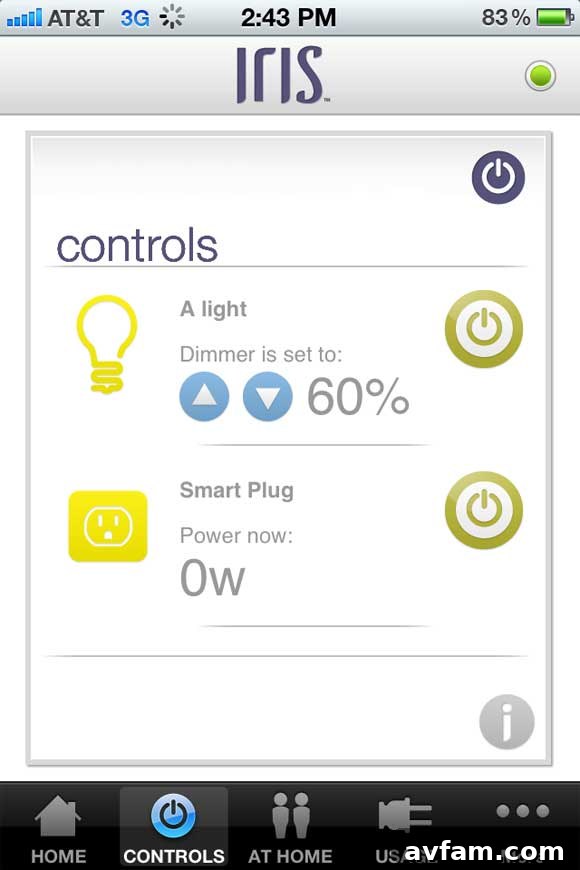
The benefits extended beyond vacations. For everyday life, Iris enabled unparalleled convenience: adjusting the thermostat from your office before heading home, ensuring a perfectly comfortable environment upon arrival; or verifying that all doors are locked after an unexpected phone call, all from the palm of your hand. For busy individuals or families, these small conveniences aggregate into significant time savings and reduced daily stress.
Embracing the Smart Home Future
Lowe’s Iris represented a pivotal moment in the evolution of the smart home market. By offering an affordable, scalable, and user-friendly system, Lowe’s successfully bridged the gap between complex, high-end home automation and the everyday consumer. It demonstrated that advanced home management was not a luxury but an attainable enhancement for modern living.
The success of Iris highlighted the growing demand for integrated solutions that simplify life, enhance security, and promote energy efficiency. Its introduction spurred further innovation in the retail sector and underscored the importance of accessibility in driving the widespread adoption of new technologies. As smart home ecosystems continue to expand and integrate, platforms like Iris paved the way for a future where connected living is not just a possibility, but a standard expectation.
Are you ready to embrace the convenience, security, and efficiency that a connected home can offer? The smart home plunge is more accessible than ever before, inviting everyone to experience the future of living, today.