
Revolutionizing Home Energy: The Dawn of Tesla’s Battery Storage Solutions
The landscape of residential energy is undergoing a profound transformation. While traditional home generators have long offered a measure of security during power outages, the concept of a true home battery system presents a far more integrated and sustainable vision for managing household electricity. A pivotal moment in this evolution arrived with the visionary entrepreneur Elon Musk, founder of Tesla, SpaceX, and SolarCity. Musk captivated the world when he announced plans for a “very large utility scale home battery,” signaling a significant shift towards making homes more energy independent and efficient.
This groundbreaking announcement wasn’t just about a new product; it represented a fundamental reimagining of how we consume, store, and interact with electricity in our daily lives. The promise of a sophisticated home energy storage system suggested not only backup power but also smart energy management capabilities that could reshape household finances and environmental impact.
The Vision Behind Home Energy Storage
At its core, the appeal of a home battery system lies in its ability to empower homeowners with greater control over their energy consumption. These advanced batteries are designed to power up during off-peak hours, typically overnight, when energy companies charge significantly less for electricity. Once charged, they can then be seamlessly activated during the day to supply power to a home, effectively insulating residents from higher peak-hour rates and enhancing energy resilience.
While the initial investment in home batteries can amount to several thousand dollars, their long-term value extends far beyond mere convenience. Many utility companies and government bodies actively encourage the adoption of such technologies by offering substantial rebates and incentives, making these systems more accessible and financially viable for a wider audience. This collaborative effort between innovative manufacturers and supportive public policies is accelerating the transition towards a decentralized and sustainable energy future.
How Home Energy Storage Works: A Smart Approach to Power
The operational principle behind a home battery system is elegantly simple yet powerfully effective. Consider a typical household’s energy usage: demand often peaks in the late afternoon and early evening when electricity is most expensive. By charging the battery during periods of low demand and cheaper rates—often overnight or when solar panels are overproducing—homeowners can “bank” energy for later use. When peak rates kick in, or when the sun isn’t shining, the home can draw power from the battery instead of the grid, leading to significant savings on electricity bills.
Moreover, these systems are increasingly integrated with sophisticated energy management software. This allows homeowners to monitor their energy consumption in real-time, optimize charging and discharging cycles based on weather forecasts, utility rates, and personal preferences, and even control the system remotely via web or smartphone applications. This level of granular control transforms passive energy consumers into active energy managers, fostering a more mindful and efficient approach to power usage.
Maximizing Savings with Time-of-Use Rates
One of the primary financial benefits of home batteries is their synergy with time-of-use (TOU) electricity tariffs. Many utility companies implement TOU rates, charging different prices for electricity at various times of the day, with peak hours being the most expensive. A home battery allows you to arbitrage these price differences: store cheap off-peak electricity and use it during costly peak hours. This strategy can dramatically reduce a household’s monthly electricity expenditure, especially for those in regions with significant rate differentials.
Ensuring Resilience During Power Outages
Beyond financial savings, home battery systems provide invaluable peace of mind. In an era of increasing climate-related weather events and an aging grid infrastructure, power outages are becoming more frequent. A well-integrated home battery acts as an automatic backup power source, seamlessly taking over when the grid goes down. This ensures that essential appliances, lighting, and communication systems remain operational, offering critical safety and comfort when the unexpected occurs. Unlike traditional generators, batteries operate silently, produce no emissions, and require no fuel refills, making them a cleaner and more convenient solution.
Driving Renewable Energy Adoption
For homes equipped with solar panels, a battery system is a natural and powerful complement. Solar panels typically generate most of their power during the midday sun, a time when many households have lower energy demands. Without a battery, this excess solar energy is often sent back to the grid for minimal credit, or simply wasted. A home battery captures this surplus solar energy, storing it for use during the evening or on cloudy days, thereby maximizing self-consumption of renewable energy and further reducing reliance on grid power. This synergy between solar and storage is critical for achieving true energy independence and significantly lowering a home’s carbon footprint.
Tesla’s Pioneering Role and Early Adoption
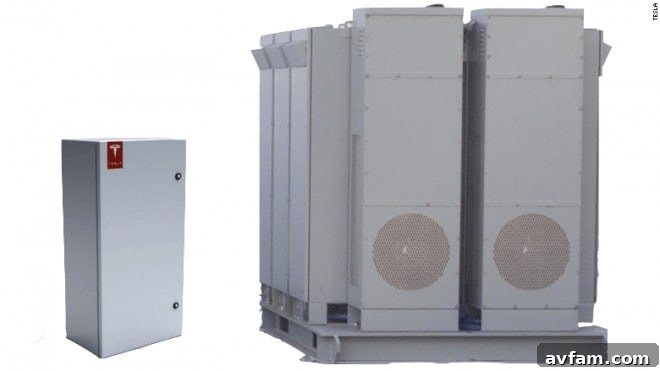
Tesla’s journey into home energy storage was previewed at a battery conference where the company’s Stationary Energy Storage Director, Arch Padmanabhan, unveiled some of the initial blueprints. These plans included a robust 10 kilo-Watt hour (kWh) residential battery, alongside a much larger 400 kWh commercial/utility battery designed for substantial buildings and industrial applications. These early conceptualizations showcased Tesla’s ambition to cater to a diverse range of energy storage needs, from individual households to large-scale enterprises.
Demonstrating its commitment to practical application, Tesla swiftly launched a pilot project offering home batteries to customers of SolarCity (SCTY), a prominent solar power company where Elon Musk also served as chairman. This strategic integration allowed SolarCity clients to experience the tangible benefits of combining solar generation with efficient energy storage. According to company analyst Trip Chowdhry, this pilot program successfully deployed Tesla’s batteries in 330 U.S. households, with a significant majority of these installations concentrated in California, a state known for its progressive energy policies and high adoption rates of renewable technologies.
These early pilot batteries, a precursor to the widely known Powerwall, typically started at an investment of around $13,000. However, the true cost to homeowners was often substantially mitigated by generous incentives. For instance, California’s Pacific Gas and Electric Co. (PCG) offered eligible customers a remarkable 50% rebate, effectively halving the upfront expense and making this cutting-edge technology more accessible. This kind of financial support proved crucial in encouraging early adoption and demonstrating the economic viability of home energy storage.
Technical Specifications and User Experience
The physical design of these initial Tesla batteries was engineered for practical home integration. Measuring approximately three feet high by 2.5 feet wide, they were designed to be compact enough for garage or exterior wall mounting, requiring installation at least a foot and a half off the ground for safety and optimal performance. Beyond their physical attributes, these systems were inherently smart. Homeowners gained the ability to monitor and control their battery systems with unparalleled ease through intuitive web and smartphone applications. This digital interface allowed users to track energy flow, manage charging schedules, and receive real-time performance data, putting advanced energy management capabilities directly into their hands.
The Evolution and Broader Impact of Tesla’s Home Battery
Following the initial announcements and pilot programs, the world eagerly anticipated the official launch of Tesla’s home battery product. While it was initially unclear whether the batteries unveiled for general availability would be identical to those in the pilot program or presented at the conference, Tesla eventually formalized its offering with the introduction of the Tesla Powerwall. This product line has since evolved, demonstrating continuous improvements in capacity, efficiency, and integration capabilities, solidifying Tesla’s position as a leader in residential energy storage.
The introduction of the Powerwall and similar systems from other manufacturers sparked a fundamental shift in the energy sector. It catalyzed a movement towards distributed energy resources, where power is generated and stored closer to the point of consumption, rather than relying solely on large centralized power plants. This decentralization promises a more robust, efficient, and environmentally friendly energy grid for the future.
Costs, Incentives, and Accessibility
While the initial cost of a home battery system can appear substantial, it’s crucial to consider the various factors that influence the overall investment and potential returns. Beyond the manufacturer’s suggested retail price, which covers the battery unit itself, there are additional costs for installation, necessary electrical upgrades, and potentially an inverter if not already integrated. However, these figures are significantly offset by a growing array of financial incentives designed to accelerate adoption.
Federal tax credits, such as the Investment Tax Credit (ITC) in the United States, can cover a substantial percentage of the total system cost, including the battery when installed with solar. State and local incentives, like California’s Self-Generation Incentive Program (SGIP) or specific utility rebates similar to the one offered by Pacific Gas and Electric Co., can further reduce the net cost to homeowners. These programs recognize the public benefit of reducing strain on the grid, enhancing energy resilience, and promoting clean energy, making home batteries a more attractive and financially viable option for many households.
The Future of Sustainable Home Power
The journey of home energy storage, spearheaded by innovations from companies like Tesla, is far from over. As battery technology continues to advance, we can anticipate even greater capacities, longer lifespans, and reduced manufacturing costs, making these systems even more accessible. The integration of artificial intelligence and machine learning will further optimize energy management, allowing homes to predict energy needs and grid conditions with unprecedented accuracy.
Ultimately, home battery systems are more than just a convenience; they are a cornerstone of a sustainable future. They offer a tangible path towards greater energy independence, significant cost savings, and a reduced carbon footprint, empowering homeowners to play an active role in the global transition to clean energy. As these technologies mature and become more widespread, the vision of a resilient, self-sufficient, and environmentally responsible home becomes an increasingly attainable reality for millions worldwide.