
There’s an undeniable allure to hitting the open road, a freedom that only a well-planned road trip can offer. For our family, based in the vibrant landscape of Los Angeles, this means countless opportunities for unforgettable day trips and exhilarating weekend escapes. Yet, before the tires ever meet the asphalt, one ritual remains paramount: ensuring our beloved vehicles are in impeccable condition. This proactive approach isn’t just about avoiding roadside mishaps; it’s about embracing every mile with confidence and peace of mind.
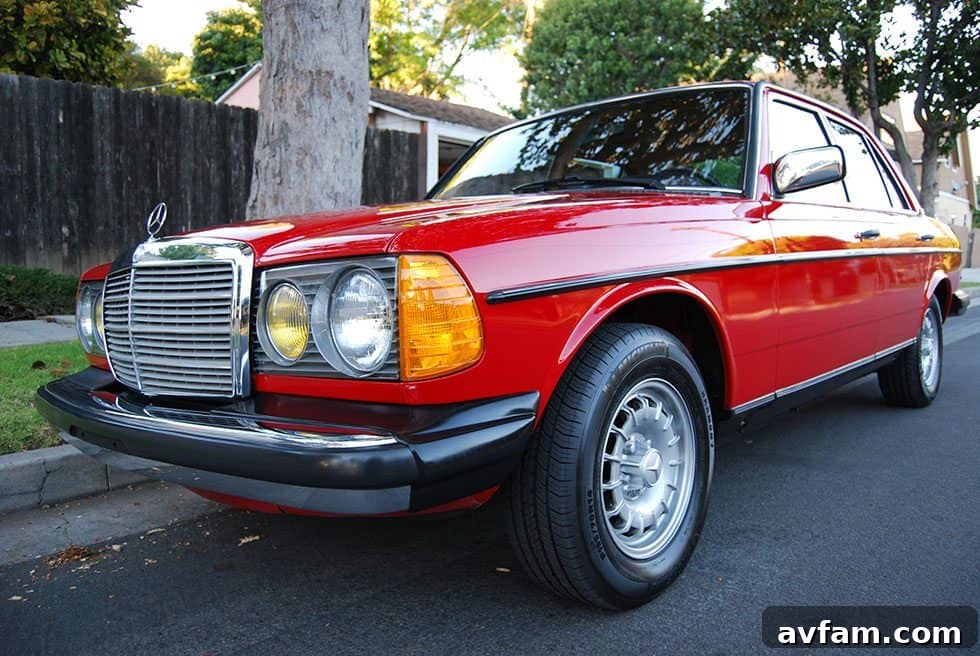
Our household boasts a diverse fleet of three vehicles, each with its unique character and ideal role in our adventures. First, there’s my wife’s elegant 1983 Mercedes-Benz 300D turbo diesel. This classic beauty isn’t just a head-turner; it’s a testament to enduring German engineering, delivering exceptional fuel economy and, remarkably, proving itself to be arguably the most reliable despite its vintage. This Mercedes often takes the lead on longer, scenic drives where comfort and efficiency are key.
For more rugged expeditions, we turn to my 1989 Toyota Land Cruiser FJ62. As our newest acquisition, it has quickly become our go-to for overlanding, camping, and off-road adventures. Equipped with robust four-wheel drive, its slightly “rough around the edges” aesthetic is actually a badge of honor, perfectly suited for navigating challenging trails and enduring the inevitable “desert pinstriping” without a wince. This Land Cruiser thrives where the paved road ends, carrying us into the heart of nature.
Completing our trio is the trusty 2008 Ford F-150, our primary family hauler. This formidable truck offers ample space, comfortably accommodating our son in the back seat alongside an impressive array of coolers, luggage, and camping gear. It’s the workhorse that makes larger family trips and hauling duties effortless. With three vehicles to maintain, none of which are still under warranty, diligent DIY maintenance is not just a hobby—it’s a necessity. This is where our local AutoZone becomes an indispensable partner, providing all the parts and expertise we need to keep our diverse fleet running flawlessly.
While general vehicle maintenance should be a consistent practice, five specific DIY tasks become absolutely crucial before embarking on any extended road trip. These projects are not only quick and straightforward, taking mere minutes to complete, but they also significantly enhance both the performance and safety of your vehicle, ultimately saving you money and stress down the road.
1. Optimal Tire Pressure: The Foundation of Safety and Efficiency
Often overlooked, maintaining correct tire pressure is one of the most impactful DIY checks you can perform. Under-inflated tires are a leading cause of reduced fuel economy, forcing your engine to work harder and diminishing handling responsiveness. Conversely, overinflated tires can lead to an overly harsh ride, uneven tire wear, and compromised traction, increasing the risk of a blowout. The consequences extend beyond your wallet, directly affecting your vehicle’s stability, braking performance, and overall safety.
Checking your tire pressure should always be done when the tires are cold, meaning the car hasn’t been driven for at least three hours or more than a mile. Refer to your vehicle’s owner’s manual or the sticker typically found on the driver’s side door jamb for the manufacturer’s recommended PSI (pounds per square inch). Investing in a quality tire pressure gauge is non-negotiable; we highly recommend dial gauges over the less precise pen-style gauges. Having one in each vehicle ensures you’re always prepared. Regular monitoring, ideally once a month and definitely before any long journey, will maximize tire life, optimize fuel efficiency, and most importantly, keep you and your passengers safe.
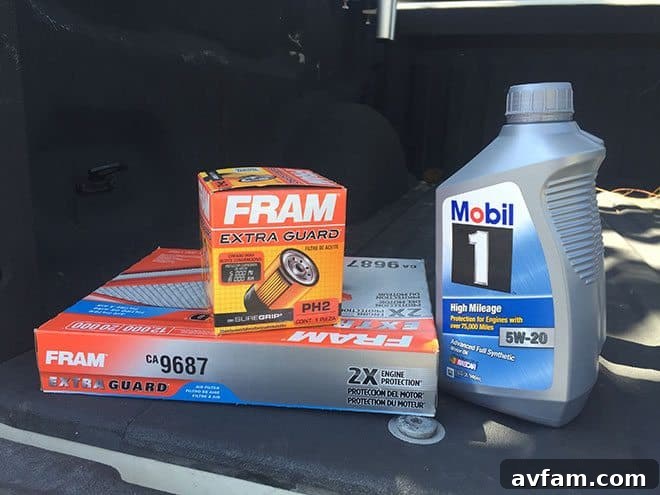
2. The Lifeblood of Your Engine: Checking and Changing Your Oil
Engine oil is the lifeblood of your vehicle, performing multiple critical functions: lubricating moving parts to reduce friction and wear, helping to cool the engine, and cleaning internal components by suspending contaminants. Neglecting regular oil checks and changes can lead to severe, irreversible engine damage. Insufficient oil levels can cause catastrophic metal-on-metal friction, while old, dirty oil loses its lubricating properties and can lead to sludge buildup, choking your engine’s performance.
Checking your oil is a simple procedure. With the engine warm but turned off (and allowed to sit for a few minutes for oil to drain back into the pan), locate the dipstick, pull it out, wipe it clean, reinsert it fully, and then pull it out again to read the level. The oil should be between the “full” and “add” marks. Beyond just the level, observe the oil’s color and consistency. Dark, sludgy oil indicates it’s time for a change, regardless of mileage. Always adhere to your manufacturer’s recommended oil change intervals and specify the correct type and viscosity of oil for your vehicle, which can be found in your owner’s manual. Consistent oil maintenance is the single best way to prolong your engine’s life and ensure smooth, reliable operation, especially when tackling thousands of miles on a road trip.
3. Ensuring Your Engine Breathes Freely: The Air Filter
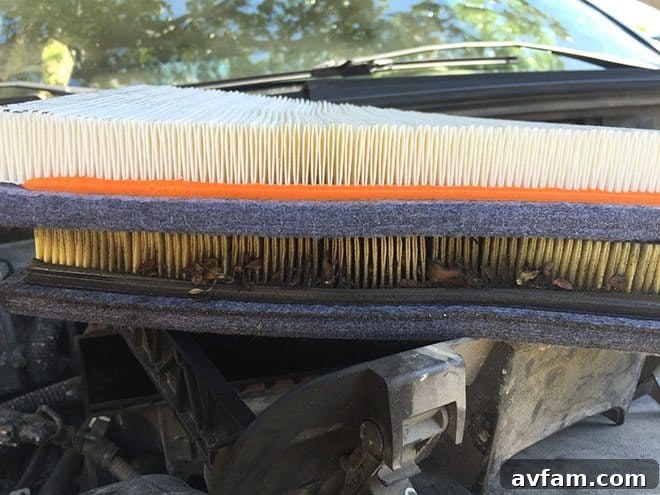
Just like humans, engines need to breathe. A clean air filter is essential for optimal engine performance, ensuring that only clean, filtered air enters the combustion chambers. A clogged or dirty air filter restricts airflow, forcing the engine to work harder, which can lead to a noticeable decrease in power, reduced fuel economy, and even increased exhaust emissions. Over time, this restriction can strain engine components and accelerate wear.
Checking your engine air filter is typically a straightforward task. Most are housed in an easy-to-access box under the hood. Simply open the clips or unscrew the cover, remove the filter, and hold it up to a light source. If you can’t see light through it, or if it’s heavily soiled with dirt, dust, or debris, it’s time for a replacement. While some aftermarket filters claim to be “cleanable” or “lifetime” filters, we advocate for the simplicity and effectiveness of replacing standard paper or synthetic elements regularly. A fresh filter ensures peak engine efficiency and longevity. Moreover, don’t forget your cabin air filter! While it doesn’t impact engine performance, a clean cabin filter significantly improves air quality inside your vehicle, making long road trips much more pleasant by reducing allergens and odors.
4. Boost Performance and Longevity: The Power of Fuel Additives
In today’s automotive world, fuel additives have become a valuable tool for maintaining engine health, particularly for high-mileage vehicles or those that see varied driving conditions. These specially formulated liquids are designed to clean critical components within your fuel system, such as fuel injectors, valves, and combustion chambers. Over time, deposits can build up in these areas, hindering fuel delivery and combustion efficiency, leading to decreased performance, rough idling, and diminished fuel economy.
By regularly using a high-quality fuel additive, you can effectively dissolve these harmful deposits, restoring the optimal spray pattern of your injectors and ensuring a more complete fuel burn. This translates directly to improved engine power, smoother acceleration, better gas mileage, and reduced harmful emissions. For our family, with our older, higher-mileage vehicles, we incorporate a fuel additive into our maintenance routine about once a month. This proactive step helps keep the entire fuel system running smoothly, prevents costly repairs down the line, and ensures our engines perform reliably on every journey. There are various types of additives, from fuel system cleaners to octane boosters and fuel stabilizers; choosing one designed for injector cleaning and deposit removal is generally a good all-around choice for regular maintenance.
5. Your Vehicle’s Voice: Understanding Dashboard Gauges and Warning Lights
Your vehicle’s dashboard is more than just a speedometer; it’s a vital communication hub, providing real-time insights into your car’s operational health. While the speedometer and RPM indicator, along with the fuel gauge, are always front and center, it’s equally crucial to actively monitor other critical gauges and warning lights. These include the battery/charging system light, the oil pressure gauge (or warning light), and the engine temperature gauge.
Developing a keen awareness of what “normal” looks like for your specific vehicle is key. Know where the temperature needle usually sits under various conditions, what the oil pressure reading typically shows, and ensure no warning lights are illuminated unnecessarily. If you notice a sudden spike in temperature, a drop in oil pressure, or the illumination of a battery light or, critically, the “Check Engine” light, address it immediately. Ignoring these signals can escalate a minor issue into a major, costly repair or even leave you stranded. Consulting your owner’s manual to understand what each specific light or gauge indication means is highly recommended. Proactive monitoring and timely response to these visual cues can often prevent significant problems and ensure your road trip remains uninterrupted and safe.
By embracing these five DIY car maintenance tasks, you empower yourself to take control of your vehicle’s health, bypassing the often considerable cost and potential headaches associated with dealership or independent auto shop visits. These simple checks not only save you money but also instill a deeper understanding and appreciation for your vehicle, fostering a sense of confidence every time you get behind the wheel. For everything you need—from tire gauges and oil filters to fuel additives and expert advice—your local AutoZone is an invaluable resource, ready to help you prepare your car for its next grand adventure, ensuring every journey is as smooth and worry-free as possible.
This post is brought to you by AutoZone; the opinions are all mine.