
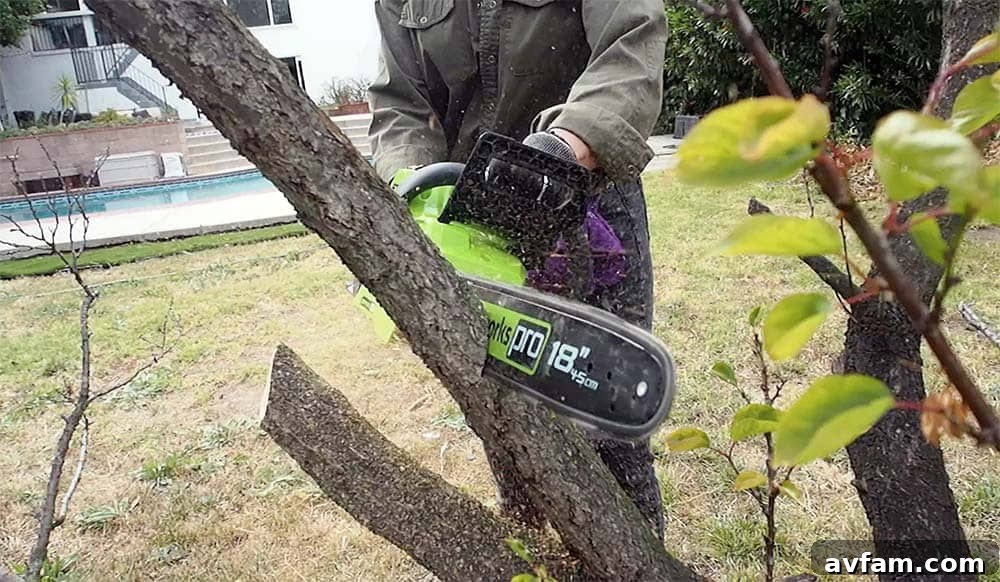
Embarking on a significant yard project can be both exciting and daunting. For us, a major undertaking this spring involves the removal of a diseased apricot tree in our backyard. Despite years of diligent care—including regular watering, fertilizing, and pruning—the tree has unfortunately succumbed to illness, making its removal a necessary step for the health and safety of our property.
The initial thought of tackling such a task often brings to mind traditional tools like an ax or a hatchet. However, for efficient and safe tree removal, particularly for a tree of this size, an electric chainsaw emerges as the superior choice. Our apricot tree stands approximately 8 feet tall at its highest point, with a trunk diameter reaching about 2 feet. This size requires a tool that offers both power and precision, capabilities an electric chainsaw is perfectly designed to provide.
We’ve chosen the new Greenworks 60V chainsaw for this project. This particular model is engineered with homeowners in mind, striking an excellent balance between comfort for routine weekend tasks and robust construction for more demanding, occasional heavy-duty jobs. Its design makes it an ideal tool for cutting down a tree of the dimensions we’re dealing with, promising a smooth and effective operation.
Why Choose an Electric Chainsaw for Homeowners?
The landscape of outdoor power equipment has undergone a significant transformation, with electric models rapidly gaining favor over their gasoline-powered counterparts. Electric chainsaws, in particular, offer a compelling array of benefits that make them the preferred choice for many homeowners. Beyond the convenience of simply inserting a charged battery and pulling a trigger, these tools address common pain points associated with gas models, enhancing both user experience and environmental responsibility.
Unmatched Convenience and Ease of Use
One of the most immediate advantages of an electric chainsaw is its user-friendliness. Unlike gas chainsaws that often require priming, choking, and multiple pulls of a starter cord, electric models offer instant starts. Simply insert a fully charged battery, engage the safety, and press the trigger. This eliminates the frustration of difficult startups, especially on cold mornings or after periods of storage. Furthermore, electric chainsaws are generally lighter and better balanced, reducing user fatigue during extended periods of use. Their intuitive operation makes them accessible even for those new to chainsaw use, provided proper safety protocols are followed.
Environmental and Health Benefits
Electric chainsaws produce zero emissions during operation. This means no noxious fumes from burning gasoline and oil, creating a much healthier working environment for the user and reducing your carbon footprint. The absence of exhaust fumes is particularly beneficial when working in enclosed or semi-enclosed spaces, such as near buildings or in densely treed areas. By choosing electric, you contribute to cleaner air and a healthier planet, aligning your yard maintenance with sustainable practices.
Reduced Noise Levels and Vibration
Traditional gas chainsaws are notoriously loud, often requiring substantial hearing protection and potentially causing disturbance to neighbors. Electric chainsaws, by contrast, operate at significantly lower noise levels. While still powerful, their electric motors run much quieter, making for a more pleasant user experience. This reduction in noise also comes with a corresponding decrease in vibration, which further minimizes user fatigue and enhances comfort, allowing for longer work sessions without discomfort.
Minimal Maintenance Requirements
The complexity of maintaining a gas engine—including spark plug checks, fuel filter replacements, carburetor adjustments, and winterizing procedures—is entirely absent with electric chainsaws. You eliminate the hassle of mixing gas and oil, and the risk of stale fuel causing engine problems. Maintenance for an electric chainsaw primarily involves ensuring the chain is sharp and properly tensioned, and keeping the bar lubricated with bar oil. This simplicity translates to less downtime, fewer repair costs, and more time spent on the actual work.
Essential Personal Safety Equipment
While an electric chainsaw is inherently easier to operate, it remains a powerful cutting tool that demands respect and adherence to strict safety guidelines. Personal Protective Equipment (PPE) is not optional; it is absolutely crucial for safeguarding against potential injuries. Prioritizing safety will ensure your projects are completed efficiently and without incident.
- Work Gloves: Essential for protecting your hands from splinters, cuts, and abrasions. They also provide a better grip on the chainsaw, especially important during prolonged use or in damp conditions.
- Eye Protection: Safety glasses or goggles are non-negotiable. They shield your eyes from flying debris, wood chips, and sawdust, which can cause severe injury. Opt for glasses with side shields for comprehensive protection.
- Hearing Protection: Even quieter electric chainsaws can produce noise levels that, over time, can damage your hearing. Earmuffs or earplugs are vital to protect your auditory health.
- Chainsaw Chaps: For any task involving significant cutting or extended periods of operation, protective chainsaw chaps are highly recommended. These chaps are made with special ballistic fibers designed to jam the chain instantly upon contact, preventing catastrophic leg injuries.
- Face Shield: A full face shield, often integrated with a hard hat, provides additional protection for your face from flying debris and helps keep sawdust out of your eyes and off your skin.
- Hard Hat: When cutting overhead branches or felling larger sections of a tree, a hard hat protects your head from falling branches or unexpected impacts.
- Sturdy Footwear: Work boots with steel toes and good ankle support are crucial to protect your feet from falling wood and to provide stable footing on uneven terrain.
Always assess your specific task and wear the appropriate PPE. For light-duty work such as limbing small branches or clearing light brush, work gloves and eye protection might suffice. However, for more intensive jobs like felling a tree or extended cutting sessions in awkward positions, the full suite of protective gear—including chaps, hearing protection, and a face shield—is indispensable.
Crucial Chainsaw Maintenance for Optimal Performance
Maintaining your electric chainsaw is straightforward but essential for ensuring its longevity, efficiency, and safety. Regular checks and simple upkeep tasks will keep your saw performing at its best, extending the life of its components and making your cutting tasks much easier.
Bar Oil Management
In addition to ensuring your battery is fully charged, one of the most critical maintenance steps is to check the level of bar oil before each use. Bar oil is specifically formulated to lubricate the chain as it rapidly moves along the guide bar. This constant lubrication is vital for several reasons: it reduces friction and heat buildup, which in turn minimizes wear and tear on both the chain and the bar, extending their lifespan. A well-lubricated chain also moves more freely, resulting in smoother cuts and less strain on the saw’s motor. The Greenworks saw, like many modern electric models, features a translucent oil cap, allowing for a quick and easy visual check of the oil level without the need to remove the cap.
Chain Tension Adjustment
Over time and with use, your chainsaw chain will naturally stretch, leading to slack. Operating with an improperly tensioned chain is dangerous and can damage the saw. A chain that is too loose can derail from the guide bar, potentially causing injury or damage to the saw. A chain that is too tight can cause excessive friction, generate heat, and put undue stress on the motor and chain components. You can easily check for correct chain tension by pulling the chain up from the top of the bar. It should lift slightly but still feel snug against the guide bar. Another method is to lift the chain from the bottom of the bar; upon release, it should snap back firmly into place without sagging. If the chain sags or feels loose, you can easily adjust its tension using the tool provided with your chainsaw. Refer to your owner’s manual for specific instructions on your model.
Chain Sharpening and Cleaning
A sharp chain is not just about efficiency; it’s also a safety feature. A dull chain forces you to apply excessive pressure, increasing the risk of kickback and making the saw harder to control. Regularly inspect your chain for dullness (signs include sawdust instead of chips, slow cutting, or burning wood). Sharpening can be done with a specific chainsaw file or by a professional. Additionally, regularly clean sawdust and debris from the guide bar groove and sprocket area to prevent build-up that can impede chain movement and lubrication.
Effective Techniques for Using a Chainsaw
Understanding how to properly operate your chainsaw is as important as wearing the right safety gear. Different cutting tasks require different approaches to ensure safety and efficiency. Always take a moment to assess the tree or branch you are cutting, planning your cuts before you start the saw.
Pre-Operation Checklist and Stance
Before starting the chainsaw, ensure your work area is clear of obstructions and bystanders. Maintain firm footing, with your feet shoulder-width apart, providing a balanced and stable stance. Always hold the chainsaw with both hands, gripping firmly, with your thumb wrapped around the front handle for better control and to reduce the risk of kickback. Ensure the chain brake, typically located at the top of the saw near the front handle, is engaged (pulled towards you). This critical safety feature is designed to stop the chain instantly if the saw kicks back violently towards the operator.
Starting and Operating the Saw
To start the saw, first depress the safety button, then pull the trigger. Always ensure the chain is moving at full speed before it makes contact with the wood. This allows the chain to cut cleanly and efficiently. Never let the running chain hit the ground. Contact with dirt, rocks, or other hard objects can immediately dull or damage your chain and bar, and can also throw dangerous debris.
Cutting Strategies: Limbing and Bucking
For larger trees, the typical approach involves felling the main trunk first, followed by limbing (removing branches) and then bucking (cutting the trunk into manageable sections). However, for a smaller tree like our 8-foot apricot, it’s often more practical and safer to limb the branches first. This reduces the overall bulk and weight of the tree, making subsequent cuts easier and less hazardous.
When limbing branches, be mindful of any tension in the wood. Branches under tension can spring back unexpectedly when cut. If a branch is under compression (being squeezed), make an undercut first, then a top cut. If it’s under tension (being stretched), make a top cut first, then an undercut. Use light, consistent pressure and allow the sharp chain and the weight of the saw to do the work. There’s no need to force the saw back and forth or apply excessive downward pressure; a sharp, well-maintained chainsaw will cut through wood smoothly and efficiently.
After all branches are removed and set aside, you can then proceed to buck the main trunk and larger branches into firewood-sized pieces. Again, pay attention to the wood’s tension to avoid pinching the bar or experiencing kickback. Always stand to the side of the cut, never directly behind the saw.
The Greenworks 60V Advantage: Power and Versatility
The top-rated Greenworks 60V cordless chainsaw exemplifies the pinnacle of electric chainsaw technology, offering ample power to meet virtually all homeowner needs. We wholeheartedly recommend considering one of their cordless models as a modern, efficient replacement for any old gas-guzzling equipment you might have. Making the switch to electric brings with it a multitude of benefits that elevate your outdoor maintenance experience.
With Greenworks, you can say goodbye to the noxious fumes, the messy hassle of mixing gas and oil, and the ear-splitting noise associated with traditional gas-powered saws. Electric models offer a dramatically quieter operation, allowing you to work without disturbing your neighbors or straining your ears. Furthermore, you’ll experience zero startup issues—no more frustrating pulls of a starter cord—and significantly fewer maintenance problems, freeing up your time and reducing operational costs. The Greenworks 60V system, with its robust brushless motor, delivers the torque and cutting speed comparable to many gas chainsaws, ensuring efficient and effective results every time.
Beyond the exceptional performance of this electric chainsaw itself, you’ll also benefit from the innovative Greenworks universal 60-volt battery system. This means that the same powerful battery that fuels your chainsaw can be interchanged and used across a wide array of other Greenworks outdoor power tools, such as their string trimmers, leaf blowers, pole saws, and mowers. This interchangeable battery system not only offers incredible convenience but also provides significant cost savings by reducing the need for multiple batteries and chargers for different tools. It’s an ecosystem designed for seamless power and maximum efficiency in your yard work.
Greenworks tools are widely accessible, available at your local Lowe’s store or conveniently online through Amazon. Investing in a Greenworks 60V chainsaw is an investment in powerful, clean, and efficient yard maintenance that simplifies your tasks and enhances your overall outdoor experience.
This post is sponsored by Greenworks but all opinions are 100% those of Timothy Dahl of Charles & Hudson.