

Revitalizing Your Ride: A DIY Guide to Ford F-150 Shock Replacement with Rancho RS5000
Every truck owner understands the importance of consistent maintenance, especially as their trusty vehicle racks up the miles. My Ford F-150, a loyal companion through countless journeys and demanding tasks, recently approached the significant 150,000-mile mark. While its robust engine and drivetrain continued to perform admirably, I knew a comprehensive inspection and crucial component upgrades were essential to ensure its continued reliability and performance. High on my maintenance checklist, and arguably one of the most impactful upgrades, was the replacement of the shock absorbers.
The 150,000-Mile Milestone: Why Your F-150 Demands New Shocks
The journey to 150,000 miles is a testament to a vehicle’s durability, but it also highlights the cumulative wear and tear on critical components. Shock absorbers, often overlooked, are fundamental to your truck’s handling, comfort, and safety. Unlike a sudden catastrophic failure, shocks tend to degrade gradually, making it difficult to pinpoint the exact moment they lose their effectiveness. This slow deterioration can lull drivers into a false sense of security, attributing subtle changes in ride quality to the truck simply “getting older.”
The Subtle Signs of Worn Shocks
For my F-150, with its naturally stiff suspension characteristic of a workhorse truck, the tell-tale signs of failing shocks were particularly insidious. I initially didn’t notice the gradual decline as much as I might have in a softer-sprung vehicle. However, a recent off-road adventure through the challenging, uneven terrain of Utah served as a stark, undeniable wake-up call. The truck felt less controlled, exhibiting excessive bouncing and a distinct lack of dampening over obstacles. It was clear that the original equipment manufacturer (OEM) shocks, which had served faithfully since day one, were completely worn out – a perfectly natural expectation after such extensive mileage.
Common indicators of worn shocks include increased body roll when cornering, excessive nose-dive during braking, squatting during acceleration, a bouncy or floaty ride, uneven tire wear, and a general feeling of instability, especially over rough roads. Ignoring these symptoms not only diminishes your driving comfort but also compromises your safety.
The Far-Reaching Impact of Failing Suspension
Beyond the immediate impact on ride quality, having functional shock absorbers is paramount for the longevity and integrity of your entire suspension and steering system. Shocks are designed to control spring oscillation, preventing excessive movement and absorbing impacts. When they fail, the springs bear the brunt of every bump and dip unchecked, leading to increased stress and premature wear on a multitude of other components. Ball joints, tie rod ends, control arm bushings, and even wheel bearings can suffer accelerated degradation when shocks are no longer performing their duties effectively. Investing in new, high-quality shocks isn’t just about a smoother ride; it’s a proactive measure that safeguards your F-150’s critical systems, reducing the likelihood of more expensive repairs down the line and maintaining optimal vehicle control.
The Quest for the Perfect Shocks: Research & Cost Analysis
Armed with the realization that new shocks were a necessity, I embarked on a mission to find the best balance of performance, durability, and value. The internet, particularly F-150 owner forums and message boards, became my primary research tool. The consensus among the F-150 community indicated that replacing shocks is a relatively straightforward DIY job for anyone with basic mechanical aptitude and the right tools. This encouraged me to explore the self-installation route, offering significant potential savings.
Weighing Professional Installation vs. DIY Savings
Before committing to a DIY project, I decided to get a baseline quote from a local professional shop. My neighborhood Big-O Tires provided an estimate to install KYB shocks on all four wheels for a total of $600, encompassing both parts and labor. While KYB shocks are considered a semi-premium option, they typically don’t rank alongside top-tier brands like Bilstein in discussions about ultimate performance. A $600 price tag felt substantial, prompting me to seriously consider the DIY alternative.
The allure of saving money, coupled with the satisfaction of completing a hands-on project, solidified my decision to tackle the shock replacement myself. This approach not only allowed me to invest in potentially better quality parts but also provided valuable experience and a deeper understanding of my truck’s mechanics.
Discovering the Rancho Advantage: Quality and Unbeatable Deals
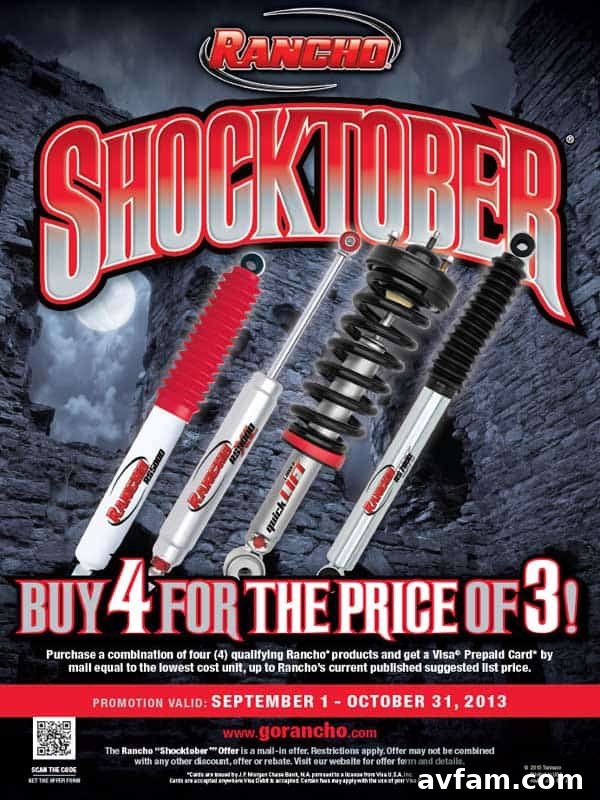
My mind immediately went to Rancho shocks. Years ago, I had installed Rancho shocks on my classic 1970 Ford Bronco, and they had delivered exceptional performance and durability. I was pleasantly surprised to discover that Rancho was running an enticing promotional rebate for the current month, a campaign they cleverly dubbed “Shocktober.” This deal offered a “buy 3, get 1 free” incentive, making high-quality Rancho shocks even more accessible.
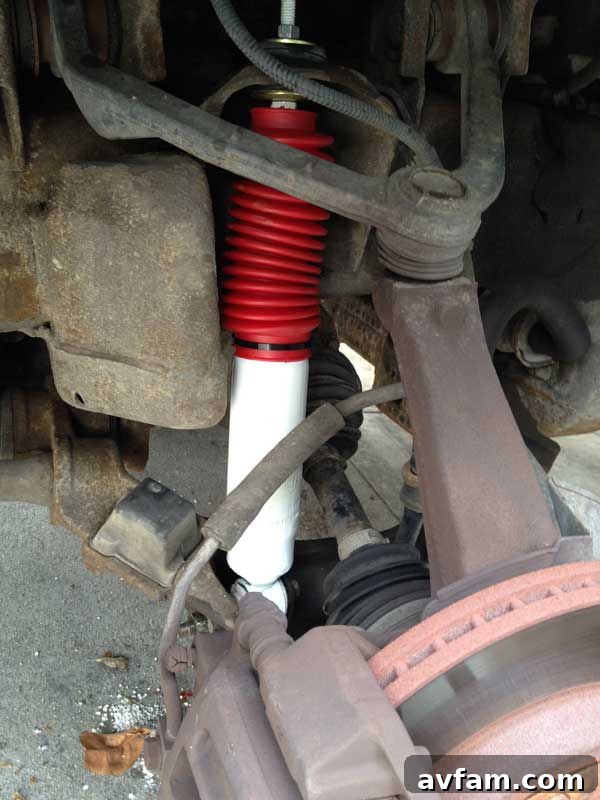
After reviewing the options, I settled on the Rancho RS5000X shocks (the modern iteration of the classic RS5000). These gas-pressurized, twin-tube shocks are renowned for their ability to deliver consistent performance, reducing fade and improving handling without a harsh ride. I found the most competitive pricing for a set of four on Amazon. Combining the significant savings from the “Shocktober” rebate with the elimination of labor costs by doing the installation myself, I projected savings of well over $400 compared to the Big-O quote. This made the decision an absolute no-brainer – premium quality at a budget-friendly price, with the added satisfaction of a DIY accomplishment.
DIY Ford F-150 Shock Replacement: A Step-by-Step Guide
Undertaking a shock replacement on your Ford F-150 can seem daunting, but with proper preparation, tools, and a methodical approach, it’s a rewarding project. My experience reaffirmed that this is a manageable task for most home mechanics.
Essential Tools and Safety First
Before you begin, gather your tools: a comprehensive socket set (metric and SAE), wrenches, a torque wrench, a breaker bar, a jack, sturdy jack stands, wheel chocks, penetrating oil (like WD-40), a wire brush, and personal protective equipment (gloves, safety glasses). Safety is paramount: always work on a level surface, engage the parking brake, and use appropriate wheel chocks. Crucially, never rely solely on a floor jack; always support your truck securely with robust jack stands before getting under it. Once the truck is safely elevated and the wheels are off the ground, a light spray of penetrating oil on all shock mount bolts a few hours or even the day before can work wonders, allowing the lubricant to penetrate and significantly ease the loosening process. This simple step can prevent stripped bolts or unnecessary struggle.
Front Shock Absorber Installation: A Straightforward Process
The removal and installation of the front shock absorbers on the F-150 proved to be surprisingly straightforward. The design allows for relatively easy access to the mounting points.
- Preparation: Secure the truck on jack stands and remove the front wheels.
- Loosening Bolts: Locate the top and bottom shock mounts. The top mount typically consists of a nut attaching to a bolt that’s part of the shock’s stem. The bottom mount involves a bolt passing through the shock and secured to the frame. Spray both with penetrating oil and allow it to work.
- Removing Old Shocks: Begin by removing the bottom bolt. You may need to support the lower control arm slightly with your floor jack to relieve tension on the shock. Then, remove the top nut. For the top mount, you’ll likely need a second wrench or a pair of vice grips to hold the shock stem while you loosen the nut to prevent it from spinning freely. Once both are loose, the old shock can be removed.
- Installing New Shocks: Compress the new Rancho RS5000 shock slightly if necessary (they usually extend easily) and align the bottom mount first. Insert the bolt and tighten it finger-tight. Then, guide the top stem through its mount, attach the washer and nut, and tighten it down. Ensure all bushings are correctly seated.
- Torqueing: Consult your F-150’s service manual for the precise torque specifications for both upper and lower shock bolts. Proper torque is essential for safety and performance.
Tackling the Rear Shocks: Overcoming the Challenge
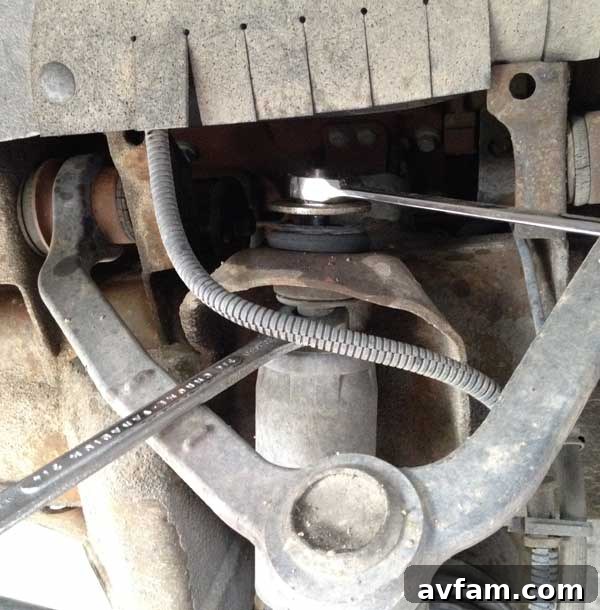
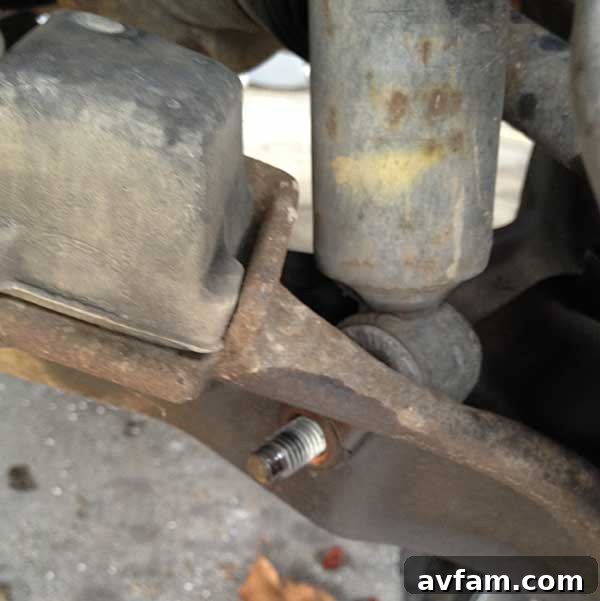
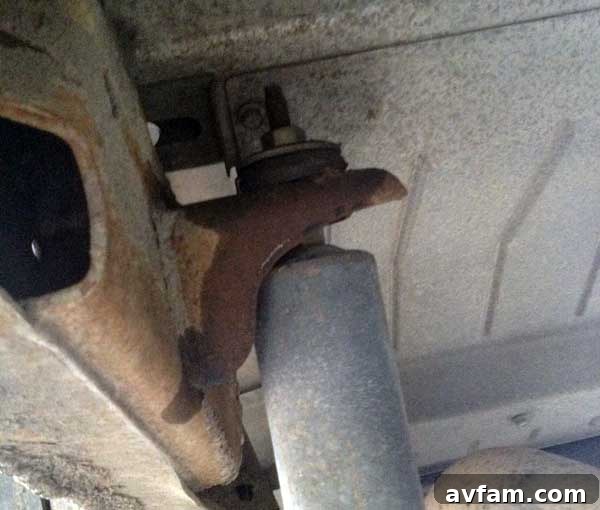
While the front shocks were relatively cooperative, the rear shocks presented a different challenge, primarily due to accessibility. The top mount of the rear shocks is often nestled in a tight space, obscured by the truck’s bed and frame configuration. The angle and limited clearance make it particularly difficult to get a standard wrench or socket onto the bolt head.
- Accessing Rear Shocks: Similar to the front, secure the truck and remove the rear wheels. You may need to lower the spare tire for better access to one side.
- Top Mount Challenge: The confined space often necessitates the use of a thin, angled box-end wrench or a specific ratchet extension setup to reach the upper bolt and nut. Patience and persistence are key here. Once you get the wrench on, apply firm, steady pressure. Remember that pre-soaking with penetrating oil will be your best friend in this scenario.
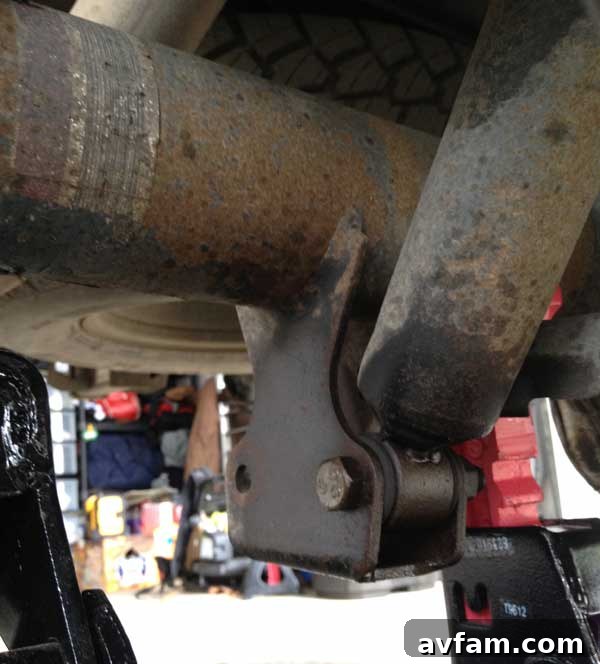
- Bottom Mount: The bottom rear shock mount is typically more accessible, usually a single bolt passing through a bracket on the axle.
- Removal and Installation: Remove the bottom bolt first, then tackle the more challenging top bolt. Once the old shock is out, reverse the process for the new one. Ensure the shock is properly aligned before inserting the bolts.
- Torqueing: Again, consult your F-150’s service manual for the correct torque specifications for the rear shock mounts.
Final Steps and Wheel Reinstallation
After successfully installing all four new Rancho RS5000X shocks, the final step involves carefully reinstalling the wheels. This seemingly simple task can often be surprisingly challenging, especially when trying to perfectly align the wheel’s bolt holes with the lug nuts while holding a heavy tire in place. A good tip is to use one lug nut to partially hold the wheel while you get the others started. Once the wheels are back on and finger-tight, lower the truck until the tires just touch the ground, then torque the lug nuts to the manufacturer’s specified setting, typically in a star pattern. Finally, lower the truck completely and give all fasteners one last check. The satisfaction of completing the job myself, coupled with the significant savings, made every moment of effort worthwhile.
The Road Test: A Transformed Driving Experience
With the new Rancho RS5000X shocks installed and all tools put away, I eagerly anticipated the first test drive. The moment I pulled out of the driveway, the difference was immediately noticeable. The ride, while retaining the F-150’s characteristic robust feel, was undeniably more refined and controlled. The excessive bouncing and floating sensations that had plagued the old, worn-out shocks were completely gone.
On local roads, bumps that previously caused jarring impacts were now absorbed with a confident dampening action. The truck felt more “planted” and connected to the road, inspiring greater confidence in steering and handling. Cruising on the freeway, the experience was even more telling. The subtle but persistent rattling and minor oscillations that used to accompany higher speeds were no longer present. The F-150 tracked straighter, felt more stable during lane changes, and exhibited a remarkable improvement in overall ride comfort without sacrificing its utility-vehicle stiffness. It felt like a revitalized vehicle, ready to tackle another 150,000 miles with renewed vigor, whether on paved roads or challenging trails.
Rancho RS5000 Shocks: A Smart Investment for Your F-150
Based on my personal experience and the immediate, tangible improvements in my Ford F-150’s ride quality and handling, I wholeheartedly recommend the Rancho RS5000X series for any truck owner looking to upgrade or replace their shocks. They offer an exceptional balance of quality, performance, and value, particularly if you’re working within a budget. These shocks are a fantastic choice for daily driving, towing, and light off-roading, providing a significant upgrade over worn OEM units.
For those who demand even greater control and adaptability, Rancho also offers the RS9000XL series. These premium shocks feature nine-position adjustability, allowing you to fine-tune your ride characteristics to perfectly match varying load conditions, terrain types, or personal preferences. Whether you opt for the robust RS5000X or the versatile RS9000XL, investing in quality shock absorbers is one of the most impactful upgrades you can make to enhance your F-150’s performance, safety, and comfort for years to come.
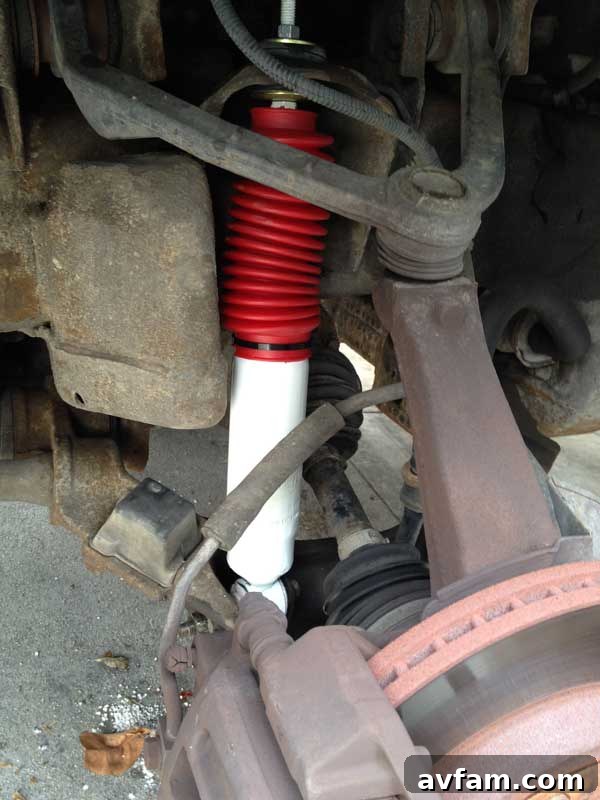
Installed Rancho RS5000X shocks on my Ford F-150, ready for the next adventure.