
The landscape of cordless power tools is undergoing a profound evolution, driven primarily by continuous advancements in battery technology. At the forefront of this revolution is the emergence of stacked pouch cell batteries, a game-changing innovation that is rapidly reshaping expectations for power, performance, and runtime. This cutting-edge technology promises to unlock new levels of efficiency and capability for professionals and DIY enthusiasts alike, pushing the boundaries of what cordless tools can achieve.
Industry giants such as Milwaukee, DeWalt, and Flex are leading the charge, each unveiling their unique interpretations of these advanced batteries. Their commitment signals a significant shift, but it also prompts a crucial question for the cordless power tool market: Will stacked pouch cell batteries completely dominate the future, becoming the sole standard, or will they coexist and compete alongside other rapidly evolving battery technologies, including advanced cylindrical cell designs?
Understanding Stacked Pouch Cell Technology
Before diving into manufacturer-specific implementations, it’s essential to understand what makes stacked pouch cells so revolutionary. Unlike traditional cylindrical cells, which are rigid, metallic containers, pouch cells are flat, rectangular, and encased in a flexible, foil-like material. This design allows for a more efficient use of space, as individual cells can be stacked closely together without the dead space inherent in arrangements of round cylindrical cells. This stacking configuration leads to several key advantages:
- Higher Power Density: Pouch cells typically offer a higher energy-to-volume ratio, meaning more power can be packed into a smaller form factor. This translates to lighter, more compact batteries that still deliver impressive power.
- Improved Thermal Management: The flat surface area of pouch cells allows for better heat dissipation compared to cylindrical cells. Efficient cooling is critical for maintaining performance during heavy use and extending battery lifespan.
- Lower Internal Resistance: The design can facilitate shorter current paths, which reduces internal resistance. Lower resistance means less energy lost as heat and more power delivered to the tool, enabling sustained high-drain applications.
- Flexibility in Design: The flexible nature of pouch cells allows manufacturers greater freedom in designing battery packs, potentially leading to more ergonomic and specialized tool designs.
These benefits directly translate into a superior user experience: tools that are lighter, more powerful, run longer under load, and potentially charge faster, making demanding tasks more manageable and efficient.
Milwaukee Tool’s Forge Line and the M18 Pouch Battery Innovation
Milwaukee Tool has been a prominent innovator in the battery space, and their recent announcement of the first M18 pouch battery, a 6Ah capacity under their new “Forge” line, is a testament to this commitment. The Forge line signifies Milwaukee’s dedication to pushing the boundaries of performance, offering professional users maximum output, extended runtime, and enhanced durability in the most demanding applications. This 6Ah pouch battery, specifically engineered for high-draw tools, delivers exceptional sustained power and cooler operation.
However, Milwaukee’s strategy is not limited to pouch cells alone. Their impressive M18 Forge 12Ah battery stands out as another significant development, built using advanced tabless cylindrical Li-ion cells. This strategic choice underscores Milwaukee’s nuanced understanding that different applications may benefit from different cell architectures. Tabless cylindrical cells significantly reduce internal resistance by eliminating the traditional tabs that connect cells, allowing for more efficient current flow and vastly improved thermal performance. This innovation demonstrates that even the “older” cylindrical cell form factor has significant room for advancements, capable of competing with and even surpassing some of the benefits offered by pouch cells in specific high-demand scenarios. Milwaukee’s approach clearly indicates a multi-faceted battery ecosystem catering to diverse professional needs.
DeWalt’s PowerStack: A Strong Commitment to Pouch Cell Technology
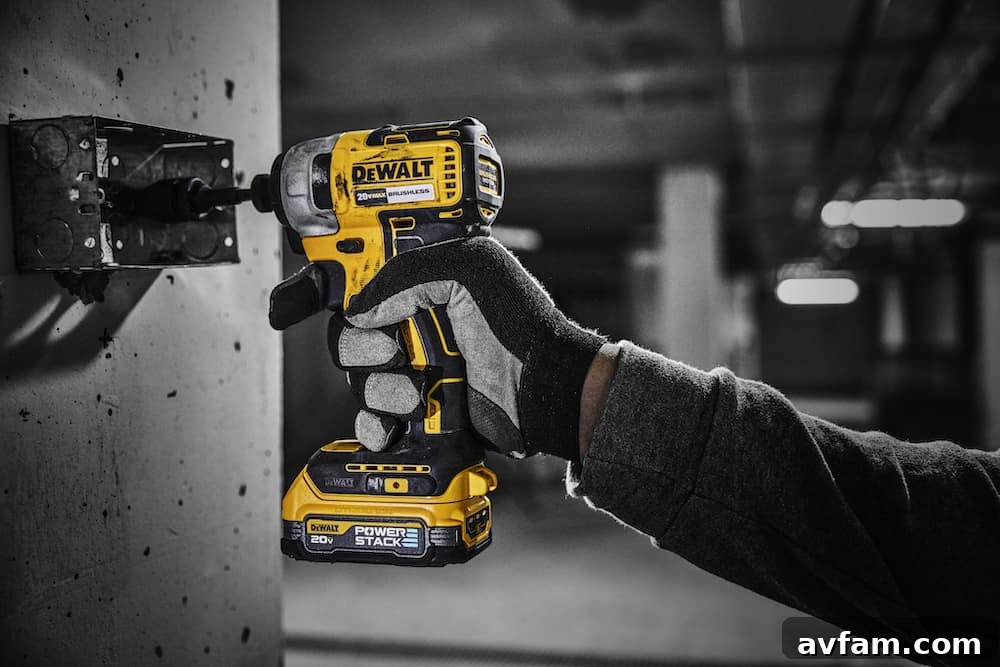
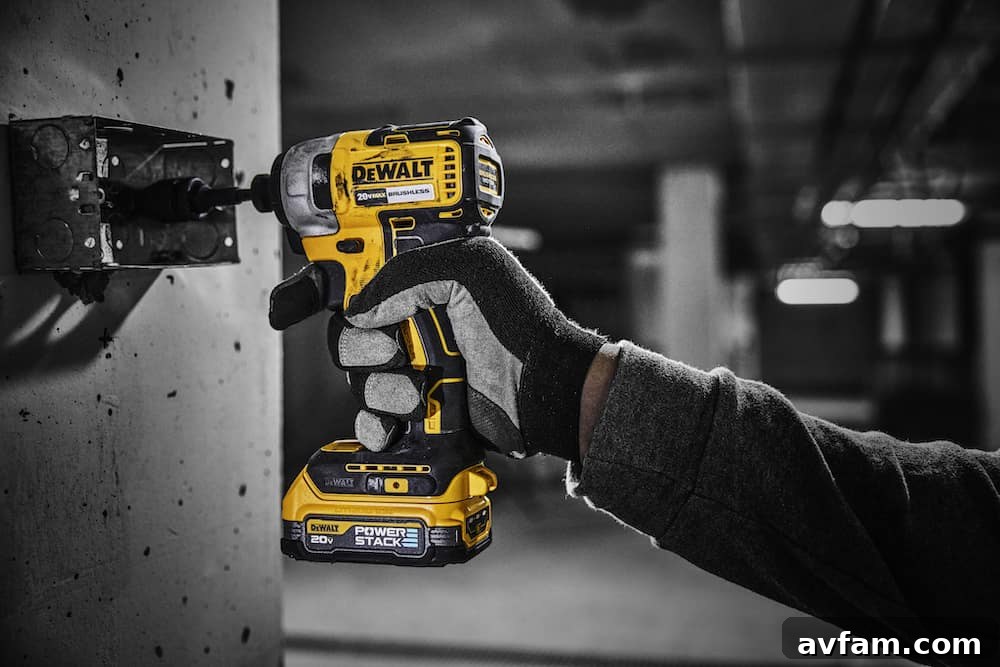
DeWalt has unequivocally embraced pouch cell technology with the introduction of their “PowerStack” line. They have launched two distinct sizes of 20V Max pouch cell batteries, signaling a strong belief in its potential. The compact 1.7Ah PowerStack battery revolutionized the compact battery segment, offering a remarkably smaller and lighter footprint than traditional compact batteries while delivering significantly more power. This makes it ideal for applications where tool weight and maneuverability are paramount, such as overhead work or precision tasks.
Complementing the compact version, DeWalt also introduced a more substantial 5Ah PowerStack battery. This larger capacity pouch cell battery targets applications requiring extended runtime and sustained high power output, effectively bridging the gap between compact convenience and heavy-duty performance. DeWalt’s aggressive move with PowerStack batteries across different capacity points demonstrates their firm commitment to leveraging pouch cell technology to enhance the user experience across their extensive 20V Max platform, providing tangible benefits in terms of ergonomics, power, and efficiency.
Flex’s Pouch Cell Offerings and CAT’s Graphene Battery Entry
Flex Power Tools, a brand rapidly gaining traction among professionals, has also made a significant foray into pouch cell technology with a comprehensive range of 24V Max batteries. Their lineup includes 3.5Ah, 6Ah, and 10Ah pouch cell batteries, showcasing the versatility and scalability of this design across various power demands. Flex’s commitment to pouch cells aligns with their brand promise of delivering extreme power and performance, providing users with longer runtimes and consistent power delivery even in the most strenuous applications.
Adding another layer of innovation to the competitive landscape, CAT Power Tools, manufactured by Positec, has introduced an “I-FOR-ALL Graphene” 5Ah battery. While the term “Graphene” is often used broadly in marketing, in battery technology, it typically refers to the use of graphene-enhanced materials in electrodes or electrolytes. This can potentially lead to benefits such as faster charging times, improved thermal conductivity, enhanced cycle life, and greater power output. CAT’s entry with this distinct technology highlights the ongoing research and development within the battery industry, exploring various avenues to enhance performance beyond just cell form factor, adding a new dimension to the discussion of next-generation power tool batteries.
Milwaukee’s Strategic Balance: High Output M12 and Tabless Cylindrical Cells
Milwaukee’s battery strategy is characterized by a sophisticated balance between introducing cutting-edge technologies and continuously optimizing existing ones. Beyond their M18 Forge pouch cells, Milwaukee has also significantly upgraded their M12 platform with new High Output M12 batteries. These batteries utilize more advanced, higher-performing cylindrical cells to deliver enhanced power and runtime within the compact M12 ecosystem, catering to specific user needs where smaller, lighter tools are preferred without sacrificing performance.
Furthermore, their decision to utilize tabless cylindrical cells for the M18 Forge 12Ah battery, rather than pouch cells, offers critical insight into their strategic thinking. This choice isn’t arbitrary; it’s often driven by a nuanced understanding of specific application requirements, performance characteristics, and thermal management. Tabless designs in cylindrical cells can offer superior current delivery and thermal dissipation compared to traditional cylindrical cells, making them highly suitable for tools that require extreme, sustained power over long durations. This dual approach of investing in both advanced pouch cells and highly optimized cylindrical cells demonstrates Milwaukee’s commitment to providing the best battery solution for every tool and every task, ensuring peak performance across their entire lineup.
Makita’s Position and Potential Shifts in Battery Technology Adoption
Amidst these rapid advancements, Makita, another industry leader, maintains a somewhat cautious stance regarding the immediate adoption of stacked pouch cell technology. Their current product strategy, particularly their measured approach to introducing higher capacity or output batteries in their dominant 18V LXT line, raises intriguing questions about the potential impact of pouch cell batteries on their future product roadmap. Makita has historically focused on reliability, an extensive tool ecosystem, and a balance of performance and runtime with their well-established cylindrical cell batteries.
However, the pressure to innovate and compete on power and runtime is undeniable. The possibility of Makita eventually moving to advanced tabless cylindrical batteries, with minimal deviation from their existing battery pack shapes and sizes, presents a compelling avenue for exploration. This approach would allow them to leverage the performance benefits of tabless technology (improved power delivery, better thermal management) while maintaining compatibility with their vast existing tool base and minimizing re-tooling costs for manufacturing. A strategic shift to either tabless cylindrical or even a selective introduction of pouch cells in specific high-demand segments would allow Makita to remain competitive while retaining their core values of consistency and reliability, making their future battery announcements keenly anticipated.
The Role of Other Major Players: Bosch, Ryobi, Metabo HPT, Metabo, Kobalt, Festool
While Milwaukee, DeWalt, and Flex have taken early and decisive steps into the pouch cell arena, other major players in the cordless power tool market, including Bosch, Ryobi, Metabo HPT, Metabo, Kobalt, and Festool, have largely yet to make significant public announcements or widespread introductions of pouch cell batteries. Their strategies could vary widely:
- Some may be conducting extensive internal research and development, waiting for the technology to mature further or for manufacturing costs to become more favorable.
- Others might be focusing on optimizing their existing cylindrical cell technologies, believing there is still untapped potential in current designs or that their target market priorities don’t immediately necessitate a shift to pouch cells.
- There’s also the possibility that some brands, particularly those with strong existing ecosystems like Ryobi, might opt for a “wait and see” approach, assessing market adoption and competitor performance before committing substantial resources to a new cell architecture.
The absence of pouch cells from these major brands thus far keeps the competitive landscape dynamic and unpredictable. Their future moves in this space remain a topic of keen interest and will undoubtedly shape the broader trajectory of cordless power tool battery innovation.
The Future Landscape: Pouch Cells, Cylindrical Cells, and Beyond
The future of the cordless power tool industry is clearly not a monolithic landscape dominated by a single battery technology but rather one of vibrant coexistence and intense competition among various sophisticated solutions. While stacked pouch cell batteries offer undeniable advantages in power density, thermal management, and design flexibility, cylindrical cell technology, especially with innovations like tabless designs and advanced chemistries, continues to demonstrate significant potential for growth and improvement.
Milwaukee’s diverse range of batteries – from standard and High Output cylindrical packs to Forge pouch and Forge tabless cylindrical batteries – perfectly exemplifies the industry’s overarching trend toward a varied and highly specialized battery ecosystem. This strategic diversity is a huge win for end-users, offering greater flexibility and a wider array of choices. It allows professionals and enthusiasts to select batteries precisely tailored to specific tool requirements, task demands, and personal preferences, ensuring optimal performance, runtime, and ergonomics for every application. For instance, a lightweight compact pouch battery might be perfect for precision work, while a robust, high-capacity tabless cylindrical battery excels in heavy-duty demolition.
In conclusion, while stacked pouch cell batteries are undoubtedly shaking up the cordless power tool industry and represent a major leap forward, they are but one crucial piece of an ever-evolving puzzle. As we look ahead, it’s clear that these innovative batteries will play a pivotal role in shaping the next generation of power tools. However, they will share the stage with other advancing technologies, including new forms of highly optimized cylindrical cells, smart battery management systems, and even entirely new chemistries. The future of cordless power tools is not a single-technology race but a multi-dimensional arena where continuous innovation across various fronts contributes to the industry’s relentless growth, enhanced efficiency, and evolving capabilities.