
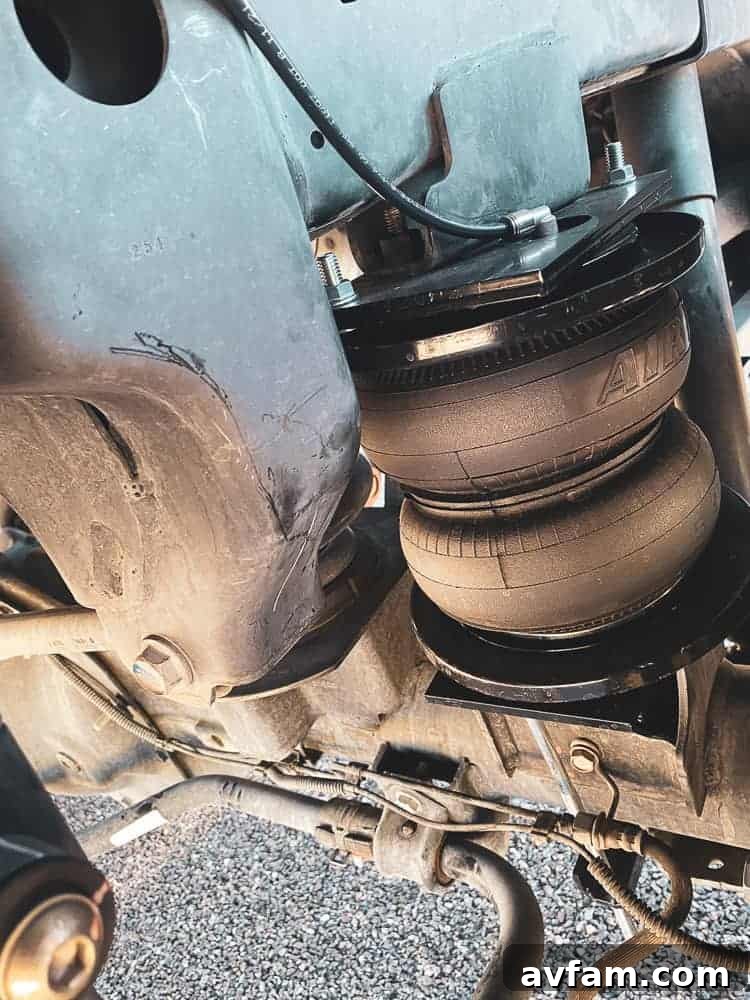
When it comes to towing or hauling substantial loads, maintaining a level stance in your truck is paramount. Without proper support, heavy cargo can cause the rear of your vehicle to sag, leading to a host of problems from compromised safety to accelerated wear and tear on your truck’s components. This undesirable “squat” not only detracts from your vehicle’s appearance but significantly impacts its handling, braking, and overall stability. For truck owners who frequently tow RVs, utility trailers, boats, or transport heavy equipment, finding an effective solution to counteract this sag is crucial. One of the most reliable and versatile enhancements for your truck’s suspension system is the addition of airbags.
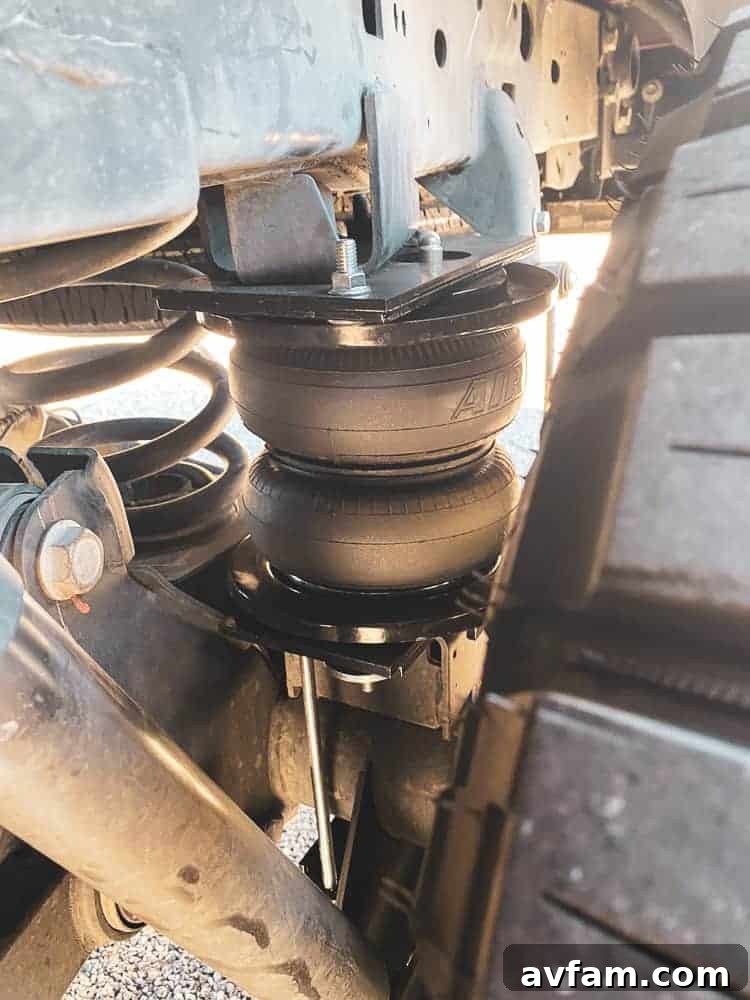
Truck airbags, often referred to as air springs or helper springs, are inflatable rubber bladders designed to fit between your truck’s frame and its leaf springs. Their primary function is to provide supplemental support to the existing suspension, allowing you to easily adjust your truck’s ride height and levelness when under load. By adding air pressure, these bladders inflate, creating a cushioned air spring that effectively lifts the rear of the truck, restoring proper weight distribution and a level profile.
This dynamic adjustability is a key differentiator, making airbags a superior solution compared to fixed suspension enhancements. Whether you’re hauling a lightweight utility trailer one day and a heavy fifth-wheel RV the next, airbags allow you to fine-tune the support precisely to your load’s requirements. This versatility ensures optimal performance and a comfortable, safe ride across all your towing and hauling needs.
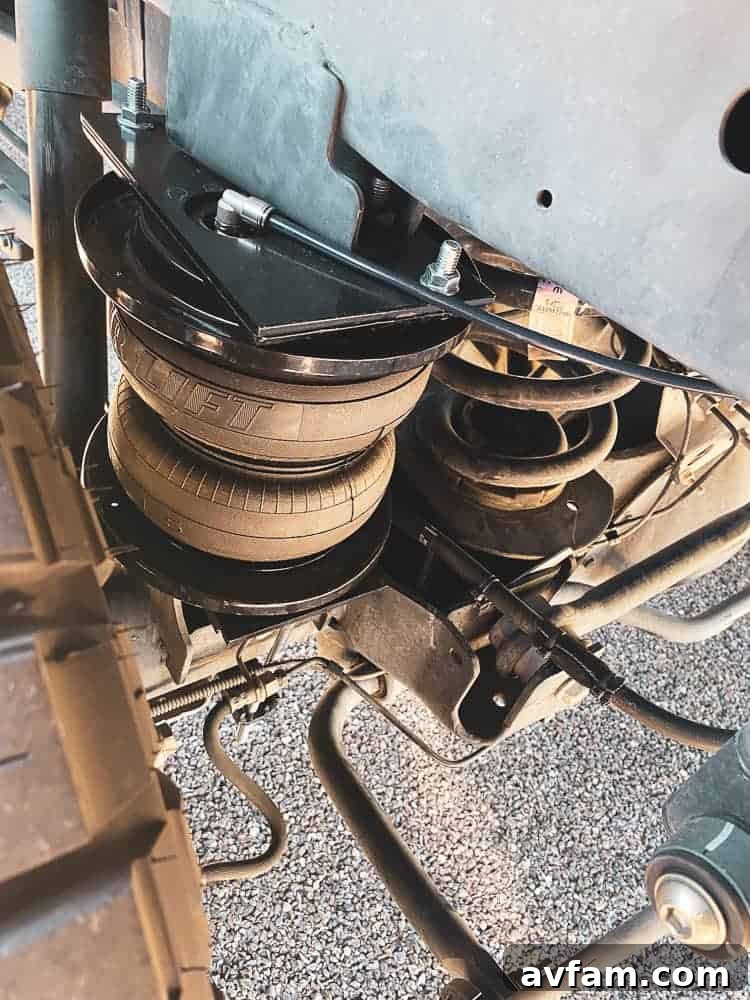
We recently experienced the transformative benefits of this technology ourselves. Installing a set of Airlift LoadLifter 5000 airbags on a 2020 Ram 2500, we’ve achieved exceptional results when towing a 30-foot travel trailer. The improvement in stability, ride quality, and overall control was immediately noticeable, turning a potentially stressful towing experience into a remarkably smooth and confident journey.
In this comprehensive guide, we will delve into the mechanics of how truck airbags work, explore the numerous advantages they offer over other suspension enhancement options, detail the different types of airbag systems available, and provide a general overview of their installation process. By the end, you’ll have a clear understanding of why airbags are an indispensable upgrade for any truck owner serious about safe and efficient heavy hauling.
Understanding How Truck Airbags Work to Level Your Ride
At their core, truck airbags are robust, inflatable rubber bladders strategically placed within your truck’s existing suspension system, typically between the leaf springs and the vehicle’s frame. Their design allows them to augment the load-carrying capacity of your truck’s rear suspension, preventing sag and ensuring a level stance even when confronted with substantial weight.
When your truck is subjected to a heavy load, whether it’s cargo in the bed or a trailer hooked to the hitch, the added weight naturally compresses the leaf springs. This compression causes the rear of the truck to drop, altering the vehicle’s geometry and compromising its handling characteristics. This is where airbags step in. When you introduce compressed air into these bladders, they inflate and expand, creating a powerful air cushion that pushes against the frame and leaf springs. This counteracting force effectively lifts the rear of the truck, restoring it to its original, level ride height.
The beauty of airbag suspension systems lies in their adjustability. Unlike traditional helper springs or stiffer leaf springs that offer a fixed level of support, airbags allow you to modulate the internal air pressure. This means you can increase the pressure for heavier loads to achieve maximum lift and support, and decrease it for lighter loads or when driving empty to maintain a comfortable, stock-like ride. This precise control over your truck’s stance and suspension performance is unparalleled, enabling you to fine-tune the system to perfectly match the specific demands of any given load or road condition. The result is a dynamic solution that not only prevents sag but also significantly enhances stability, control, and overall ride comfort when towing or hauling.
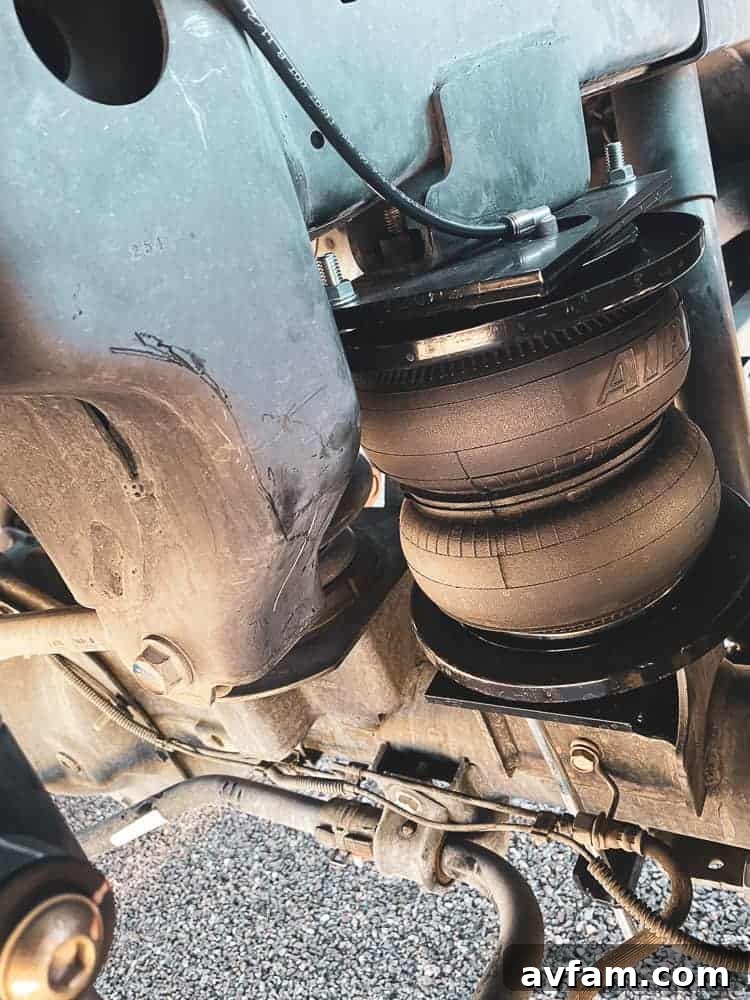
Why Adding Airbags to Your Truck is Essential for Towing and Hauling
The decision to add airbags to your truck’s suspension goes beyond mere convenience; it’s an investment in safety, performance, and the longevity of your vehicle. When you hook up a heavy trailer or load your truck bed to capacity, the adverse effects of suspension sag are immediately apparent and can be quite detrimental.
Firstly, the most critical concern is **safety**. A sagging rear end throws off the entire vehicle’s weight distribution. This means less weight on the front axle, leading to reduced steering authority and compromised braking effectiveness. Your headlights will point upwards, blinding oncoming traffic and reducing your visibility of the road ahead. The dreaded “porpoising” effect – where the truck bounces excessively – can occur, making it difficult to maintain control, especially at highway speeds or during emergency maneuvers. Airbags mitigate these risks by leveling the truck, restoring proper weight distribution, and ensuring optimal contact between all four tires and the road.
Secondly, **handling and stability** are severely impacted. A non-level truck experiences increased body roll, sway, and an overall unstable feeling. This is particularly noticeable when navigating turns, encountering crosswinds, or being passed by larger vehicles. Airbags drastically improve stability by firming up the rear suspension, reducing sway, and providing a more planted feel, which translates to a more confident and less fatiguing driving experience for the operator.
Thirdly, ignoring suspension sag can lead to **premature wear and tear** on your truck’s components. When the rear sags, the suspension is constantly under maximum stress, leading to accelerated wear on shocks, leaf springs, and even tires, as the alignment is thrown off. The added strain on the drivetrain and braking system can also shorten their lifespan. By leveling the load, airbags distribute the weight more evenly, protecting your original equipment manufacturer (OEM) suspension and extending the service life of critical parts.
Finally, there’s the significant improvement in **ride comfort and fuel economy**. A truck that’s constantly bottoming out or riding on its bump stops is an uncomfortable experience for both driver and passengers. Airbags absorb road imperfections and prevent harsh impacts, leading to a much smoother and more enjoyable ride. Additionally, a level truck presents less aerodynamic drag than a tilted one, which can contribute to slightly better fuel efficiency during long hauls.
In essence, adding airbags isn’t just about lifting your truck; it’s about optimizing its capabilities for heavy-duty tasks, ensuring a safer journey, preserving your vehicle’s health, and making every towing or hauling trip significantly more comfortable and controlled.
Exploring Types of Airbag Suspension Systems
When considering an airbag suspension system for your truck, it’s helpful to understand the different configurations available. These systems range from basic, manually adjustable setups to sophisticated, electronically controlled units, each offering varying levels of convenience and functionality.
1. Manual Fill Airbag Systems:
This is the most straightforward and often the most cost-effective airbag system. It involves installing the airbags themselves along with independent air lines that terminate at manual fill valves. These valves are typically mounted in an easily accessible location, such as the bumper, fender, or fuel door area. To adjust the air pressure, you connect a portable air compressor or an air hose from a service station to these valves, much like filling a tire. Each airbag often has its own fill valve, allowing for side-to-side leveling if your load is uneven.
Pros: Simplicity, lower initial cost, reliable with fewer electronic components, independent side-to-side adjustment.
Cons: Requires manual intervention with an external air source, no on-the-fly adjustment from the cab.
2. On-Board Air Compressor (OBA) Systems:
For those seeking greater convenience and control, an on-board air compressor system integrates a dedicated air compressor directly onto the truck. This allows for quick and easy air pressure adjustments from within the vehicle, eliminating the need for an external air source.
There are typically two sub-types:
- Standard OBA Systems: These systems include a compressor, air lines, and a gauge or set of gauges mounted in the cab. The driver manually activates the compressor and monitors the pressure to achieve the desired height. Some systems might include a small air tank for quicker fills.
- Advanced OBA Systems (Wireless & Automatic Leveling): These represent the pinnacle of airbag convenience. They feature a more robust compressor, often with an air tank, and advanced control modules.
- Wireless Control: Allows you to adjust air pressure using a remote control or a smartphone app, even from outside the truck.
- Automatic Leveling: Incorporates height sensors that continuously monitor the truck’s stance. When a load is added, the system automatically detects the sag and inflates the airbags to return the truck to a pre-set level, all without driver input. This is ideal for dynamic loads or situations where consistent height is critical.
Pros (OBA Systems): Ultimate convenience, on-the-fly adjustment, precise control, often include additional features like automatic leveling or presets, can also be used to air up tires or other inflatables.
Cons (OBA Systems): Higher initial cost, more complex installation due to wiring and air line routing, more components that could potentially require maintenance.
Regardless of the system chosen, the fundamental components remain consistent: the durable rubber airbags (available in various shapes like bellows or sleeve styles to fit different truck architectures and load requirements), robust mounting brackets that secure the airbags to the frame and axle, and air lines to deliver compressed air. When selecting a system, consider your towing frequency, the types of loads you carry, and your budget for both the purchase and installation.
Compelling Advantages of Airbags for Your Truck’s Suspension
The decision to equip your truck with an airbag suspension system brings a multitude of benefits, transforming your towing and hauling capabilities in ways that traditional suspension modifications often cannot. Here are the key advantages:
- Enhanced Safety: A level truck is a safer truck. When your vehicle maintains a proper stance, it ensures optimal weight distribution across all axles. This directly translates to improved steering response, allowing for more precise control during emergency maneuvers. Braking performance is also significantly better, as the front tires maintain sufficient contact with the road for effective stopping power. Furthermore, headlights remain properly aimed, preventing dangerous glare for oncoming drivers and ensuring clear visibility for you. By reducing body roll and sway, airbags provide a stable platform, significantly minimizing the risk of accidents when hauling heavy loads.
- Superior Performance and Ride Quality: Airbags allow your truck to perform at its peak, even under extreme loads. By lifting the rear to a level height, they reduce strain on your factory suspension components, preventing them from bottoming out or prematurely wearing. This sustained levelness also reduces aerodynamic drag caused by a tilted vehicle, potentially contributing to better fuel economy on long trips. Beyond the mechanical advantages, airbags dramatically improve ride quality. They act as a cushion, absorbing impacts from potholes and bumps, which leads to a smoother, more comfortable experience for everyone in the vehicle. Driver fatigue is also reduced, as the truck feels more planted and less prone to uncontrolled movements.
- Unmatched Versatility and Adjustability: This is arguably one of the most significant advantages of airbag systems over other suspension enhancements like helper springs or stiffer leaf springs. Airbags offer dynamic adjustability, meaning you can precisely tailor the amount of support to the specific weight of your load. Hauling a small utility trailer? A moderate amount of air pressure will suffice. Hooking up a heavy fifth-wheel RV? Maximize the air pressure for ultimate support. When you’re driving empty, you can deflate the airbags to their minimum recommended pressure, returning your truck to its stock ride height and comfort, preventing the harsh ride often associated with constantly stiffened suspensions. This adaptability makes airbags the ideal solution for truck owners with varied towing and hauling needs.
- Protection of OEM Components and Increased Longevity: By preventing sag and absorbing excessive stress, airbags act as a protective layer for your truck’s original suspension components. They prevent your leaf springs from becoming over-stressed and bottoming out against the bump stops, which can lead to damage and premature failure. This preservation of OEM parts means fewer repairs and replacements down the line, ultimately saving you money and extending the overall lifespan of your truck’s suspension system.
- Relatively Straightforward Installation: While some mechanical aptitude is beneficial, many airbag kits are designed for a bolt-on installation with minimal drilling or modification required for most popular truck models. Comprehensive, model-specific instructions are typically provided by manufacturers, making it a manageable DIY project for many truck owners, or a routine job for a professional mechanic.
- Cost-Effective Long-Term Solution: Compared to more drastic suspension overhauls or the continuous wear and tear (and subsequent repairs) that result from persistent sag, airbags represent a highly cost-effective investment. Their ability to prevent damage, improve safety, and enhance comfort provides significant value over the lifespan of your truck.
In summary, installing airbags on your truck is not just an upgrade; it’s a comprehensive enhancement that improves nearly every aspect of your vehicle’s performance and safety when tackling heavy loads, all while extending the life of your valuable asset.
General Guide: How to Install Airbags on Your Truck
While the precise steps for installing airbags can vary significantly depending on your truck’s make, model, and the specific airbag kit you choose, the overall process generally follows a similar sequence. It’s crucial to always refer to the manufacturer’s detailed instructions provided with your specific kit, as they will contain vital safety information and model-specific nuances. However, here’s a general overview of the steps involved:
- Thorough Preparation and Safety First:
- Gather Your Tools: You’ll typically need a floor jack, jack stands, torque wrench, various sockets and wrenches, a drill (for some kits, especially for air line routing), and possibly a grinder or cut-off tool if bump stop removal is required.
- Secure the Vehicle: Park your truck on a flat, level surface. Chock the front wheels, then use a floor jack to lift the rear of the truck. Place sturdy jack stands under the frame, ensuring the vehicle is safely supported. This is paramount for your safety. You may need to remove the rear wheels for better access, but this is not always necessary depending on the kit.
- Determine Your Truck’s Load Capacity and Choose the Right Airbags:
- Before installation, understand your truck’s Gross Combined Weight Rating (GCWR) and your typical trailer’s Gross Trailer Weight (GTW) and tongue weight. This will help you select an airbag kit with the appropriate load-leveling capacity.
- Choose a kit specifically designed for your truck’s year, make, and model. These kits come with custom brackets that ensure proper fitment and performance. Popular brands like Air Lift and Firestone offer a wide range of model-specific solutions.
- Prepare the Installation Area:
- Locate the factory bump stops on your truck’s frame, directly above the rear axle. Most airbag installations involve removing or modifying these bump stops to make space for the airbags and their mounting brackets.
- Clean the area around the frame and leaf springs where the airbags and brackets will be mounted.
- Mount the Brackets and Airbags:
- Begin by installing the upper and lower mounting brackets according to the manufacturer’s instructions. These brackets often bolt directly to existing holes in the frame and around the leaf spring assembly, though some older kits might require minor drilling.
- Once the brackets are securely in place, carefully position and attach the airbags between the upper and lower brackets. Ensure the airbags are properly oriented as specified by the manufacturer.
- Torque all bolts to the manufacturer’s recommended specifications.
- Install the Air Lines and Fill Valves/Compressor:
- Route the air lines from each airbag to your chosen inflation point. If you’re using a manual fill system, run the lines to a convenient location on your truck’s exterior (e.g., bumper, hitch receiver, fender well) where you’ll install the Schrader valves.
- If installing an on-board air compressor system, follow the kit’s instructions for mounting the compressor, air tank (if applicable), and routing the main air lines and electrical wiring. This usually involves connecting to the vehicle’s power source and installing gauges or control switches in the cab.
- Ensure all air lines are securely fastened, protected from sharp edges, heat sources (like the exhaust), and moving suspension components. Avoid kinks in the lines.
- Test for Leaks and Adjust Air Pressure:
- Once everything is connected, inflate the airbags to their maximum recommended pressure (as per manufacturer guidelines).
- Use a spray bottle with soapy water to generously spray all air line connections, valve stems, and around the airbags themselves. Look for bubbles, which indicate an air leak. Tighten connections or repair lines as necessary until all leaks are eliminated.
- Lower the truck off the jack stands. Add or release air pressure to achieve a level stance, according to the weight of your current load. Always maintain the minimum recommended air pressure in the bags, even when driving empty, to prevent damage.
- Final Checks and Maintenance:
- After driving for a short period (e.g., 50-100 miles), re-check all mounting bolts to ensure they are still torqued to spec.
- Regularly inspect the airbags and air lines for any signs of wear, cracks, or damage. Periodically check and adjust air pressure, especially before towing.
While installing airbags can be a rewarding DIY project, if you’re uncomfortable with any part of the process or lack the necessary tools, it’s always best to seek professional installation from a qualified mechanic. Proper installation is key to the system’s performance, safety, and longevity.
Should You Invest in Truck Airbags? A Final Consideration
If you’re a truck owner who regularly ventures beyond light hauling – be it for work, recreation, or travel – the question of whether to install airbags often boils down to balancing safety, performance, and long-term vehicle health. The answer, for most individuals who frequently tow or carry significant payloads, is a resounding yes.
Airbags provide an elegant and highly effective solution to the perennial problem of suspension sag. They tackle the fundamental issues head-on: restoring optimal weight distribution, preventing dangerous headlight misaim, and dramatically improving steering and braking capabilities when under load. This translates directly to a safer journey for you, your passengers, and fellow road users.
Beyond safety, the performance benefits are undeniable. Imagine conquering challenging terrain or navigating busy highways with a heavy trailer, all while experiencing a stable, controlled ride that minimizes sway and enhances driver confidence. Airbags make this a reality. They reduce the stress on your truck’s factory suspension components, thereby extending their lifespan and potentially saving you from costly repairs down the road. Furthermore, the enhanced ride comfort and potential for improved fuel economy add to the compelling value proposition.
Perhaps the most significant advantage is the unparalleled versatility. Unlike fixed solutions, airbags adapt to *your* needs. Whether you’re carrying a light load of groceries or a fully loaded fifth-wheel RV, you can adjust the air pressure to achieve a perfect, level stance. When you’re driving empty, simply reduce the pressure for a comfortable, stock-like ride, something other suspension enhancements can’t offer without sacrificing comfort.
While the initial installation might require some mechanical skill or a visit to a professional, the long-term benefits far outweigh this investment. Airbags aren’t just an accessory; they are a critical upgrade that unlocks your truck’s full potential as a towing and hauling powerhouse, ensuring every trip is smoother, safer, and more efficient. If you’re serious about maximizing your truck’s capabilities and protecting your investment, adding an airbag suspension system is one of the smartest enhancements you can make.