
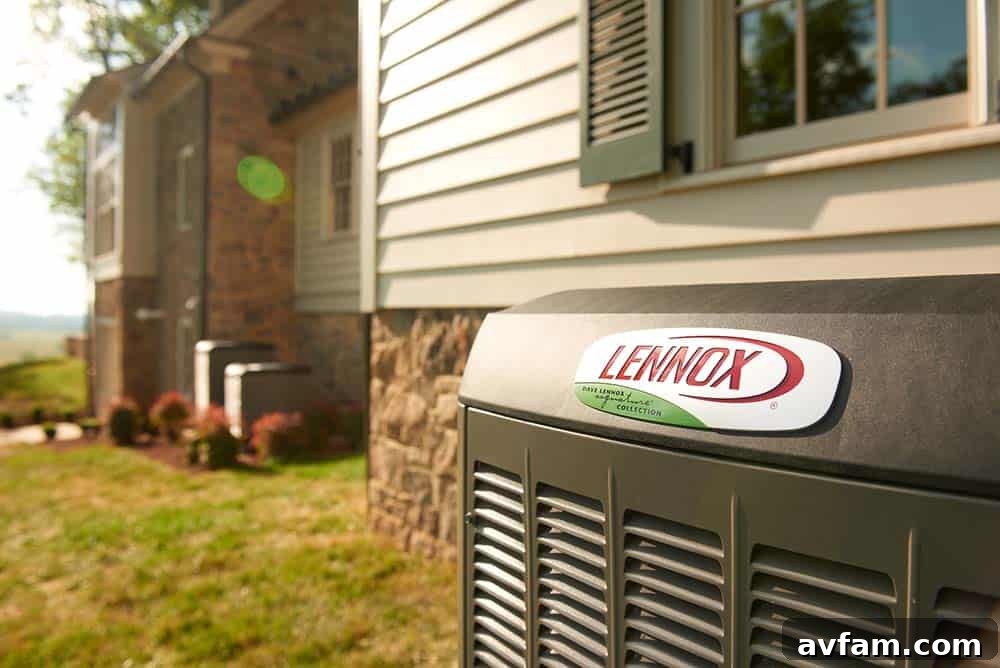
Mastering Home Comfort: A Comprehensive Guide to HVAC System Maintenance and Smart Technology
A well-functioning heating, ventilation, and air conditioning (HVAC) system is more than just a convenience; it’s the heart of your home’s comfort, health, and energy efficiency. When your indoor environment isn’t properly regulated – whether it’s too hot, too cold, or the air quality is compromised – every aspect of your daily life at home can suffer. From productivity and focus to relaxation and sleep quality, an uncomfortable living space diminishes your overall well-being. Understanding how to proactively maintain your HVAC system and leverage modern technologies like smart thermostats can not only prevent costly breakdowns but also significantly enhance your home’s performance and your family’s quality of life. This comprehensive guide will walk you through essential steps to ensure your HVAC system is always performing at its peak, providing precise and efficient heating and cooling year-round, while also exploring advanced solutions from leading innovators like Lennox.
Evaluating Your HVAC Equipment: When to Consider an Upgrade
The average lifespan of a home furnace or central air conditioner typically ranges from 15 to 20 years. While an appliance might continue to function beyond this timeframe, it’s crucial to understand that its efficiency often declines significantly after two decades of service. An older system may still be “working,” but it could be costing you a fortune in higher energy bills and frequent repair costs due to outdated technology and increased wear and tear. Recognizing the subtle and overt signs of an aging or inefficient system is the first step towards a more comfortable, reliable, and cost-effective home environment.
Key Indicators Your HVAC System Might Need Attention or Replacement:
- **Advanced Age:** If your furnace or air conditioner is approaching or has exceeded 15-20 years, even with diligent maintenance, it’s prudent to begin evaluating replacement options. Modern units offer vastly superior efficiency.
- **Escalating Energy Bills:** A sudden or gradual increase in your heating and cooling costs, without a corresponding increase in usage or utility rates, is a strong indicator of declining efficiency. Your system is likely working harder to achieve the same results.
- **Frequent or Costly Repairs:** If you find yourself calling an HVAC technician multiple times a year, or facing significant repair bills, the cumulative cost might quickly outweigh the investment in a new, more reliable, and warrantied system.
- **Inconsistent Temperatures Throughout Your Home:** Persistent hot and cold spots in different rooms suggest your system is struggling to distribute conditioned air evenly, or that your ductwork may have issues.
- **Unusual Noises or Odors:** Grinding, squealing, banging, or persistent musty smells emanating from your unit can signal mechanical issues, worn-out parts, or even mold growth within the system or ductwork.
- **Lack of the Energy Star Label:** The Energy Star program, a government-backed symbol for energy efficiency, began appearing on products about 20 years ago. If your existing furnace or air conditioner lacks this label, it is almost certainly less energy-efficient than modern Energy Star certified counterparts. Upgrading to a new, highly efficient system can lead to substantial long-term savings on utility bills and a reduced environmental footprint.
Upgrading to a new, energy-efficient HVAC system, such as those offered by Lennox, can provide substantial long-term benefits including significantly lower energy consumption, improved indoor air quality, enhanced and consistent comfort, quieter operation, and the peace of mind that comes with a new warranty and advanced features.
Proactive Maintenance: The Cornerstone of HVAC Longevity and Efficiency
While evaluating your equipment’s age is important, proactive maintenance is absolutely paramount to extending its operational lifespan and ensuring consistent, optimal performance. Most homeowners only identify an issue with their HVAC system when it fails to provide adequate heating or cooling, often during extreme weather when demand is highest. However, by performing regular inspections and adhering to a maintenance schedule, you can prevent the vast majority of problems before they escalate into costly emergency breakdowns. It is generally recommended to inspect your furnace and AC unit at least twice a year – ideally in the fall before the heating season begins and in the spring before the cooling season – to ensure they are in optimal working order and ready for the demands of each season.
The Critical Role of Professional HVAC Tune-Ups:
While some basic maintenance tasks can be handled by homeowners, annual professional tune-ups are invaluable and highly recommended. A certified HVAC technician possesses the expertise and specialized tools to perform a thorough, multi-point inspection and diagnostic check that goes far beyond what a homeowner can do. These comprehensive services typically include:
- Checking refrigerant levels and pressure for air conditioning systems.
- Inspecting all electrical connections, components, and motor amperages for safety and proper function.
- Cleaning evaporator and condenser coils, as well as drainage lines, to maintain efficiency and prevent clogs.
- Lubricating all moving parts to reduce friction, wear, and noise.
- Calibrating the thermostat to ensure accurate temperature readings and control.
- Checking safety controls and startup cycles to guarantee reliable operation.
- Assessing overall system performance, airflow, and efficiency, providing recommendations for optimization.
- Inspecting the heat exchanger for cracks or damage, which is crucial for furnace safety.
These preventative measures not only catch minor problems before they become major, expensive repairs but also optimize your system’s efficiency, ensuring it consumes less energy, operates more reliably, and provides consistent comfort throughout the year. Many manufacturers even require annual professional maintenance to keep warranties valid.
Your HVAC System’s Lifeline: Inspecting and Changing Filters
The single most common, yet frequently overlooked, HVAC maintenance issue is neglecting to regularly inspect and change the system filter. A clean filter is absolutely fundamental to the health, efficiency, and longevity of your heating and cooling system, acting as its first and most important line of defense against airborne contaminants. Filters trap dust, pollen, pet dander, mold spores, and other microscopic particles, preventing them from circulating through your home’s air and, critically, accumulating on your HVAC unit’s internal components, such as the evaporator coil.
Why Filter Maintenance Matters So Much:
- **Improved Indoor Air Quality:** A clean, properly rated filter effectively removes a significant amount of allergens, pollutants, and irritants from your indoor air. This is immensely beneficial for everyone, especially those with allergies, asthma, or other respiratory sensitivities.
- **Enhanced System Efficiency:** A dirty, clogged filter severely restricts airflow, forcing your HVAC system’s fan motor to work significantly harder and longer to push air through the clogged medium. This increased strain directly leads to higher energy consumption, elevated utility bills, and reduced cooling or heating capacity.
- **Extended Equipment Lifespan:** When your system overworks due to restricted airflow, its motor and other vital components experience greater stress and accelerated wear and tear. This shortens the overall lifespan of your expensive HVAC equipment and dramatically increases the likelihood of premature breakdowns and costly repairs.
- **Prevention of Coil Damage:** A dirty filter allows dust and debris to accumulate on the evaporator coil. This accumulation reduces the coil’s ability to absorb heat, diminishing cooling efficiency, and can lead to coil freezing, which is a major problem.
How Often Should You Change Your HVAC Filter?
The ideal frequency of filter replacement depends on several crucial factors, making a “one-size-fits-all” answer difficult:
- **Occupancy and Activity:** Homes with more residents or higher levels of activity (e.g., frequent cooking, DIY projects) might require more frequent changes.
- **Presence of Pets:** Pet owners should check and change filters much more often due to the increased volume of pet hair and dander circulating in the air.
- **Allergies or Asthma:** Individuals with allergies or asthma will benefit significantly from more frequent filter changes to maintain optimal indoor air quality and reduce triggers.
- **System Usage:** During peak heating or cooling seasons, when your system is running constantly, filters will accumulate debris much faster and need to be changed more frequently.
- **Filter Type and MERV Rating:** Some high-efficiency filters (with higher MERV ratings) are designed to last longer than standard fiberglass filters, but they also capture more particles and can become restrictive if not changed as recommended by the manufacturer.
- **Local Environment:** If you live in an area with high pollen counts, construction nearby, or dusty conditions, your filters will get dirty faster.
As a general rule of thumb, check your filter monthly and plan to replace it every 1-3 months. Under heavy use, in busy homes with pets, or for allergy sufferers, you might need to change it as frequently as every 2-4 weeks during peak seasons.
Step-by-Step Filter Replacement Guide:
Changing your HVAC filter is a simple DIY task that takes only a few minutes. Before you begin, always prioritize safety by ensuring the power to your HVAC system is completely turned off at the thermostat and, if possible, at the circuit breaker for added security. If you have a gas furnace, also locate and turn off the gas supply valve.
- **Locate the Filter:** HVAC filters are typically found in one of two places: within the return air duct, often situated near the furnace or air handler unit itself, or behind a large return air vent grille located on a wall or ceiling.
- **Note the Size and Airflow Direction:** Before removing the old filter, carefully note its dimensions (length x width x depth, typically printed on the frame) and its MERV rating. Also, observe the airflow arrow printed on the filter frame, indicating the correct direction of air movement.
- **Remove the Old Filter:** Slide or pull the old, dirty filter out of its designated slot. Take a moment to observe how clogged it is – this will give you a good visual indicator of how frequently you should be changing it.
- **Clean Around the Area (Optional but Recommended):** With the filter removed and power off, gently use a vacuum cleaner with a brush attachment to remove any visible dust, dirt, or cobwebs from the immediate areas inside your furnace or air handler that you can safely reach.
- **Insert the New Filter:** Ensure the new filter is correctly oriented according to the airflow arrow. The arrow should always point towards the furnace or air handler, indicating the direction air flows into the unit for conditioning.
- **Secure and Restore Power:** Once the new filter is securely in place, close any access panels, and then safely restore power to your HVAC system at both the circuit breaker and the thermostat.
High-quality replacement filters with various MERV ratings can be conveniently purchased online, at hardware stores, or directly from your local Lennox dealer or other HVAC suppliers, depending on your system’s specifications and your indoor air quality needs.
The Heart of Control: Investing in a Smart Thermostat
Beyond maintaining your physical HVAC equipment, the thermostat serves as the central command center for your home’s comfort and energy management. An easy-to-use, intelligent thermostat is the key to unlocking the full potential of your heating and cooling system. Simply setting a constant temperature, like 70 degrees Fahrenheit all summer long, is an incredibly inefficient use of energy and can prematurely reduce the lifespan of your air conditioner. A properly programmed and smart thermostat, one that aligns with your family’s dynamic daily schedule, will optimize energy usage, maintain ideal temperatures with minimal manual adjustments, and deliver substantial savings on your utility bills.
The Evolution of Thermostats: From Basic to Brilliant:
- **Manual Thermostats:** The most basic form of control, requiring constant manual adjustment to change temperature settings. Highly inefficient for modern lifestyles.
- **Programmable Thermostats:** A significant step forward, allowing you to set predefined schedules (e.g., warmer when you’re at work, cooler when you’re home, or lower at night). These offer considerable energy savings compared to manual models.
- **Smart Thermostats:** The pinnacle of home temperature control, offering advanced connectivity, learning capabilities, and seamless integration with smart home ecosystems.
Unlocking Advanced Comfort and Efficiency with Smart Thermostats: The Lennox iComfort® S30
Ultra-smart thermostats, like the innovative Lennox iComfort® S30, redefine what’s possible for home climate control. These state-of-the-art devices go far beyond simple scheduling, integrating seamlessly with your lifestyle and offering unparalleled precision, convenience, and energy savings. Connected to a dedicated app on your mobile device via Wi-Fi, the iComfort S30 allows you to monitor and adjust your HVAC system remotely from virtually anywhere in the world. Imagine being able to pre-cool your home on the drive back from a summer vacation or warm it up before you even step through the door on a chilly evening – all from your smartphone.
Exceptional Features and Benefits of the Lennox iComfort® S30 Smart Thermostat:
- **Remote Access and Control:** Gain complete command over your home’s temperature, fan settings, and system modes directly from your smartphone or tablet, providing ultimate flexibility and peace of mind.
- **Seamless Smart Home Integration:** The iComfort S30 effortlessly connects with popular smart home platforms and voice assistants, including your Amazon Echo device. Enjoy the convenience of hands-free, voice-activated control: simply say, “Alexa, set the living room temperature to 72 degrees.”
- **Smart Away™ Mode with Geofencing:** This incredibly intelligent feature syncs with your smartphone’s GPS. The thermostat learns your daily routines and knows when you leave and return home, automatically adjusting HVAC settings to an energy-saving mode while you’re out and ensuring your desired comfort level is precisely met upon your arrival. It’s comfort without compromise, and without you having to lift a finger.
- **”Feels Like™” Temperature Technology:** Unlike standard thermostats that only consider dry bulb temperature, the iComfort S30’s “Feels Like™” setting takes into account both temperature and humidity levels in your home. This provides a more accurate and holistic representation of how comfortable your home truly feels. You simply set your desired “feels like” temperature, and the system intelligently adjusts heating and cooling to achieve that precise, perceived comfort.
- **”Perfect Temp” Setting:** This advanced feature allows you to set your singular ideal temperature. Your Lennox system will then automatically adjust its operation, optimizing both heating and cooling cycles, to maintain that perfect setting year-round, minimizing any temperature fluctuations and maximizing efficiency.
- **Revolutionary Allergen Defender:** For allergy and asthma sufferers, this built-in feature is a true game-changer. It monitors the air quality and pollen levels of your local zip code through internet data and automatically turns on the fan to clean your home’s air when outdoor allergen levels are detected as high. This proactive approach significantly improves indoor air quality, transforming your home into a healthier, cleaner sanctuary.
- **Filter Reminder and Maintenance Alerts:** The iComfort S30 intelligently tracks filter usage based on system run time and automatically reminds you when it’s time for a replacement. It can also provide crucial alerts for potential system malfunctions or maintenance needs, allowing for early intervention and preventing minor issues from escalating.
- **Detailed Energy Usage Reports:** Gain invaluable insights into your heating and cooling patterns with comprehensive energy usage reports, empowering you to make informed decisions to optimize your settings and save even more on your utility bills.
- **System Performance Monitoring:** The thermostat constantly monitors your system’s performance, ensuring it runs optimally and providing diagnostic information to your service technician if a problem arises.
These seamless, intuitive, and highly functional features make investing in an ultra-smart thermostat like the Lennox iComfort® S30 a truly worthwhile decision, transforming your home into a supremely intelligent, efficient, and comfortable living space.
Beyond the Basics: Additional HVAC Maintenance Tips for Optimal Performance
To further optimize your HVAC system’s performance, extend its lifespan, and ensure peak energy efficiency, consider incorporating these additional maintenance steps into your annual routine:
- **Clear Outdoor Unit (AC Condenser):** For central air conditioning systems and heat pumps, ensure the outdoor condenser unit is always free from obstructions. Trim back shrubs, bushes, and plants at least two feet from the unit on all sides, and regularly remove any accumulated leaves, dirt, grass clippings, and other debris from its fins. Obstructions severely hinder airflow, reducing cooling efficiency and putting undue strain on the compressor.
- **Inspect and Unblock Indoor Vents and Returns:** Make sure all supply and return vents inside your home are fully open, unobstructed, and clear of furniture, curtains, rugs, or any other items that could restrict airflow. Blocked vents lead to uneven temperatures, reduced system efficiency, and increased energy consumption.
- **Check Ductwork for Leaks:** Periodically inspect visible ductwork in your attic, basement, crawl spaces, and utility closets for any signs of leaks, gaps, or loose connections. Even small gaps or poorly sealed joints can lead to significant conditioned air loss (up to 30% in some homes), drastically reducing efficiency. Sealing leaks with mastic sealant or metallic tape (not duct tape) can drastically improve system performance and air quality.
- **Monitor Refrigerant Levels (AC):** While adding refrigerant (“recharging”) is a professional task, be aware that low refrigerant levels in your air conditioner indicate a leak in the sealed system, not just a simple need for a “top-up.” If your AC isn’t cooling effectively or you hear hissing sounds, a certified technician must diagnose and repair the leak before adding refrigerant.
- **Ensure Proper Home Insulation:** Your HVAC system works in direct conjunction with your home’s insulation and sealing. Adequate insulation in your walls, attic, and crawl spaces, along with properly sealed windows and doors, helps maintain stable indoor temperatures by preventing heat transfer, thereby significantly reducing the workload on your heating and cooling equipment.
- **Keep Thermostat Area Clear:** Ensure your thermostat is not exposed to direct sunlight, drafts, or heat-producing appliances (like lamps or TVs), as these can skew its readings and cause the system to cycle improperly.
Conclusion: Embrace Smart Comfort and Proactive Care
The best HVAC system is one you rarely have to think about – operating silently, efficiently, and consistently in the background to provide unwavering comfort throughout your home. However, adopting an “out of sight, out of mind” mentality can unfortunately lead to neglected maintenance, decreased efficiency, and unexpected, costly problems. By committing to regular professional inspections, diligently changing your filters, and upgrading to intelligent control systems like the Lennox iComfort® S30, you can significantly extend the operational life of your expensive equipment, drastically reduce your energy bills, and create a healthier, more comfortable, and intelligently controlled living environment for your entire family.
Make it a habit to set recurring reminders in your digital calendar to check and replace your HVAC filters seasonally. If you ever notice any unusual sounds, strange odors, a noticeable dip in performance, or simply feel that something is “off” with your system, do not hesitate to act. Proactive intervention can save you from bigger headaches and expenses down the line. Contact your local Lennox dealer today to schedule a comprehensive professional inspection, inquire about their preventative maintenance plans, and learn more about the precise, energy-efficient HVAC products and cutting-edge smart home solutions that Lennox offers. Innovation never felt so good, and with Lennox, unparalleled comfort and efficiency are always within reach.